What's the difference?
Replacing the long-standing UX250h, the more powerful Lexus UX300h hybrid sits at the luxury end of the compact SUV segment, and the latest update brings a refined line-up along with tweaks to both design and technology. In this review, I’m looking at the base Luxury grade to see what it's like to live with this hybrid day-today and how it stacks up against its nearest rivals.
Almost 30 years after Lexus launched its original LS flagship sedan, the fifth generation of the car has arrived in Australia in what appears to be the brand’s never-ending battle to hunt down and beat Mercedes-Benz, BMW and Audi at their own game.
In some markets it looks as though Lexus is making headway. In the United States last year Mercedes-Benz was the best-selling luxury brand, followed by BMW and then Lexus. To give you even more insight, 50 per cent of all Lexus sales globally are in the US.
The story is different in Australia, with Lexus hardly a threat to the big three Germans, selling about a third less each month.
The Lexus LS is the Japanese prestige brand’s flagship and comes with a price that nudges up against formidable rivals. There’s the Mercedes-Benz S-Class, BMW 7 Series and Audi’s A8. Only the best cars from a few of the best brands in the world – no pressure, Lexus.
This may even be a reason to buy one – in that it’s not one of the traditional three. You could see Lexus as the popular underdog that in some ways does a better job than the usual suspects. A people’s favourite perhaps?
Just look at how often it’s mentioned in songs. According to lyrics.com.au the word Lexus has been used in 873 songs. Meanwhile Mercedes Benz appears in 500, Audi in 402 and BMW in 307.
With all this in mind we headed to the Australian launch to drive the LS 500 and its hybrid twin the 500h.
The updated Lexus UX300h Luxury is a solid entry in the premium compact SUV segment. It doesn’t break new ground, and there are areas that could be improved, but it handles well, offers a thoughtful selection of amenities for a base-grade luxury model, and its compact size makes it easy to park almost anywhere. For buyers seeking a stylish, efficient, and practical hybrid with a luxury badge, it’s a dependable choice.
The Lexus LS 500 and 500h are both exceptional cars. The ‘obnoxious’ styling especially to the grille makes the offerings from BMW, Benz and Audi look bland and overly corporate inside and out. It’s really in the dynamics department that the LS falls short of its rivals and only the LS 500 is enjoyable if you like to drive with a degree of conviction.
Both the LS500 and 500h, though, have wonderfully comfortable rides and this together with those sumptuous interiors makes these the perfect place to be if you’re in the back being swiftly and quietly taken to you next meeting.
For me the sweet-spot pick would be the LS 500 F Sport for its value and dynamic ability.
The updated Lexus UX is technically a compact SUV, but it feels more like a hatchback that's taken a small dose of steroids. The facelift brings a sharper look with a stylised 3D spindle grille, new air intake vents, fresh 17-inch alloy wheels, updated daytime running lights and a full-width rear light bar. The sculpted bodywork still showcases Lexus’ signature origami-like panelling and, overall, it’s a handsome little thing. That said, the heavy use of black plastic moulding around the lower edges detracts from its premium appeal.
Inside, the cabin takes a more understated approach. Up front it feels premium-enough, with synthetic leather trims, soft-touchpoints and those high-tech dual 12.3-inch displays headlining the dash. Your eye moves smoothly across the layout without lingering too long on any single element, which adds to the sense of elegance.
Not everything feels top-tier, though. Hard plastics are still scattered throughout the cabin, and they’re especially noticeable in the back seat where the doors have very little in the way of a soft surface. Yes, this is the base grade, but in a car wearing a luxury badge, it’s something you notice more than you should.
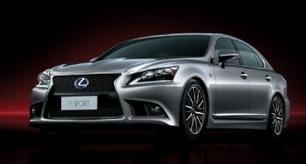
“You’re either going to love them or hate them.” You can bet that whenever you’re told this just before being introduced to somebody then that somebody is going to be downright obnoxious. The same goes for the LS, well it’s face anyway, because those are the kinds of statements made about that grille.
The thing is, the LS needs an obnoxious face because its up against The Establishment - the Mercedes-Benz S -Class, BMW 7 Series and Audi A8, and given there’s no way they’ll ever let Lexus into their little ‘club’ it’s good that the LS has steered clear of imitating them and is boldly different.
This was also the type of thinking which inspired the grille’s creator, Tokuo Fukuichi. The so called ‘spindle grille’ first appeared in 2010 on the CT200h before rolling out to the rest of the Lexus line-up. The look polarised the opinions of fans and even executives inside Lexus. But Fukuichi was adamant the key to the brand’s survival and success was to not to be boring.
That massive gaping mouth is anything but boring, and for this new-generation LS the spindle grille has been overhauled. Yes, some car companies might make a few tweaks to a grille, but not Lexus. Using a CAD computer program, it took designers six months to refine each of the 5032 surfaces on the F-Sport’s grille and the more than 7000 on the Sports Luxury’s. If only you didn’t have to slap a number plate on these exquisitely spun net-like structures.
New LED headlights and the ‘Zorro blade-slash’ LED running lights are equally obnoxious and therefore perfectly suited for the LS’s face. So too are the enormous air inlets below them in the bumper. If only the rest of the car’s exterior was as wild and not mild and milder the further you get from the grille. The rear looks stately, modern and sleek but could have done with something more adventurous (similar to IS’s taillights).
But the LS’s insides make up for that dullness, with a cabin that’s decadent and alien at the same time. A dash which sweeps from door to door features asymmetrical string-like design elements which are a theme carved through wood and glass and stitched into leather throughout the cabin. The quality is superb, while the fit and finish is better than I’ve seen on some of its competitors.
There are four no-cost interior packages on the Sports Luxury ranging from 'Moon White' trim with walnut decorative inlays to black trim with 'Crafted Latte' inserts. But it’s the $9800 optional 'Black with hand-pleating' and 'Kiriko' glass which is a stand out. It’s an intriguing look, the pleated fabric which cascades around the hand-cut Japanese glass.
The F Sport’s cabin is less decorative with seats that hold you tighter in three no-cost option leathers from 'Moon White' to 'Flare Red' with aluminium door and dash decorative elements.
Both cabins are sumptuous, although they fall a little short in gob-smacking tech like those amazing, expansive, floating dash screens and the virtual instrument cluster in the S-Class. Yes, there’s the large screen up front and the seat-back screens in the rear but the styling of the graphics and typeface reveal the Toyota DNA.
The LS has the presence a prestige brand’s flagship car should - imposing, long and wide. Look at the LS’s dimensions. At 5235mm end-to-end and 1900mm across, the LS is longer and wider than a Mercedes-Benz S-Class, but swoops in lower at 1450mm. The LS’s wheelbase is longer than a regular S-Class’s at 3125mm, too.
Apart from the grille you can tell an F Sport from a Sports Luxury by its black brake calipers and black elements in the front bumper, boot lid and sill.
To tell a 500 from a 500h, the difference is subtle. There are the badges, of course, but the 500's rear bumper also has a different design with chrome exhaust surrounds.
The UX is a compact SUV, so it's best not to expect a sprawling interior. The front row offers the best space and comfort, with wide door openings and a ground clearance that makes it easy to hop in without any grunts. The seats are comfortable enough on long drives, although some fatigue creeps in on the passenger side due to the lack of lumbar support. Both front seats are power-adjustable and heated, and with the steering wheel also adjusting electrically, it’s easy to dial in a good driving position.
Move to the rear seats, and space becomes noticeably tighter for adults. At 168cm, my knees press against the seat in front, and even my eight-year-old asked me to slide the passenger seat forward this week. That said, he’s been mostly comfortable thanks to the wide door openings, lightweight doors and well-padded seats.
My son did point out that the tall window sills make it hard to see out, which could be a deal breaker for younger passengers. There are three top tether anchor points, but fitting three child seats across is unrealistic.
Storage is on the slim side, but the dual-opening centre console is clever, and there are two cupholders and drink bottle holders up front. The rear row only gets a single map pocket and two cupholders. A few more cubbies for things like sunglasses or keys would be welcome, as the cabin can quickly feel cluttered if you’re not careful.
Technology is neatly integrated. The dual 12.3-inch displays look sharp with clear graphics, and the touchscreen is responsive. The updated operating system isn’t a big leap forward, but it’s easy to use and the wireless Apple CarPlay and Android Auto work seamlessly. There’s also sat nav, a wireless charging pad, four USB-C ports, a single USB-A port and a 12-volt socket for charging.
The boot looks modest at first glance, especially with the floor set in its highest position, but it still swallowed a big grocery shop with no fuss. Officially, capacity is 364 litres, which makes it the smallest compared to its nearest rivals, although the adjustable floor helps with taller items or creates a handy nook for smaller ones.
A bigger drawback is the lack of a spare tyre as you only get a repair kit. For city drivers that might be fine, but for those of us who live regionally or do longer trips, a spare tyre is a must-have. On the plus side, the powered tailgate with kick function is standard here, whereas rivals make you pay extra for it.
Anything with a 3.1m wheelbase has to be practical right? Well, legroom in the back is excellent, but I can’t properly stretch out in that reclining rear seat with the ottoman without my feet hitting the seatback.
Headroom is also a bit a restricted in that rear row for me, too. That’s something to keep in mind for taller passengers (I'm 191cm tall).
A cargo capacity of 480 litres is 30 litres shy of the Mercedes-Benz S-Class, while the cooler box in the rear (that comes with the Sports Luxury trim) eats into the boot space and drops the total to 440 litres.
The LS is a five-seat sedan, but that centre rear seatback folds forward to become the armrest and houses the controls to the massage and reclining functions, plus two cupholders.
There’s another two cupholders up front and pockets in all the doors. While the storage area under the centre console armrest in the front and back is good – that’s about it for storage.
An access mode will raise the car by 30mm when getting in and lower it by 10mm when getting out. Those wide opening doors also make entry and exit easier.
The new Lexus UX300h is offered in three grades, and the grade tested here is the entry-level Luxury, priced from $55,370 before on-road costs. That positions it right in the middle of its rivals, with the Audi Q2 35TFSI S starting at $49,400 and the Volvo XC40 kicking off from $56,990.
The Luxury grade brings a solid list of standard equipment. While it won’t blow your socks off, it does offer good value-for-money compared to its premium competitors where a lot of features have to be added for additional cost. Highlights include powered front seats with heat function, synthetic ‘NuLux’ leather upholstery and trims, dual 12.3-inch displays and a upgraded OS for the multimedia system. You’ll also find a 10-speaker sound system and seamless wireless phone mirroring for both Apple CarPlay and Android Auto.
Technology extends further with built-in satellite navigation, Bluetooth, digital radio, reversing camera, two USB-C ports in each row, plus a USB-A port, 12-volt socket and wireless charging pad up front.
Practical features like keyless entry and start, dual-zone climate control, dusk-sensing headlights, updated daytime running lights, rain-sensing wipers, electrically adjustable steering wheel and a powered tailgate with kick function.
A three-year complimentary membership to the Lexus Encore program rounds out the package. Members gain access to the Lexus Connected Services phone app where you can customise your driver profile and have access to a digital key but there are a range of benefits from supporting partners like Westfield and Ampol to enjoy as well.
The line-up is simple. There are two powertrains: the turbo-petrol V6 LS 500, and the petrol-electric LS500h hybrid, and there's no price difference between them. Then, there are two trim levels: the F Sport for $190,500 and Sports Luxury for $195,500.
Coming standard on the F Sport are 'F Sport' seats with leather upholstery, heated front and rear seats, dual-zone climate control, 28-way power adjustable front seats and head-up display. The multimedia system comes with a 12.3-inch screen, sat nav, DVD player, DAB+ digital radio, Bluetooth connectivity and a 23-speaker Mark Levinson sound system.
There’s also LED headlights, 20-inch alloy wheels and a kick-open tailgate. While the F-Sport misses out on some of the plush features of the Sports Luxury it does get hardware for better on-road dynamics which you can read about in the driving section below.
The Sports Luxury has that large screen, those power adjustable front seats and the multimedia system with that Mark Levinson stereo, too, but adds much more. The front passenger seat slides and folds itself forward to allow the seat behind it to recline and extend its ottoman-style leg rest.
Both rear seats are 22-way power adjustable and heated. If you’re lucky enough to be lounging back there, you’ll also two 11.6-inch seat-back screens with a DVD player. Plus, there’s four-zone climate control, a rear cooler box and power sun shades.
The F-Sport and Sports Luxury have their own choice of no-cost interior options. The Sports Luxury also gives you the option to buy (for $9800) one of four special interior packs – you can read about the standout one with the hand-cut glass below.
There are 11 body colours to choose from: Sonic Quartz, Sonic Silver, Titanium, Liquid Metal, Onyx, Graphite Black, Vermillion, Scarlet Crimson (a dark red), Metallic Silk, Deep Metallic Bronze and Deep Blue.
The UX300h Luxury runs a hybrid setup that pairs a 2.0-litre four-cylinder petrol engine with two small electric motors. Combined, the system produces 146kW of power, and it drives through an electronic continuously variable transmission (eCVT). This powertrain sees it outmuscle the old UX250h by 15kW.
On paper, those new outputs sit neatly in the middle of this segment. Out on the road, though, the hybrid assistance helps the UX feel a little more sprightly than the numbers suggest. The electric motors give it an eager step-off from traffic lights and smooth power delivery around town, while the petrol engine takes over when more effort is needed.
It's a good combination for a little car.
Let's talk engine specifications .The LS 500 has a 3.5-litre twin-turbo petrol V6 making 310kW/600Nm, with drive being sent to the rear wheels via a 10-speed automatic transmission. That's impressive horsepower, but this car is heavy is a weight of about 2.3 tonnes.
The LS 500h has a 220kW/350Nm 3.5-litre V6 (a different engine to the 500’s) plus two electric motors driving the rear wheels. The total power output is 264kW. Shifting gears in the 500h is a continuously variable transmission (CVT). Just a reminder, too, the LS 500h is not a plug-in hybrid. Regenerative braking re-charges the lithium-ion batteries.
If you're looking for a diesel, you won't find one here. Same goes for a manual gearbox. And, while buyers can choose an all-wheel drive (awd) Lexus LS in other markets around the world, ours are all front-wheel drive.
Fuel efficiency is a real strength. Lexus claims 4.2L/100km on the combined cycle, which is impressive against petrol-only competitors. With a 43L tank, you’re looking at a theoretical driving range of over 1000km between fills.
In my week of mixed open-road and urban driving, I saw a real-world figure of 5.0L/100km, and that’s without holding back on using the available power, which makes the claim feel very achievable.
The LS 500 has an official fuel consumption of 9.5L/100km while the 500h’s is 6.6L/100km after open and urban road driving. We drove both cars on mainly country roads and saw an average of 10.1L/100km in the LS 500 and 9.1L/100km in the 500h.
The UX300h Luxury proves itself to be a versatile little SUV. It offers ample power with prompt acceleration, making it easy to confidently take a gap in traffic or keep pace on the open road. It feels like a solid all-rounder that balances everyday usability with just enough grunt when you need it.
There are three selectable drive modes, though in practice they don’t feel dramatically different. The hybrid system can sometimes sound a little flustered at times as it switches between the two components, but it doesn’t translate into anything unsettling from behind the wheel. The actual driving experience remains smooth and predictable.
Ride comfort is another strength. The suspension does a good job of soaking up small bumps, and unless you’re on the highway in torrential rain, the cabin stays impressively quiet.
Visibility is mostly good, although the A- and B-pillars can occasionally intrude from the driver’s seat. It’s never enough to be a deal breaker, but worth noting. Where the UX really shines is in tight spaces because its 10.4m turning circle and compact dimensions makes it stupidly easy to park. The reversing camera is clear, though for a car wearing a luxury badge, it feels like a missed opportunity not to include a 360-degree camera as standard.
My first experience of the new LS was from the back seat of a 500 Sports Luxury being driven from the airport to the venue where Lexus Australia would deliver the presentation on its fifth generation of the car.
Seat reclined, I was whisked quietly and comfortably through the traffic, barely any road or wind noise, the ride was superb on that air suspension, a little floaty but still damped well enough for it not to become bouncy, with minimal head sway (the movement that makes you car sick).
Cocooned in leather with seat-back screens for audio and DVD the ride and environment was just right for a limousine chauffeuring important business types who need swift and tranquil transportation. Not for weirdos like me who were only interested in the way the front and back multi-link suspension kept a 2.3-tonne car with a 3.1m wheelbase so civilised, even through roundabouts. I wondered if this was actually the best way to experience the LS – from the back seats, being driven?
When I did drive the 500 and 500h in the two trims later it more or less confirmed that first impression. The 500 in F Sport trim was the best to drive, while the 500 in Sports Luxury was the best to be driven in. Why? I’ll explain.
The LS 500’s 3.5-litre twin-turbo V6 makes more power than the hybrid for starters, which is always a good thing when you need to move a car this heavy. Even then the LS 500’s acceleration isn’t super quick, and the engine needs to work hard when asked to get a wriggle on. That 10-speed automatic transmission is excellent though.
The same can’t be said for the CVT in the 500h which under harder acceleration does what CVTs do in that situation, make more noise without seeming to get the drive effectively to the wheels.
The 500h’s naturally aspirated V6 is a good thing, but it seems the weight of the car and the CVT work against it being exciting to drive. After a couple of hundred kilometres in a 500h blasting through the countryside steering it became tiresome rather than rewarding with the engine constantly kicking in and whining incessantly when asked for more beans, please.
This car is far better suited to slipping silently through city streets than it is galloping through the bush – that’s where the 500 is a lot more at home.
The 500 and 500h are rear-wheel drive cars, and this, along with an almost 50-50 balance, sets the ground work for good cars to pilot. The F-Sport trim adds an active rear stabiliser bar as standard equipment and brings a more sophisticated version of Lexus’s 'Vehicle Dynamic Integrated Management' (VDIM) – a stability system using data from suspension, ABS, traction control, electric power steering, the stabiliser bar and rear steering. The result is the control of longitudinal, vertical, yaw, roll and pitch movements for better ride and handling.
The F Sport trims adds bigger brakes, too with 400mm x 36mm discs on the front and 359mm x 30mm at the back, plus staggered tyres with 245mm rubber at the front and 275mm at the rear.
The electric steering is light, which makes it easy to manoeuvre in carparks, and an 11.2m turning circle is great for the class.
On the open road at speed the steering is pinky-finger light even in Sport+ mode, and while it’s smooth and accurate, I want to feel more connected to the wheels and where they’re pointed.
While the LS 500 is more the driver’s car than the 500h neither perform as well dynamically as Benz’s S-Class, but from the back seat the LS feels just as comfortable and even plusher.
The UX300h Luxury comes equipped with Lexus Safety System+, covering the essentials and more. Standard features include lane keeping aid, lane departure alert, adaptive cruise control, traffic sign recognition, blind-spot monitoring, front collision warning, rear cross-traffic alert, rear seat alert, safe exit assist, ISOFIX child seat mounts, three top tether anchor points and tyre pressure monitoring.
Dusk-sensing headlights, rain-sensing wipers, and the restyled LED daytime running lights further improve visibility and overall safety.
The UX has a maximum five-star ANCAP safety rating from testing conducted in 2019, scoring highly across all individual assessments. While the updated model hasn’t yet been re-tested under the latest criteria, its suite of standard safety technologies and solid crash history should offer some reassurance.
The UX has autonomous emergency braking (AEB) with pedestrian and cyclist detection and is operational from 10 - 180km/h but it is normal to see this begin from 5.0km/h on competitors.
The Lexus LS has not been crash tested, but all the signs are there that this is an exceptionally safe vehicle, from the structure of the car to the advanced safety technology such as AEB (forward and reverse) with pedestrian detection, lane keeping assistance and adaptive cruise control.
For child seats there are three top tether anchor points and two ISOFIX mounts across the rear seats.
Both the 500 and 500h are fitted with run-flat tyres.
The UX300h Luxury comes with a five-year/unlimited kilometre warranty, which is comparable to its nearest rivals, although we’re seeing increasingly generous terms from mainstream brands.
Servicing is straightforward thanks to a five-year capped-price program, with each service costing $595. The intervals are well spaced at every 12 months or 15,000km, whichever comes first.
This grade also includes a three-year complimentary membership to the Lexus Encore program. Membership brings access to the Lexus Connected Services phone app, allowing you to customise your driver profile and even use a digital key. Beyond that, Encore members enjoy perks with supporting partners, including Westfield and Ampol.
There's around 40 official Lexus service centres located around Australia but you can make use of its sister brand's (Toyota) service centres if you're in a pinch.
The Lexus LS is covered by a four-year/100,0000km warranty. Servicing is recommended every 15,000km or 12 months. There is no capped price servicing program. Being a Toyota family product the Lexus LS also comes backed by the same reputation for reliability and you may experience lower maintenance costs than perhaps its German rivals.