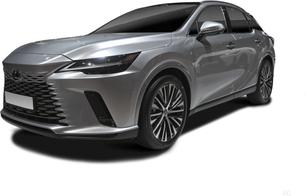
What's the difference?
The Lexus RX holds broad appeal. Families with a bit of money that don’t need a third seating row, older people who love the brand and want a bit of space, and people stepping up into the premium marque from a mainstream brand are all potential buyers.
The fifth-generation version that launched in early 2023 proved to be a significant step up over the previous RX.
Lexus made it more dynamically capable, and there’s been a sharpened focus on refinement, value-for-money and safety credentials.
We spent three weeks getting to know the most affordable RX - the entry-grade Lexus RX350h Luxury two-wheel drive - to see whether it’s worth putting it at the top of your premium family SUV shopping list.
Genesis has been in Australia for seven years, which in car industry terms is ancient (given the rapid pace of new arrivals). But the Hyundai-owned luxury brand has yet to make a real dent on challenging the likes of BMW and Mercedes-Benz and is now facing growing threat from the likes of Zeekr and Omoda-Jaecoo.
So it has opted for the tried and tested method of appealing to Australian customers - more performance. Australians have always had a soft spot for the likes of BMW M and Mercedes-AMG, so Genesis is hoping its new performance sub-brand, dubbed Magma, will help give it a sales boost as well as an image enhancement.
The Genesis GV60 Magma has just arrived in Australia and is the first member of what is planned to be an entire family of Magma halo vehicles.
An electric performance small SUV is an unusual choice for a hero model, but there are some good reasons why this has potential and why it makes sense to be the first Magma offering. And both those reasons are largely the same, because the GV60 Magma is based on the same underpinnings and features and much the same powertrain as the Hyundai Ioniq 5 N and Ioniq 6 N.
Just like Hyundai N has three core elements - Corner Rascal, Racetrack Capability and Everyday Sportcar - Genesis has created a trio of pillars for Magma. These are Design: Unspoken Dominance, Driving Sensation: Captivating Control and User Experience: Sharpened Immersion.
Or to put it another way - slightly different, but fundamentally the same premise given the shared mechanical DNA. But Genesis has definitely put its own spin on it, so read on to find out if Magma is hot or not.
It’s hard to look past the value equation of the RX350h Luxury 2WD when comparing it to almost all its competitors. The pricing is on point, but there are some features missing.
However, there are very few (if any) rivals with a true hybrid powertrain (sorry, mild hybrids do not count), so the RX will capture buyers looking for environmental credentials and efficiency without going full EV.
The drive experience is much better than before and it’s all wrapped up in a very stylish package. The Lexus RX should not be ignored.
An electric SUV is certainly an unconventional choice for a halo model, and is unlikely to be a big seller, but that’s not really the focus for Genesis. Instead, the arrival of the GV60 Magma means something bigger for the brand.
It’s a clear sign of intent from Genesis that it means business with Magma and has a long-term plan for Australia and taking on the likes of BMW M and Mercedes-AMG.
But, as for the car itself, it’s undoubtedly a very nice proposition, with some genuine performance potential and an engaging driving experience - even if it is thanks to technology rather than simple mechanics.
To dismiss it as simple a ‘luxury Hyundai’ would be doing it a disservice, too, as it offers not only a more premium package but overall a different driving experience. It’s less outrageous than either the Ioniq 5 N or 6 N, but still outrageously fast.
Note: CarsGuide attended this event as a guest of the manufacturer, with travel, accommodation and meals provided.