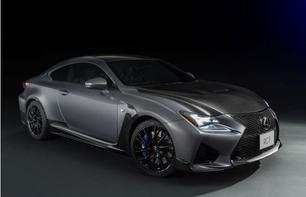
What's the difference?
Ford’s growling Mustang GT isn’t the only rear-wheel drive performance coupe powered by a naturally-aspirated 5.0-litre V8 engine on the Australian new car market.
Pfft! Those things are everywhere. If you’re willing to literally double-down and spend twice the pony car’s circa $65K asking price, the Lexus RC F comes into range; the Japanese luxury brand’s take on a two-door, four-seat, muscle car.
Rather than wrestling with the blue oval, it’s a challenger to the German ‘Big Three’, pitching its deep-breathing, high-revving atmo power against shove-in-back, low-down, turbo-torque.
We spent a week behind the wheel to see how this mature, but recently updated machine, measures up in 2020.
Small or compact four-door SUVs have found favour with those who might usually climb into a hatch but, for whatever reasons, are now looking to a vehicle with the ability, actual or otherwise, of being sporty and even a little bit outdoorsy. The reality is most of these vehicles will spend their time on city and suburban streets, which perfectly suits them, and their owners’ lifestyles.
However, some of these diminutive SUVs are better at their intended purpose – and do it with much more style – than others.
How does the base-spec turbocharged Holden Trax, the LS, hold up in a bustling market segment? To find out, read on.
There’s so much to like about the Lexus RC F EP3. A glorious atmo V8 soundtrack, sharp dynamics, plus loads of standard features and safety tech in a beautifully engineered four-seat coupe package. It can’t match the turbos for mid-range thump, and if you need practicality look elsewhere, but it’s the type of performance car we’ll be looking back at in years to come as one of the last to proudly hold its head above a rising tide of turbos, hybrids, and electric hot rods.
The Holden Trax looks nice enough and is pleasant enough to live with day to day. Like many others of its ilk, the Trax may be marketed as an SUV but that catch-call moniker, which has come to be accepted to mean that a vehicle is actually sporty and off-road capable, is misleading.
As an adventure vehicle the Trax falls well short – it needs a diesel engine and much improved capability (AWD) and space – but as a lively daily driver for a young starter, or a one-child family, then it’s perfectly adequate.
If you’ve got your heart set on a Trax and you’re patient, perhaps you’ll wait until 2020 when the next-generation Trax is due here.
At just over 4.7m long, a bit more than 2.0m wide and less than 1.4m high, the RC F has a classically macho wide coupe stance with a distinctive Lexus twist.
In a late 2019 refresh the RC F was upgraded with suitably jagged single-piece, LED headlights and an even wider version of Lexus’ signature ‘spindle grille’ featuring a new mesh pattern.
Pumped up guards sitting over the standard 19-inch BBS rims feature gills behind them to help smooth airflow around the front of the car, stabilise it overall, and exhaust cooling air flowing around the brakes.
A revised rear diffuser is now body coloured, the stacked-at-an-angle quad exhaust pipes are a Lexus ‘F’ hallmark, stainless steel window trims are now dark rather than bright thanks to a thicker oxide film covering, and the LED tail-lights feature a new L-shaped insert.
Of course, a car’s looks are always subjective, but I think the RC F’s interior is super cool, combining long, flowing graphics on the seats and doors, with rounded, multi-level sections and brushed metal finishes across the dashboard.
The racy instrument binnacle tips its hat to classic sports cars of the ‘60s, the analogue clock between the central air vents could come off as cheesy, but actually looks great, and the large multimedia screen set ‘rear-of-stage’ at the top of the dash is subtly integrated.
True to form, this Lexus is beautifully finished with an obvious eye to design detail and manufacturing quality. Which makes its biggest failing all the more irritating.
The ‘Remote Touch’ control pad behind the gearshift in the centre console managing settings in the media system is hateful.
Operating in similar fashion to a laptop mousepad (only worse) despite available adjustments for speed/sensitivity, even on its most benign setting it is maddeningly over-reactive and inaccurate. Lexus should just put its hand up, say “My bad” and retire it, yesterday.
It’s a small SUV and it looks sporty and outdoorsy enough in a generic sort of way. A nuggety stance, short-wheelbase and roof rails add to this Trax’s activity-friendly demeanour, without promising too much. Take a look and make up your own mind if it’s your cup of tea; I’m not your life coach so decide for yourself whether it’s cool or plain.
Practicality is unlikely to be high on the priority list for anyone shopping for a car like this, but comfort and convenience certainly will be.
And the RC F delivers just that for its front seat passengers, providing lots of space, as well as numerous storage options, including long door bins with room for smaller bottles, two cupholders in the centre console, a large, lidded storage box/armrest between the seats (housing twin USB-A ports, an aux-in jack, and a 12V socket), as well as a decent glove box.
But that space we were just talking about pretty much evaporates when you move to the back. This is a classic ‘2+2.’ The electric folding and sliding front seats make access okay, however, sitting behind the driver’s seat, set for my 183cm height, headroom is tragic, legroom is tight, and toe room is bad.
So, let’s assume it’s a kids-only area, and once ensconced back there, they’ll appreciate a fold down centre armrest, two cupholders between the seats (with a roll-top cover), and adjustable air vents. But there isn’t a USB point in sight which may lead to friction when devices lose charge, or a plug-in negotiation with front-seaters.
Lexus claims a modest boot volume of 366 litres (VDA) and it’s important to note that although there’s a ‘ski-port’ door to accommodate lengthy things (like skis?) the rear seats don't fold down. So, flexibility is limited, although there are tie-down hooks at each corner of the floor to help secure tricky loads.
The Lexus RC F is a no-tow zone, and don’t bother looking for a spare of any description, a repair/inflator kit is your only immediate option. Good thing roadside assistance is included in the warranty package.
Its interior is plain, but practical. The LS has cloth trim and expanses of plastic, which make it a bit ordinary to look at but very easy to live with in the real world because day-to-day life involves liquid spills, crumbs and dirt – lots of dirt.
Storage spaces include a narrow glovebox, narrow plastic door pockets, four cupholders in centre console (no lidded bin here) plus two in the rear centre armrest, and driver and front passenger seat-back pockets.
The rear cargo area is a 356-litre space with the rear seats in use and the cargo cover in place), or a 785-litre space with the 60/40 rear seats folded into the floor. For this to happen, the rear-seat bases flip forward into a vertical position and the seat-backs fold forward to make the ‘new’ flat floor.
Base price for the Lexus RC F is $134,129, before on road costs, which puts it in the same ballpark as the BMW M2 CS ($147,400), undercuts the Audi RS5 Coupe ($157,700), and prices it above Merc-AMG’s C 43 Coupe ($116,500).
The ‘Enhancement Pack 3’ (EP3) option bundle fitted to our test car (19-inch BBS alloys, Brembo carbon-ceramic brakes, titanium exhaust, carbon fibre cabin trim, and glass sunroof), adds $29,161, for an as-tested total of $163,290, which stars to push it into even tougher territory (think M4 CS and C 63 S).
But aside from the EP3 extras, the RC F is well furnished when it comes to standard features, with highlights including, semi-aniline leather accented trim, electrically adjusted (10-way with memory), heated and ventilated front seats, keyless entry and start, dual-zone climate control, plus a 10.3-inch centre screen (managed via the ‘Remote Touch’ interface and voice recognition) running satellite navigation (with live traffic updates) and a 17-speaker Mark Levinson audio system (including digital radio and Apple CarPlay/Android Auto functionality).
Other boxes ticked include, auto-fold exterior mirrors (with auto-dimming, heating and memory), auto LED headlights (with active high beam), LED DRLs, indicators, and tail-lights, rain-sensing wipers, adaptive cruise control, a reversing camera, an 8.0-inch multi-function digital driver display, leather-trimmed gearshift and (electric height and reach adjustable) steering wheel, ‘Drive Mode Select’ (Eco, Normal, Sport S, Sport S+, and Custom modes), ‘Adaptive Variable Suspension’ (Normal and Sport S modes), and ‘Vehicle Dynamic Integrated Management’ (Sport S+ and Expert modes).
Along with the standard safety tech (detailed in the Safety section below) that’s a pretty handy basket of fruit that stands up well relative to the asking price and competition.
The Trax is a front-wheel drive small SUV and the LS is the base-spec variant.
Our tester – a MY19 LS with a 1.4-litre turbocharged four-cylinder petrol engine and six-speed automatic transmission – has a listed price of $24,490 drive away. The Trax LS is available with a five-speed manual gearbox, but it’s matched to a 1.8-litre non-turbo petrol four-cylinder engine. The turbocharged LS is the way to go, I reckon.
The LS has a stack of standard features for the price, including Holden’s MyLink multimedia system, with a 7.0-inch colour touchscreen, Apple CarPlay, Android Auto and Bluetooth connectivity, USB port and power socket up front, cruise control, rear-view camera, rear parking sensors, as well as hill-start assist, hill-descent control, and more. No Trax has AEB.
Our test vehicle has 17-inch alloy wheels with a space-saver spare.
It has an Absolute Red paint exterior; prestige paint colours are available – including Mineral Black, Burning Hot and Abalone White – but they cost an extra $550.
The Lexus RC F is powered by the latest iteration of the brand’s (2UR-GSE) 5.0-litre, naturally aspirated V8 engine.
Featuring exotic touches such as a dual variable valve timing (with electric actuation on the inlet side), dual-length intake runners, forged connecting rods, titanium valves, and the ‘D-4S’ control system (combining port and direct-fuel injection) it produces 351kW (471hp) at 7100rpm, and 530Nm from 4800-5600rpm.
Drive goes to the rear wheels via an eight-speed (torque converter) automatic transmission with a new ‘AI-Shift’ control designed to adapt to the driver’s style and shift drive modes more effectively, as well as a Torsen mechanical limited-slip differential.
Our test vehicle has the 1.4-litre DOHC 16-valve four-cylinder iTi petrol engine – producing 103kW at 3000rpm and 200Nm at 1850rpm – matched to a six-speed automatic transmission.
The turbo gives the Trax a welcome kick in the automotive pants, making the turbo-equipped variant the pick of the bunch.
Claimed fuel economy for the combined (ADR 81/02 - urban, extra-urban) cycle is 11.1L/100km, the V8 emitting 254g/km of CO2 in the process.
In our week with the car, over a combination of city, suburban and freeway conditions (including some enthusiastic B-road running) we recorded an average of 12.8L/100km, which, while not exactly frugal, is still impressive for a V8, performance-focused coupe.
Minimum fuel requirement is 98 RON premium unleaded, and you’ll need 66 litres of it to fill the tank.
This Trax has a claimed fuel consumption of 6.7L/100km (combined). We clocked up more than 300km of highway and back-roads driving, with a smattering of gravel-road driving thrown in. We recorded 10.7L/100km, which is much thirstier than claimed.
A performance car should excite the senses, but the RC-F leans on one a little harder than the rest… hearing.
With the addition of launch control in last year’s update the big V8 will reliably slingshot you from 0-100km/h in just 4.5sec, which is no mucking around quick. But it’s the combination of raucous induction noise, furious mechanical roar, and bellowing titanium exhaust that add extra drama to the experience.
Fact is though, while maximum torque of 530Nm is not to be sneezed at, that number is only available from 4800-5600rpm. Although the RCF starts to get into its stride at about 3000rpm, the twin-turbo BMW M2 CS smashes it for mid-range punch with its 550Nm on tap from just 2350rpm.
So, in everyday, even mildly enthusiastic driving, the RC F sounds amazing, and don’t get me wrong, this is a proper performance car, but it doesn’t have the low-down, kick-in-the-pants grunt of its turbocharged six and eight cylinder competitors.
Linear power delivery, and the crisp throttle response only a naturally aspirated engine can deliver go some way to evening things up, however, and there are multiple systems to help tune the drive experience to your exact preference.
‘Drive Mode Select’ offers five settings (Eco, Normal, Sport S, Sport S+, and Custom).
Eco lowers engine output, dampens the throttle, and dulls the air-con in the name of fuel efficiency and reduced emissions. But you’re not buying this car to save the planet, so don’t touch that button, Sport S is the sweet spot (and save Sport S+ for track days).
Quick gearshifts from the eight-speed auto (particularly using the wheel-mounted paddles), that rapid throttle response, and nice steering feel work seamlessly together to deliver a satisfying backroad experience. Sport S holds gears longer on the way up the ratios, and is quicker to shift on the way back down.
In a more civilised mode, with eight gears to play with, freeway cruising is relaxed, especially given the top two ratios are overdriven.
The ‘Adaptive Variable Suspension’ offers Normal and Sport S modes, and here normal is the go. The basic set-up is double wishbone front, multi-link rear, and Lexus says the SACHS-developed AVS shocks can adjust damping force across a range of 30 levels. But even in the default Normal setting the ride is firm.
According to Lexus, the standard Michelin Pilot Sport 4S tyres (255/35 fr / 275/35 rr) have been tailored specifically to the RC F and they grip hard, keeping the 1715kg coupe planted in quick corners. But their narrow profile no doubt contributes to the car’s less than limo-like feel around town.
Then the ‘Vehicle Dynamic Integrated Management’ system fine tunes the car’s stability control in Sport S+ and Expert modes. Expert only happens when you’re in Sport S+ and turn the stability control off. So again, best to go full racer at the circuit, and we didn’t explore VDIM this time around.
The electrically-assisted steering is not only accurate (the strength of the steering rack bushing has been increased by 150 per cent to boost response), but the wheel itself feels great, and the huge (380mm) Brembo carbon ceramic brakes are mega (working well from cold unlike some other carbon set-ups).
Under the heading of notable mentions, the digital instrument cluster is inspired by the V10-powered Lexus LFA supercar, switching between a blue economy indicator ring in Eco mode, a standard tachometer and digital speedometer in Normal, a white and red cluster in Sport S, and orange in SPORT S+ (with three-stage upshift indicator lights).
Plus, you can also switch between racy functions such as a lap timer and G-force display, and soft-trim knee pads on the sides of the front centre console improve comfort and seating stability if you’re having a crack.
Driving position is high, steering is quite sharp and handling is tight and controlled, so there’s plenty of welcome driver involvement from the get-go.
The turbocharged engine makes for a lively and responsive drive and, combined well with the six-speed auto, this 1376kg Trax offers up plenty of zip from stop-starts and oodles of oomph for smooth overtaking.
Ride is very firm, bordering on harsh, with rear-seat passengers* especially feeling the lumps and bumps of irregular road surfaces by way of the tight suspension. (*I believe my children.)
Interior space is not an issue though as everyone can manage head and shoulders nicely in the tall cabin. The seats are lacking in full support though, making long trips not such an appealing proposition, and in-cabin noise builds early and becomes quite hard on your ears.
The Lexus RC hasn’t been assessed by ANCAP or Euro NCAP, but it boasts a solid array of active and passive safety tech.
To help avoid a crash the expected systems like ABS, EBD, brake assist, as well as stability and traction controls are all on-board.
And despite its relatively advanced age (the RC was launched globally in 2014) the RC F hasn’t been left behind, with more recent safety developments also included.
Specifically, pre-collision warning (including AEB, with pedestrian detection), active cruise control, lane-departure warning (with steering assist), vehicle sway warning, auto high beam, blind-spot monitoring, a reversing camera, front and rear parking sensors, and rear cross-traffic alert.
But if an impact is unavoidable, you’re protected by eight airbags (driver and front passenger front and side , driver and front passenger knee, and side curtain bags).
Pedestrians aren’t forgotten either, the RC F featuring sensors able to detect if the front bumper has collided with a person, immediately lifting the back of the bonnet up by around 65mm, to help absorb impact force. Interestingly, the ‘Pop-up Hood’ sensors won’t deploy this function if the car collides with anything else.
There are top tether points and ISOFIX anchors to securely fit baby capsules/child restraints in both rear seat positions.
The Trax has a five-star ANCAP rating as a result of testing in August 2013.
The LS has six airbags (including full-length curtain airbags), dusk-sensing headlights, reversing camera, rear-parking sensors, hill-start assist and hill descent control.
The standard Lexus warranty in Australia is four years/100,000km, which outscores the likes of Audi and BMW on duration (both at three years) but trails on kilometres (both offering unlimited km).
Then there’s Merc, which has gazumped all the luxury players with five year/unlimited km cover. Plus, there’s the fact that the mainstream market standard is now five years/unlimited km, with some at seven years.
To balance the scales, the ‘Lexus Encore Privileges’ program provides 24-hour roadside assistance for the duration of the warranty, as well as access to owner events and special offers.
Service is scheduled for 12 months/15,000km (whichever comes first), and Encore capped price servicing is available for a three year period, averaging $595 annually, for an all-in cost of $1785.
A Lexus loan car is provided while your pride and joy is in the workshop, or a pick-up and return option (from home or office) is available in some instances. You’ll also receive a complimentary wash and interior vacuum. Nice.
The Trax has a five-year/unlimited-kilometre warranty and service intervals are recommended at 15,000km/nine months.