What's the difference?
For Lexus, 2025 was a year of celebration. It marked not only its 35th anniversary in Australia but was also the year when total sales surpassed 200,000 since its local launch and electrified powertrains took a record share of more than 76 per cent of the fleet.
In other words, three out of four Lexus vehicles sold were either HEV (Hybrid), PHEV (Plug-in Hybrid) or BEV (Battery) with the most popular model for more than a decade being the mid-size NX which represents more than 40 per cent of the Japanese marque's sales. The NX was also calendar year 2025’s top seller in Australia's ‘Medium SUV over $60K’ segment in which it competes against a bewildering number of rivals.
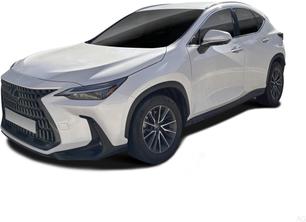
Clearly, the NX has hit a sweet spot with prestige SUV buyers, with the vast majority choosing HEV or PHEV powertrains. We were recently handed the keys to one of the latest NX offerings to find out why this stylish five-seater has such enduring appeal for couples, families, weekend travellers and business professionals.
The Renault Master range has been refreshed, and this was our first chance to see what changes have been made.
You should be able to tell just by the look of the 2020 Master that there’s a new design with a more modern looking front-end. And the inside has been thoroughly modernised, too.
But with contemporary rivals such as the VW Crafter and Mercedes-Benz Sprinter - both of which launched in all-new generation guises in 2018 - the question is whether the ageing, yet facelifted Master is worthy of consideration.
We spent a week with it - and covered plenty of kays in it - to find out.
The NX 450h+ Luxury combines high build quality and upmarket looks with plug-in hybrid convenience/performance/economy and numerous luxury appointments. It’s a competent all-rounder that's difficult to fault and clearly meets the needs of many prestige mid-size SUV buyers.
If you’re after a budget-conscious offering in the large van segment, the Renault Master could be a really solid proposition. It falls short of the safety expectations set by its newer rival, though, and that’s something you might not be able to put a price on.
The exterior is a sculptured blend of sharp creases and flowing curves which create a sporty and sophisticated appearance that clearly appeals to many buyers.
The interior looks and feels about as spacious and airy as you could realistically expect in a mid-sized SUV, which is enhanced with the roof open and sunshine pouring in.
The boldly contrasting two-tone grey and camel interior trim in our test vehicle adds to its visual appeal although we suspect such a bold colour choice could also be a stain magnet in everyday use, particularly for young families with lots of sticky kids’ stuff onboard.
The front-end styling of the Master has been modernised with a “robust” new look which sees it adopt a more upright nose with a bulkier grille, squared-off headlights (with LED daytime running lights as standard, along with halogen headlights).
There were no other changes made to the exterior, so if you see it side on or from the rear, you’d be hard pressed to tell if it's the new model.
This is the second facelift for this generation (X62) Master, which originated back in 2010. It is also offered in some markets as a Nissan, Opel, and Vauxhall. And this version certainly freshens up the appearance, though the practicality of the Master line-up remains unchanged.
That’s a good thing: you can still get the van as a short-wheelbase with low roof (L1H1), a mid-wheelbase with mid roof (L2H2), a long-wheelbase with mid roof (L3H2), or an extra-long-wheelbase with high roof (L4H3). There’s also the choice of a single cab-chassis Platform ute model, too.
Our test model is the L2H2, meaning dimensions of 5575mm long on a lengthy 3682mm wheelbase (giving it a 13.6-metre turning circle), while the width is 2070mm and the height is 2499mm. Too tall for car parks (and drive-thru windows, in this age of social distancing).
The good news about the height, though, is that it allows you excellent interior dimensions. The cargo hold of this version is 3083mm long, 1765mm wide (and 1380mm between the wheel-arches, enough for Aussie pallets to slide in easily), and the height is 1894mm inside. I’m six-foot tall (1820mm) and that meant I could safely step in and out of the cargo zone without fear of hitting my head. The load space is 10.8 cubic metres in this spec.
As you’ll see in the interior section, the cabin has been given a bit of attention too - you can see it in the images below.
Its compact dimensions of 4660mm length, 1865mm width and 1660mm height make the usual driving chores in congested urban settings, particularly tight inner-city streets and parking spaces, much easier than a full-size SUV.
With its 2050kg kerb weight and 2540kg GVM, it has a load capacity of 490kg of which up to 75kg can be carried on the roof rails using approved racks.
While almost half a tonne of load capacity may seem ample, keep in mind that the combined weight of five large adults could reach that limit before you could start loading their luggage.
It’s also rated to tow up to 1000kg of braked trailer, which would be ideal for hauling small trailers with a recreational focus like fold-out campers, jet-skis, trail bikes etc. However, Lexus does not publish a GCM figure, so for weekend escapees we don’t know how much it can legally carry and tow at the same time.
There’s more than adequate space for the driver and front passenger, along with storage that includes a bottle-holder and bin in each door, overhead glasses holder and a single glove box.
The centre console has two cupholders and a deep box with padded lid that doubles as a comfy elbow rest. You’ll also find a quartet of USB ports, a 12V socket and wireless phone charging pad.
The rear bench seat is surprisingly accommodating for tall people, given I’m 186cm and when seated behind the driver’s seat set in my position I still have sufficient knee clearance and headroom.
However, with three up, those in the centre must compete for shoulder space plus have their feet either side of the transmission tunnel and knees together between the front seat backrests. So, three adults is okay for short trips but should be capped at two for longer drives.
Rear passenger storage includes a bottle-holder and bin in each door, pockets on both front seat backrests and two cupholders with the centre seat backrest folded forward. The rear of the centre console has adjustable air vents, rear seat heating controls, another 12V socket and a pair of USB ports.
The power tailgate can open by waving your foot under the rear bumper (useful when hands are full) to gain access to the rear luggage area, which provides numerous internal hooks for securing cargo straps or nets plus underfloor storage for the charging cables and more.
This luggage area offers up to 520 litres (more than half a cubic metre) of load volume with the rear seat upright. It expands into what is effectively a small van when the rear seat is folded flat, which can carry everything from a mountain bike to flatpack furniture.
Like all vans in this segment there are some cabin smarts that will make your life a lot easier if you spend a lot of time in the cockpit.
There are storage options aplenty, including overhead folder holders, a trio of dash-top storage caddies, dash-top cup holders, huge door pockets with bottle holders, some smaller storage cubbies near the shifter, and a glovebox that is, in the French tradition, good to hold a pair of gloves and not much else. This model had the dual passenger bench seat, with a hidden storage section underneath, and you can fold the middle seat down to form a desk platform with cup holders if that’s what you need.
Along with the storage smarts, the updated Master has seen some major changes in terms of infotainment intelligence, too. The new 7.0-inch MediaNav touchscreen system with Apple CarPlay and Android Auto is a welcome advancement for the brand, and during my time in the vehicle it proved simple to use and quick to react. The sound isn’t terrific, with just two speakers fitted, and I had to turn it up pretty loud to overcome the wind noise from this mid-roof model.
The driver’s seat is comfortable and offers decent adjustment, with height and lumbar adjustment. It’s easy to step up into the cab, too, despite there not being side grab handles. The driver also gets a new digital instrument display section on the redesigned dashboard, which includes a gear-shift indicator (but not a gear position indicator), and a digital speedometer and trip computer.
The steering wheel is new, too, and it’s much nicer than the old grainy plastic number in the pre-facelift version. Gone are the round vents across the dash and round plastic sections of the old model - now there are squared-off, more modern looking finishes that clearly aim to mimic the exterior’s now boxy-edged body.
In the cargo zone there are multiple tie-down hooks (eight on the floor, four on the side wall pillars), making for plenty of options to secure a load - though as can often be found with these eye-hook points, they can be a little too far inboard to make good use of, and in the Master’s case, there are no tie-down points rear of the wheel-arches. There is a 12-volt outlet in the back pillar, however.
Our test vehicle is the NX 450h+ Luxury (launched late 2025) which sits one rung below the premium 450h+ F Sport on the model ladder. Even though they share the same PHEV all-wheel drive (AWD) underpinnings, the Luxury’s emphasis on providing more affordable luxury at the highest level is reflected in its list price of $84,500, before on-road costs, which is $11,500 less than its F-Sport sibling. Our example is finished in optional 'Graphite Black' prestige paint available at extra cost.
As you’d expect there are plenty of items on the standard equipment list including 18-inch alloy wheels with 235/60 R18 tyres and an inflator/repair kit (no spare), heated door mirrors, tilt-and-slide moonroof, a rear spoiler, roof rails and LED headlights/DRLs to name a few.
Step inside using the smart entry and start function and drivers are treated to luxuries like front seat heating/ventilation with 12-way power adjustment (eight-way passenger), a heated steering wheel with paddle shifters and power height/reach adjustment, digital multi-information display, an electric parking brake, traffic sign recognition, tyre pressure monitoring and active parking aids.
There’s also outer rear seat heating, dual-zone climate control, wireless phone charging, multiple USB ports, 10-speaker premium sound, a 14-inch multimedia touchscreen with multiple connectivity including wireless Apple CarPlay/Android Auto and lots more.
The 2020 update for the Renault Master saw prices adjusted to compensate for additional standard equipment now offered range wide.
You can read the full pricing and specs breakdown story here, but the standard goodies for the Master include: a new 7.0-inch touchscreen media system with USB input, Bluetooth, Apple CarPlay, Android Auto, sat nav and reversing camera display, a two-speaker sound system, rear parking sensors, 16-inch steel wheels with a full size spare fitted under the rear body, body-protective cladding, twin-view side mirrors with electric adjustment, electric windows, cruise control, air conditioning, remote central locking, halogen headlights, LED daytime running lights, and rear fog lights.
The list price for the L2H2 mid-wheelbase manual model used in this review is $47,490 plus on-road costs (RRP or MSRP), but Renault is advertising this exact spec for $47,990 drive-away, which is pretty compelling - you don’t even need to be an ABN holder for that discount.
The Master MWB van comes as standard with barn doors at the rear (270-degree opening), and a sliding side door on kerb side (left), while SWB models get 180-degree barn doors. It also features a steel bulkhead as standard, as well as a three-seat layout up front. There’s a handy lift-up base on the bench part of the seat, which allows you about 100 litres of hidden storage if you need it.
There are numerous options for buyers to customise their van to suit what they need. There are several packs to choose from, such as: the Trade Pack - wooden floor, full height timber wall lining, rear step, LED ceiling lights ($1600); the Business Pack - front fog lights, hands-free key card and push-button start, chrome exterior and interior trim finishes ($1000); and the Convenience Pack - auto high/low beam lights, lane departure warning, blind spot monitoring and front parking sensors ($1000).
You can option individual elements such as a driver’s side sliding door ($800), a driver’s suspension seat ($800 - removes the side airbag for the driver), a single passenger seat ($200 - N/A with driver suspension seat, adds passenger-side airbag protection), and if you choose RWD model there’s an available differential lock ($1000). Last but not least, you can have glazed dual sliding doors for $800, but only if you also option the Trade Pack.
Colour options include no-cost solid paint finishes in white, grey, dark blue, light blue, yellow, orange and red (the interesting colours will need to be pre-ordered). There are also three metallic paint options in grey, black or a silver/blue look, and the cost there is $1000.
The sophisticated PHEV drivetrain with electronic AWD comprises a 2.5-litre four-cylinder petrol engine that delivers 136kW of power and 227Nm of torque to the front wheels through a Continuously Variable Transmission (CVT).
There’s also electric motors front and rear, fed by an 18.1kWh lithium-ion traction battery that can provide limited electric-only driving range.
The front electric motor, which assists with driving the front wheels through the CVT, produces 134kW/270Nm while a smaller one exclusively drives the rear wheels with 40kW/121Nm. Although the combined output from these three power sources is 310kW, Lexus claims a total system output of only 227kW to optimise efficiency and reliability.
The petrol engine and electric motor outputs are electronically synchronised and traction is continuously monitored to automatically vary the amount of power being sent to the front or rear wheels to optimise stability and traction in all conditions.
There’s also a choice of drive modes comprising 'Normal', 'Sport' and 'Eco' and paddles on the steering wheel allow manual shifting of the CVT 'ratios' for a more engaging drive, or to increase the regenerative braking effect (like using lower ratios on descents etc).
Several operational modes can also be selected including electric-only driving (we covered 60km on one full charge and 56km on another) and two modes of hybrid driving, plus battery charging while driving courtesy of the petrol engine which during our test charged the battery from near zero to 100 per cent in 56km.
There’s also external plug-in charging of course. At home we used the three-pin domestic wall socket compatible 10A charger/AC Type 2 cable supplied with the vehicle, which took about six hours (at a tiny 2.3kW) to charge from 35-100 per cent.
The power outputs and torque figures depend on the transmission you choose.
Despite the fact that both manual and automatic versions of the Master run a 2.3-litre four-cylinder diesel engine, there’s a difference between the engines: the version with the six-speed manual transmission is a twin-turbo unit, while the six-speed automated manual transmission makes use of a single-turbo diesel.
There’s not much in it when it comes to the difference in outputs, however.
The manual version has a slight horsepower advantage, with 120kW of power (at 3500rpm) and 360Nm of torque (at 1500rpm).
The automated manual has a maximum power of 110kW (at 3500rpm) and 350Nm of torque (at 1500rpm).
Both transmissions are geared the same across all six ratios, though from experience, the automated manual is best left at the showroom. While rivals offer conventional torque converter automatic gearboxes to appeal to a broader customer base globally, the French brand persists with its pernickety somewhat-auto option instead.
The majority of models in the Master range are front-wheel drive (FWD), but there are a couple of long-wheelbase rear-wheel drive (RWD) models available. None are all-wheel drive (AWD) or four-wheel drive (4WD).
You might be interested to note the weight specs for the Master range. There are too many variables to bore you with here, but the details on the L2H2 mid-wheelbase manual I tested, according to Renault Australia, are as follows: kerb weight - 1887kg; gross vehicle mass/GVM - 3510kg; payload - 1623kg; towing capacity - 750kg un-braked, 2500kg braked. The gross combination mass (GCM) is 6000kg.
Lexus claims average combined consumption of only 1.3L/100km, achieved in ideal lab conditions which is largely irrelevant. When we stopped to refuel after 424km of real-world testing, which included our usual mix of suburban, city and highway driving and switching between the different modes (including 116km of electric-only driving), the dash display was showing 5.7L/100km.
That was close to our own figure of 5.4 calculated from fuel bowser and tripmeter readings, so based on our test consumption and depending on the mix of drive modes used, you could expect a realistic driving range of up to 1000km from its 55-litre tank which prefers 95RON premium petrol.
There is no official combined fuel consumption claim figure stated by Renault, as the vehicle falls into the heavy commercial vehicle space.
But I can tell you it’s pretty impressive for fuel economy. I saw an average of just 8.5 litres per 100 kilometres over more than 1000km of testing - more than half of which was with the van loaded up with hundreds of kilograms of load.
With a 100-litre diesel tank, you could theoretically get about 1150km to a fill, and that’s with a mix of loaded and unloaded driving.
One thing, though: most vehicles have a graphic on their dashboard to show which side the filler neck is - you know, you see a fuel bowser and the filler is on the right, that means your vehicle’s filler is on the right. Not in the Master. It has a graphic with the filler on the right, but the actual fuel cap is on the left. And like most vans, you have to open the passenger door to fuel up.
Worried about AdBlue? No need - the engine used in the Master range is a Euro 5 unit, so there is a diesel particulate filter, but no urea after treatment setup to mention.
The cabin is what you might call ‘cosy’ for tall people like me (186cm) but there’s still adequate room to find a comfortable driving position.
The ride quality is noticeably firm, which contributes to its sporty feel. The steering is nicely weighted with good response and braking is reassuringly strong.
Acceleration in full-electric and hybrid modes is brisk but not exceptional and about what you’d expect from this powertrain, which engages the rear electric motor for standing starts and other situations to ensure all-wheel drive traction is being deployed when you need it most.
We sampled the different drive modes, with 'Sport' providing a more engaging feel (particularly when manual shifting using the paddle shifters), 'Eco' producing a more subdued response to optimise range and the default 'Normal' providing a pleasant compromise.
Even so, despite its technical wizardry and generous choice of driver preferences, we reckon most daily driving owners would simply plug-in and charge each night, start off in electric-only mode and if needed continue in ‘Normal’ hybrid mode.
I did a mix of driving in the Master over the week I had it, including more than 600km of unladen driving.
Why so many kays? I used it to move house, which meant I completed two “full” trips between Sydney’s inner-west and Cowra in the Central West of NSW, and two “empty” trips back to Sydney, as well.
I’ll get to how it drove with a load on board in the section below, but the unladen experience was pretty positive.
The engine and transmission are well teamed, and there’s a good amount of usable torque and very little lag to speak of.
As with this entire generation of engines - a derivative engine in a different state of tune is used in the Nissan Navara - the refinement is mostly good until you reach higher in the rev range, where it can get a bit noisy and clattery. But the best work is done down low in the rev zone anyway.
The manual shift action isn’t what I’d call “slinky”, more “clicky”. But it’s easy to row between gears as the action is light and the clutch isn’t too heavy, either. The gearing is generous, meaning you can saunter in sixth gear around 70km/h without the engine labouring too hard, and it’ll accelerate from there to freeway pace - provided you’re not going uphill.
There is a bit of ratio management required if you encounter a steep incline, but generally it’s a decently strong powertrain for its intended use - more on that below.
I’m always astounded about the steering and ride characteristics of vans of this size. Yes, it’s large, and yes, it can get blown around a little by crosswinds, and yes, you need to factor in the longish-wheelbase and larger turning circle that results from that… but it drives a lot smaller than it is.
The steering is direct and accurate, easy to judge at high or low speeds - which is great news when you’re parking (and there’s a good quality reversing camera and rear parking sensors, but you’ve just gotta remember the roof height, too).
The ride is adequate without a load on board, too. The independent McPherson strut front suspension copes well with changes in surface and bump control, though it can be a little bouncy at times. The rear suspension is a leaf-spring torsion beam setup, and it can be a little clumsy over road joins when unladen.
It also brakes well, with solid and trustworthy response from the four-wheel disc brakes at all speeds.
The NX has a maximum five-star ANCAP rating (awarded 2022), eight airbags and a suite of active safety features including AEB with pedestrian and daytime cyclist/motorcycle detection, steering assist, lane-keeping, safe exit assist, rear cross traffic alert, blind-spot monitoring, traffic sign recognition, LED DRLs, tyre pressure warning and lots more. The rear seat is equipped with two ISOFIX child seat anchorages and three top tethers.
While there has been a safety revolution in the van segment in recent years led by Mercedes and VW, Renault has been left behind to a degree.
The Renault Master has never been put through NCAP or ANCAP crash testing. So there’s no safety star rating to speak of.
And it falls short of its chief rivals, as it doesn’t have any sort of auto emergency braking (AEB) or forward collision warning system at all.
It has a reversing camera and rear parking sensors, plus dual front airbags and driver’s side airbag protection (not passenger though?), and there are no curtain airbags either. But it has electronic stability control (ESC), electronic brake force distribution, and hill start assist with Renault’s Grip X-tend system that is designed to allow better traction in slippery situations.
You can option some safety technology into the manual versions of the Master, by way of the Convenience Pack. For $1000 it adds auto high/low beam lights, lane departure warning (not active lane keeping assist), blind spot warning (not rear cross-traffic alert), and front parking sensors.
I understand the argument that buyers shouldn’t have to pay for anything they don’t need, especially when it comes to business vehicles. But I hope that behind closed doors Renault is working furiously to improve the safety equipment offering as a matter of priority.
Comes standard with a five years/unlimited km warranty. Same applies to the lithium-ion traction battery, which is eligible for additional warranty coverage of up to five years (so 10 years in total) based on annual inspections.
Scheduled servicing is every 12 months/15,000km, whichever occurs first. Capped pricing, which applies to the first five scheduled services up to five years/75,000km, totals $3225 or an average of $645 per service.
The Renault van range is covered by a warranty plan that isn’t as good as you’ll get from VW or Ford. That is, the Master (and Trafic and Kangoo below it) have a three-year/unlimited kilometre warranty cover, which is two years shorter than the best in the class.
Service intervals are business-friendly at 12 months/30,000km, with a capped-price service plan spanning the first three years/90,000km. The service price is $599 per visit, but keep in mind you will need to replace the coolant ($132) and brake fluid ($79) every 60,000km. There’s also an accessory belt replacement at 90,000km ($506).
If you service your van at Renault, you’ll also be eligible for up to four years of roadside assistance cover. From the showroom floor there is 12 months cover.
Concerned about issues, problems, recalls, questions, queries, complaints, or reliability issues? Check out our Renault Master problems page.