What's the difference?
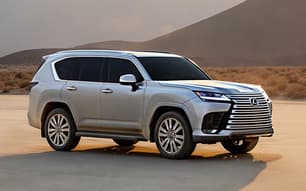
With the hugely anticipated Toyota LandCruiser 300 Series now in showrooms, the time has come for Lexus to show off its own riff on the LC300 theme. But don’t be fooled by the LandCruiser connection, the new Lexus LX models, while perfectly equipped to tackle bush tracks, are aimed at the cashed-up urbanite who appreciates an SUV with the absolute lot.
It's been almost a decade-and-a-half since the last new Lexus LX model, and in that time, the global demand for the SUV concept has gone from strength to strength, playing into Lexus’ hands somewhat. But that doesn’t mean this clean-sheet design has ignored some innovative technologies or creative design and packaging.
The new LX range covers plenty of price territory, and can be configured to handle a huge range of user profiles. And while it remains an expensive vehicle by Australian standards, there’s no doubt that it will be taken seriously by those with the means and the need for a huge SUV with the potential for serious off-road use.
In fact, the ability to cover rough terrain in supreme comfort and without sacrificing anything in the way of creature comforts, suggests that Australia (and its hordes of recreational four-wheel drivers) was never the market Lexus had in mind for the new LX. Instead, think Middle East and North America and you’re probably getting closer to the well-head of LX inspiration.
As well as a new mechanical platform, this LX also introduces a pair of new trim levels; the F-Sport and the Ultra Luxury specification.
Yes, this is the car that Ferrari said it would never build. In fact, Ferrari Chief Design Officer, Flavio Manzoni told this very publication (albeit way back in 2015) that "Enzo Ferrari would turn in his grave" should the company ever make something other than a two-door sports car.
But I'd advise you not to get too hung up on all of that. Times change, and the automotive world is a very different place compared to five or 10 years ago.
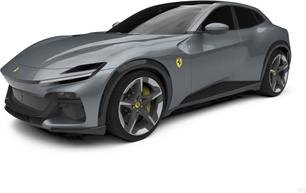
So, yes, this is the first Ferrari SUV (even if the brand steadfastly refuses to call it one). And it’s the first prancing horse with four doors and four seats.
But it’s also the only SUV on the planet (at least, that I’ve ever heard of) that’s powered by a properly screaming naturally aspirated V12 petrol engine.
So, is this Purosangue the world’s most super SUV, and thus worthy of its iconic badge? Or does it only detract from the brand’s impressive performance legacy?
Let’s go find out, shall we?
There's absolutely no doubting the new LX's off-road credentials, nor the fact that it takes luxury SUVs to new heights in the four-seat Ultra Luxury model. Do you need a massaging chair and a foot-stool to get to your camping site? Probably not, but globally, there's a distinct market for that sort of decadence.
Closer to the other end of the LX line-up, however, there's a fair bit of cross-over in price and luxury terms with the Lexus' close cousin, the Toyota LandCruiser 300 Series. That suggests there might be a LandCruiser that will do the same job for a little less money and, if that's the case, then the LX loses a little relevance, particularly the petrol-engined version here in Australia. Until, that is, you take into account buyers for whom the Lexus badge infers the bank-vault solidity and prestige that the brand has worked so hard to establish. Which is another way of saying; it all comes down to where you stand on the politics of envy.
Note: CarsGuide attended this event as a guest of the manufacturer, with travel, accommodation and meals provided.
Write the Purosangue off as nothing more than another SUV-sized cash grab at your peril. It's not just the easiest-to-live-with Ferrari ever made, but also, and indisputably, an actual Ferrari, regardless of its body shape.
Note: CarsGuide attended this event as a guest of the manufacturer, with travel, accommodation and meals provided.
Perhaps the most left-field design element is the way the LX can, depending on trim level, be configured in terms of its seating. In the past, we’ve seen plenty of SUVs available with a choice of five- or seven-seat layouts, but the LX is the first time we’ve seen seating choices range from seven- to five- to four-seat layouts. If nothing else, it illustrates the breadth of applications a modern luxury SUV is expected to cover.
Those who use their four-wheel drive SUVs off-road will also note the shift back to six-stud wheel hubs. Toyota’s (and Lexus’) move to five-stud wheels a few years ago suddenly made the vehicle’s wheels incompatible with owner’s existing caravans and trailers.
The new LX has also become a committed subscriber to the engine-downsizing theory of modern vehicle design. While the previous model was available with a 4.5-litre turbo-diesel and a massive 5.7-litre petrol, the new engine capacities of 3.3 litres for the diesel and 3.5 litres for the petrol represent major philosophy changes. Both the new engines are now V6s, rather than the previous V8 layouts.
And to give the new car a James Bond moment, all models bar the entry-level version feature a fingerprint sensor to control the starter button function. Q would be pleased.
The word ‘SUV’ is a bit like Voldemort around Maranello — as in, he who shall not be named. And if I’m totally honest, I thought the brand’s refusal to acknowledge what they’ve so obviously made here was just marketing guff to protect its performance heritage.
But seeing the Purosangue in the metal has shifted that view a little. Sure, it will compete with models like the Lamborghini Urus, but it doesn’t exactly look like an SUV, does it?
In fact, and this would likely be another dirty word in Ferrari land, it almost looks more like a hot hatch, what with its short rear overhang, swollen body styling and the positioning of each wheel in the furthest possible corners.
But more than that, the Purosangue looks elegant. Aggressive, sure, but still somehow a little understated. And for mine, that’s a huge tick in the positive column.
Unlike some of its competitors, the Purosangue looks like it was designed by adults, for adults, and not by cordial-addled children.
There’s no active aero at work here, with the airflow instead built into the design. Like the openings at either side of the front end, which channel air past the front tyres, or the positioning of the rear spoiler, which pushes air down over the rear windscreen so effectively there's apparently no need for a rear windscreen wiper.
Traditionally, interiors have not been Ferrari’s strongest suit, but the Purosangue is a comfortable and premium space to spend time, and the seats and the steering wheel especially, look fantastic.
The tech, though, isn’t perfect. Some of it (like the haptic Engine Start button) is an awesome addition, but while the twin screens for driver and passenger look good, the technology is a little clunky, and simply not as smooth as using a single, centrally mounted screen.
The practicality of each variant of the new LX is dependent entirely on how many people you need to move. The base-model version has seven seats with a two-three-two layout, while the Sport Luxury and F Sport feature five conventional seats in two rows.
The Ultra Luxury’s four individual seats obviously make it the variant of choice for the buyer who doesn’t need the extra seats, but clearly limit its appeal for families. But if luxury is your aim, the rear passenger seat in particular is the one to be in as it can be configured to offer up to a metre of legroom and even features a footrest when the front passenger’s seat is moved all the way forward. Both rear seats are also heated and cooled and reclinable to an angle that NASA has calculated offers the maximum support for the human body.
Vents in the rear seat area allow for an air-shower (of cool air over the passengers) or an air-curtain (a blanket of warm air at shoulder height).
The seven-seat versions have a third row of seats that folds flat into the floor (a major improvement over the old fold-up third row) and the second row folds and tumbles into the footwell. There’s a 220-volt outlet in the luggage compartment, too.
Cargo space is slightly less than the old model, but with second and third row seats folded, the LX has cargo space of up to 1871L.
The single-piece tailgate of the new Lexus won’t win as many friends as the old, split tailgate design which formed an impromptu kitchen bench or covered picnic seat. But the single rubber seal of the new design may be an advantage in keeping dust out on outback roads.
Not the kind of thing you’d normally care about in a Ferrari review, I know, but then this isn’t a normal Ferrari.
So, let’s focus on the back seat for a moment. The Purosangue is a strict four seater. Asked why not just install a bench backseat for more family-friendly practicality, the brand had a quality answer locked and loaded.
The reason, it says, is because a car in this price bracket needs to instil a sense of dignity in every seat, and by installing three across the back row, you don’t just ruin the middle seat, but the two window seats as well, because then everyone is uncomfortable.
It make sense, right? Even if I still harbour suspicions that, by installing just the four seats in the Purosangue, it moves it just a little further from that dreaded SUV tag.
Either way, there is more space in the rear of the Purosangue than you might expect by looking at it. Each rear seat rider can stretch out, with more than enough head and legroom.
And while there, they can access their seat functions and climate control settings through a nifty pop-up rotary dial (front seat riders get one, too).
The rear doors open automatically with a long pull on a lever at the base of the window. Ferrari says the rear-hinged doors serve two purposes, the first being that they allow easier access to the rear seats, and the second being that they look much cooler than regular, boring doors.
The engineers, though, concede making them a reality was a nightmare, with the brand replacing three fastening points with a single massive hinge that emerges from the rear of the body.
There’s more practicality on offer here, too, courtesy of a 473-litre boot space (and more if you flatten the back seats), with a flat load space, and hidden storage beneath it.
The Purosangue measures in at 4973mm in length, 1589mm in height, and 2028mm in width, and it rides on a new spaceframe chassis bespoke to this model.
Much has been made of the Toyota LandCruiser’s $90K starting price in LC300 form, so it will come as no surprise to learn the new LX is likewise bold when it comes to the sticker on the windscreen.
The range kicks off in seven-seat form with the entry level LX600 (petrol) and LX500d (diesel) priced at $152,300 and $148,800 respectively. Of course, at these price points, entry-level is a relative term, and the list of standard features is a long one, indeed.
Lexus has gone for a tech-heavy look and feel here, with a 12.3-inch main display, a 7.0-inch lower screen as well as 8.0-inch multi-function display screen and even a colour head-up display for the driver. Lexus’ latest generation multi-media system is used, but may require some familiarisation for some owners.
The entry-level car also gets 20-inch alloy wheels, heated and powered front seats, leather-accented upholstery, a premium 25-speaker stereo system, LED headlights and active height control of the suspension via hydraulically-adjustable dampers.
Lexus has also fitted 'Multi-Terrain Select' and 'Multi-Terrain Monitor 2' to allow for different types of terrain and grip conditions as well as giving the driver a 360-dgeree camera’s-eye view of the track and the vehicle crossing it.
If that’s not enough, Lexus also offers what it calls an 'Enhancement Pack' which adds 22-inch alloy wheels, a sunroof and a kick-sensor tailgate for an extra $5500.
The next step up the LX ladder is the Sports Luxury model with a price-tag of $165,800.
For the extra money, you get a premium leather covering for the seats, and the front seats become heated and ventilated. There’s also a heated steering wheel, a cool box (much appreciated in Australia) a split rear-seat entertainment system and specific trim including timber veneer.
The new F Sport is next and adds not just more equipment but more capacity to the car’s off-road aspirations. That’s down to a Torsen rear differential which is torque-sensing in the way it distributes drive to each rear tyre, as well as performance dampers at each corner.
Dark exterior accents and a mesh grille help justify the F sport’s sticker of $171,800, as do interior touches such as seats with extra bolstering and some aluminium trim accents.
Which brings us to the headline act, the Ultra Luxury, which represents a huge price jump to $210,800. As well as extra equipment such as a rear touchscreen for climate control, wireless device charging, the Ultra Luxury is designed as a vehicle where the owner is more likely to be in the rear seat rather than the driver’s seat.
A strict four-seater, the vehicle has a pair of plush rear bucket seats (Lexus calls them captain’s chairs) which recline a full 48 degrees and feature a massage function. The passenger’s rear seat even runs to an ottoman and the entire cabin is trimmed in plush, quilted leather. Surely, with this layout, Lexus has achieved peak oligarch.
How much the Purosangue actually costs is something a moot point. Officially, it starts at $728,000, before all your on-road costs.
But Ferrari says every Purosangue will go through its personalisation, 'Atelier' or 'Tailor Made' programs, meaning no two vehicles will be exactly alike, adding significant cost to the sticker price.
But perhaps the biggest issue is that you can’t actually buy one. Ferrari paused orders globally in November last year as it realised its factory capacity had been exhausted by demand.
Right now, all it can say is that, should you want one, you should speak to your dealer, while warning that average global wait times are in excess of 18 months.
Further complicating matters is the fact the brand has issued a production cap on the Purosangue, with the SUV not to exceed 20 percent of Ferrari’s total production volume.
The idea is two-fold. One, Ferrari’s production capacity is limited, and so freeing up space on a factory line isn’t easy. And two, unlike its Italian competition, Ferrari wants to remain Ferrari, not the Purosangue company.
So, this newcomer will produce incremental growth without dominating the entire line-up.
The brand is holding triple-figure orders and expressions of interest in Australia, and though it’s not sure how many cars we’ll actually get, they will begin arriving before the end of the year.
Ferrari in Australia is also yet to confirm exactly what local customers will get, but standard fare internationally includes 22-inch (front) and 23-inch (rear) alloys, leather-and-Alcantara seating (now made from 68 percent recycled materials) in both rows, twin screens (one in the instrument cluster for the driver, and another mounted in the dash directly in front of the passenger), standard Apple CarPlay and Android Auto, a 21-speaker Burmester stereo, automatic-opening rear doors and an automatic boot, seat and steering wheel heating, and an in-seat massage function.
You also get an engine that could power a small city, but let’s circle back to that, shall we?
While the Toyota LandCruiser 300 Series is a diesel-only proposition, the Lexus LX takes a broader view of what its buyers will want in such a vehicle.
As a result, there’s a choice of petrol or diesel power for the LX range, with both engines covering all variants apart from one. To add weight to the theory that the Ultra Luxury model is for people for whom fuel costs really don’t matter, it’s available only as a petrol vehicle.
The turbo-diesel engine is the 3.3-litre V6 twin-turbo unit we see in the 300 Series. It’s unusual in that it uses hot-side-in technology where the exhaust system and turbochargers live inside the vee of the engine, rather than hanging off each side as is much more common. Lexus claims greater efficiency from this layout with less plumbing between the cylinder head and turbo units as well as a more compact design.
Outputs for the turbo-diesel are 227kW of power, with an impressive 700Nm of torque produced anywhere between 1600 and 2600rpm, which is where the engine will spend most of its operating life.
The petrol engine is also a V6 and also twin-turbocharged. It measures 3.5 litres and, again, features a design that allows a smaller capacity engine to exceed the outputs of the physically larger, previous model. To that extent, it makes 305kW of power and 650Nm of torque; both impressive figures.
There’s only one transmission available on the LX, and that’s a 10-speed conventional automatic. To compliment that rugged, ladder-chassis design, the LX also has a transfer-case with proper off-road gear ratios. This is what gives the vehicle its rock-crawling and river-crossing abilities, while permanent four-wheel drive and the Multi-Terrain Select system mean no-fuss operation.
Nothing but Ferrari’s best here, with a mid-front mounted V12 engine providing the power, and plenty of rapid forward momentum.
This naturally aspirated 6.5-litre monster produces a total 533kW at 7750rpm and 716Nm at 6250rpm – and climbs to a screaming 8250rpm.
It channels that power to all four wheels via an eight-speed dual-clutch automatic, and a compact and front-mounted power transfer unit that calls the front tyres into action.
It’s a clever solution that allows the Purosangue the grip of all-wheel drive when you’re in fourth gear or below, reverting to rear-wheel-drive at higher speeds.
The reasoning is that you get the lower-speed grip without requiring a heaver permanent AWD solution.
There are more clever things at play here, too. Like a new 'Active Suspension' system that replaces the need for anti-roll bars with motorised adaptive dampers.
Each corner has an electric actuator that can then individually stiffen or soften the suspension as required to keep the Purosangue flat when cornering, or supple on bad road surfaces.
You can also lift or lower the ride height slightly, including for launch control which flatness the Purosangue for maximum aero slipperiness.
Much has been made of the new LandCruiser’s fuel-tank reduction to its new total of 110 litres. The LX follows suit with an 80-litre main tank and 30-litre auxiliary tank, but it’s worth remembering the improved efficiency of the new drivelines will maintain the range to a useful total. The base-model diesel version also misses out of the second tank for an 80-litre total.
Toyota claims a combined figure of 8.9 litres per 100km for the diesel and 12.1 litres for the petrol. On the open road, both variants will get pretty close to those targets (even though they’re a combined urban-highway figure) so the touring range remains useful and better than 1000km for the turbo-diesel with the twin tanks.
If there’s a fly in this Ferrari’s ointment, we’ve found it. Big V12 engines mean big fuel use, and the Purosangue will require a claimed 17.3L/100km on the combined cycle.
Be warned, though, the Ferrari’s accelerator calls to your right foot like a siren song luring sailors to the rocks, and should you get aggressive with it, I’d suspect your fuel figures to be even higher.
The C02 emissions are pegged at 393g/km.
You might expect a lower score than seven for this section, and I take your point. But for mine, you're buying a vehicle with a huge V12 engine, so you probably know what you're in for, right?
Lexus surprised us a bit with its choice of test roads for the LX’s launch. As well as some twisty bitumen which might not, on the surface, have seemed the most LX-friendly terrain, the launch also threw in some steep if not otherwise too taxing off-road work.
The steep downhill section highlighted the fact that the LX has probably the best hill-descent control we’ve sampled. Not only is it simple to use with speed variation via the rotary knob that otherwise controls the drive modes, it’s also consistent and doesn’t stumble or lock-up wheels and bang brake calipers intermittently.
The second surprise was how well 2.6 tonnes of luxury off-road SUV handled the winding blacktop. It’s no performance-oriented SUV with its live rear axle and off-road-worthy suspension settings, but it can be hustled along in a pretty tidy manner if you concentrate and keep it flowing.
Beyond that, it was pretty civilised at everything else, too, and although it’s not a compact vehicle by any means, the cameras and sensors ensure that it’s not too much of a brain-teaser to park.
The LX seems to have slightly better noise suppression than the LandCruiser on which it’s based and the diesel version doesn’t seem quite as vocal under load. That said, it’s still very quiet and when rolling along at highway speeds and low engine revs, even the diesel is tomb-like in its silence.
But the petrol is next-level refined. There’s a small degree of engine raspiness when you rev the petrol V6 hard (and you won’t mistake it for a V8) but it’s a sophisticated soundtrack and, at a steady throttle, the petrol LX is even more silent.
The two engines have vastly different torque curves, but the 10-speed transmission is so on top of things that it can tailor its shift-pattern to make the absolute most of whatever torque and power are being produced. You can just feel the transmission holding a gear a little longer when the driver dials up max thrust, but in the interests of getting a heavy vehicle moving swiftly, using a clever transmission is the smart, modern way to do it.
Steering is a fraction light to be completely tactile, but that’s a function of the off-road abilities, and we’re pleased to report that the turning circle is very good given the exterior dimensions and makes tight city work much easier.
The shift paddles are, ironically, likely to be of most benefit when off-road and it’s here that the LX lays the SUV pretenders to waste. With low-ratio gears in the transfer case and that clever 10-speed, the LX will climb up some amazing places. It’s fair to say that, like all good off-roaders, you’ll run out of brave pills before the LX runs out of talent.
And while the suspension does a good job off-road, the live rear-axle and independent front suspension also combine pretty well on the blacktop. There’s some initial thump on pattery bumps that are felt more than heard. But as the bumps get bigger, the LX gets even better at dispatching them.
The variable ride height feels like air-suspension but is actually a clever hydraulic adjustment to the dampers to increase their length and, therefore jack the vehicle up for off-roading. Strangely, the ride seems to become a fraction firmer (and we mean a fraction) as the height cranks up, but most owners will never notice it.
What they will notice is the composure that the LX has in most settings. No, it’s not the fastest or tidiest handling SUV out there, but it’s well beyond good enough. And off-road? Very, very little is likely to touch it.
There’s a reason most supercars aren’t daily drivers, and it’s not always just a financial one.
It’s because they’re the most specialist tools in the automotive toolbox, usually engineered to attack race tracks and alpine roads, but not the school run or bumper-to-bumper traffic.
But you put up with it — the too-firm ride, the questionable ergonomics — because when you do land upon the kind of road your car was built for, any other inconvenience vanishes like traces of smoke from a chimney.
Which is exactly what makes the Purosangue such an interesting proposition, because here is a Ferrari that will likely be driven more, and for longer spells, than any Ferrari to have come before it, but it still needs to excite the senses on the right road.
So has Ferrari pulled it off? In a word, yes.
Honestly, when you’re just tootling around it’s easy to forget you’re driving a supercar.
That V12 engine falls silent, the exhaust is almost non-existent (owing largely to the sound deadening of the cabin – to really hear this beast at full roar you want to crack a window, or find a tunnel), and the suspension (each driving mode has two suspension settings, medium and soft, allowing for some serious fine-tuning of the ride comfort) floats across most road surfaces.
It feels much like any other premium SUV, and not one with a nuclear power plant lurking just ahead of the dashboard.
Because there is a Hyde to this Jekyll, and it arrives when you dial up the sportiness, or get a little too heavy with the accelerator. Then that big V12 roars into life, along with the exhaust, and suddenly you’re very much behind the wheel of Ferrari once again.
Engage launch control and you can feel the Purosangue hunker down, dropping lower onto the wheels and readying for action. Flatten your right foot, and 100km/h arrives in a claimed 3.3 seconds, with 200km/h flashing by in 10.6 seconds.
But there is a quirk here, and that is that the Purosangue doesn’t always feel blisteringly fast. It's powerful, sure, and plenty quick, too, it's just that somehow it doesn't always feel quite as fast as the spec sheet suggests.
Maybe it’s the theatre, or all in my mind, but I reckon the best way to experience the all-out performance is by taking over the gearing yourself, and listening to the machine-gun-popping of the rev limiter before squeezing the paddle shifter, to truly feel like you're unlocking every ounce of performance on offer.
Is it the sharpest Ferrari ever built? Obviously not, and even a carbon-fibre roof can’t compensate for the over 2.0-tonne weight here.
But I promise, should you find yourself on a twisting road, the Purosangue can paint a supercar-sized smile on your face just the same.
The steering isn't quite as sharp as it might be in a true supercar (I suspect its been softened to make the Purosangue more comfortable on freeways and over longer distances), but it still inspires plenty of confidence, while the the rear-wheel-steering helps tuck you nearly into corners before that big engine drags you out the other side, that operatic exhaust bellowing along with you.
A real Ferrari? You bet.
Lexus’ latest safety innovations have made it on to the new LX, and as well as the now-usual driver aids and passive safety gear, there are fitments such as an autonomous braking system that can identify cyclists in daylight hours and pedestrians any time of the day or night.
There’s also intersection turn-assist which minimizes the chances of a crash when turning across oncoming traffic, as well as emergency steering-assist to help with fast inputs in a crash-avoidance situation.
The adaptive cruise-control now also features curve-speed reduction if the car thinks a corner is being tackled at too high a velocity. Along with that is road-sign recognition, blind-spot monitoring, tyre-pressure monitoring, 10 airbags (12 in the Ultra Luxury) and Multi-Terrain Monitoring which allows for a transparent on-screen outline of the car, allowing the driver to see what’s around and even underneath the vehicle.
The Ferrari Purosangue has not, and surely will not, be independently crash tested, but does arrive with a pretty stacked suit of safety kit, including AEB, adaptive cruise control, lane keeping assist, blind-spot monitoring, rear cross-traffic alert, traffic sign recognition and hill descent control.
Lexus Australia recently upgraded its factory warranty to five years/unlimited kilometres (up from three years). That’s better, but by no means a real advantage over most of its competition.
Capped price servicing is available at $595 per service for the first three years. The catch there is that servicing is every six months or 10,000km, an area in which Lexus trails its main competitors.
Every Ferrari arrives with a three-year, unlimited kilometre warranty, with the option of extending coverage for up to seven years at the point of purchase.
Also available is Ferrari's 'Power20' coverage, which covers the engine, gearbox, transmission and all other major mechanical and electronic components for 20 years from the point of purchase.
The recommended service interval is 12 months/20,000km, and there's also a seven-year capped-price servicing program, called '7-Year Genuine Maintenance', which allows you to prepay for all your servicing needs.