What's the difference?
Most people that are wealthy enough to be ferried around in a car or limo choose a long luxurious sedan like a Mercedes-Benz S-Class, BMW 7 Series or a Lexus LS. Of course, there are now also SUVs that are used for the same purpose.
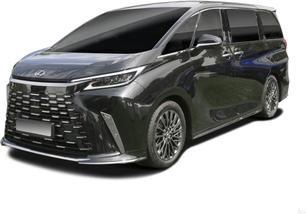
But what about a plush people mover? There are very few of these available in Australia and they don’t sell in huge numbers. But Lexus believes there is a market for such a model and it has just launched the big and bold LM. The hybrid-only range is a unique proposition and the LM should hold appeal for limo and tourism operators, and larger cashed-up families.
This initial launch drive was a slightly different format to usual. Given the intended use of the lounge-like model, Lexus arranged for us to be collected in the LM by a chauffeur and ferried from Melbourne to the Mornington Peninsula. From there we got behind the wheel for a brief drive, but many of my impressions will focus on the passenger cabin experience.
Note too that the LM500h does not land until early 2024, so we only sampled the LM350h AWD.
So jump aboard and let’s see if this Lexus can do everything the LS can do - and maybe even a little bit more.
Feels like lately all the Mercedes-AMG buzz has been at the smaller end of the scale.
Most recently, the screaming GLA 45 S has arrived in Australia, pumping out more kilowatts and newton-metres than any compact SUV has a right to.
But here, we're doubling the cylinder count to eight, arranging them in a vee, and lighting the wick on AMG's powerhouse mid-size sedan, the recently upgraded E 63 S.
While the ferocious twin-turbo V8 and the rest of this beast's powertrain are unchanged, the car has been brought up to speed with some aero-focused styling tweaks, Merc's latest 'Widescreen' digital cockpit, as well as the MBUX multimedia system, and a tricky new multi-function sports steering wheel.
The Lexus LM is going to be a niche model. This was not designed to appeal to people that may have bought a Toyota Tarago back in the day, or even a Kia Carnival now.
It has a specific purpose for ferrying people around in absolute comfort and at that, it succeeds in a big way.
It’s just a bonus that it’s great to drive.
Welcome to the automotive equivalent of a business class airline suite.
Note: CarsGuide attended this event as a guest of the manufacturer, with accommodation and meals provided.
The E 63 S fills its niche in AMG's Australian line-up perfectly. More mature than the brand's four-cylinder hatches and SUVs, but not as overbearing as some of its bigger sedan, GT and SUV stablemates. And its ability to seamlessly switch between serene comfort and dynamic performance has nailed the objective for this 2021 update.
Look, people movers are not considered the sexiest of automotive body styles, but that’s changing.
The Kia Carnival and Hyundai Staria are examples of good MPV design.
And the Lexus LM steps it up again.
It is based on Toyota’s TNGA-K architecture that underpins a bunch of Toyota and Lexus models, including the Lexus RX, and it measures a whopping 5.1 metres long and has a three-metre wheelbase.
It shares its underpinnings with the latest generation Japanese-market Toyota Alphard, which is a cult hit in Australia among the grey import set.
The front-end design is bold, with the latest take on Lexus’ big ‘spindle grille’, pinched slimline headlights and a stubby nose.
I am a big fan of this design. It is far more than a box on wheels and it has quite a bit of presence.
The interior design up front is modern Lexus, with a few familiar Toyota touches, and while it’s not exactly minimal, it’s still visually appealing.
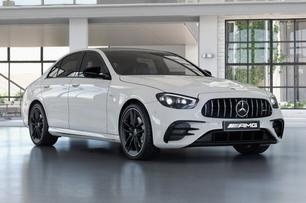
The E 63 S has been massaged for 2021 starting with flatter headlights, AMG's now signature 'Panamericana' grille, and a high gloss black flap across the top of the curved 'Jet Wing' section defining the lower part of the nose.
At the same time, the vents on either end of it are larger and feature twin transverse louvers to guide cooling air to wherever it's needed.
It's all about what AMG calls 'optimised aerobalance' but the form is just as appealing as the function. The characteristic 'Power Domes' in the bonnet dial up the muscle, as do the fat wheel arches (+27mm each side), and 20-inch rims with distinctive aero inserts.
This car's optional exterior carbon package consists of a front splitter, side sills, a flash near the fender badges, the exterior mirror covers, the boot lid lip spoiler, as well as the lower apron around the redesigned diffuser and quad tailpipes.
New, intricately styled LED tail-lights are also flatter, but there's even more going on inside.
A new AMG sports steering wheel features three rounded twin-spokes with new switches on the bottom to control the car's dynamic set-up.
It also picks up a new take on the small touch-sensitive controllers used to adjust the instrumentation and manage other functions like phone calls, audio and the cruise control.
Not sure I'm in love with them at this stage. In fact, the words fiddly, imprecise, and frustrating come to mind.
Nappa leather covering the superb AMG sports seats, upper dash, and door beltlines remains standard, but the show-stopper is the 'Widescreen Cockpit' - twin 12.25-inch digital screens for the MBUX multimedia interface on the left and instruments on the right.
The instrument cluster can be set to 'Modern Classic', 'Sport' and 'Supersport' displays, with specific AMG read-outs such as engine data, gear speed indicator, warm-up status, car set-up, as well as a G-meter and 'RaceTimer.'
To borrow an official automotive design term, it looks schmick. Overall, with touches like open-pore black ash wood trim, and brushed metal highlights, the interior looks efficient but classy, with an obvious attention to detail in the layout and its execution.
While most of the fun happens in the second row of the Lexus LM, there is a lot to like in the front compartment.
The dash is dominated by a large touchscreen that houses Lexus’ latest multimedia setup. The logical menu and uncomplicated sub-menus ensure this is an easy system to navigate. Speaking of, the in-built sat-nav is one of the better systems I have experienced.
Comfort isn’t just the domain of the second row - the driver’s seat is very supportive and comfortable, with power adjustment.
There’s plenty of glass including a smaller front quarter window that helps eliminate front blind spots, so forward visibility is exceptional. Rearward visibility is aided by the digital rear-view mirror that is designed to ensure privacy for second and third-row occupants. You don’t want the chauffeur spying on you while you’re sleeping, do you?
The other big tick for me is the driving position. Other people movers, namely the Hyundai Staria and Mercedes-Benz EQV, have very low window lines and it leaves you with a feeling of sitting on the car, rather than in it. I am sure it helps with extra light and it probably makes it easier for kids to see out of, but from a driving perspective, I find it a little disconcerting.
But the LM has flipped that. The front compartment is designed in such a way that it feels like a cockpit that you’re ensconced in. This helps the driver feel more connected with the car, and in the LM it feels like you’re sitting in the driver’s seat of a sporty sedan, not a five-metre bus. Very well done, Lexus.
And now to the main event - the second row.
Where to begin. Let’s start with space. Because there is so much of it. Unsurprisingly given the seating layout, there is an unending amount of head, leg, knee, bum, shoulder and whatever-else room. I can’t imagine anyone complaining about space back there.
Also, getting in and out is a breeze thanks to the sliding power doors on both sides. These can be opened from the front seat, and via several buttons in the rear.
Those captain’s seats are plush. Not quite Benz S-Class plush, but still.
They are adjustable six ways - power adjustable, of course - and they’re heated and ventilated. They recline almost flat, too, if you need a nap on the way to the country estate. And while you do that you can look up through the split sunroof, or close the shade a number of ways.
Is there a massage function? Of course there is a massage function. And it’s not bad. You can choose two settings - weak and firm.
Adding to the feeling of a business class airline seat, there is a fold-out table in the armrest, although it’s a smallish one. And there is dual-zone climate control in the rear.
There is a roof-mounted control panel for things like climate, sunshades and sunroof blinds, but much of this can also be controlled by the Apple iPhone-like devices clipped into both rear seats. These are closer to the seats, so it is easier to access than the roof.
Another function in the device is the Climate Concierge that features different modes - Dream, Relax, Focus, Energise. Depending on which one you choose, it alters the seat settings, massage, climate and lights to suit.
I love the massively wide side windows that are tinted (or privacy glass), too.
Other amenities include map pockets, knee and roof-mounted air vents and a 14.0-inch display screen that retracts from the roof and connects to an HDMI cable, allowing you to watch whatever you want.
The third row is not as appealing as the second. It is technically a three-person row, but the width and the fact that it has a sizeable gap in the centre suggests that this is best thought of as a six-seater van.
The seats are not as plush of course, so you might not want to spend too much time in that row unless you are a small child. But you do get USB-C ports, cupholders, air vents, lights, sunglasses holder, power side shades and grab handles.
Getting in and out of the third row can take a while. It’s all power adjustable, so you don’t have to lift anything heavy - but it takes a while for the second row seats to move forward and up.
With all seats in place the cargo space is limited. In fact, it’s just 110 litres.
That’s similar to what you get in a seven-seat SUV. But it did fit all our overnight luggage easily.
Drop the rear row and that expands to a maximum of 1191 litres in the 350h or 752 litres in the 500h.
All grades have a space-saver spare wheel.
At just under 5.0m end-to-end the E-Class sits in the upper range of the mid-size luxury spectrum. And almost 3.0m of that is accounted for by the distance between the axles, so there's plenty of space inside.
The driver and front passenger are provided with heaps of room to breathe, and there's a surprising amount of space for those in the back as well.
Sitting behind the driver's seat set for my 183cm (6'0”) position I had more than adequate head and legroom. But access to and from the back is a struggle for full-size adults.
The rear doors open out a long way, but the limiting factor is the size of the aperture, necessitating excessive contortion of the head and limbs to fold in and out of the car.
Connectivity runs to two (power-only) USB-C sockets in the front centre storage bin, as well as another USB-C (for power and multimedia) and 12-volt power outlet in the centre console.
Speaking of the front centre storage bin, it's a decent size and has a padded split lid so it can double as an armrest. There are two cupholders in the front console, a generous glove box, as well as long door compartments with recesses for large bottles provided.
There's a pair of USB-Cs along with another 12-volt socket in the back, sitting under the climate control panel with adjustable vents in the rear of the front centre console. Nice.
The fold down centre armrest incorporates a lidded (and lined) storage box as well as two pop-out cupholders. Again, there are bins in the doors with room for smaller bottles.
The boot offers 540 litres (VDA) of volume, and is able to swallow our three-piece hard suitcase set (124L, 95L, 36L) with room to spare, or the substantial CarsGuide pram, or the largest suitcase and pram combined! There are tie-down hooks to help secure loads, too.
Don't bother looking for a spare of any description, a repair/inflator kit is your only option. And the E 63 S is a no-tow zone.
From launch there will be two versions of the LM350h Sports Luxury on offer - front-wheel drive and all-wheel drive, priced from $160,888 and $165,888 before on-road costs respectively.
They both have seven seats across three rows and share the same four-cylinder hybrid powertrain, but an even more high-end version is on the horizon.
The LM500h will land in January 2024, priced from $220,888, and it adopts a newer more powerful hybrid powertrain. Something else that sets the LM500h apart is the seating layout - it is a four-seater. Behind the driver and front passenger compartment are two big captain’s chairs that recline flat if required. Decadent luxury. Or so the pictures suggest. We will have to wait until the New Year to sink into the sumptuous seats.
Given the positioning and interior layout, the LM will probably not appeal to people looking at a Kia Carnival, or who would have opted for the departed Toyota Tarago. It will, however, appeal to large families that aren’t short of a dollar, airport limo operators, and even as tourist transport.
Thankfully, there’s a substantial amount of standard gear fitted as standard in the LM.
The only difference in spec between the two 350h grades is the addition of all-wheel drive. Otherwise you’ll find keyless entry and start, front heated seats, automatic retractable side steps, power opening side doors, rear privacy glass, a pair of sunroofs, and semi-aniline or L-aniline upholstery.
Tech-wise, there is a digital rearview mirror, and a 14.0-inch touchscreen, a 12.3-inch digital instrument cluster, a head-up display, seven USB ports, a smartphone charger and a rear 14.0-inch multimedia display.
The 500h adds niceties like a separation partition with elevating and dimmable glass, that doubles as a 48.0-inch widescreen display to watch films and TV, or take conference calls with. It also gets two partition glove boxes, a pair of umbrella holders, two second-row phone chargers, a 23-speaker Mark Levinson 3D audio system and more.
In terms of rivals, there really aren’t many other luxury people movers on the market. Aside from the Mercedes-Benz V-Class and all-electric EQV, there are higher-grade versions of the Volkswagen Multivan, and the LDV Mifa 9 EV.
So, first of all, let's get the price out of the way. At $253,900, before on-road costs, this car's competitive set is a bruising, all-German trio comprising the Audi RS 7 Sportback ($224,000), BMW M5 Competition ($244,900), and Porsche Panamera GTS ($309,500).
And no surprise, it's loaded with all the luxury features you'd expect in this part of the market. Here are the highlights.
On top of the standard performance tech and safety equipment fitted to the E 63 S (covered later in this review), you'll also find: Nappa leather trim (seats, upper dash, upper door cards, and steering wheel), MBUX multimedia (with touchscreen, touchpad, and 'Hey Mercedes' voice control), 20-inch alloys, three-zone climate-control, interior ambient lighting, auto LED headlights (with 'Active High Beam Assist Plus'), eight “energising comfort programs” (with 'Energising Coach'), an 'Active Multicontour' front seat package, the 'Air Balance' package (including ionisation), and keyless entry and start.
Also included are the the 'Widescreen' digital cockpit (twin 12.25-inch digital screens), 13-speaker Burmester audio with digital radio, Apple CarPlay and Android Auto, a panoramic sunroof, adaptive cruise control, a head-up display, augmented reality satellite navigation, 'Parktronic' self-parking, electric front seats, seat cooling and heating front (heated rear), heated front centre armrest, a power-adjustable steering column, auto rain-sensing wipers, a wireless device charger, illuminated door sills, as well Amazon Alexa, etc, etc, etc.
And our test car also featured a couple of tasty options. An exterior carbon package ($7500), and AMG's professional grade ceramic composite brakes ($15,900), for an as-tested price of $277,300.
There are two hybrid powertrains available. Coming next year, the LM500h combines a 2.4-litre turbocharged petrol engine and a hybrid setup, making for power and torque of 202kW and 460Nm respectively. It is all-wheel drive and is paired with a six-speed automatic transmission.
The LM350h comes with a 2.5-litre naturally aspirated petrol engine and a parallel hybrid system, offering up a total system output of 140kW and 239Nm. The 350h comes in front or all-wheel-drive guise and uses a continuously variable transmission (CVT).
The E 63 S is powered by the M178 version of the all-alloy 4.0-litre twin-turbo V8 engine used across numerous AMG models from the C-Class up.
Thanks in no small part to direct injection and a pair of twin-scroll turbos (located in the engine's 'hot vee' to optimise throttle response), this all-alloy unit produces 450kW (that's 612hp) from 5750-6500rpm, and 850Nm from 2500-4500rpm.
And as per standard AMG practice for its Vee engines, this car's powerplant was built from scratch by a single engineer in Affalterbach. Thank you Robin Jäger.
AMG calls the nine-speed transmission used in the E 63 S an MCT, which stands for Multi-Clutch Technology. But it's not a dual-clutch, rather a normal auto transmission using a wet clutch as opposed to a conventional torque converter, to connect it to the engine on take-off.
Drive goes to all four wheels via Merc's '4Matic+' AWD system, built around an electromechanically controlled clutch connecting the permanently driven rear axle (with locking diff) variably to the front axle.
As you’d hope with an all-hybrid line-up, the LM excels when it comes to combined cycle fuel efficiency. The 350h FWD sips just 5.5 litres per 100 kilometres, while the AWD version is 5.6L/100km. The 500h is a little thirstier at 6.6L.
Our drive was so brief we did not get to record an on-test fuel figure.
The theoretical range of the LM, considering the 60-litre fuel tank and 5.5L/100km (350h) and 6.6L/100km (500h) fuel consumption figures is about 1000km.
Claimed fuel economy for the combined (ADR 81/02 - urban, extra-urban) cycle is 12.3L/100km, the E 63 S emitting 280g/km of CO2 in the process.
That's a pretty hefty number, but in line with this car's proportions and performance potential.
And Merc-AMG has gone to great lengths to minimise fuel use. As well as the standard 'Eco' stop-start function, in the 'Comfort' drive program cylinder deactivation becomes active, the system able to drop four cylinders anywhere between 1000 to 3250rpm.
There's no physical hint of half the cylinders leaving the party. The only clue is a blue icon on the dash indicating a temporary shift to V4 operation.
Despite all that effort, however, we saw a dash-indicated 17.9L/100km over a mix of urban trundling, highway cruising, and some spirited dynamic assessment.
Recommended fuel is 98 RON premium unleaded (although it'll run on 95 at a pinch), and you'll need 80 litres of it to fill the tank. That capacity translates to a range of 650km according to the factory claim, and 447km using our real world result.
As mentioned earlier, I spent much more time in the second row as a passenger than I did behind the wheel of the LM350h. But it was enough time to capture some initial high-level drive impressions.
But let’s start in the rear. The ride in the second row is comfortable - as you’d hope. Our trek from Melbourne’s inner north down to the Mornington Peninsula included a lot of freeway, which was smooth. The only thing that disturbed the peace was a chunky bridge join that caused a bit of a thump. But we were hardly disturbed.
Back in the driver’s seat, there’s a lot to like about how the LM350h drives. First of all, it feels smaller on the road than its ample dimensions would otherwise suggest. It even feels relatively light on the road.
After the LM, I drove a Mercedes-Benz EQE SUV that has a similar kerb weight (the Lexus is about 2.4 tonnes), and the LM felt lighter.
The hybrid powertrain is responsive enough, offering decent acceleration from a standing start. The more potent 500h will of course be quicker.
The transition from electric to petrol propulsion is pretty smooth in Lexus (and Toyota) models these days, and the additional noise-deadening materials in the LM ensure it’s subtle.
The 2.5-litre petrol engine is really only noticeable when accelerating hard, and the CVT a slight drone, but it’s in no way unpleasant.
Otherwise it’s a superbly refined and quiet cabin on all but the absolute worst road surfaces. Whisper quiet power windows adds to that feeling of luxurious refinement.
Given the brief time behind the wheel, we didn’t get to test the handling capability of the LM, so that might have to wait for a review in the New Year.
The steering is heavily weighted and doesn’t feel overly responsive, but it’s perfectly suited to this sort of vehicle.
That supple ride we experienced in the rear was also evident behind the wheel.
This was especially impressive on a couple of pock-marked peninsular back roads. The ride is also much more compliant than the Mercedes-Benz EQV I tested early in 2023.
AMG's major goal with this upgrade of the E 63 S was to maintain its dynamic response and ferocious performance, but dial in the extra comfort customers had said they wanted.
So, the 4Matic+ AWD system has been fine-tuned for more smoothness as has the Comfort option in the dynamic set-up. But we'll investigate that shortly.
First, that 4.0-litre turbo V8 in the nose is claimed to slingshot this roughly 2.0-tonne sedan from 0-100km/h in just 3.4 seconds, and it feels every bit that fast.
With 850Nm available from 2500-4500rpm and nine gear ratios to help keep you operating in that Goldilocks band, mid-range thrust is monumental. And thanks to the bi-modal sports exhaust it sounds beautifully brutal.
The nine-speed auto's wet clutch, as opposed to a conventional torque converter, is designed to save weight and optimise response. And while some will tell you an auto with one input shaft is never going to be as fast as a dual-clutch with two, shifts are rapid and direct. The wheel-mounted shift paddles are larger and set lower, as well.
The AMG 'Ride Control+' suspension with multi-chamber air suspension and adaptive damping is amazingly good. The underlying set-up is by multi-links front and rear, and despite riding on big 20-inch rims wrapped with low-profile, high-performance Pirelli P Zero rubber (265/35 fr - 295/30 rr) the Comfort setting is incredibly... comfortable.
Slip into 'Sport' or 'Sport+' and the car immediately feels tauter but far less compliant and forgiving. An impression reinforced by the engine, transmission, and steering shifting to a more buttoned-down mode at the same time.
The standard dynamic engine mounts play a big part here. Able to make a soft connection for maximum comfort, but switch to a rigid link when required.
But no matter which mode you're in, the car is well damped and feels beautifully balanced in quick cornering. And the E 63 S's electro-mechanically-assisted variable-rate steering is progressive, feelsome, and accurate.
The 4Matic+ AWD system is built around an electromechanically controlled clutch connecting the permanently driven rear axle (with locking diff) variably to the front axle.
Torque distribution happens imperceptibly, the big V8 putting its power down emphatically, with various electronic systems tieing up the loose ends as you aim up for the next corner.
There's even a 100 per cent RWD Drift mode available in the Race setting, but without a race circuit at our disposal this time around that'll have to wait for another time.
The optional ceramic brakes feature huge rotors and six-piston front calipers, and stopping power is immense. And the good news is they operate quickly but progressively at normal pottering around town speeds. No warming up required to get them in an optimal temperature zone (as can be the case with other ceramic set-ups).
The LM is yet to be crash tested by ANCAP, and it is unclear if it will be given the fact that it’s a niche model. However, as with other current Lexus models, it has a long list of standard safety gear.
The safety suite, including intersection assist, and a pre-collision system with vehicle, pedestrian, bicyclist and daytime motorcyclist detection.
It also comes with emergency steering assist, full-speed radar cruise control, ‘Curve Speed Reduction’, ‘Lane Trace Assist’ with lane-departure alert, automatic high beam, ‘Road-Sign Assist’ (speed signs only), ‘Emergency Driver Stop System’, a blind-spot monitor and rear cross-traffic alert.
The three-pointed star's white-coated boffins have gone to town on the E 63 S, and the car is as good as it currently gets in terms of active and passive safety technology.
You could argue this car's dynamic ability is its strongest contributor to crash-avoidance. But a broad suite of features, specifically designed to keep you out of trouble includes, forward and reverse AEB (with pedestrian, cyclist, and cross-traffic detection), traffic sign recognition, 'Attention Assist', 'Active Blind Spot Assist', 'Active Distance Assist', 'Active High Beam Assist Plus', 'Active Lane Change Assist', 'Active Lane Keeping Assist', and 'Evasive Steering Assist.' That's a lot of assists.
There's also a tyre pressure monitoring and pressure loss warning system, as well as a brake priming function (monitors release speed on the accelerator pedal, moving pads factionally closer to the discs when required), and brake drying (when the windscreen wipers are active the system periodically applies just enough brake pressure to wipe water off the brake rotors to optimise wet weather efficiency).
But if an impact is unavoidable the 'Pre-Safe Plus' system is able to recognise an imminent rear-end collision and fire up the rear hazard lights (at high frequency) to warn following traffic. It will also firmly apply the brakes once the vehicle is stationary to minimise the risk of whiplash injuries if the car's then hit from behind.
If the potential crash is coming from the side, 'Pre-Safe Impulse' inflates air chambers in the side bolsters of the front seat backrest (within a fraction of a second) moving the occupant to the side towards the centre of the car, away from the impact area. Amazing.
As well as that, there's an active bonnet to minimise pedestrian injuries, an auto emergency call function, 'Crash Response Emergency Lighting', even a first aid kit and hi-vis vests for all occupants.
For the record, the current E-Class received a maximum five-star ANCAP assessment in 2016.
When you buy a Lexus, you get a bit more than a car. The brand has a customer loyalty program - Lexus Encore - and depending on what model you buy, you are eligible for some pretty cool discounts, bonuses and experiences.
There are three tiers, depending on your model. UX, NX, RX and ES fall under regular Encore, and electric models the RZ and UX300e sit beneath Electrified Benefits. But the LM, as well as the LS, LC and LX are under Encore Platinum - the top tier.
That means access to the ‘On Demand’ program that allows access to another Lexus model for a few days or longer. So if you own an LC Convertible but need an RX for a few days to ferry people around, that’s all free. There’s valet parking service loans and more.
It also includes upgrades at Lexus partners. Our launch took us to Jackalope Hotel on the Mornington Peninsula, which is a Lexus partner, and you can get a bunch of extras here as a Lexus owner that other guests won’t get.
In terms of other ownership details, the LM is covered by a five-year, unlimited-kilometre warranty, and the servicing schedule is every 12 months or 15,000km.
Lexus is yet to announce the capped-price servicing details for LM, but it is expected to cover five years, and should be in the vicinity of approximately $700 per service.
All AMG models sold in Australia are covered by Mercedes-Benz's five year/unlimited km warranty, with 24-hour roadside and accident assistance included for the duration.
Recommended service interval is 12 months or 20,000km, with pricing for a three-year (pre-paid) plan set at $4300, a $950 saving overall relative to its three year, pay-as-you-go 'Service Solutions' capped price program.
And if you're happy to fork over a little more up-front, there's a four-year service deal at $6300, and five years coming in at $7050.