What's the difference?
Luxury vehicles are better because of the quality, reliability and care that Lexus has brought since 1990, upending the status quo like no other brand before.
The ES, however, has been an outlier.
Inexplicably inferior to the far-cheaper Toyota Camry on which it’s long been based on, the bloated mid-sized “Executive Sedan” series created especially for America ignored “The Relentless Pursuit of Perfection” ethos that Lexus originals like the LS, IS, LFA and even the most-recent NX have striven for.
The eighth-generation ES redesign, however, is different, despite remaining Camry-based, with an extended, beefed-up body and platform, multi-link rear suspension featuring adaptive dampers, an advanced new operating system that drags connectivity into this decade and an electric option.
Suddenly, the ES is poised to lure Polestar 2, Tesla Model 3 and Mercedes-Benz CLA buyers with a high-quality electric vehicle (EV) from Japan brimming with technology, refinements, space and features, at a price that cannot be ignored.
Has the ES finally understood the Lexus memo?
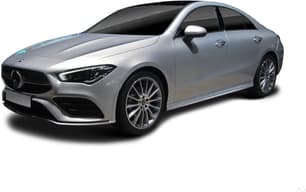
Mercedes-Benz’s Gordon Wagener is a car design rock star. He’s the guy that shapes the three-pointed star’s design strategy and a decade ago introduced the concept of ‘sensual purity’ as a key driver of the way the brand’s cars should look and feel. And this is the latest expression of that thought, the second-generation (C118) CLA four-door Coupe.
Wagener’s influence is critical here because the CLA is one of the most fashion-focused offerings in the ever-broadening Mercedes-Benz range.
But does the drive match the creative style? We got behind the wheel of the first model to arrive, the entry-level CLA 200, to find out.
Since launching in Australia in 1992, the ES has always felt like what it clearly was: an overpriced and overblown Camry that never quite drove well enough to justify its premium positioning.
It felt sub-Lexus in most of the ways that mattered.
The ES350e, however, builds on the Camry basics with unique styling, packaging, steering, suspension and powertrain, while evolving the technology and luxury with the times.
A few ergonomic missteps aside, this is by far the best version ever, and an exceptional value proposition to boot.
In EV guise at least, four decades and eight generations in, the ES has finally come of age.
The Mercedes-Benz CLA 200 is sleek, well-equipped, and beautifully engineered. That said, it’s pricey. You can get a car that’s 80 percent as good for 50 per cent of the price. But getting that extra 20 percent in terms of refinement, dynamic ability and design sophistication is what you’re paying for. If you’ve got the extra dough, top dollar buys you a spot on the top shelf.
Note: CarsGuide attended this event as a guest of the manufacturer, with travel and meals provided.
The Lexus is considerably taller now. That’s because it rides a little higher, like a crossover sedan. Which the traditional Lexus demographic ought to love.
The dimensions tell the story, being 5145mm long (+170mm over the previous ES), 1920mm wide (+55mm), 1555mm tall (+115mm) and with a 2950mm (+80mm) wheelbase.
The fastback styling, aiding aerodynamics, fits in with the current, rakish Toyota Crown sadly not seen in Australia that the ES shares much of its TNGA-K architecture with.
Its low bonnet line, fresh LED lighting signatures, blanked-out grille and edgy details like the heavy side crease lines, unique recessed door handles, frameless mirror casings and 21-inch turbine alloys, give the Lexus EV a boldness that finally banishes the old blobbiness.
Against the sparkling metallic silver, even the hockey-stick side motif has a place, though it may not be to everybody’s taste.
If the ES’ architectural exterior seems fussy, the interior is far calmer, with an inviting warmth and elegant layout that, while still minimalist, avoids the cold, bare, buttonless and oversized screen sameness of many premium EVs nowadays.
Oh, and it’s also massive inside.
While the way a car looks is a subjective call, and as always, your thoughts are welcome in the comments below, I’m putting it out there… this is a beautiful machine. And Gordon Wagener’s not pulling any punches, either. He thinks it has the potential to become, “a modern design icon.”
The long bonnet, cab-rear, wide-track proportions sit within a slightly larger footprint. The new CLA is marginally longer, wider, lower overall, and has a lengthier wheelbase than the model it replaces. And the car’s intricate mix of gently curved surfaces and hard lines is expertly managed, with a standard AMG body kit, complete with 18-inch rims, adding just a hint of macho intent.
The angle of the shoulder runs from this character line, virtually unchanged up to the roof, and the inward slope of the side glass (car designers call it tumblehome) is quite pronounced. And the sweeping curve at the top of the front guards is defined by hard strakes on the outer edges of the bonnet.
The rear view is arguably the CLA’s most appealing angle with the intersection of the sloping turret, boot, and rear guards neatly resolved.
It’s super slick aerodynamically, as well, boasting a Cd of 0.23, running a close second to it’s A-Class sedan sibling (0.22) which Merc claims as the world’s most aero-efficient series production four-door.
But what about the inside? Well, the biggest visual feature is the customisable MBUX media and data interface, expressed dramatically through a pair of 10.25-inch widescreens.
The info available and number of configurations offered is mind-blowing. It’s very 2019 and spot-on target for the digital generation.
Piano black surfaces around the dash and console lift the tone (but pick up the fingerprints) while the signature turbine-style vents add another flash of visual interest without compromising function.
Other highlights include front seats with racy one-piece backs (reflected on the top of the outer rear seats, as well), frameless doors enhancing the coupe feel, and neatly detailed stitching around the dash and doors.
Fun fact time. The latest ES is also larger than the original Lexus LS400 created to challenge the Mercedes-Benz S-Class in 1990. And the second-gen version from 1995. And the third released in 2001.
Wide doors and a higher-set cabin than in most sedans allow for effortless entry to, and egress from, a comprehensively modernised and impressively roomy interior that progresses in some areas and regresses in others.
Let’s begin with the positives by championing the shapely front seats that cosset and support beautifully the moment you sink yourself in them. Even after hours at the wheel. And heating elements add to their cosy feel on a frosty morning.
In fact, with its subtle diffusion, the highly effective heat-pump-aided climate control system feels lush, radiating within a cocooning, quiet environment that helps isolate its occupants from the outside world.
It isn’t difficult to find a commanding driving position either, assisted by exceptionally large mirrors and a crystal-clear surround-view camera display that help overcome poor side and rear vision that comes with the ES’ inherent shape.
Employing Toyota’s new operating system, as also found in the latest RAV4, results in improved multimedia connectivity, speed and functionality, with localised voice control tech that now understands Australianisms like ‘take me to Woollies’. The audio quality is also great.
Access to most controls is fine, with a special shout out to a redesigned gear lever that feels reassuringly intuitive (not a given in the electrified age), while there is a decent level of storage within the centre console, under it, in the door pockets (though they are too narrow for one-litre bottles) and in the glovebox if you remove the encyclopaedic handbook.
Banishing the Camry-esque mess of the old dashboard design, the new ES brings a far simpler look and cleaner layout, and is better for it.
But perhaps Lexus has gone too far the other way.
If it weren’t for the soft rubber fascia top, lovely bamboo panel inserts, head-up display and sumptuous seating material, it would seem more Chinese generic than Japanese luxury.
Plus, the freshly designed steering wheel’s powdery sheen also feels sub-brand. Like a flimsy handshake, it lacks… substance. Owners of previous models will immediately notice.
Worse still, while the infuriating capacitive switches that render operating the cruise control a guessing game on other contemporary Lexuses like the latest NX and RX have thankfully disappeared here, so have illuminated buttons.
Lexus crows on about the ES’ “hidden switches” on the steering wheel spokes and lower centre console area, with symbols that remain invisible until a hand hovers over them. A stupid guessing game you play at, say, 80km/h, only then can you see where to land a digit, demanding the driver’s attention and consequently taking eyes off the road for a moment. How did this unnecessary distraction and complexity get into production? Are legacy carmakers this bereft of sensibility?
So is eliminating climate controls buttons for touchscreen access only, because Elon Musk decided it was cool a decade ago. And remember how Lexuses used to have a large knob protruding out the side of the binnacle for driving mode settings? Look at last year’s ES to remind yourself. Now, you’ll again need to dive into the central display, rather than intuitively twist or push something probably while travelling at speed. First Mazda CX-5. Now Lexus. Japan, you’re better than this.
Enough whining.
Used examples of the ES enjoy a stellar career as high-end taxis and the reason has always been because of the rear seat.
This time around, with a longer wheelbase than before, there’s even more space for heads, shoulders, legs and knees. And the Lexus goes the extra mile again with perfectly comfortable outboard cushions and (fixed) backrests, a wide centre armrest, face-level vents, USB-C ports, overhead lighting, door sunshades and even longer doors to enter and exit from.
As with the front, the rear’s premium ambience is enhanced by the trim and textures that feel a cut above.
Further back, the ES’ cargo capacity is a handy 517 litres (VDA), and the floor is wide and flat, though the backrests are fixed so the only extra versatility is a ski port into the cabin, while the provided charge cables are not secured anywhere, rolling around inside the boot.
Underneath the floor is a wheel well, but no spare tyre; instead there is a repair kit that cannot fix blowouts, always destroys the tyre after use (even after a minor puncture) and is hundreds of dollars to replenish. No thanks. These are totally inadequate for Australian roads.
Despite a two mm drop in overall height, the CLA’s front headroom has been extended by 17mm, and there’s lots of room up front, with storage running to two cupholders in the centre console, a lidded bin/armrest between the seats (including twin USB ports), an overhead sunglass holder, decent door pockets with room for bottles and a medium-size glove box.
There’s also a mat for wireless device charging at the front of the centre console, complete with another USB input (just in case).
But what does that sexy, sloping roofline do for space in the rear?
Sitting behind the driver's seat set to my (183cm) position, there’s adequate legroom, but despite Merc claiming an extra 3.0mm of headroom, my noggin made firm contact with the headliner.
It’s worth remembering this is a coupe-style four-door, with the packaging compromises a swoopy roof brings. You could call it a ‘2+3’, with a couple of doors added to make access to the back seats easier.
A centre fold-down armrest incorporates two cupholders, again there are generous pockets in the doors with room for bottles, map pockets on the front seatbacks, and adjustable ventilation outlets set into the back of the front centre console are a welcome inclusion.
There are three belted positions across the rear, but the adults using them for anything other than short journeys will have to be good friends and flexible. Kids will be fine.
Boot volume is a healthy 460 litres (VDA), which is down 10 litres on the first-gen car, but the aperture has been widened by no less than 262mm, and a 40/20/40 split-folding rear seat opens up extra space. There are tie-down hooks, a 12-volt outlet and elasticised storage pockets either side of the load space to further enhance useability, plus a cargo net is included.
No news on towing capacity at this stage, and don’t bother looking for a spare, the tyres are run flats.
Now, the biggest news is that going electric costs just $2000 more than the established 300h hybrid redesign that is right behind the EVs.
Starting from $77,000 before on-road costs, the electric ES range is basically an all-in-one package with no options bar the powertrain.
The 350e Sport luxury grade is loaded, with adaptive LED headlights, leather upholstery, radiant heating climate control, a head-up display, a 14-inch touchscreen with panoramic-view monitor, wireless Apple CarPlay and Android Auto, twin wireless phone chargers, five USB-C ports, 17-speaker premium audio, a panoramic roof with sunshade, powered/vented/heated front seats and steering wheel with driver’s side memory settings, acoustic side glass, rear door sunshade, a powered boot lid, easy-close doors, automatic parking, adaptive dampers and 21-inch alloys shod with Michelin tyres. Classy.
It also brings paddle shifters for five levels of regenerative braking and an artificial sporty exhaust mode, as well as a plethora of advanced driver-assistance systems (ADAS) including autonomous emergency braking (AEB). More on safety later on.
There’s also a five-year free subscription to Lexus’ Connected+ services, allowing for a range of benefits including remote vehicle functionality and location if stolen, among other features, as well as six years of a Connected Media subscription.
Another $7000 buys the 500e Sport Luxury, adding a second electric motor that’s located on the rear axle for all-wheel drive and significantly extra performance, as well as an artificial manual mode that holds each fake gear ratio to the point it seems like it’s bouncing off a rev limiter. Weirdly entertaining.
Given this is now essentially a full-sized sedan, $77,000 buys a lot of EV metal compared to the properly mid-sized Polestar 2, Model 3 and Mercedes CLA alternatives.
Only the MG IM5 range, which is a big and bulbous liftback from China, substantially undercuts the ES.
That the Lexus now looks like a Lexus tops off an undeniably compelling value proposition.
In Australia the CLA 200 weighs in at $59,500, before on-road costs, which is plenty, but the all-wheel drive CLA 250 ($68,800) will join it early in 2020, so the range will line up against the likes of BMW’s 4 Series Gran Coupe, even the Audi A5 Sportback.
The Mercedes-AMG CLA 35 ($83,400) arrives before the of 2019, with the full-fat CLA 45 S scheduled for Q1 2020 (estimated circa $95,000).
For that $60K price tag the CLA 200’s standard features list includes, dual-zone climate control air, sports seats, ambient (interior) lighting, ‘Artico’ and ‘Dinamica’ trim (faux leather and suede, respectively), the twin 10.25-inch digital media and instrument screens (running the ‘MBUX’ interface), an AMG styling pack (including 18-inch alloy wheels), active cruise control, auto headlights, keyless entry and start, LED headlights, DRLs and tail-lights, a leather multi-function, flat-bottom sports steering wheel, sat nav, park assist (including a reversing camera), rain-sensing wipers, wireless phone charging, ‘Hey Mercedes’ voice control, and nine-speaker audio including digital radio as well as Apple CarPlay and Android Auto.
All CLAs can also be hooked up (via a smartphone app) to the ‘Mercedes me Connect’ remote connectivity system, allowing access to locking/unlocking the doors, tracking and locating the vehicle, retrieving maintenance and service information, and more.
For the record, our test example was loaded with five option packages, adding no less than $13,630 to the price tag for a total of $73,130. Specifically, the ‘AMG Exclusive Package’ ($3190) – Heated and cooled front seats, ‘Lugano’ two-tone leather upholstery (with contrast top-stitching), adaptive damping, and ‘Energising Comfort Control’, the ‘Communications Package’ ($2490) - Head-up display and Burmester 590W, 12-speaker ‘surround sound’ audio, ‘Driver Assistance Package’ ($1790) – ‘Active Distance Assist’ (including ‘Cross-Traffic Assist’), ‘Driving Assistance package Plus’, ‘Lane Change Assist’, ‘Extended automatic Re-start’ (in traffic), and ‘Route Based Speed Adaptation’, and ‘Seat Comfort Package’ ($1290) - Electrically adjustable front seats, memory function for driver’s seat, exterior mirrors and head-up display (if fitted), heated front seats, and passenger mirror with reverse parking position, and ‘Vision Package’ ($2490) – ‘Adaptive Highbeam Assist PLUS’, ‘Multibeam’ LED headlights, panoramic electric sunroof, ‘Parking package HIGH’ (featuring 360-degree camera).
Under the ES350e’s bonnet is a permanent-magnet synchronous electric motor, that sends 167kW of power and 269Nm of torque to the front wheels via a single-speed transmission. It is capable of going from zero to 100km/h in 8.0 seconds flat, on the way to a top speed of 160km/h.
Choosing the ES500e adds an 88kW/170Nm electric motor located on the rear axle, for a total of 252kW of power (Lexus does not quote a combined torque figure) and AWD. This slashes 2.5 seconds off the 0-100km/h time, to just 5.5 seconds, while boosting top speed to 180km/h.
The AWD system can distribute up to 100 per cent of the available torque to whichever axle needs it for optimum traction, though in normal conditions the front/rear split when cornering is between 80/20 and 25/75.
Four driving modes are offered: Eco, Normal, Sport and Range (to maximise distance efficiency), while a Custom setting allows personalisation by altering the various powertrain, steering and suspension settings.
The CLA 200 is powered by Merc’s 1.3-litre (M 282), direct-injection four-cylinder turbo-petrol engine driving the front wheels through a seven-speed dual-clutch auto transmission (with paddle shifters on the wheel).
It’s the product of a joint development with Renault, and outputs are 120kW at 5500rpm and 250Nm at 1620rpm, which is pretty impressive for such a small capacity unit.
The single turbo features an electronically controlled wastegate and flexible charge pressure control to optimise boost across the entire rev range (rev ceiling is 6300rpm), with an equal focus on power, step-off throttle response and fuel efficiency.
Integrated into the TNGA-K architecture low down between the axles, the ES350e's 74.7kWh lithium-ion battery offers a WLTP range of 510km, which is 45km more than the 500e AWD’s 465km WLTP rating.
Driven at sustained highway speeds of up to 110km/h, via some fast corners as well as through inner urban streets, we were on track to achieve about 380km between charges.
Lexus says the ES350e's WLTP energy consumption is 16.4kWh/100km, or 1.5kWh better than the 500e AWD.
Of the four driving modes – Eco, Normal, Sport and Range – Range locks in front/rear torque distribution to 70/30 whilst restricting outputs to maximise efficiency.
The ES offers 22kW three-phase AC charging, and a maximum of 150kW DC charging.
Claimed fuel economy for the combined (ADR 81/02 - urban, extra-urban) cycle is 5.7L/100km, the CLA emitting 130g/km of CO2 in the process.
At just over 1.4 tonnes it’s fairly hefty for its size, but at partial load between 1250-3800rpm two of the engine’s four cylinders shut down to improve economy. ‘ECO’ mode dampens performance in the name of improved economy, plus stop-start is standard.
And over roughly 200km of freeway, city and suburban running we saw an average of 7.5L/100km courtesy of the on-board read-out.
Minimum fuel requirement is 95 RON premium unleaded, and you’ll need 43 litres of it to fill the tank, which at our real-world average delivers a range of approximately 575km.
Arguably the biggest difference from behind the wheel in the latest ES is not its larger body or the 350e’s single-motor EV powertrain, but the deeper changes made to the TNGA-K architecture that complement it.
While obviously still very related underneath to the previous model’s platform that’s also shared across most mid-sized Toyota and Lexus models, the extended wheelbase, stronger body, heavily revised steering and suspension geometry up front and a multi-link rear end in place of the old trailing arm-type set-up really switch things up.
In the 350e, they transform the ES from a bloated Camry to a proper, athletic-ish Lexus.
Like in most EVs, that starts with instant, rich acceleration and super-smooth power delivery, that translates to immediate throttle response and strong performance. Even in Eco. Select Sport, and you’ll enjoy a feisty, fast point-to-point luxury sedan. Rapid refinement.
That would be a waste if the chassis wasn’t up for some cornering hijinks, which – thanks mainly to the slicker steering and new independent rear suspension – the ES executes with confidence and poise.
Along our ragged hilly road test route festooned with potholes, broken bitumen edges and off-kilter camber, where the old one would sometimes struggle to maintain the driver’s chosen line, this one zips straight through, without being bumped out of shape.
Now, the steering isn’t especially sharp or tactile to the point where the driver feels connected to or as-one with the road, but then it’s not nervous or slavishly following each contour to the nth degree, either, so hits a handling happy medium.
The new adaptive dampers no doubt help keep everything in control here, but their bigger talent is soaking up the bumps and keeping everything cushy, comfortable and quiet – words we would never have collectively described any previous ES, especially ones wearing 21-inch wheels like today’s car. Quality Michelin tyres help.
Apart from a trigger-happy bleating driver monitor, the ADAS tech is sufficiently tuned for Australian road conditions, and that also helps maintain dynamic decorum.
Overall, then, at least in this initial launch driving phase, the new 350e feels safe and planted like a modern Camry to drive, but with a newfound polish and sophistication to finally leap-frog its proletarian Toyota fraternal twin and justify the hefty price difference.
The ES is now a relaxing pleasure to drive, with just enough talent to engage a keener driver. Yes, there are more fun and exciting luxury sedans out there, but this Lexus finally earns its stripes from behind the wheel.
And for that we’re pleasantly surprised and definitely somewhat astounded.
So, despite the engine’s small capacity the addition of a turbo means peak torque (250Nm) arrives at just 1620rpm. Power delivery is linear and mid-range acceleration is healthy. Claimed 0-100km/h acceleration is 8.2sec, which is neither sluggish nor particularly fast, but performance is more than adequate around town and on the highway.
The seven-speed dual-clutch auto shifts smoothly, but not particularly rapidly, although a switch to manual mode and use of the wheel-mounted paddles means you can be more selective about which ratio you’re in and for how long.
Standard suspension set-up is strut front, multi-link rear, with many of the components made from aluminium to reduce unsprung weight, and the CLA feels nimble through twisting backroad bends.
Our test car was optioned with the AMG Exclusive Package, which includes adaptive dampers. And no surprise ‘Sport’ mode is severe, and the fillings in your teeth (unless you’re one of those strange people that don’t have any) will be in danger of rattling loose over anything other than a billiard table smooth surface.
By contrast, ‘Comfort’ lives up to its name with a supremely compliant ride without any sacrifice in terms of balance and (taut) body control. The standard 18-inch rims, shod with 225/45 rubber, don’t put a disenable dent in proceedings, either.
The electro-mechanical steering points accurately and delivers a good connection with what’s happening at the front wheels. Assistance is subtle.
Brakes are vented discs up front, with solid rotors at the rear. Purely in the interests of a full and well-rounded review we enthusiastically pushed through some lengthy B-road sections, and the pedal remained firm and consistent.
In short the CLA is a refined city coupe that doubles as a comfortable touring car.
There is currently no ANCAP crash-test rating for the Lexus ES. But it does come with a long list of safety features.
Along with the AEB system that detects bikes, motorcycles and pedestrians, you’ll find front and rear cross-traffic alerts, intersection collision avoidance support, front and rear parking support braking and Emergency Driving Stop System that, if the driver becomes unresponsive, automatically slows the vehicle to a gradual stop, activates the hazard flashers, unlocks all doors and places an SOS call to emergency services.
Other ADAS tech includes a blind-spot monitor, emergency steering assist, lane trace assist, adaptive cruise control, road sign assist and automatic high beam.
Additionally, an electronic door latch system features safe exit assist, that delays a door from opening onto oncoming traffic until the danger has passed.
Nine airbags are fitted, including a centre airbag up front, while three child-seat top tether latches and a pair of ISOFIX anchorage points are integrated into the ES’ rear seat.
It’s hard to fault Mercedes-Benz when it comes to safety, and the new CLA is loaded with standard active and passive tech.
Active safety tech includes ABS, BA, EBD, stability and traction controls, a reversing camera (with dynamic guidelines), 'Active Brake Assist' (Merc-speak for AEB), 'Adaptive Brake', 'Attention Assist', 'Blind Spot Assist' (with exit warning assistant), 'Cross-wind Assist', 'Lane Keep Assist', a tyre pressure warning system, a reversing camera plus ‘Parking Distance Control’ (front and rear), 'Traffic Sign Assist', a wet weather brake drying function, and ‘Active High Beam Control’.
If all that fails to prevent an impact you'll be protected by the 'Pre-Safe' accident anticipatory system, plus nine airbags (front, pelvis and window for driver and front passenger, side airbags for rear seat occupants and a driver's knee bag), and the 'Active Bonnet' automatically tilts to minimise pedestrian injuries.
There’s also an impact-sensing auto door unlock system, an auto emergency call function and crash responsive emergency lighting, plus a first-aid kit, warning triangle and (five) hi-vis vests in the boot are thoughtful additions.
The A-Class (which encompasses the CLA) was awarded a maximum five ANCAP stars in 2018, and for smaller occupants there are three child restraint/baby capsule top tether points across the back seat, with ISOFIX anchors on the two outer positions.
Lexus offers a five-year/unlimited kilometre warranty and roadside assistance, which is no more than average nowadays.
Service intervals are every 12 months or 15,000km, with capped-price servicing available at $625 annually for five years.
Starting from July 1, 2026, new ES owners can join the Encore Signature membership program. Free for five years, it is designed to keep them in the Lexus dealer network, providing access to free service loan vehicles, airport lounge access, hotel/restaurant offers and discounted fuel from Ampol, among other benefits.
There is also a five-year free subscription to Lexus Connected services with SOS and vehicle tracking features, as well as enhanced multimedia functionality.
At the time of publishing, there were 33 Lexus dealers across Australia.
The Mercedes-Benz range is covered by a three year/unlimited km warranty, which, like Audi and BMW continues to lag behind the mainstream market where the majority of players are now at five years/unlimited km, with some at seven years.
On the upside, Mercedes-Benz ‘Road Care’ roadside assistance is included in the deal for three years.
Service is scheduled for 12 months/25,000km (whichever comes first) with pricing available on an 'Up-front' or 'Pay-as-you-go' basis.
For the CLA, pre-payment delivers a $500 saving, with the first three services set at a total of $2050, compared to $2550 PAYG. Fourth and fifth services are also available for pre-purchase.