What's the difference?
What’s the closest thing we have to a modern-day Holden Statesman/Caprice?
If, like General Motors, you obliterate Australia’s Own from existence altogether, you’re left with time-honoured rivals also made in this country, like the Ford Fairlane, Chrysler by Chrysler and Toyota’s Crown and Avalon.
But they’re also all in history’s dustbin (well, the American ones, anyway), leaving the humble Camry as the sole living nameplate with any connection to Australian manufacturing.
And since the Lexus ES is a close relative, we’re going to take a fresh look at the latest version, with a view of it as a bit of a survivor of a bygone era – where aspirational vehicles were created from normal family sedans.
Just like the Fairlane, Crown and of course, the Caprice.
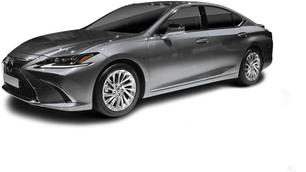
Launched in mid 2018 but facelifted in 2021, we test the ultimate version of the seventh-generation ES, the 300h Sports Luxury – or SL, if we’re to make yet another tenuous connection to long-gone Holdens.
Let’s go!
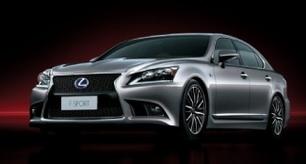
Almost 30 years after Lexus launched its original LS flagship sedan, the fifth generation of the car has arrived in Australia in what appears to be the brand’s never-ending battle to hunt down and beat Mercedes-Benz, BMW and Audi at their own game.
In some markets it looks as though Lexus is making headway. In the United States last year Mercedes-Benz was the best-selling luxury brand, followed by BMW and then Lexus. To give you even more insight, 50 per cent of all Lexus sales globally are in the US.
The story is different in Australia, with Lexus hardly a threat to the big three Germans, selling about a third less each month.
The Lexus LS is the Japanese prestige brand’s flagship and comes with a price that nudges up against formidable rivals. There’s the Mercedes-Benz S-Class, BMW 7 Series and Audi’s A8. Only the best cars from a few of the best brands in the world – no pressure, Lexus.
This may even be a reason to buy one – in that it’s not one of the traditional three. You could see Lexus as the popular underdog that in some ways does a better job than the usual suspects. A people’s favourite perhaps?
Just look at how often it’s mentioned in songs. According to lyrics.com.au the word Lexus has been used in 873 songs. Meanwhile Mercedes Benz appears in 500, Audi in 402 and BMW in 307.
With all this in mind we headed to the Australian launch to drive the LS 500 and its hybrid twin the 500h.
There’s no denying the Sport Luxury is imposing, spacious, plush, chock-full of kit, efficient, speedy and pleasingly relaxing up to a point.
But its interior is also dated and true ride comfort can be elusive beyond smooth roads for this top-of-the-line version to make the grade as a proper luxury sedan.
The ES 300h feels more like an aspirational Toyota than a Lexus for the (wealthier) masses, especially after recent triumphs like the latest NX and RX SUVs. The Camry DNA is difficult to disguise, as the amused strangers who sat in our test car uninvited thinking it was their Camry highlights.
Sure, the hybrid is no Chevy V8, but in many other ways, the Sport Luxury seems like the modern successor to the Holden Caprice experience.
The Lexus LS 500 and 500h are both exceptional cars. The ‘obnoxious’ styling especially to the grille makes the offerings from BMW, Benz and Audi look bland and overly corporate inside and out. It’s really in the dynamics department that the LS falls short of its rivals and only the LS 500 is enjoyable if you like to drive with a degree of conviction.
Both the LS500 and 500h, though, have wonderfully comfortable rides and this together with those sumptuous interiors makes these the perfect place to be if you’re in the back being swiftly and quietly taken to you next meeting.
For me the sweet-spot pick would be the LS 500 F Sport for its value and dynamic ability.