What's the difference?
The LDV G10 arrived on the scene in the van segment a few years ago, with the aim of upsetting the equilibrium.
It was a budget-priced, Chinese-made mid-size van with its target set squarely on appealing to customers who might have wanted a HiAce, but couldn’t afford one.
After almost four-and-a-half years on the market in Australia, the LDV G10 is better than ever. It has seen new additions in the cabin, more comfortable seats, and still offers big value for money.
But with the van market moving forward at pace, does the LDV G10 offer appeal beyond the sticker price? We tested the diesel auto model to find out.
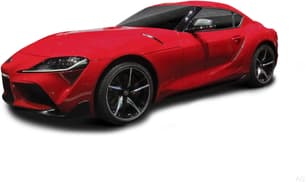
Thinking of a Toyota GR Supra, eh? Well, come on in, your timing is perfect.
See, up until halfway through last year the Toyota GR Supra only came with an automatic transmission, so I was jumping up and down to drive this version with the six-speed manual.
To me, it’s the way the Supra should be. Not having a manual gearbox in a car like this is like spending the day at an amusement park but not going on any rides.
Not only that but the Supra now has more power than it did when this generation launched in 2019.
See what I mean about your timing?
In a lot of ways the Supra is now complete.
Well that was what I wanted to verify when I tested the entry grade GT, along with what it was like to live with daily, the fuel consumption, warranty and even its practicality; fitting all of me and my stuff.
The LDV G10 is a solid option for those buyers who just want a van that gets the job done. It was decent with weight on board, but is probably better suited to parcel carriers rather than pallet shifters.
Safety levels are the biggest concern, as it is falling behind in the class when it comes to active safety tech, and its weak crash test score could be enough to rule it out for some customers.
The Toyota GR Supra GT is a superb sports car that’s relatively easy to live with in the city even with the manual gearbox and incredibly fun to drive out where the roads are free from traffic.
Not only is the GT great for the price compared to rivals but it’s the pick of the Supra range.
The more you see LDV G10 vans, the more regular they look. Familiarity breeds ignorance, I guess, but I still think the G10 looks smart.
It isn’t quite as boxy as some, with its sleeker front-end styling and almost sedan-like tail-lights helping it stand out from the ‘box-on-wheels’ stigma. It gets 16-inch alloy wheels as standard, and has halogen headlights and misses out on daytime running lights.
But it still is a box on wheels, measuring 5168mm long (on a 3198mm wheelbase), 1980mm wide and 1928mm tall. That makes it a darn sight smaller than the new HiAce, which stepped up significantly in size, and about on par with a Renault Trafic SWB or Ford Transit Custom 300S SWB.
The perceived build quality is mostly okay, though our test car had a few loose plastics on the outside and a seemingly mis-fit windshield rubber.
Perhaps it’s just me but I think the Supra looks exactly how it should look - like a Hot Wheels car.
Seriously, how good does the back view look? I love the spoiler that angles up like a crazy ski jump and the tail-lights integrated underneath it.
I love the huge rear hunches swollen like they’ve been stung by an enormous wasp. Check out the roof - see how it’s curved? And that bonnet with the vent above the wheel arches, I love the styling of every millimetre of this car.
But my neighbour doesn’t. I pulled up and said, “How good does this look?” And he gave me this stare like I was bonkers.
I don’t know, maybe you and I have the same excellent taste, but if there’s anything I hate it's anything that’s boring.
To me the BMW Z4 ‘twin’ is getting very close to the boring end in the styling department.
Talking of BMW, the Supra's interior is very BMW from the indicators stalks to the media system and climate control set-up.
It’s a modern and minimalist cabin… if only there wasn’t a cupholder right where my elbow goes. That’s a good place to stop and talk about the Supra GT’s practicality.
Those dimensions translate to a cargo space of 5.2 cubic metres, with a load space spanning 2500mm long, 1590mm wide (1270mm between the arches) and 1270mm tall. That mightn’t be big enough for you, and that’s too bad - there is no high roof version, nor a long-wheelbase model; but you could get an LDV V80 if you really need to step up in size… but we wouldn’t suggest you do that.
The payload for this model is 1010kg, which is decent but not benchmark-setting. It has a gross vehicle mass of 3000kg, meaning a kerb weight of 1990kg. The gross combination mass depends on the model: the GCM for diesel models is 5000kg for a braked trailer, while petrol models have a GCM of 4750kg for a braked trailer (auto) and 4500kg (manual). All models have a GCM of 3750kg for unbraked trailers.
The petrol versions have 1093kg of payload, if you prefer that fuel type. Interestingly, the manual versions have leaf spring rear suspension, while the auto models have coil springs as part of a five-link suspension architecture.
The load area has a six floor-mounted and four wall-mounted tie-down hooks, and the floor is lined with a vinyl covering while up to half-height the inner walls are lined, too. There are four lights mounted on the walls, which is handy for after-hours work.
And every LDV G10 comes with dual sliding side doors (some brands charge thousands more for this convenience), while the back door is a tailgate as standard, with the option of barn doors for diesel models.
For those who need to fork loads in, the barn doors are a no brainer, because the side door apertures (at 820mm wide) aren’t broad enough to load in using a lift. The tailgate also makes it very difficult to load weight in, as we found on test, as our mates at Crown Lifts had to use long tines to fork in our 750kg ballast.
When it comes to creature comforts up front, there is a pair of low-mounted pop-out cupholders, and an open storage area between the seats. There isn’t much covered storage, so if you often carry valuables, you may need to keep that in mind.
The seats are comfortable and offer good adjustment, and they’ve been changed since the diesel auto model launched. They’re no longer a cheap-feeling fabric, but rather a faux-leather accented, mesh-lined set of seats, and both have armrests. Nice.
The presentation is okay, but the ergonomics could be better. The touchscreen is mounted down lower than most, and means you may need to take your eyes away from the road because the controls are down even lower. And the USB? Near the floor.
That screen is still a 7.0-inch display, but now has the same software system as the newer models in the LDV range. That means a nice crisp colourful display with the added advantage of Apple CarPlay… if you can get it to work. We had a few issues when reconnecting a phone without re-starting the car.
The good news is that if you’re tall like me (189cm) and mainly legs then you’ll have more than enough legroom and headroom because the footwells are impossibly deep and the seats can be lowered to what feels like ground level.
Actually, you are almost at ground height in this car so the bad news if you’re as tall as me you’ll probably have to crawl out of the car on all fours.
The cabin of the Supra doesn’t do the storage space thing well. Sure there are two cupholders but their location is the same place my elbow frequents while changing gears and resting.
The wireless phone charging area is good and easy to access, but the door pockets are as thin as post box slots so if it’s letters you’re storing there you’re in luck.
If it’s anything thicker than that you’ll be left looking around for a place to put your purse or wallet and end up throwing it in the phone charger space if the passenger seat is taken.
You could always ask your co-pilot to hold onto your things which reminds me to tell you that the Supra is a two-seater only. There are no back seats, and there’s no option to have back seats.
If you’re looking for a sports car with rear seats (although space will be limited) for the same money then there’s the Audi A4 45 TFSI and at an even lower price is the Ford Mustang GT.
If you look over your left shoulder while in the driver’s seat of the Supra GT you’ll see into the boot - there’s no wall separating the cabin from the cargo area. This is handy for throwing a school bag in as I did for my son on the morning drop off, but also means your items may make an unexpected visit to the cockpit if you stop suddenly.
The boot is large for a sports car at 296 litres (VDA) and it managed to fit our large CarsGuide suitcase with space to spare as you can see in the images.
If you’re buying an LDV G10, it’s because of the price. The cost of the diesel automatic model we’ve got is usually $32,490 drive-away for ABN holders, but there are promotions running listing it at $29,990 drive-away for ABN holders at the time of writing. If you’re not an ABN holder, just get one, because you’ll save heaps (the G10 diesel auto is $34,147 drive-away for non-ABN holders).
You can get other vans for around this money - the Renault Trafic Trader Life manual, with its gutless 66kW turbo-diesel engine, is $30,990 d/a. But you won’t find a diesel Hyundai iLoad, Peugeot Partner or Toyota HiAce within $10,000 of the LDV.
As for standard spec, you get 16-inch alloy wheels, tyre pressure monitoring, climate control air-conditioning, a 7.0-inch touchscreen with USB connectivity, Apple CarPlay, Bluetooth phone and audio streaming, CD player and AM/FM radio, a digital speedometer, two part fake-leather seats with arm-rests (driver’s side with height adjust), carpet flooring up front, and vinyl floor protective liner in the rear, and a reversing camera.
Standard body fit out is dual sliding side doors and a lift tailgate, though you can get barn doors fitted on diesel models. Unlike some competitors, there is no option for glazing in the rear doors or side panels.
There are also no auto headlights, no auto wipers, push-button start, keyless entry, leather-lined steering wheel, reach adjustment for the steering, and there’s quite a bit missing in the safety section of this review - see below.
The Toyota GR Supra GT with the manual gearbox lists for $87,380 and you’ll pay the same price for the same car with the automatic transmission.
Yes, almost $90K might sound like a lot of money for a Toyota (unless it’s a LandCruiser) but it’s actually a bargain considering the GTS grade above costs $10K more and has the same engine plus pretty much the same features apart from a fancier stereo, head-up display and 19-inch alloys (rather than the 18s on this GT).
Also, if you didn’t know already the Supra is a BMW/Toyota joint venture model aligned with the BMW Z4, and if you want the Beemer version with the same engine as the Supra GT you’ll pay $139,800 for it.
So see, it’s a bargain in comparison.
The standard features list of the GT has pretty much everything you need. There’s a proximity key, LED headlights with adaptive high beam, active cruise control, sat nav, wireless Apple CarPlay and Android Auto, a 10-speaker stereo, wireless phone charger, heated and power adjustable seats, shifting paddles and sports pedals.
Great features, but let down only by a small 8.8-inch screen for your media and nav. Still, that absolutely shouldn’t be a deal-breaker for you.
The rivals? Well, clearly the BMW Z4 which is way more expensive, but also there is the Nissan Z which costs between $70-$80K and is also a hoot to drive.
Add the Ford Mustang GT to your research list, as well. It’s not as agile as the Supra but it’s quick, fun and sounds better to my ears.
Under the bonnet of the diesel G10 is a 1.9-litre four-cylinder turbo-diesel with 106kW of power and 350Nm of torque. There’s the choice of a six-speed manual or six-speed automatic, and the G10 is rear-wheel drive. It has a diesel particulate filter, but not stop-start or AdBlue.
Prefer petrol? There’s a 2.4-litre five-speed manual model (105kW/200Nm) or a 2.0-litre turbocharged six-speed auto (165kW/330Nm). Those models are cheaper - $25,990 for the manual for ABN holders, while the turbo-petrol auto is $30,990 d/a.
You’re looking at a Supra that could be the peak of its model evolution because since the generation’s arrival in 2019 Toyota has increased the power of the 3.0-litre turbo-petrol in-line six-cylinder from 250kW to 285kW (torque remains the same at 500Nm) and introduced a six-speed manual.
This 3.0-litre six-cylinder turbo-petrol is the only engine you can have with the Supra, there are no four cylinders or V8s - now there’s an idea.
Toyota says the 0-100km/h time for the GR Supra with the manual gearbox is 4.4 seconds and 4.1 seconds for the automatic which comes with a ‘launch control’ feature.
Of course, all Supras are rear-wheel drive.
The combined cycle fuel use claim for the LDV G10 diesel auto is 8.6 litres per 100 kilometres. The manual version uses 8.3L/100km according to the brand.
On test we saw a fuel use return of 9.7L/100km at the pump, across a mix of urban, highway and freeway driving, with and without a load.
Petrol models use a claimed 11.5L (manual) and 11.7L (auto) per hundred.
Toyota says the 3.0-litre six-cylinder straight-six turbo-petrol engine in the Supra GT paired with the six speed manual gearbox should use 8.9L/100km after a combination of open and urban roads.
I did a week’s worth of city commuting and then a couple of hundred kilometres on country roads, but no motorways and the trip computer told me I was averaging 10.3L/100km.
Not bad for a big engine in a car tuned for performance, driven by a big kid who feels like he’s playing with somebody else’s toys.
Premium 95 RON fuel is recommended, although 'standard' 91 is acceptable. A 52-litre fuel tank translates to a theoretical range of around 580km, dropping to approximately 500km using our real-world number.
You probably wouldn’t choose an LDV G10 as a daily driver if you didn’t intend to use the cargo zone at least 80 per cent of the time.
But if - for whatever reason - you really want to use a van like this on a day-to-day basis, you won’t hate it.
The G10 drives pretty nicely for this type of vehicle. It isn’t as bouncy when unladen as some of the other vans out there, with the suspension proving very quick to settle and mostly very compliant across mixed surfaces.
The steering wheel can jostle a bit over sharp edges, but it steers well, with decent (not too heavy) weighting and predictable response at all speeds.
Without weight on board the engine feels reasonably urgent in its response, which is a bit of a surprise because it’s not a powerhouse based on its outputs. It revs smoothly and pulls with good strength, with little turbo lag to contend with. While it is a bit of a grumbly engine at times, the response is better than adequate.
Plus the transmission is well sorted, with smooth shifts that are predictable.
The braking response is definitely better without weight on board, with a decent progression to the pedal and decent bite when you press hard on the anchors.
Ah, but what about living daily with a manual? As a car enthusiast most of the cars I’ve owned have been manuals and I’ve rarely cursed them because I love to drive.
But there were times when they were a pain, such as in traffic, or in traffic on steep streets and in traffic in shopping centres. Did I mention in traffic, also?
But on the nice roads with bends and dips, hills and sweeping corners, hairpins and twisty parts in places without traffic, then all is forgiven.
And so it goes with the manual version of the Supra.
Making life easier in the Supra GT is a clutch pedal without much travel so you don’t feel as though you’re at the gym doing a one-sided leg press.
I found the shifts themselves, while short, to be less than smooth. At first, I thought that the clunky changes might have been because the gearbox hadn’t been run in yet, but the odometer was saying 7500km, so this could just be the nature of the gearbox and after a few days I became used to it.
The rev-matching feature of this gearbox is a nice touch, especially on those sporty drives when you change into a gear and you’re thrown straight back into the power band again.
Superb balance, great steering with a nose which points exactly where you want it to and that magnificently smooth turbo-petrol in-line six posting all its meaty grunt to the rear wheels just behind your shoulders makes for a sports car that’s fun, talented and quick.
Good brakes (348mm ventilated rotors with four piston calipers at the front and 330mm discs with single piston calipers at the rear) and grippy Michelin Pilot Supersport tyres (255/40 fr - 275/40 rr) complete a great package.
A ride that’s still comfortable over bad Sydney roads and surprisingly good visibility made the Supra easy to live with in the city, from parking to school drop offs.
Yes, used it each day for the school run with my older child and the grocery shopping.
If safety matters to you, this could be your reason not to buy an LDV G10.
The van scored a mediocre three-star ANCAP crash test safety score - which would be more acceptable if that was under the current, strictest criteria, but it was actually tested in 2015. Which means it would be even lower if tested today.
One of the reasons is the safety equipment - there’s not a lot of it. You get dual front airbags, but no side airbags or curtains. There is no advanced tech like auto emergency braking (AEB), no lane keeping assistance or lane departure warning, no blind spot monitoring or rear cross-traffic alert… But you do get a reversing camera and rear parking sensors.
The GR Supra GT has not been crash tested by ANCAP, but its BMW Z4 twin scored a maximum five stars when it was tested by the European equivalent Euro NCAP.
Still, the Supra has seven airbags, there’s AEB with pedestrian and cyclist detection, lane keeping assistance and blind spot warning, plus front and rear parking sensors. There are seven airbags on board.
There’s no spare wheel, but there is a tyre inflation kit which should get you out of trouble.
LDV isn’t close to the leaders in the segment for ownership, with a behind-the-times three-year/100,000km warranty (admittedly with the same cover for roadside assist), and no capped price servicing plan.
Service intervals are every 12 months/10,000km, which is short, and you need to get an initial service done at 5000km, too.
If you’re worried about long-term longevity, you can check out our LDV G10 problems page.
Toyota covers the GR Supra GT with its five-year, unlimited kilometre warranty. Servicing is required every 12 months or 15,000km and is capped at $415 per service.
The warranty is the industry standard in terms of time and kilometre length, and the capped service prices are very reasonable - a lot more affordable than a car with a prestige badge on the bonnet, too.