What's the difference?
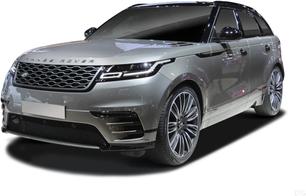
The new Range Rover Velar P400e Dynamic HSE, or P400e for short, is the first Velar offered with a plug-in hybrid powertrain. In theory, this should make it a solid contender for those wanting a luxury SUV that produces a smaller and greener footprint.
It’s not as big as its Range Rover siblings, so if you’re after a sleeker Rangie that can do some 'mild' adventuring on the weekends while still looking flash during the week, this may be the one you’re looking for.
It faces competition from the BMW X5, Volvo XC90 and… at a stretch, the Porsche Cayenne. I’ve spent a week with the mid-level P400e Velar to see how it stacks up for everyday use.
BMW’s original X2 crossover from 2018 was not a massive sales success in Australia. The related X1, however, was and continues to be a very popular pick in the ultra competitive premium small SUV class.
BMW has flipped the script for the second-generation X2, giving it a dramatic makeover that ushers in a bold design that’s now in keeping with its SUV strategy. That is to offer a ‘conventional’ SUV - X1, X3 and X5 - and then a coupe-style sibling - the X2, X4 and X6 - to sit alongside it.
Beyond the new look there are significant changes throughout the car, including the introduction of an all electric version - the iX2.
We drove the two flagship grades at the international launch in Lisbon, Portugal - the petrol-powered M35i xDrive, and the iX2 xDrive30. They might look the same, but they maintain their own distinct characters. Let’s dive in…
The Range Rover Velar P400e looks damn sexy and is large enough to house your family comfortably while still being easy to manoeuvre around town.
But I’m not a fan of these luxury brands forcing you to pay extra for what should be standard features when you’re at this grade level and price point. This is a model I’d pay close attention to in terms of the optional trims required to maintain a high-end feel.
But the powertrain works quite well here and it has pleasant on-road manners.
There is little doubt the new X2 represents a vast improvement over the original model. The design alone gives it a lot more presence.
More interior and boot space also helps widen the SUV’s appeal and the significant tech updates are welcome.
It is on the pricey side and there are a few too many options that should be standard.
However, the M35i is hard to ignore as a sporty premium crossover, and the iX2 xDrive30 is the sort of electric SUV that should worry Volvo.
They both have their own distinct flavours, so there’s no dud in this line-up. Of course, we will hold final thoughts for the local launch when we can drive all four grades. But until then, it’s a welcome return to form for the X2.
Land Rover hasn’t updated the exterior looks of the Velar and for good reason. It is almost flawless in how sleek and sexy it looks. It hovers between its larger Ranger Rover siblings and the more nimble-looking Discovery Sport.
There is still a distinctly ‘Range Rover’ vibe but it looks more agile and fun than its bigger siblings. But while its external looks are beautiful, the cabin loses me.
It’s even more pared back now than the pre-facelifted model and while the minimalistic style will appeal to some it doesn’t tick the luxury factor box for me.
There are too many plain and empty spaces in the dashboard and doors. The multimedia system has been updated to the cool 11.4-inch floating-effect screen but all the buttons and dials are gone. So, there’s even less going on and it makes you 100 per cent reliant on the screen.
And funnily enough, the grey knit fabric and synthetic material that’s used in the upholstery and trims is an optional extra and replaces Windsor leather. The knit-fabric adds some warmth but the black synthetic stuff is awful to touch or clean and reminds me too much of neoprene-style wetsuit material.
The large panoramic sunroof keeps the cabin feeling bright and cheery when it's open, though.
The second-gen X2 looks very different to the original from 2018. That first X2 had a squat stance, looked more like a hatchback than an SUV, and the glasshouse appeared as though it had been squished into the body of the car.
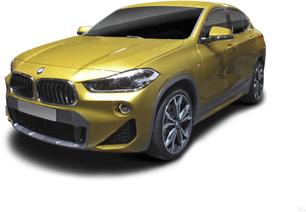
The 2024 X2 adopts a similar design philosophy to the X4 and X6 - swoopy, coupe-like roofline and liftback, and bold styling elements at the front and rear.
It has a much more upright, flush front end, freshly designed large kidney grille and an edgy headlight design. There’s flared wheel arches and broad shoulders at the rear, as well as a cool new horizontal tail-light signature.
The X2 has grown in size in a big way. It’s 194mm longer, 21mm wider, and 64mm taller than the outgoing model. That naturally means more space inside, too.
Inside there are big changes. The X2 adopts elements introduced by the excellent iX SUV a couple of years ago. They include the curved display, and a floating arm rest with a control panel. Some of this is also familiar from the X1.
The materials mostly look and feel like they are high quality, and there is an appealing minimalism to the overall design and layout. The chunky sports steering wheel is visually appealing, but it’s a bit too thick in my hand.
Practicality on a whole is pretty good in the Velar and that comes down mostly to the space provided for each occupant and the high-end tech.
Up front, there is a lot of head- and legroom for my 168cm height and even when you have a co-pilot you’re not jockeying for elbow room.
The seats are very comfortable as they’re well-cushioned and feature excellent lumbar support. I miss a seat heat function on colder days but you can easily do a long trip in the Velar and not feel too fatigued.
The 214mm ground clearance has made it an easy SUV to get in and out of, for me and my seven-year old. Annoyingly, though, some of the doors don't close properly unless you slam them.
The individual storage is a bit less than you might expect as there's not a lot of centre console storage for little items but you still get a small glove box and middle console, two cupholders, two drink bottle holders and a phone cubby up front.
The back seat offers enough space for me to be comfortable but I did have a comment from my dad, who is 183cm, that it was a smidge squishy for him.
The seats are comfortable and amenities are good with two USB-C ports, a 12-volt socket, directional air vents, map pockets and a fold-down armrest with two cupholders. There are storage bins but they're very shallow.
Because of the sleek rear shaping, the boot space is smaller than most of its rivals at 625L when all seats are in use. It’s large enough for my gear and you should still be able to stack luggage easily for a road trip.
The technology on offer is pretty darn good. The multimedia system takes a while to get used to but once you do, it's an easy enough system to get around but not having any buttons/dials means you tend to look at it more than I like while on the go.
Unlike the Disco Sport I was just in, which features the same system, there have been no issues with connectivity with my iPhone with the Bluetooth or wireless Apple CarPlay. There’s also Android Auto and the built-in satellite navigation is top-notch.
I've already mentioned the rear charging options but up front you're spoiled for choice with a USB-A port, three USB-C ports and a wireless charging pad.
Where the previous X2 was a very small crossover with niche appeal, the increase in size for the new model means more people will be interested in it. Possibly even people with a small family.
Those increased dimensions pay dividends inside, with ample headroom up front and more than enough space across the front row, although the raised armrest console is somewhat narrow.
The seats in both the iX2 xDrive30 and the M35i xDrive are very supportive thanks to ample bolstering, but both were also on the firm side. The iX2’s synthetic leather was slightly more comfortable than the M35i’s sports-focused front seats.
The power-adjustable seats and height- and reach-adjustable steering wheel means it’s not hard to find a decent driving position, but forward vision is impeded by a very thick A-pillar, and the letterbox-like rear windscreen in the X2 means rearward vision is limited. Good thing it has excellent parking cameras and sensors.
Storage is decent in the X2, with room for big bottles in the door cavity, and a few nooks and large open spaces in the console. Although secure storage is limited with the armrest housing a very shallow space. I do like BMW’s phone charger setup. Rather than lying on a pad, it slots into a vertical holder that has a latch to keep it in place when cornering. The only drawback is that you can see the screen which could potentially distract some drivers.
The X2 introduces operating system nine to iDrive, which is housed in the central part of the curved display and operated by touchscreen or the controller on the floating central console. After some familiarisation, the functionality isn’t that much different to the previous version of the operating system. The main menu looks cool and is mostly easy to navigate. The sub-menu icons - of which there are heaps - look a little Microsoft Windows.
The X2 has drive modes that also interact with the interior of the car and change lighting, EV noise and more. They include Personal Mode, Sport Mode and Efficient Mode as standard, but if you opt for (and pay extra for) BMW Digital Premium, the modes extend to Expressive Mode, Relax Mode and Digital Art Mode. Some of these are quite cool, especially some of the EV sounds, but would I use them everyday? Probably not.
The clearest indication of increased space is in the second row. There’s much more legroom than the old X2, and behind my six-foot frame I had enough space with a couple of centimetres between my knees and the front seat backs. Toe room was very limited, however.
The roof has been scalloped out to ensure more headroom, which is welcome given the extra sloping roofline.
There are a pair of USB-C ports back there, lower air vents, map pockets, decent door storage, and a centre armrest with cup holders.
The boot is sizeable, in both engine grades but you only get a tyre repair kit. There is underfloor storage for the charging cables in the iX2.
At 560 litres with all seats in place and 1470L with the second row stowed, the petrol grades have a bit more space than the iX2 at 525L (all seats in place) and 1400L (second row lowered).
The Velar is offered in three variants with a choice of four powertrains spread between them. The model I'm testing is the plug-in hybrid mid-level HSE Dynamic in P400e form, which sits right behind the flagship Autobiography.
The P400e is priced from $143,508, before on-road costs, and sits close to the middle of the pack compared to its rivals.
The Volvo XC90 Recharge Ultimate PHEV comes in as the most affordable at $128,990 MSRP, then the BMW X5 xDrive50e M Sport PHEV at $149,900 MSRP.
Even with our model's optioned extras, the Porsche Cayenne S E-Hybrid PHEV sits a country-mile above them all at $178,300 MSRP (thus it's a 'stretch').
Our test model has a few optioned extras, including a 'Dynamic Handling Pack' for $1750, a black contrast roof ($1420), ash veneer trim ($930), rear privacy glass ($890), 21-inch diamond turned alloys ($780), non-leather premium steering wheel ($750), black synthetic leather upholstery ($700), cabin lighting ($540), rear seat remote levers ($300) and 'Terrain Response' ($430).
That all equates to an extra $8490 and brings the total before on-roads costs price tag to $151,565.
Standard technology features that are included are an 11.4-inch touchscreen multimedia system, 12.3-inch digital instrument cluster, built-in satellite navigation, wireless connectivity for Apple CarPlay, wired Android Auto, Amazon Alexa app, dual-zone climate control, a wireless charging pad, five USB-C ports, one USB-A port, two 12-volt sockets and a Meridian sound system with digital radio.
Other features include pixel LED headlights, panoramic sunroof, keyless-entry, push-button start, rear fog lights, powered front seats, run-flat tyres, a powered boot lid and a tyre pressure monitoring system.
Annoyingly, a lot of luxury features have to be added at additional cost and given the price tag it's odd there are no heat or ventilation functions for the seats, no heat function for the steering wheel, no climate control for the rear or even a head-up display.
So, it feels a bit bare on features once you start to compare the Velar to some of its rivals, like the well-specified and more affordable Volvo.
In Australia, there will be four X2 grades in total - the xDrive20i and M35i xDrive petrol models, and the iX2 eDrive20 and xDrive30 all-electric models.
The iX2 xDrive 30 and the two X2 petrol grades are expected late in quarter one, or early in quarter two. The iX2 eDrive20 will follow shortly after in the third quarter.
The model grades largely mirror that of the X2’s mechanical twin, the X1, although the X1 is also offered in base front-wheel-drive sDrive18i guise as a range-opener.
At the international launch event, the two grades available to drive were the iX2 xDrive30 and the X2 M35i, so I will focus on those two models when it comes to the driving and practicality sections of this review. But I will detail elements of the whole range in other sections.
That X2 xDrive20i kicks off the range from $75,900 before on-road costs. For that you get features like a leather sports steering wheel, dual-zone automatic climate control, satellite navigation, an automatic tailgate, 19-inch alloy wheels, four USB-C ports and more driver-assistance systems and digital services compared with the previous model.
The $92,900 X2 M35i xDrive adds an extra dollop of performance but also includes 20-inch alloy wheels, a 12-speaker Harman/Kardon sound system, leather upholstery, a panoramic glass roof, a BMW M body kit and more.
The most affordable iX2 is the eDrive20 that kicks off at $82,900, while the iX2 xDrive30 dual-motor all-wheel-drive is $85,700. Both of these currently fall under the luxury car tax threshold at the time of writing.
There are several individual options and options packages across the range that can quickly push these prices up.
The X2 is a bit more expensive than the equivalent grades of the X1. The X2 xDrive20i costs $5500 more than the same X1 grade, while the M35i is only $2000 dearer than the equivalent X1.
For the EV, the X2 price premium is $4000 for the eDrive20 and just $800 for the xDrive30.
When it comes to rivals, pricing is a little higher than similar swoopy small SUVs like the Audi Q3 Sportback when it comes to the petrol models.
For the EV, competitors include the Lexus UX300e ($79,990-$87,665), Mercedes-Benz EQA (from $82,300-$102,579), and the Volvo C40 Recharge ($78,990-$87,990).
The Range Rover Velar P400e's plug-in hybrid powertrain combines a 2.0-litre four-cylinder turbo-petrol engine with an electric motor to deliver 297kW of power and 640Nm of torque.
The Velar features an eight-speed auto transmission and is an AWD. With that optioned Terrain Response feature, it can do some mild off-road adventuring or tackle a trip to the ski-fields with relative ease.
Each of the four grades come with a different powertrain, and the xDrive20i kicks it all off with its 2.0-litre four-cylinder turbocharged petrol unit, making 150kW of power and 300Nm of torque. It drives all four wheels via a seven-speed dual-clutch transmission and can hit 100km/h in 7.4 seconds.
The xDrive M35i ups the fun factor with a gruntier 2.0-litre four-cylinder turbo-petrol unit, driving all four wheels via the same transmission as the 20i, all while delivering power and torque of 233kW/400Nm This ensures a 0-100km/h dash of 5.4 seconds.
The iX2 eDrive20 is powered by a 150kW/247Nm electric motor on its front axle, and the iX2 xDrive 30 uses two motors - one on the front and one on the rear axle for all-wheel-drive traction. The total system output is 230kW and 494Nm and the xDrive30 gets to 100km/h in just 5.6 seconds.
The official combined fuel-cycle consumption figure is 2.2L/100km and my real-world usage came out at 6.0L/100km after doing mostly open-road trips with some urban stuff thrown in.
I have charged it to full twice with a few (small) charging moments scattered in between as that’s been realistic for life this week.
Claimed pure electric driving range is 69km but expect closer to 50km in the real-world.
Based on my real-world consumption and the 69L fuel tank, expect a theoretical driving range of 1150km.
The only draw back with a PHEV is the charging element as you get the best economy if you charge it to full every time you drive, and that's not always realistic!
The P400e has a Type 2 CCS charging port, so you can hook it up to a fast charger. On a 50kW system you can go from 0-80 per cent in 30 minutes and on a 7.0kW system, you can go from 0-100 per cent in two-hours and 12-minutes.
On a standard domestic socket, expect to leave on overnight for a 0-100 per cent fill.
Land Rover recommends a minimum 95 RON premium unleaded petrol for the Velar.
A fuel-use figure for the xDrive20i is yet to be confirmed, but the front-wheel-drive sDrive20i offered in Europe with a three-cylinder engine sips as little as six litres per 100 kilometres on the combined cycle. Expect the Australian version to be a little higher than that given it’s AWD and has a more potent engine.
The M35i consumes 7.7L/100km.
The high-voltage 64.8kWh lithium-ion battery in the iX2 ensures a driving range on the WLTP cycle of between up to 477 kilometres in the eDrive20 and between 417 and 449km for the xDrive30.
The latter has an energy efficiency range of 16.3 to 17.7kWh/100km, and BMW says you should be able to top up the battery from 10 to 80 per cent in 29 minutes at a fast charging station.
That driving range is not bad compared with the Lexus UX300e and Peugeot e-2008, but not quite as impressive as the Volvo C40 twin-motor.
I missed out on checking the energy efficiency figure of the iX2 xDrive30 following our drive, but after an 88km drive loop, the iX2’s range had dropped by 91km, which is just a 3km difference.
The P400e has a deep well of power to dip into and fantastic pick up when you need to overtake or get up to speed.
Like other plug-in hybrids I’ve sampled from Land Rover there's a little lag sometimes when you accelerate from a full stop but it’s not as pronounced in this model as others.
The back brakes seem to hold a couple seconds longer than they should and if you accelerate as you would in any other car, there is a ker-clunk sound and you shift forward in your seat until they release.
This was most noticeable in stop-start city traffic and to be fair might just be a quirk on our test car and not on the model as a whole.
The switch between the electric and petrol components is mostly smooth and the cabin is refined because it’s so quiet. Pretty much no external noise makes its way inside.
I did a trip with my father-in-law this week and he said riding in the back seat was smooth, comfortable and very quiet. In fact, he fell asleep not long after we left! A high compliment, indeed.
The wide windows and higher ride have ensure excellent visibility but you only get a reversing camera. Yes, it’s great quality and clear but a 360-degree view system should come standard on a large SUV like this, especially considering its price tag. That being said, the P400e is still pretty easy to park.
The M135i xDriveis undeniably quick off the mark. The lovely 2.0L turbo engine is well matched to the seven-speed dual-clutch and it’s responsive and willing from a standing start and when overtaking.
The engine sounds lovely too, although we suspect it’s amplified in the cabin, and steering is as sharp as it should be in a warmed-up performance SUV. We darted through some very twisty roads outside Lisbon and had quite a lot of fun in the process, so the M Performance badge is justified.
I drove the previous-generation X2 M35i a few years back and was disappointed with the ride quality. It was quite jiggly on uneven road surfaces and way too firm.
While the new version still has a firm tune to aid dynamic driving, it is much more compliant than the old car and overall ride comfort has improved.
The iX2 is also quick off the mark and in xDrive30 guise is only 0.2sec slower to 100km/h than the M35i.
That lively, smooth EV acceleration is present here, adding a sense of fun to the iX2.
It too has sharp steering, and the cabin is hushed. Not just because it’s an EV either. We were on coastal roads on a windy day and there was only a hint of wind noise in the cabin.
In some instances taking corners that had typical European walls or houses right up against the road, the iX2 would slow before I had a chance to tap the brakes. But it was hard to tell if that was a vehicle safety function, or the regenerative braking.
The ride in the iX2 was a bit of a mixed bag. It coped with some of the pockmarked roads exceptionally well, soaking up the imperfections. But then on other roads it was a little choppy.
It also bounces a little when you go over speed bumps, but that’s not exclusively an iX2 trait. I’ve felt it on many an EV, given the placement of the very heavy battery packs under the floor.
On the driving tech front, the X2 has a well executed head-up display projected directly onto the windscreen. It includes the speedo of course, nav guidance, a crystal clear display and more info.
The plug-in hybrid variant is not rated with ANCAP yet but features a good number of safety features, like blind-spot monitoring, driver attention alert, tyre pressure monitoring, rear collision warning, forward collision warning, AEB, DRLs, rear cross-traffic alert, lane keeping aid, traffic sign recognition, intelligent seatbelt warning, adaptive cruise control, reversing camera, as well as front and rear parking sensors.
It does miss out on lane departure warning and only has six airbags, which is low for a large SUV but all of the other safety tech seems well-tuned and not intrusive on everyday driving.
For any families, the Velar has ISOFIX mounts on the rear outboard seats plus three top tethers. You might get three seats installed if they’re not too big but two will fit best.
The X2 and iX2 are yet to be crash tested by ANCAP or Euro NCAP for that matter.
As mentioned, it gets a more generous list of standard safety features than its predecessor. Features include the latest version of BMW’s front collision warning system, auto emergency braking, speed limit detection, active pedestrian protection and a front centre airbag.
All X2s come standard with BMW’s Driving Assistant Professional which features ‘Steering and Lane Control System’, adaptive cruise control with stop and go braking function, and a blind-spot monitor, as well as Parking Assistant Plus with a surround-view camera, reversing assistant and ‘Drive Recorder’.
The Range Rover Velar comes with a five-year/unlimited km warranty and the battery is covered by an eight-year/ 160,000km warranty, which is a usual term for the class now.
There is a five-year capped-price servicing program which costs a flat $2100, or $420 per service, and is more affordable than a pay-as-you-go option.
Servicing intervals are very reasonable at every 12 months or 20,400km, whichever occurs first.
You also get five years roadside assistance through Assist Australia as a part of your servicing plan.
The X2 range is covered by BMW’s five-year, unlimited kilometre warranty - something the German giant only increased from three years back in 2022. This is now the minimum standard.
The battery warranty for the iX2 is eight years or 160,000 kilometres.
BMW does not have scheduled servicing terms, instead, servicing is condition-based and the car’s computer will alert the driver when to book in for a service.
A five-year servicing package will cost you $3171 for the petrol X2s, while the iX2 is $2186 for six years.