What's the difference?
This feels wrong to say this, but it’s so refreshing not to be driving an electric vehicle. There I said it.
After testing so many EVs lately reviewing a car that has an actual engine is a nice change. And this car definitely has an internal combustion engine - it's the Land Rover Defender Octa Black with a twin-turbo petrol V8.
The Defender Octa is the ultimate form of the 110 Defender. It’s wilder looking, more powerful and more capable, while the Black edition adds darkened elements inside and out for even more visual appeal.
While the Defender Octa Black is special, it’s not alone in a world of high-performance luxury SUVs and its head-to-head rival would be Mercedes-AMG’s G63.
I had the Defender Octa Black for a week and while I didn’t take this beast off-road where it is superbly capable, I put it to the test on some challenging tarmac as well as some challenging real-world family duties.
Sometimes a name change can make all the difference.
Google used to be called “Back Rub”. The Spice Girls started off as “Touch”. And – particularly in Germany – some premium sedans became known as “coupes”, as they struggled to stay popular against SUVs.
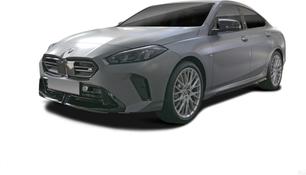
Case in point: what is essentially a 1 Series hatchback with a boot has been more glamorously badged the “2 Series Gran Coupe” since 2020.
Still following the sedan script with four doors, it’s BMW’s tilt at Mercedes’ booted A-Class hatch, the rakish CLA, unveiled early last decade as the Concept Style Coupe and now in its third series-production iteration – though since 2019 a more conservatively styled A-Class Sedan has also existed, that goes up against Audi’s A3 Sedan.
But we digress. Now there’s a “new” 2 Gran Coupe, coded F74, though it’s really a heavy facelift of the superseded F44. Oh, and the ‘i’ no longer exists in the badge, so (M-enhanced models aside) it’s just numbers from here on in. 218. 220. M235.
Regardless of names, does it live up to the BMW promise?
The Land Rover Defender Octa Black could well be the ultimate form of the Defender. There's also the combination of Land Rover style and utility, but with one of the best V8 powerplants gifted to it from BMW. The Black edition adds extra appeal and highlights how stealthily something this good can fly under the radar against rivals like the Mercedes-AMG G63.
The badge might say one thing, but the 2 Series Gran Coupe sticks to the time-honoured template of being a compact yet comparatively practical three-box, four-door sedan, complete with a big boot.
More importantly, it drives and behaves like a BMW – which means sufficient-to-strident performance depending on grade, athletic dynamics and pleasing refinement on one hand, as well as a stiff price and a hard ride on the other.
A true BMW in name and nature, then..
Note: CarsGuide attended this event as a guest of the manufacturer, with travel, accommodation and meals provided.
Oh gosh yes, there’s a lot that’s interesting about the design of the Defender Octa Black.
Land Rover absolutely nailed the look of the new Defender when it launched in 2020 and it's barely aged in the years since.
I love its modern take on the original Defender design with its boxy styling that looks both prestigious enough to be waiting in the driveway of a castle, but also purposeful and practical enough to be sitting in a paddock on a farm.
The Octa is based on the 110 Defender four-door body style with five seats, but its muscular enhancements make it longer, wider and taller than a regular 110 Defender.
The Octa Black has exactly the same dimensions as the Octa at 5003mm long including the tailgate-mounted spare wheel, 2105mm wide with the mirrors out, and 1995mm tall on the low suspension setting (air suspension can raise the vehicle much higher).
The Octa Black adds about 30 gloss black or satin black elements to the Octa and I’ve listed many of them in the features section above.
For me the highlights of the Black include the 20-inch forged wheels which look stylish and army tough, there’s also the black coating on the quad exhaust tips, while the blacked-out badging and lettering also gives this variant a carefully modified, stealthy look.
Inside I love the exposed screws in the door trim, and black dashboard hand rail. When the vehicle is switched off all of the black buttons lose their glowing icons, turning the cabin into an inky, luxurious, minimalist space.
I could go on about the safari windows overhead in the boot area, the thick carpet, and how the optional chopped carbon fibre looks like solid marble, but we need to move on.
BMW is calling the F74 a new-generation 2 Series Gran Coupe, and there have been obvious and even profound changes throughout and underneath, including to some of the sheetmetal.
But this is not an all-new car by any stretch, with the glasshouse, doors and roof amongst many other body items carrying over from the F44.
That now remarkably Kia Cerato-esque nose ushers in new LED lighting motifs and an updated kidney grille, but whether they sit easily with the rest of the car is debatable. Redesigned tail-lights, different colours and new alloys make up the majority of the exterior changes.
Betraying the latest 2 Series Gran Coupe’s newness claims are near-identical dimensions, with that redesigned front end and bumpers contributing to a 20mm increase in the F74’s 4546mm length, while revised suspension and damper settings help account for the 25mm boost in height (to 1445mm). The BMW’s 1800mm width and 2670mm wheelbase remain the same.
There’s a higher level of newness to be found inside.
The Defender Octa Black is practical by its design and intention. This is a large off-road SUV with boxy proportions and utility is as much a priority as luxury.
A five seater with no third row, the Defender Octa Black has an enormous boot at 972 litres and outstanding cabin storage throughout from large door pockets to stowaway areas, trays and hidey holes. There’s also a small fridge under the centre armrest between the front seats.
Space for passengers is excellent with ample headroom and rear legroom. I’m tall at 188cm and can easily sit behind my driving position. Upfront and sitting in the driver’s seat I have acres of room in the footwell, plenty of space for my legs to clear the steering wheel and lots of elbow room.
There are power outlets throughout including a 230V powerpoint in the boot, USB-C ports in the second and front rows, plus wireless phone charging up front.
How great it is to see big chunky physical dials for climate control and volume as opposed to just a media screen, which is the case with so many new vehicles.
Possibly the only impracticality of the Defender Octa Black is the drop down out of the cabin. Even on the lowest air suspension setting the step up and out of the cabin will be too big for some older people and younger children.
During the media presentation at its launch, BMW described the 2 Series Gran Coupe as being almost as large as a 1990s E46 3 Series, and it is in all major dimensions except wheelbase.
Plus, being a front-drive-biased/transverse engine proposition instead of rear-wheel drive should make it roomier than the F74’s iconic ancestor.
The sense getting in is that this is certainly not too low or cramped as per a more-traditional coupe, with plenty of space for legs and shoulders, while even the optional sunroof fitted to our 218 left us with headroom to spare.
The redesigned dash is a visual and operational treat, with crisp, clear instruments, a logically presented and intuitive centre display screen offering fast and easy operation, excellent ventilation and ample storage. Full marks here.
Better still, attaining the perfect driving position is possible for most people, on brilliantly supportive front seats. This is the stuff BMW does right.
Improvement suggestions for the next update? Some people may complain about the somewhat less-than-premium feel of some of the lower-lying plastic trim; not everybody will love the swatches of colour stitching (we love it); why does the steering wheel have to be so wide-of-rim? Side and rear vision is restricted by fat pillars, rising shoulder lines and a shallow rear window; and there is quite a bit of road noise that enters the cabin at speed.
Still, even the back seat is sufficiently spacious for most users, with the sole exception of taller folk having to negotiate a sloping rear roofline. If you’re below 180cm, this should be fine. Most amenities minus overhead grab handles are also fitted.
Further back, the boot is surprisingly accommodating, with 430 litres of cargo capacity that’s enhanced by a 40:20:40 split-fold backrest, and the aperture should be big enough for bulkier loads, but the lack of a spare wheel will be bad news for many buyers. The supplied tyre-repair kit is just not good enough.
But, you know what is good enough? The engines BMW builds, that’s what.
The Defender Octa Black lists for $313,800 which is about $10,000 more than a standard Octa. The difference between them is purely cosmetic but the black elements add such a visual impact that $10K seems worth it for the unique customised look that distinguishes it from ‘ordinary’ Defender Octas.
The Black edition adds about 30 elements with either a gloss black or satin black finish. These include the Narvik Black paint, gloss black exhaust tips, 20-inch forged black wheels with gloss black calipers, there’s black badging and lettering, too.
Inside there’s ebony semi-aniline leather upholstery, plus black hand holds and dashboard crossbeam.
Then there’s all the standard equipment you’ll find on a regular Defender Octa.
There's three-zone climate control, a Meridian sound system, Android Auto and Apple CarPlay, 11.4-inch touchscreen with sat nav, wireless phone charging and head-up display.
The front seats are heated and cooled, while the second-row outboard rear seats are heated. There’s privacy glass in the rear windows, a panoramic glass roof, LED headlights and tail-lights and a proximity key.
Our car had several options fitted including the chopped carbon-fibre finisher which you can see on the front seat-backs and centre console, dual snorkels, tow-hitch receiver, mud flaps and black roof rails.
Is the value good? Yes' it's very expensive at more than $300k, but the price is quite a bit lower than the Mercedes-AMG G63 ($368,400) and the Porsche Cayenne Turbo GT ($376,200).
This depends on how much you buy into this being a sporty Gran Coupe rather than a small sedan.
From $59,900 (all prices are before on-road costs), the German-made front-wheel-drive 218 base grade is slightly cheaper than the previous 218i equivalent, yet gains more kit. It also matches the A200 Sedan and costs a bit more than the (also recently facelifted) A3 Sedan, while offering similar performance and equipment to both.
Along with a host of advanced driver-assist safety (ADAS) systems like adaptive cruise control – to be covered in more detail later on – the base 2 Series Gran Coupe comes with the M Sport styling package inside and out as standard.
You’ll also find goodies like adaptive LED headlights with auto high beams, adaptive dampers, keyless entry/start, a curved all-in-one 10.25-inch instrument display/10.7-inch centre control display using BMW’s latest OS9 system offering cloud-based navigation, an M Sport steering wheel, heated sports front seats, a head-up display, surround-view camera, wireless smartphone charger, Apple CarPlay/Android Auto, BMW Connected Drive with auto emergency call and other services, artificial leather upholstery, a 40:20:40-split backrest, an electric tailgate and 19-inch M-Sport alloy wheels.
From $62,900, the 220 ditches the 218’s 115kW 1.5-litre three-cylinder turbo petrol engine for a 150kW 2.0-litre four-pot turbo, while the 233kW M235 xDrive from $86,600 adds a lot more muscle to that 2.0-litre engine, all-wheel drive, more ADAS tech, massaging front seats, a Harmon/Kardon audio upgrade, uprated brakes, a panoramic sunroof, a heated steering wheel, rear spoiler and higher-gloss trim.
Many of those items are available with a $6700 Enhancement pack on the lower grades.
These more-or-less line up with rival premium small sedans.
Note, though, that they are expensive compared to fine mainstream C-segment alternatives costing far less, like the Subaru WRX, Toyota Corolla hybrid and Mazda3. Or Hyundai’s criminally underrated Ioniq 6 EV. Labels, eh!
Still, for some folk, the 2 Series Gran Coupe’s swoopier silhouette might make it seem like more of a rival to the sleeker CLA than a mere A200/A3 competitor, and that Benz kicks off from about $15K more than the 218. If that’s you, the BMW might be construed as a bit of a bargain.
Since we’re talking about styling, let’s take a deeper dive into the F74’s newly minted looks.
One of the Defender Octa’s biggest drawcards is its engine, a 4.4-litre twin-turbo V8 courtesy of BMW.
Yes this is a BMW-sourced V8 making 467kW and 750Nm. The same engine is found in BMW’s M5 super saloon and X5 M and it suits the Defender Octa Black so well you’d swear it was purpose built for the big SUV.
You might not know that there is also a mild hybrid system on board too, but it doesn’t drive the wheels and isn't really there to save fuel. Its function is to add even more grunt to the engine.
Unlike Mercedes-AMG's G63’s V8, the Defender Octa’s V8 won’t traumatise the neighbourhood on start up or idle or even just cruising along. But push it hard and it changes its attitude from a powerful limousine growl to a wild NASCAR roar.
There are drive modes including a dynamic setting but it’s ‘Octa’ mode that makes the car special. It's is a high-performance off-road setting that does exactly what you’d think.
Of course the Defender is one capable off-road vehicle with low- and high-range four-wheel drive.
An eight-speed automatic transmission sends the drive to all four wheels smoothly and the paddle shifters allow quick changes up and down.
Three F74 powertrain choices are available for Australia in 2025. And none even remotely reflect what their respective badges imply on the boot.
The 218, for instance, is not powered by a 1.8-litre engine, but BMW’s long-lived B38 1.5-litre three-cylinder turbo petrol unit. Making 115kW of power at 6500rpm and 230Nm of torque between 1500rpm and 4600rpm, drive is channelled to the front wheels via a seven-speed dual-clutch transmission (7DCT).
With a kerb weight of 1420kg, the 218 has a power-to-weight ratio of 81kW per tonne, helping it achieve the 0-100km/h sprint time of 8.6 seconds, on the way to a 230km/h top speed.
Not enough? The 220 features the ubiquitous B48 2.0-litre (not a 2.2-litre) four-cylinder turbo petrol engine/7DCT combo, pumping out 150kW at 6500rpm and 300Nm from 1450-4500rpm. Tipping the scales at 1525kg for 98.4kW/tonne, its 0-100km/h time is 7.3s and top speed is 250km/h.
Want more? Stretching to the M235 xDrive sadly doesn’t mean a 3.5-litre in-line six, but a modified B48 2.0L/7DCT duo, delivering 233kW at 6500rpm and 400Nm from 2000-4500rpm to all four wheels. Result? Weighing just 50kg more than the 220, it boasts a heady 148kW/tonne, for a 0-100km/h of just 4.9s and a 250km/h v-max.
As with all of the UKL2/FAAR transverse-engine front-to-AWD platform models from non-electric Minis through to sub-X3/3 Series BMWs, you’ll find MacPherson-style struts up front and a multi-link independent rear end out back.
If you’re reading this outside of Australia, you may notice that none of the current F74 models offer mild-hybrid tech, in contrast to their European counterparts. And don’t go expecting any manual gearboxes either, unfortunately.
Nobody buys a large off-road SUV powered by a petrol V8 thinking it’s going to be super fuel efficient, right? Just checking, because the 4.4-litre petrol V8 in the Defender Octa Black needs feeding constantly, like some kind of huge, hungry animal.
My average fuel economy of 18.5L/100km (according to the trip computer) over nearly 500km of driving actually wasn't as high as I expected considering all the countryside I ran through combined with the urban warfare of heavy traffic. Still that’s much higher than the 13.1L/100km Land Rover says the Octa should do in combined driving conditions.
Fortunately the Octa has a 90L fuel tank so you won’t have to fill up at every petrol station you see.
OK, so is the 2 Series Gran Coupe cheap to run?
BMW reckons the 218 and 220 will average 6.3 and 6.7 litres per 100km, which means combined average carbon dioxide emissions ratings of 143 and 152 grams/km respectively.
Filling the 49L fuel tank with 95 RON premium unleaded, that translates to around 775km in the 218, and 730km in the 220 between refills.
Predictably, the M235 xDrive uses more, at 7.7L/100km for a CO2 rating of 176g/km. That’s a distance of about 635km.
Over our launch run, which took us from Sydney’s Circular Quay to Wollongong, the 218’s trip meter was reading in the high 8s and about 10 for the M235.
The Defender Octa Black is big but it only takes a week of driving before it feels like an extension of your body and becomes an easy and obedient thing to pilot.
The acceleration is strong with 0-100km/h coming in four seconds but it's how it handles that's really impressive.
Smart so-called '6D suspension' uses adaptive tech to keep the vehicle level, damping its desire to pitch forward under braking and preventing body roll in the corners. I tested this on my remote winding, bumpy test road and was amazed by this big monster’s ability to keep itself composed and flat despite the sudden changes in direction.
There was no off-road test for the Octa Black this time but we've been impressed with the capability of Defenders in our tough terrain tests in the past. The Octa Black’s air suspension can rise high enough to offer a maximum 323mm of ground clearance. Angle of approach is 40.2 degrees and departure is 42.8 degrees, while the ramp over angle is 29 degrees. Wading depth is 1000mm.
And if you’re towing, braked towing capacity is 3500kg.
We tested the Octa Black for its handling of both engaging roads but also its handling of suburban duties where it proved easy to pilot, towering over the traffic but still able to slip up tight streets and in and out of car parks (check the maximum headroom and keep the suspension low), along with the school run each day.
Built for off roading means visibility is excellent, from being able to see clearly where the vehicle begins and ends to the huge windows that means there’s hardly a blind spot.
That made parking easy as long as there’s a space large enough and trust me, even if you take your time to park, nobody will honk at you in this military-grade looking rig.
All the while the air suspension kept the ride comfortable and serene.
Earlier, we mentioned that the 2 Series Gran Coupe is way more expensive than fine alternative sedans like the Mazda3 and Toyota Corolla.
And while that still stands, there is a remarkable solidity and refinement difference between those and the BMW that helps justify the premium. And nowhere is this more evident than from behind the wheel.
Sat on body-hugging seats and clutching that (too chunky) steering wheel, there is a sense of sporty occasion, backed up by quality trim and an aroma of expensiveness.
For a turbo three-cylinder car weighing 1.5 tonnes, the 218 does a lot with a little, offering spirited off-the-line acceleration and pleasingly lag-free throttle responses at lower speeds. You’d never call it fast, but it is a quick point-to-point urban mover. Only the unavoidable three-pot thrum lets you know you’re in the lowest mechanical spec. And, also, the delay at freeway speeds in building momentum when overtaking.
Which is why, for less than five per cent extra, the 220 with the 2.0-litre four-cylinder turbo would probably make a better buy. Sadly, that isn’t on sale yet in Australia, so we missed out on driving it during the Sydney launch. But in the scores of other BMWs and Minis we’ve tested this in, it’s a cracking little powertrain.
Whether the big leap (nearly $25K worth) to the M235 is worth it depends on how fast you drive and how much you value/need AWD. This is a terrifically muscular machine, since it provides rapid performance via a tidal wave of power, even with the lightest flex of your right foot. On-point and on-brand, this fun and fiery flagship possesses the grand-touring spirit that the rakish design and tech-heavy engineering promise.
To that end, in both the 218 and M235, the steering makes the driver feel connected to the car, resulting in precise and controlled handling. The driver-assist safety tech is beautifully calibrated and nuanced in its intervention, and the brakes are second-to-none.
What is also on-topic for a BMW is the firm suspension, despite the adaptive dampers fitted as standard equipment.
It isn’t stiff or overly uncomfortable, but bumps are certainly always felt, and they’re accompanied by fairly constant road-noise drone over some surfaces.
As such, you’re constantly reminded that dynamic athleticism is the priority here, rather than sumptuous comfort. We’ve experienced much worse from BMW, but a magic-carpet ride isn’t what’s in store for the 2 Series Gran Coupe owner.
So, what’s our verdict then? The 218 is a rorty little tryer that never fails to involve the driver, while the M235 ushers in an elevated level of acceleration, grunt and grip. We suspect that the 220 will be the Goldilocks-zone happy medium.
For (largely) better as well as for (occasionally) worse, these drive and feel like a BMW should.
The Land Rover Defender scored the maximum five-star ANCAP rating when it was tested in 2020 and that applies to the Octa Black, too. The only catch is that ANCAP rating will expire at the end of 2026. The criteria is now much stricter to get five stars.
That said, of course the Defender is safe, just as cars given a five star rating this year won’t automatically be unsafe in six or seven years, but there will be newer and better safety tech.
Still the Defender has auto emergency braking (AEB), lane-keeping assistance, blind-spot warning and rear cross-traffic alert.
Occupant safety in crash tests also scored high, according to ANCAP.
For child seats you’ll find two ISOFIX points and three top tether anchors across the second row.
The latest, F74 2 Series Gran Coupe scores neither an ANCAP nor EuroNCAP rating at this stage, but its F44 predecessor managed a five-star result back in 2019.
For the latest version, BMW is highlighting an elevated level of advanced driver-assist safety (ADAS), including lane-change/departure alerts, forward collision warning and automatic emergency braking tech that detects vulnerable road users like pedestrians and cyclists, rear cross-traffic warning, exit warning, adaptive cruise-control with full stop/go functionality, blind-spot monitor and traffic-sign speed-limit alerts.
No information on AEB operating parameters is available as yet for the F74, but the earlier series’ low-speed AEB worked from 8km/h to 85km/h and inter-urban AEB kicked in between 5-80km/h, while the lane-support systems functioned from 70-210km/h.
Tyre-pressure warning, 360-degree surround-view cameras and six airbags are also included, along with Parking Assistant Plus that brings sensors, automatic parking, a reverse assistant that automatically retraces the last 50 metres travelled and a drive recorder.
Note that the 218 misses out on the 220/M235 grades’ ADAS-related crossroads warning, evasion assistant tech, lane-keeping assist with active side-collision prevention and front as well as rear cross-traffic warning. These are available in the aforementioned Enhancement Pack, but at this lofty price point, they should be standard.
Finally, there are ISOFIX child-seat anchorages in the rear-seat outboard positions, along with a trio of child-seat tether latches.
Land Rover covers the Octa Black with a five-year, unlimited-kilometre warranty which is short compared to most mainstream brands but fairly common among the high-end makes.
Roadside assistance is included for five years, too.
A service plan is available with five years costing $4800. Again, quite common for prestige brands but expensive compared to the more mainstream makers.
Here, however, is where BMW can do a bit better.
While the five-year/unlimited-kilometre warranty is where most premium brands are, it falls short of several Asian alternatives. Roadside assistance is for just three years and there is no capped-price servicing.
Service scheduling is also condition-based, meaning the vehicle will alert the driver when a service is imminent. This may not suit everybody, and we always recommend at least every 12 months or 10,000km, just to be on the safe side.
BMW does offer pre-paid service packs that take in basic maintenance for the first five years at $2369 or $3782, including brake-pad replacement, which works out to be about $475 and nearly $760 annually respectively. There is also a cap on mileage during that time frame: 80,000km.