What's the difference?
Lamborghini is famous for making glamorous supercars whose pilots seem so carefree they don’t appear to need a boot, or back seats, or even families.
They don’t even seem to mind them being so low they have to get in and out on all fours – well that’s how I need to do it, anyway.
Yup, Lamborghini is famous for these exotic race cars for the road… not SUVs.
But it will be, I know it.
I know, because the new Lamborghini Urus came to stay with my family and we torture tested it, not on the track or off-road, but in the 'burbs doing the shopping, the school drop-offs, braving multi-storey car parks and the potholed roads daily.
While I never like to give the game away this early in a review, I need to say the Urus is astounding. This is truly a super SUV that is every bit as Lamborghini as I hoped, but with a big difference – you can live with it.
Here’s why.
Anecdotal evidence across automotive and social media suggests the new Toyota HiLux has for some Aussies fallen short of expectations, which were understandably high given a decade has passed since the last generation was launched.
Although it brings new front and rear styling, a redesigned interior and upgraded safety and digital tech, the underpinnings and drivetrains are largely carried over which has created perceptions of the 2026 Toyota HiLux being more of an update than a new generation.
Given the company’s recent claim that the ute market has peaked, is the latest HiLux the result of a typically pragmatic Toyota choosing not to commit substantial new-vehicle development funds to a segment in which it sees no future growth? We recently spent a week in one of the workhorse models to see if the underwhelming response to the latest HiLux range is justified in the hard-working tradie world.
Lamborghini has nailed it. The Urus is a super SUV that’s fast, dynamic, and has Lamborghini looks, but just as importantly it’s practical, spacious, comfortable and easy to drive. You’re not going to find those last four attributes in a sentence about an Aventador.
Where the Urus loses marks is in terms of warranty, value for money and fuel consumption.
I didn’t take the Urus on the Corsa nor the Neve, nor Sabbia and Terra, but as I said in my video we know this SUV is capable on the track and that it can go off-road.
What I really wanted to see was how well it handled regular life. Any competent SUV can deal with shopping centre car parks, dropping kids off at school, carrying boxes and bags, and of course fitting and being driven as you would any car.
The Urus is a Lamborghini anybody could drive, pretty much anywhere.
It might be a new generation HiLux but we get the (oh what a) feeling that Toyota has adopted a that-will-do approach with this one, based on its cautious view of the ute market.
Although it’s still a competent load-hauler that will no doubt continue to attract Toyota loyalists, even a major facelift and tech upgrades can’t hide its decade-old origins.
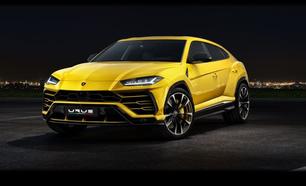
Anything interesting about the Urus? That’s like asking is there anything tasty about that really tasty thing you’re eating there? See, whether you like the look of the Lamborghini Urus or not, you have to admit it doesn’t look like anything you’ve ever seen before, right?
I wasn’t a major fan of it when I first clapped eyes on it in pictures online, but in the metal and in front of me wearing that 'Giallo Augo' yellow paint I found the Urus stunning, like a giant queen bee.
As I’ve mentioned, the Urus is built on the same MLB Evo platform as the Volkswagen Touareg, Porsche Cayenne, Bentley Bentayga and Audi Q8. While that offers a ready-made base with great comfort, dynamics and technology, it would limit shape and styling, but nevertheless I think Lamborghini has done an excellent job of ‘dressing’ the Urus with styling that doesn’t give away its Volkswagen Group bloodline too much.
The Urus looks exactly how a Lamborghini SUV should – from its side profile with the sleek glasshouse and haunches which look spring loaded, to its Y-shaped tail-lights and tailgate lip spoiler.
At the front, as with the Aventador and Huracan, the Lamborghini badge takes pride of place and even that broad flat bonnet which looks just like the lid on its supercar siblings has to skirt around the emblem almost out of respect. Below is the giant grille with its enormous lower air-intake and front splitter.
You can also see a few hat tips to the original LM002 Lamborghini off-roader from the late 1980s in those squared-off wheel arches. Yes, this isn’t Lamborghini’s first SUV.
The optional 23-inch wheels do look a bit too big, but if anything can pull them off, I feel the Urus can because so much else about this SUV is over the top. Even everyday elements are extravagant – the fuel cap on our car was carbon-fibre for example.
But then everyday objects which I think should be there, aren’t – like a rear windscreen wiper.
The Urus’s cockpit is just as special (and Lamborghini) as its exterior. As with the Aventador and Huracan the start button hides beneath a red flip-up cover fighter-jet rocket launcher-style and the front passengers are separated by a floating centre console which is home to more aircraft inspired controls – there are levers for selecting drive modes and there’s a giant one just for selecting reverse.
As we’ve covered above, the interior of our car had been optioned to the hilt, but I have to mention those seats again – the Q-Citura diamond stitching looks and feels beautiful.
It’s not just the seats, though, every touch point in the Urus has a quality feel – actually even places that never come in contact with passenger such as the headlining look and feel plush.
The Urus is large – look at the dimensions: it’s 5112mm long, 2181mm wide (including the mirrors) and 1638mm tall.
But what’s the space like inside? Read on to find out.
Toyota states this was the first time in HiLux history that a new exterior design was spearheaded by the company's Australian design team, with its confronting appearance claimed to be inspired by the stance held by Japanese sumo wrestlers at the start of a fight. Really?
Regardless of its inspiration, there’s no denying the imposing new-look front with its high slimline headlights, gaping body-coloured grille and trapezoidal side air intakes polarised opinion among passers-by we spoke to during our week of testing.
The cabin and doors are carried over from the previous generation but the rear styling has also been refreshed, with a more hard-edged appearance that incorporates concave rear side-steps for load tub access plus ‘TOYOTA’ lettering stamped into the tailgate like the good old days.
The squared-off styling theme inspired the HiLux’s interior design featuring new dash and centre console layouts, plus tasteful blending of soft-touch and hard-wearing surfaces to create a visually appealing cabin environment.
From the outside the Urus’s cabin looks like it could be a cramped place – it is a Lamborghini, after all right? The reality is the interior of the Urus is spacious and storage is great.
Our test car was a five-seater, but the Urus can also be ordered with just four seats. Alas, there is no seven-seater version of the Urus, but Bentley does offer a third row in its Bentayga.
The front seats in our Urus were snug but offered outstanding comfort and support.
Head-, shoulder- and legroom up front is excellent, but it’s the second row which is most impressive. Legroom for me, even at 191cm tall, is outstanding. I can sit behind my driving position with about 100mm to spare – take a look at the video if you don’t believe me. Headroom is good back there, too.
Entry and exit through the rear doors is good, although they could open wider, but the height of the Urus made putting my child into his car seat easy on my back. Also installing the car seat itself was easy – our is a top tether which hooked to the seatback.
The Urus has a 616-litre boot and that was large enough to fit the box for our new child car-seat (have a look at the images) along with several other bags – that’s damned good. Making loading easier is an air suspension system which can lower the rear of the SUV.
The big door pockets were excellent and so was the floating centre console which has storage underneath and two 12-volt power outlets. You’ll also find a USB port up front, too.
The centre console bin is the downfall – it’s only has space for the wireless charging pad.
There are two cupholders up front and another two in the fold down centre armrest in the rear.
The rear climate control system is outstanding and offers separate temperature options for left and right rear riders, with plenty of vents.
Grab handles, 'Jesus handles', call them what you will, but the Urus doesn’t have any. Both the youngest and oldest members of my family pointed this out – my son and my mother. Personally, I’ve never had a use for them, but they both feel it’s a glaring omission.
I’m not going to mark the Urus down for a lack of handles – this is a practical and family friendly SUV.
With its 2125kg kerb weight and 3090kg GVM, our test vehicle has a useful 965kg payload rating.
It’s also rated to tow up to 3500kg of braked trailer but with its 6300kg GCM (or how much it can legally carry and tow at the same time) the payload would need to be reduced by 290kg to tow the maximum trailer weight without exceeding the GCM.
Even so, that still leaves a practical 675kg of payload capacity, so these are useful numbers for any number of working roles given that few owners (if any) would need to tow 3500kg with a HiLux.
The load tub is 1570mm long, 1645mm wide and 495mm deep, offering an enclosed load volume of more than 1.2 cubic metres. However, with 1105mm of load floor between the rear wheel housings, it can’t carry a standard Aussie pallet but can fit a Euro.
The SR does not come standard with a spray-in or slide-in tub liner so its painted surfaces are vulnerable to load damage. There’s a sturdy front bulkhead that provides rear window protection and is fitted with pivoting load retainers on the top rail for securing long lengths of timber, conduit, PVC pipe, etc.
The load tub is also equipped with four load anchorage points mounted at mid-height (not ideal for low loads) and hydraulic struts provide lowering/raising assistance for the tailgate. Externally there are also new concave rear steps on each side to provide easier access to the load tub.
There’s ample cabin space for the driver and front passenger, and storage that includes a bottle holder and bin in each door, along with two cupholders, upper and lower gloveboxes in the new dash and an overhead glasses holder.
The front of the new centre console includes a wireless phone charging pad and two USB-C ports, plus a single cupholder in the middle (why not two?) and a lidded box at the rear which also contains a 12V socket and AC220V inverter socket that’s compatible with devices or appliances that use a domestic three-pin plug.
Rear seating for tall people (I’m 186cm) is still as restrictive as it’s always been, with minimal knee/shoulder/head room combined with a notably short distance between the top of the base cushion and floor creating a steep thigh angle that concentrates body weight on your lower back.
It’s worse in the slightly higher centre position, with my head pressed firmly into the roof lining, knees squeezed together between the front seat backrests and feet either side of the transmission tunnel. So, for any trip longer than the local shops, the HiLux rear bench is strictly a two-seater.
Even so, there’s a bottle-holder and bin in each rear door plus pockets on both front seat backrests and two USB-C ports and a storage slot on the rear of the centre console. The centre seat backrest also folds forward to provide an armrest with two cupholders.
Only the narrower driver’s side of the 60/40-split rear seat base cushion can swing up and be stored vertically as the passenger side is now fixed, given the V-Active’s 48V battery resides beneath it.
When it comes to Lamborghinis value-for-money is almost irrelevant because we’re in the realm of the supercar, where the laws of price and features don’t really apply. Yes, the old, if-you-have-to-ask-how-much-it-is-then-you-can’t-afford-it rule is coming into effect here.
Which is why the first question I asked was – how much is it? The five-seater version we tested lists for $390,000, before on-road costs. You can also have your Urus in a four-seat configuration but you'll pay more at $402,750.
The entry Lamborghini Huracan also lists for $390K, while the entry-level Aventador lists for $789,809. So, the Urus in comparison is an affordable Lamborghini. Or an expensive Porsche Cayenne Turbo.
You may know this already, but Porsche, Lamborghini, Bentley, Audi and Volkswagen have the same parent company and share technology.
The 'MLB Evo' platform which underpins the Urus is also used by the Porsche Cayenne, but that SUV is almost half the price at $239,000. But it’s not as powerful as the Lamborghini, not as fast as the Lamborghini, and … it’s not a Lamborghini.
Coming standard is a full-leather interior, four-zone climate control, two touch screens, sat nav, Apple CarPlay and Android Auto, DVD player, surround view camera, proximity unlocking, drive-mode selector, proximity unlocking, leather steering wheel, power and heated front seats, LED adaptive headlights, power tailgate and 21-inch alloy wheels.
Our Urus was fitted with options, lots of options - $67,692 worth. This included the giant 23-inch rims ($10,428) with carbon ceramic brakes ($3535), the leather seats with 'Q-Citura' diamond stitching ($5832) and optional stitching ($1237), the Bang & Olufsen stereo ($11,665) and digital radio ($1414), night vision ($4949) and the ambient light package ($5656).
Our car also had the Lamborghini badge sewn into the headrests which is a $1591 option and the plush floor mats are $1237.
What are the Lamborghini Urus’s rivals? Does it have any other than the Porsche Cayenne Turbo, which isn’t really in the same monetary ballpark?
Well, the Bentley Bentayga SUV also shares the same MLB Evo platform and the five-seat version lists for $334,700. Then there’s the Range Rover SV Autobiography Supercharged LWB at $398,528.
Ferrari’s upcoming SUV will be a true rival to the Urus, but you’ll have to wait until about 2022 for that.
Aston Martin’s DBX will be with us sooner – it’s expected in 2020. But, don’t hold your breath for a McLaren SUV. When I interviewed the company’s global product boss in early 2018 he said one was totally out of the question. I asked him if he wanted to bet on it. He declined. What do you think?
The SR is a more upmarket version of the base-grade WorkMate and available in 4x2 guise as a dual-cab ute, or as a 4x4 in either extra cab/dual-cab chassis or dual-cab ute body styles.
Our test vehicle is the 4x4 SR dual-cab ute, which comes standard with a 2.8-litre turbo-diesel (with 48V mild-hybrid assistance that Toyota calls 'V-Active') and six-speed automatic transmission for a list price of $59,490 (plus on-road costs). Our example is finished in Eclipse Black which is a $675 premium paint option.
This list pricing is in the same ballpark as higher grade work-focused rivals offering similar features and load ratings including the Ford Ranger XLS 2.0L ($57,888) and Isuzu D-Max X-Rider 2.2L ($59,500).
The SR comes standard with 17-inch alloy wheels and 265/65 R17 tyres with a full-size alloy spare (although buyers can opt for the WorkMate’s 17-inch steel wheels), silver-painted lower front bumper, black-painted doorhandles, side mirrors and bonnet moulding, black plastic wheel arch flares, LED front fog lamps, side steps, locking tailgate and choice of six exterior colours.
Inside the cabin (with smart entry and start), the SR adds greater front seat bolstering and high-grade fabric upholstery, leather-accented shift knob and steering wheel, AC 220V inverter, wireless phone charging and eight-speaker sound.
This is in addition to the WorkMate’s standard equipment, which still adheres to rear drum brakes with a mechanical lever handbrake plus LED headlights, body-coloured front bumper and grille and tailgate damper with lift-assist.
Cabin enhancements include a new 7.0-inch driver's digital instrument display, multiple USB-C ports and 12V accessory sockets plus a new multimedia system with 12.3-inch touchscreen, DAB+ digital radio, voice recognition and connectivity with mirroring for Apple and Android devices.
The Lamborghini Urus has a 4.0-litre twin-turbo petrol V8 engine making 478kW/850Nm.
Any engine which can make 650 horsepower has my attention, but this unit, which you’ll also find in the Bentley Bentayga, is superb. The power delivery feels almost naturally aspirated in how linear and controllable it feels.
While the Urus doesn’t have the same screaming exhaust note as a V12 Aventador or the V10 found in the Huracan, the deep V8 grumble on idle and crackle on the down shifts let everybody know I’d arrived.
An eight-speed automatic transmission can change its personality from a brutally hard-shifter in Corsa (Track) mode to gelato smooth in Strada (Street).
The ubiquitous 1GD-FTV 2.8-litre four-cylinder turbo-diesel with V-Active 48V mild-hybrid assistance produces the same 150kW and 500Nm as it does without V-Active, driving through a six-speed torque-converter automatic that offers the choice of sequential manual shifting and three drive modes.
V-Active is claimed to improve fuel efficiency, acceleration and smoothness, along with enhanced off-road prowess, as it can send up to an additional 8.4kW of power and 65Nm of torque through its motor-generator to assist the engine.
The part-time, dual-range 4x4 system includes a switchable rear diff-lock and a choice of numerous multi-terrain driving modes to enhance off-road ability.
A V8 combustion engine that makes 478kW is not going to be frugal when it comes to fuel consumption. Lamborghini says the Urus should use 12.7L/100km after a combination of open and urban roads.
After highways, country roads and urban commutes I recorded 15.7L/100km at the fuel pump, which is close to the serving suggestion and good considering there weren't any motorway kays in there.
That’s thirsty, but not surprising.
Toyota claims combined average consumption of 7.2L/100km which is aligned with rivals like the Ford Ranger XLS 2.0L (7.2L/100km) and Isuzu D-Max X-Rider 2.2L (7.1L/100km).
The HiLux’s dash display showed 9.5L/100km at the completion of our 457km test, which included the usual mix of suburban, city and highway driving of which about one quarter was hauling a near-maximum payload.
Our own figure calculated from fuel bowser and tripmeter readings was slightly higher again at a neat 10L/100km. That’s just within the usual 2.0-3.0L/100km discrepancy between lab-based official and real-world consumption but thirstier than figures we’ve achieved in some rival 4x4 dual cabs like the JAC T9 with 8.3L/100km and Nissan Navara SL with 8.4L/100km.
So, based on our test consumption, you could expect a realistic driving range of around 800km from its 80-litre tank.
The Lamborghini Urus is a brute, but not brutal, in that it’s big, powerful, quick and dynamic without being hard to drive. Actually, it’s one of the easiest and most comfortable SUVs I’ve ever driven, while also being the fastest I’ve piloted.
The Urus is at its most docile in the Strada (Street) drive mode and for the most part I drove it in this setting which kept the air suspension at its cushiest, the throttle calm and steering light.
The ride quality in Strada even on Sydney’s pot-holed and patchy streets was outstanding. Remarkable, given that our test car rolled on giant 23-inch wheels wrapped in wide, low profile tyres (325/30 Pirelli P Zeros at the rear and 285/35 at the front).
Sport mode does what you’d expect – firms the dampers, adds weight to the steering, makes the throttle more responsive and dials back the traction control. Then there’s 'Neve' which is for snow and probably not hugely useful in Australia.
Our car was fitted with optional extra drive modes – 'Corsa' for the racetrack, 'Terra' for rocks and dirt, and 'Sabbia' for sand.
Alternatively, you can ‘build your own’ mode using the 'Ego' selector which lets you adjust steering, suspension and throttle in light, medium or hard settings.
So, while you still have the Lamborghini supercar looks and colossal grunt, with the ability to head off road you could pilot the Urus all day as you would any large SUV in Strada.
In this mode you’d really have to plant your foot for the Urus’s reaction to be anything other than civilised.
Like any large SUV the Urus gives its occupants a commanding view, but it was a strange feeling looking out over that very Lamborghini bonnet but then pulling up next to the No.461 bus and glancing over almost at head height with the driver.
Then there’s the acceleration – 0-100km/h in 3.6 seconds. Combine that with this height and piloting it feels like watching one of those videos of a bullet train shot from the driver’s seat.
Braking is almost as astonishing as the acceleration. The Urus has been equipped with the largest brakes ever for a production car – sombrero-sized 440mm diameter discs at the front with giant 10-piston calipers and 370mm discs at the rear. Our Urus was fitted with carbon ceramic brakes and yellow calipers.
Visibility through the front and side windows was surprisingly good, although seeing through that rear glass was limited as you’d expect. I’m talking about the Urus not the bullet train – bullet train rear visibility is terrible.
The Urus has a 360-degree camera and an excellent reversing camera, too, which makes up for the small rear window.
Big handles on the windscreen pillars assist climbing aboard the new interior where (in stark contrast to the rear seat) even tall drivers can find a comfortable position, with ample seat and steering wheel adjustments plus a large left footrest.
The new wheel design feels nice in your hands and Toyota’s switch to electric power steering provides good feel and more noticeable changes in steering weight compared to the previous hydraulic system, being light at parking speeds but increasingly firm as speeds increase like variable-ratio steering should.
The job-focused WorkMate and SR grades have a heavy-duty suspension tune not shared with other HiLux models, which is primarily designed for carrying and/or towing heavy loads. However, that comes with an unwelcome trade-off in unladen ride quality that is notably harsh and jiggly, particular on bumpy roads.
The diesel engine is relatively quiet with good refinement and all-round response, even though we can’t detect any noticeable gain in acceleration, braking or smoothness from the 48V hybrid system compared to the standard engine.
That’s not to say V-Active is not delivering up to 8.4kW of power and 65Nm of torque, as Toyota claims. It’s just that these gains are modest and delivered so seamlessly that they are undetectable in real-world driving.
By contrast, there is a noticeable spike in engine response using the ‘Sport’ drive mode. it’s also a low-stressed and quiet highway cruiser requiring only 2000rpm to maintain 110km/h without the need for raised voices.
To test its GVM rating we forklifted 650kg into the load tub which combined with our crew of two equalled a total payload of 830kg that was about 130kg under its legal limit. The stout rear leaf springs compressed about 50mm, leaving ample bump-stop clearance that ensured there was no bottoming-out on our test route.
The HiLux always shines when it’s heavily loaded, as it maintains a sure-footed stance on sealed or unsealed roads, and the ride quality noticeably improves given the large increase in sprung weight that its heavy-duty suspension is primarily designed to support.
The drivetrain also made light work of this payload, particularly on our 13 per cent gradient, 2.0km set climb at 60km/h where the six-speed auto promptly self-shifted down to fourth gear and 2300rpm (within its peak torque band) to easily haul this load to the summit.
Engine-braking on the way down, in a manually selected second gear, was not as robust but adequate given the large payload it was trying to restrain and well within the capabilities of the brake pedal to maintain the 60km/h speed limit. Overall, it’s still a competent load-hauler.
The Urus hasn’t been assessed by ANCAP, and as with super high-end cars it’s unlikely to be fired into a wall. Still, the new-gen Touareg which shares the same underpinnings as the Urus scored five stars in its 2018 Euro NCAP test and we’d expect the Lamborghini to achieve the same result.
The Urus is fitted standard with an outstanding array of advanced safety technology including AEB which works at city and highway speeds with pedestrian recognition, there’s also rear collision warning, blind spot alert, lane keeping assistance and adaptive cruise control. It also has emergency assistance which can detect if the driver is not responding and bring the Urus safely to a halt.
Our test car was fitted with night vision which stopped me from running up the back of a ute with its tail-lights out while on a country road in the bush. The system picked up the heat of the ute’s tyres and diff and I spotted it on the night vision screen way before I saw it with my own eyes.
For child seats you’ll find two ISOFIX points and three top tethers across the second row.
There’s a puncture repair kit under the boot floor for a temporary fix until you replace the tyre.
The HiLux comes with a fresh five-star ANCAP rating (tested 2025), eight airbags and the latest active safety tech including auto emergency braking (AEB) with pedestrian daytime and cyclist detection, advanced lane-keeping, adaptive cruise control, rear cross-traffic alert, blind-spot monitoring, road sign recognition, tyre pressure monitoring, panoramic view monitor and more.
The rear seat has two ISOFIX and three top-tether child seat anchorages.
This is the category which brings the total score down. The three-year/unlimited kilometre warranty on the Urus is falling behind the norm with many carmakers moving to five-year coverage.
You can purchase the fourth year of the warranty for $4772 and the fifth year for $9191.
A three-year maintenance package can be bought for $6009.
Toyota has a five-year/unlimited kilometre warranty (which is short compared to Mitsubishi’s dealer-serviced 10 years/200,000km offer) that is extendable to seven years with exclusive Toyota dealership servicing.
The 48V hybrid battery has a separate five-year warranty which can also be extended for up to five years (so 10 years in total) subject to annual battery health checks.
Scheduled servicing is Toyota’s usual six months/10,000km whichever occurs first, with capped pricing of $395 for each of the first ten scheduled services up to five years/100,000km. That totals $3950, which is significantly higher than rivals like the Ranger XLS ($1995) or D-Max X-Rider ($2245) for the same five-year period.
Toyota currently has 275 dealers across its vast Australian network located in metro, rural and regional areas. Toyota dealerships are also service centres.