What's the difference?
Lamborghini is a brand built on madness, excess and eye-searing design. Its cars don’t have to make sense, and indeed its owners probably prefer it if they don’t - they have other vehicles to use for the real world.
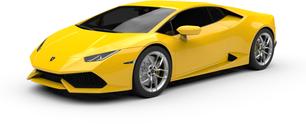
So, the existence of the new Lamborghini Huracan Sterrato, the world’s first 'All-terrain Supercar', a V10-engined mad machine built to drive sideways at high speed on dirt, should not come as a surprise.
And yet it really does, because there’s never been anything like it before (yes, Porsche has built the 911 Dakar, but it’s more of a sand-dune-climbing, desert-crossing motorsport tribute), for the very good reason that no one ever considered it would be a good idea.
It also sounds just a touch intimidating, the kind of driving experience that would require pro rally driver skills to survive, so it was with some trepidation that we headed to Palm Springs, USA, to test out the new Huracan Sterrato.
Nothing could’ve better prepared me for my drive in the 2019 Alfa Romeo 4C than a trip to Sydney’s Luna Park.
There’s a rollercoaster there called Wild Mouse - an old-school, single carriage coaster with no loop-the-loops, no high-tech trickery, and with each ride limited to just with two seats apiece.
The Wild Mouse throws you around with very little regard for your comfort, gently impinging your fear factor by making you consider the physics of what is happening underneath your backside.
It’s an unbridled adrenaline rush, and genuinely scary at times. You get off the ride thinking to yourself, “how the hell did I survive that?”.
The same can be said with this Italian sports car. It’s blisteringly quick, it’s superbly agile, it handles like it has rails attached to its underbody, and it could potentially do brown things to your underpants.
Not just a spectacularly stupid idea made real, the Lamborghini Sterrato is by far the best, or at least most hilarious, of the many Huracan variants the company has produced.
It makes you feel like a hero, even when you’re going sideways on dirt like a nutter. It could just be my new favourite supercar.
Note: CarsGuide attended this event as a guest of the manufacturer, with travel, accommodation and meals provided.
People might wonder if there’s a reason to buy an Alfa Romeo 4C. It has some great dollar-for-dollar competitors - the Alpine A110 does most of the things the Alfa does, but in a more polished way. And then there’s the Porsche 718 Cayman, which is a considerably more, well, considered option.
But there is no doubt the 4C stands alone, a sort-of cut-price alternative to a Maserati or Ferrari, and nearly as rare to spot on the road as those cars, too. And just like the rollercoaster at Luna Park, it’s the sort of car that’ll leave you wanting another go.
Oh yes, it’s pretty interesting, all right, because it breaks new dusty ground for Lamborghini, and its Huracan in particular.
To cope with its intended use, the Sterrato has been raised 44mm higher than the ground-hugging normal version and it’s also had giant, bolt-on style guards attached to make it look a bit wilder.
Also quite noticeable is the huge roof scoop - which renders rear vision from the driver’s seat a complete zero, they may as well throw the mirror away - which has to be there to help the V10 engine breathe.
The side air intakes through which air usually gets to the mid-mounted power plant have been blocked up, because they would have sucked in too much dirt and gravel.
I’m happy to report the silly looking rally style headlights stuck to the Huracan’s shark nose are optional, although again, no doubt every buyer has gone for them, because they stand out in a crowd.
The Huracan Sterrato has no problem doing that on its own, of course, because it already looks extremely aggressive, and its knobbly, all-terrain tyres finish off that style flourish.
Slap a Ferrari badge on it, and people would think it was the real deal - a pint-sized performance hustler, with all the right angles to get plenty of glances.
In fact, I had dozens of punters nod, wave, mount ‘nice car mate’ and even a few rubber-neck moments - you know, when you drive past and someone on the footpath can’t help but forget they’re walking, and they stare so hard they might well collide with the upcoming lamp-post.
It really is a head-turner. So why does it only get an 8/10? Well, there are some elements of the design that make it less user-friendly than some of its rivals.
For instance, the step-in to the cabin is enormous, because the carbon-fibre tub sills are huge. And the cabin itself is pretty tight, especially for taller people. An Alpine A110 or Porsche Boxster are much more amenable for day-to-day driving… but hey, the 4C is markedly better than, say, a Lotus Elise for ingress and egress.
Also, as smart as it still looks, there are elements of Alfa Romeo design that have moved on since the 4C launched back in 2015. The headlights are the bit that I dislike most - I had a real thing for the spider-eyes lights of the launch edition model.
But even if it isn’t unmistakably Alfa Romeo, it’s unmistakably a 4C.
Next question, please. You don’t get cupholders, there’s not really anywhere to put your phone and the cabin generally feels as roomy as a phone box that’s been through the wash and shrunk quite badly.
There’s a frunk that can barely hold two small backpacks and that’s about it. If you want practical space, buy an Urus. The Huracan Sterrato is not a practical car, but that’s not part of its design brief.
You can’t get into a car this small and expect a lot of space.
The dimensions of the 4C are tiny - it’s just 3989mm long, 1868mm wide and only 1185mm tall, and as you can see from the pictures, it’s a squat little thing. The Spider’s removable roof could be great for you if you’re tall.
I’m six-feet tall (182cm) and I found it to be cocoon-like in the cabin. You feel almost as though you’re tying yourself to the tub of the car when you get into the driver’s seat. And getting in and out? Just make sure you do some stretches beforehand. It’s not as bad as a Lotus for ingress and egress, but it’s still hard to look good clambering in and out of.
The cabin is a cramped space. There’s limited head room and leg room, and while there is reach and rake adjustment for the steering wheel, the seat only has manual slide and backrest movement - no lumbar adjust, no height adjust… almost like a racing bucket. They’re hard like a race seat, too.
The ergonomics aren’t terrific - the controls for the air-con are hard to see at a glance, the buttons for the gear select take some learning, and the two centrally-mounted cup holders (one for your double-shot mocha latte, the other for a hazelnut piccolo) are inconveniently positioned exactly where you might want to put your elbow.
The media system is rubbish. It’d be the first thing to go, if I bought one of these, and in its place would be an aftermarket touchscreen which would: a) actually let you pair to Bluetooth; b) look like it was from sometime after 2004; and c) be more fitting for a car of this price tag. I’d upgrade the speakers, too, because they’re poor. But I can totally understand if those things don’t matter, because it’s the engine you want to hear.
The materials - aside from the red leather seats - aren’t great. The plastics used are similar in look and feel to what you find in second-hand Fiats, but the sheer volume of exposed carbon-fibre does help you forget those details. And the leather pull straps to close the doors are nice, too.
The visibility from the driver’s seat is decent - for this type of car. It’s low, and the rear window is small, so you can’t expect to see everything around you at all times, but the mirrors are good and the forward vision is excellent.
Well, considering every Lamborghini Huracan Sterrato will almost certainly go up in value and become a collector’s item you’d have to consider them good value, at least in investment terms.
On the other hand, any car with a price tag of $503,949, before on-road costs, sits somewhat adjacent to the word “value”.
That large number has not put enthusiasts off, however, with all 1499 of the limited-run Sterrato Huracans already sold, and a long list of people with their names down hoping that someone gets scared and changes their mind, apparently.
Our vehicle came with two built-in cameras, which you could operate through the touchscreen to record Tik Tok-length videos of your driving.
This is almost certainly a cost option, but no one could tell us exactly, and all of the cars are already sold, no doubt to people who ticked every single option box.
Oh, and you do get aluminium floor mats. Nice.
Look, no-one considering an Italian sports car is likely to be wearing their common sense hat, but even so, the Alfa Romeo 4C Spider is an indulgent purchase.
With a list price of $99,000 plus on-road costs, it isn’t affordable. Not considering what you get for your money.
Standard inclusions consist of air conditioning, remote central locking, heated electric door mirrors, leather sports seats with manual adjustment, a leather-lined steering wheel, and a four-speaker stereo system with USB connectivity and Bluetooth phone and audio streaming. It’s not a touchscreen, so there’s no Apple CarPlay or Android Auto, and there’s no sat nav… but the thing about this car is going the fun way home, so forget maps and GPS. And there’s a digital instrument cluster with a digital speedometer - believe me, you’ll need it.
The standard wheels are a staggered set - 17-inch at the front and 18-inch at the rear. All 4C models have bi-xenon headlights, LED daytime running lights, LED tail-lights and dual exhaust tips.
Of course, being the Spider model, you also get a removable soft top and you know what’s neat? You get a car cover included as standard, but you’d want to put it in the shed, as it takes up a bit of boot room!
Our car was even further up the pay scale, with an as-tested price of $118,000 before on-roads - it had a few option boxes ticked.
First there’s that beautiful Basalt Grey metallic paint ($2000), and those contrasting red brake calipers ($1000).
Plus there’s the Carbon & Leather package - with carbon-fibre mirror caps, interior bezels, and a stitched leather instrument cover panel. It’s a $4000 option.
And finally, the Racing Package ($12,000), which includes a staggered set of 18-inch and 19-inch wheels with a dark paint finish, and those wheels are fitted with model specific Pirelli P Zero tyres (205/40/18 up front, 235/35/19 at the rear). Plus theres the sports racing exhaust system, which is awesome, and a racing suspension setup.
The Sterrato is powered by a Lamborghini engine that’s on its way into the history books, a 5.2-litre V10 that will die with this, the last variant of the Huracan.
Its replacement will be powered by a V8 hybrid, which will no doubt be more powerful but simply will not sound as amazing.
The version in the Sterrato has been detuned slightly, partly because of the breathing issues - you just can’t get as much air into an engine when it’s driving through its own self-propelled dust storm - and because of its all-terrain tyres, the first ever to be speed rated to 260km/h.
It still makes an impressive, and very loud, 449kW (602hp) and 560Nm, however. I’d describe it as “more than enough”.
That monster engine is matched with a seven-speed dual-clutch automatic and a very, very clever all-wheel drive system.
The Alfa Romeo 4C is powered by a 1.7-litre turbocharged petrol four-cylinder engine, which produces 177kW of power at 6000rpm and 350Nm of torque from 2200-4250rpm.
The motor is mounted amidships, and it is rear-wheel drive. It uses a six-speed dual-clutch (TCT) automatic with launch control.
Alfa Romeo claims a 0-100km/h time of 4.5 seconds, which makes it one of the quickest cars at this price point.
So, Lamborghini claims the Huracan Sterrato will deliver a fuel "economy" figure of 14.9 litres per 100km, which seems like a lot, until you consider it probably won't get anywhere near that, if you drive it the way you're supposed to, particularly foot flat and wheels spinning on dirt.
Again, fuel economy is not a core value for this car, nor its buyers.
An 80-litre tank means a theoretical range of around 480km.
Claimed fuel consumption for the Alfa Romeo 4C Spider is rated at 6.9 litres per 100 kilometres, so it’s no miser.
But, impressively, I saw real-world fuel economy of 8.1L/100km, over a loop that included urban, highway and ‘spirited’ driving on twisty roads.
I could give you the short version of what it was like to drive the Lamborghini Huracan Sterrato at speed on a specially prepared dirt race track, which would be to say that I have never, ever had so much fun in a car, but that would be selling it short.
While the Sterrato is clearly built to do one insensible thing brilliantly, while somehow not imperilling the life of its driver, what is most incredible about it is how good it is at everything else, as well.
To create this Huracan, Lamborghini had to increase the ride height significantly, soften up the suspension and increase its amount of travel.
It also had to ask Bridgestone nicely to produce a tyre unlike anything the world has ever seen, an all-terrain tread capable of dealing with dirt and gravel and yet also grippy enough to be used on a sealed race track, or to carve up your favourite mountain pass.
It also had to be capable of being speed rated to 260km/h, or about 100km/h faster than any all-terrain tyre Bridgestone has ever produced before.
Looking at the unique Dueler All-Terrain AT002s, with their chunky tread, you would assume that the Sterrato is going to be noisy, slippery and possibly a little rough on public roads, but that’s not the case at all.
This Huracan rides more smoothly - largely thanks to those suspension tweaks - and more quietly than its forebears, and it’s actually more practical around town as well, thanks to the ride height. So, no more flinching at speed bumps.
The tyres also provide proper supercar levels of grip on public roads, even those dusted with a bit of desert sand.
There’s a bit of squirm at the rear and under hard braking, but overall the experience is typically Lamborghini Huracan wonderful, all playing out to a soundtrack that is beyond beautiful from that howling V10.
The first part of our track experience at the Chuckwallah Raceway was also familiarly fantastic, the Huracan ripping around the sealed track at astonishing speed; it certainly doesn’t feel detuned.
Lamborghini had gone to the trouble of mirroring the sealed circuit with a specially constructed dirt track in the infield, so that 50 per cent of our lap would be spent sideways in ankle deep, dust, sand and rocks, much of it through long, long bends, with the occasional chicane set up specially for Scando flicking action.
Now, I am not, by any means, an expert at drifting, nor an accomplished rally driver, so I was, to put it mildly, shit scared of getting this half-million-dollar, limited-edition, 449kW monster on to the dirt section.
I feared I would spin around, or flip upside down, or find some other way to embarrass myself, but what happened when I got there was beyond inexplicable, and beyond joy.
This car is so clever, so easy to drive, so beautifully balanced, that it can turn a total newb into Colin McRae. His name comes to me because the whole experience reminded me of driving a rallying video game, it felt unreal, and yet overpoweringly visceral at the same time.
I could start a drift with the slightest flex of the throttle, then balance the car as it pivoted around a bend before nailing the throttle and haring off to the next fantastic drifting opportunity.
When we got back on the sealed stuff, the car would shake like mad, at 200km/h, as the dust attempted to get its way out of the wheels, but that just added to the excitement.
The secret wasn’t that I’d somehow become a better driver, it was what Lamborghini engineers call, accurately, “the hero maker”.
It’s a software and hardware package called LDVI, or 'Lamborghini Dinamica Veicolo Integrata', which, when you put the Sterrato in 'Rally' mode, uses many sensors combined with torque vectoring and selective braking to keep you going where you want to go, with minimal intervention.
Or at least minimal intervention that you can feel, which makes you feel like a hero.
I kind of understand how it works, but I totally relate to how it makes you feel. Like a genius. And you’d pay $500K for that, surely?
I said that it’s like a rollercoaster, and it really, truly is. The air doesn’t quite rush through your hair as much, sure - but with the roof off, the windows down and the speedometer constantly edging towards licence suspension, it’s a real hoot of an experience.
It just feels so tight - the carbon-fibre monocoque chassis is rigid and super stiff. You hit a cats-eye and its all so sensitive, you could mistake it for having hit an actual cat.
Alfa Romeo’s DNA drive modes - the letters stand for Dynamic, Natural, All Weather - is one of those proper examples of this type of system done well. There’s a marked difference between how these different settings operate, where some other drive modes out there are more sedate in their adjustments. There’s a fourth mode - Alfa Race - which I didn’t dare sample on public roads. Dynamic was enough to test my mettle.
The steering in Natural mode is lovely - there’s great weighting and feedback, super direct and incredibly in touch with the surface below you, and the engine isn’t quite as zesty, but still offers tremendous response on the move.
It’ll be a difficult choice between this and Alpine A110 and a Porsche Cayman
The ride is firm but composed and compliant in any of the drive modes, and it doesn’t have adaptive suspension. It is a stiffer suspension setup, and though the damping doesn’t change in Dynamic mode, if the surface is anything but perfect you will tram-track and twitch all over the place, because the steering feels even more dialled in.
In Dynamic mode the engine offers amazing response when you’re at pace, building speed incredibly and before you know it, you’re in licence loss zone.
The brake pedal requires some firm footwork - just like in a race car - but it pulls up strongly when you need it to. You’ve just gotta get used to the pedal feel.
The transmission is a good thing at speed in manual mode. It won’t overrule you if you want to find the redline, and it sounds tremendous. The exhaust is exhilarating!
With roof on and windows up there’s very noticeable noise intrusion - lots of tyre roar and engine noise. But remove the roof and drop the windows and you get the full effect of the drive experience - you’ll even get some "sut-tu-tu” wastegate flutter. It doesn’t even matter that much that the stereo system is so rubbish.
At normal speeds in normal driving you do need to be considerate of the powertrain because it is finnicky and slow to react at times. There’s notable lag if you’re gentle on the throttle, both from engine and transmission, and the fact peak torque doesn’t come on song until 2200rpm means there’s lag to contend with.
It’ll be a difficult choice between this and Alpine A110 and a Porsche Cayman – each of these vehicles has a very different character. But for me, this is the most go-kart like and it is, undeniably incredibly involving to drive.
In a V10-engined supercar you’re meant to drive on dirt? You’ve come to the wrong place.
Okay, so there’s no crash rating, and there won’t be, but you do get AEB, driver, passenger, and side airbags along with knee airbags as well as front and rear-specific collapsible areas, reinforcement bars in the doors. Oh, and Electronic Stability Control.
You’re in the wrong spot if you want the latest in safety technology. Sure, it’s at the cutting edge because it has an ultra strong carbon-fibre design, but there’s not much else happening here.
The 4C has dual front airbags, rear parking sensors and an alarm with tow-away protection, plus - of course - electronic stability control.
But there are no side airbags or curtain airbags, there’s no reversing camera, there’s no auto emergency braking (AEB) or lane keep assist, no lane departure warning or blind spot detection. Admittedly - there are a few other sports cars in the segment which lack safety smarts, too, but
The 4C has never been crash tested, so there’s no ANCAP or Euro NCAP safety score available.
The Huracan Sterrato comes with a Lamborghini warranty good for three years with unlimited kilometres.
It also comes with 24/7 roadside assist for an unspecified amount of time. It is also offered with pre-paid scheduled maintenance service for three or five years.
If you’re hoping that a ‘simple’ car like the 4C will mean low ownership costs, you might be disappointed in this section.
The Alfa Romeo website service calculator suggests that over 60 months or 75,000km (with service intervals set every 12 months/15,000km), you will have to fork out $6625 total. For a breakdown, the services cost $895, $1445, $895, $2495, $895.
I mean, that’s what you get when you buy an Italian sports car, I suppose. But consider you can get a Jaguar F-Type with five years of free servicing, and the Alfa looks like a rip-off.
The Alfa does, however, come with a three-year/150,000km warranty plan, which includes the same cover for roadside assist.