What's the difference?
Lamborghini is a brand built on madness, excess and eye-searing design. Its cars don’t have to make sense, and indeed its owners probably prefer it if they don’t - they have other vehicles to use for the real world.
So, the existence of the new Lamborghini Huracan Sterrato, the world’s first 'All-terrain Supercar', a V10-engined mad machine built to drive sideways at high speed on dirt, should not come as a surprise.
And yet it really does, because there’s never been anything like it before (yes, Porsche has built the 911 Dakar, but it’s more of a sand-dune-climbing, desert-crossing motorsport tribute), for the very good reason that no one ever considered it would be a good idea.
It also sounds just a touch intimidating, the kind of driving experience that would require pro rally driver skills to survive, so it was with some trepidation that we headed to Palm Springs, USA, to test out the new Huracan Sterrato.
Can a hatchback still be a fun and fashionable way to get around when the SUV has become such a status trend?
The facelifted Audi A3 certainly makes a case for it.
The refreshed 2025 A3 is, as Audi puts it, more competitive than before when it comes to not only value but also, you might agree, style.
Last year, before the update even arrived, the A3 sold almost as well as its Volkswagen Golf corporate sibling. In fact, it’s Audi’s third most popular model behind the Q3 and Q5 SUVs.
It’s also third in its segment of ‘Small cars under $40,000’, behind only the MG4 electric car and, you guessed it, the VW Golf.
As such, it also outsells its actual closest rivals the BMW 1 Series and Mercedes-Benz A-Class, both of which are close to the A3 on price.
Now that it’s been given a bit more razzle dazzle, let’s see if the A3 can keep that momentum going.
Not just a spectacularly stupid idea made real, the Lamborghini Sterrato is by far the best, or at least most hilarious, of the many Huracan variants the company has produced.
It makes you feel like a hero, even when you’re going sideways on dirt like a nutter. It could just be my new favourite supercar.
Note: CarsGuide attended this event as a guest of the manufacturer, with travel, accommodation and meals provided.
Closing in on $60,000 for a small car isn’t cheap. Ask a car dealer and they might even say the hatchback is a good way to get someone into a showroom to eventually look at an SUV.
But I reckon you’d be doing the A3 a disservice to count it out. It’s always been one of those cars that does everything well, and with this current facelift manages to keep its practicality without becoming boring.
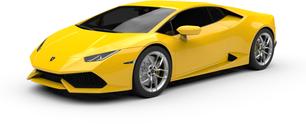
It looks good on the outside, it’s smart on the inside and it’s fun to drive while remaining sensible. Even if you get it in bright yellow.
Oh yes, it’s pretty interesting, all right, because it breaks new dusty ground for Lamborghini, and its Huracan in particular.
To cope with its intended use, the Sterrato has been raised 44mm higher than the ground-hugging normal version and it’s also had giant, bolt-on style guards attached to make it look a bit wilder.
Also quite noticeable is the huge roof scoop - which renders rear vision from the driver’s seat a complete zero, they may as well throw the mirror away - which has to be there to help the V10 engine breathe.
The side air intakes through which air usually gets to the mid-mounted power plant have been blocked up, because they would have sucked in too much dirt and gravel.
I’m happy to report the silly looking rally style headlights stuck to the Huracan’s shark nose are optional, although again, no doubt every buyer has gone for them, because they stand out in a crowd.
The Huracan Sterrato has no problem doing that on its own, of course, because it already looks extremely aggressive, and its knobbly, all-terrain tyres finish off that style flourish.
Eye of the beholder and all that, sure, but the A3 looks cool from the outside. It’s got this angular design but manages it without being too aggressive or busy with other design elements, so it still has a ‘premium Euro’ feel to it.
Shooting pics of the car for this review, the harsh light accentuated its sharp lines. It looks sculptural rather than just some little blob.
At the same time, thanks to the proliferation of sports design packs like the S Line, The A3 looks like it could be an S3, almost. Which makes sense, because the front bumper and rear diffuser as well as the roof spoiler are all partly inspired by RS models.
New for the A3 is the flat, 2D Audi badge, the model name on the B pillar and the new font for its name on the tailgate.
The lights in the cluster are able to look narrower than before thanks to their customisable settings, which allow you to choose the light signature, while the grille has a flatter appearance and the air intakes are bigger. Even the wheels look like they’re from a sports car.
Whether you’d have the A3 in the Python Yellow of our test car is another thing. I don’t mind a loud colour but I reckon a bit of 'District Green', 'Ascari Blue' or 'Progressive Red' would be the vibe.
Also, any colour that isn’t white is a cost-option on the A3, all of them coming in at $1350, except Ascari Blue which is an Audi Sport colour and costs $1850.
Speaking of the vibe, inside the A3 feels properly nice. It’s not just a spruced up Golf in there. There’s proper Audi character to the car, though that means plenty of piano black trim to get smudgy.
Audi’s done a good job making the layout look sleek without resorting to locating all the controls in the screen. There are design elements in the cabin that aren't strictly necessary but are worth doing for the way they look.
Things like the way the vents flank the driver display or the trim inlay on the passenger side of the dash.
Next question, please. You don’t get cupholders, there’s not really anywhere to put your phone and the cabin generally feels as roomy as a phone box that’s been through the wash and shrunk quite badly.
There’s a frunk that can barely hold two small backpacks and that’s about it. If you want practical space, buy an Urus. The Huracan Sterrato is not a practical car, but that’s not part of its design brief.
Starting from what’s right in front of you as a driver, the steering wheel is the same as in bigger, more expensive Audis. That’s a good thing, because it’s nice to hold, has a good shape for the nine-and-three hand position and it’s not too thick.
As well as the nice, clear buttons on the wheel, you’ve got some physical controls for the climate control and some of the vehicle functions like parking assist and stop-start under the multimedia screen.
For a car this size, the 10.1-inch central touchscreen is plenty big enough, and the fact it doesn't sit up high over the dash is great. It's like a perfect arm's length for your standard-sized adult (like me). I can reach the other side of the screen without needing to lean.
The fact there’s no head-up display is a bit of a let-down, but the now-standard 12.3-inch driver display is very good. It’s configurable yet clear, and means you can get detailed navigation information in front of you rather than having to look to the multimedia screen.
The test A3 has genuine leather upholstery, which is $1100 extra. Not the most you’d pay for leather seats in a Euro, and the seats are comfortable. They're nicely bolstered, the drivers’ side is electrically adjustable and the leather doesn’t feel hard or rough to the touch.
Sitting behind my own seating position in the second row is a little tight, however. At 178cm, my knees almost touch the seat in front. There's also no sunroof, and even though there's just about enough light, that omission doesn’t help the cramped feeling.
There are, like the front, two USB-C ports and the air vents in the back, the latter separately adjustable to avoid arguments, though the cupholders in the armrest are in an awkwardly central position.
Behind that, under the 380-litre boot's floor is a space-saver spare tyre. That's better than some SUVs designed for family adventures that only offer up an inflator/repair kit. Keep that up, Audi. Good job. Well done.
If you fold the rear seats, you get 1200 litres of space. Interestingly, those luggage space figures are the same as the BMW 1 Series.
Well, considering every Lamborghini Huracan Sterrato will almost certainly go up in value and become a collector’s item you’d have to consider them good value, at least in investment terms.
On the other hand, any car with a price tag of $503,949, before on-road costs, sits somewhat adjacent to the word “value”.
That large number has not put enthusiasts off, however, with all 1499 of the limited-run Sterrato Huracans already sold, and a long list of people with their names down hoping that someone gets scared and changes their mind, apparently.
Our vehicle came with two built-in cameras, which you could operate through the touchscreen to record Tik Tok-length videos of your driving.
This is almost certainly a cost option, but no one could tell us exactly, and all of the cars are already sold, no doubt to people who ticked every single option box.
Oh, and you do get aluminium floor mats. Nice.
For $54,800, before on-road costs, the A3 can be had as a hatchback - aka Sportback if you’re Audi - or for $57,800 as a sedan.
It’s a little over $4000 more expensive than the pre-facelift version, but Audi reckons there’s about $10,000 more value than before.
And value can be an important when you’ve got the BMW 118 ($57,600) and Mercedes A200 ($61,900) not sitting too far away in terms of price.
Part of the A3’s value equation comes thanks to the addition of the S Line package as standard, which not only makes the A3 look sportier but adds heated sports seats, aluminium interior trim elements and stainless steel on the pedals.
There’s also a larger 12.3-inch screen for the driver display as standard rather than an option. Audi has also reconfigured the air vents for the three-zone climate control, as well as adding a new style gear shifter.
Continued standard kit on the A3 is a wireless phone charger as well as a 10-speaker sound system, an ambient lighting package, a leather steering wheel and synthetic leather trim on the seats which all make for a sporty feel on the inside.
But on the outside there’s also customisable LED headlights and daytime running lights, as well as dynamic indicators and a set of 18-inch alloy wheels.
The car we tested also has a couple of options, its 'Python Yellow' paint is $1350 which I’ll come back to in the design section, but there’s also optional leather seats for $1100 and an electric tailgate for $660, the latter certainly worth it, I reckon.
All up, the car on test comes to $57,910, before on-roads, so even an optioned-up A3 comes in at either the same or less than its closest rivals from BMW and Mercedes-Benz.
The Sterrato is powered by a Lamborghini engine that’s on its way into the history books, a 5.2-litre V10 that will die with this, the last variant of the Huracan.
Its replacement will be powered by a V8 hybrid, which will no doubt be more powerful but simply will not sound as amazing.
The version in the Sterrato has been detuned slightly, partly because of the breathing issues - you just can’t get as much air into an engine when it’s driving through its own self-propelled dust storm - and because of its all-terrain tyres, the first ever to be speed rated to 260km/h.
It still makes an impressive, and very loud, 449kW (602hp) and 560Nm, however. I’d describe it as “more than enough”.
That monster engine is matched with a seven-speed dual-clutch automatic and a very, very clever all-wheel drive system.
The A3 is powered by a 1.5-litre, turbocharged four-cylinder petrol engine that makes 110kW and 250Nm.
It drives the front wheels via a seven-speed dual-clutch auto transmission and it can hit 100km/h in a claimed 8.1 seconds.
It’s also got a 48-volt mild hybrid system to help with efficiency, though you’d need to be told about it to notice. It also helps with the A3’s (smooth) stop-start system.
So, Lamborghini claims the Huracan Sterrato will deliver a fuel "economy" figure of 14.9 litres per 100km, which seems like a lot, until you consider it probably won't get anywhere near that, if you drive it the way you're supposed to, particularly foot flat and wheels spinning on dirt.
Again, fuel economy is not a core value for this car, nor its buyers.
An 80-litre tank means a theoretical range of around 480km.
The A3’s 50-litre fuel tank needs to be filled with RON 95 premium fuel and it’ll drink a claimed 5.3-litres per 100km on the combined (urban/extra-urban) cycle.
Theoretically you’re topping 900km a tank there, but given how fun this car is to drive you’d have to be well behaved to get even close.
For reference, whenever I was on a normal, day-to-day drive on test the A3's trip computer was returning figures in the mid to high sixes.
I could give you the short version of what it was like to drive the Lamborghini Huracan Sterrato at speed on a specially prepared dirt race track, which would be to say that I have never, ever had so much fun in a car, but that would be selling it short.
While the Sterrato is clearly built to do one insensible thing brilliantly, while somehow not imperilling the life of its driver, what is most incredible about it is how good it is at everything else, as well.
To create this Huracan, Lamborghini had to increase the ride height significantly, soften up the suspension and increase its amount of travel.
It also had to ask Bridgestone nicely to produce a tyre unlike anything the world has ever seen, an all-terrain tread capable of dealing with dirt and gravel and yet also grippy enough to be used on a sealed race track, or to carve up your favourite mountain pass.
It also had to be capable of being speed rated to 260km/h, or about 100km/h faster than any all-terrain tyre Bridgestone has ever produced before.
Looking at the unique Dueler All-Terrain AT002s, with their chunky tread, you would assume that the Sterrato is going to be noisy, slippery and possibly a little rough on public roads, but that’s not the case at all.
This Huracan rides more smoothly - largely thanks to those suspension tweaks - and more quietly than its forebears, and it’s actually more practical around town as well, thanks to the ride height. So, no more flinching at speed bumps.
The tyres also provide proper supercar levels of grip on public roads, even those dusted with a bit of desert sand.
There’s a bit of squirm at the rear and under hard braking, but overall the experience is typically Lamborghini Huracan wonderful, all playing out to a soundtrack that is beyond beautiful from that howling V10.
The first part of our track experience at the Chuckwallah Raceway was also familiarly fantastic, the Huracan ripping around the sealed track at astonishing speed; it certainly doesn’t feel detuned.
Lamborghini had gone to the trouble of mirroring the sealed circuit with a specially constructed dirt track in the infield, so that 50 per cent of our lap would be spent sideways in ankle deep, dust, sand and rocks, much of it through long, long bends, with the occasional chicane set up specially for Scando flicking action.
Now, I am not, by any means, an expert at drifting, nor an accomplished rally driver, so I was, to put it mildly, shit scared of getting this half-million-dollar, limited-edition, 449kW monster on to the dirt section.
I feared I would spin around, or flip upside down, or find some other way to embarrass myself, but what happened when I got there was beyond inexplicable, and beyond joy.
This car is so clever, so easy to drive, so beautifully balanced, that it can turn a total newb into Colin McRae. His name comes to me because the whole experience reminded me of driving a rallying video game, it felt unreal, and yet overpoweringly visceral at the same time.
I could start a drift with the slightest flex of the throttle, then balance the car as it pivoted around a bend before nailing the throttle and haring off to the next fantastic drifting opportunity.
When we got back on the sealed stuff, the car would shake like mad, at 200km/h, as the dust attempted to get its way out of the wheels, but that just added to the excitement.
The secret wasn’t that I’d somehow become a better driver, it was what Lamborghini engineers call, accurately, “the hero maker”.
It’s a software and hardware package called LDVI, or 'Lamborghini Dinamica Veicolo Integrata', which, when you put the Sterrato in 'Rally' mode, uses many sensors combined with torque vectoring and selective braking to keep you going where you want to go, with minimal intervention.
Or at least minimal intervention that you can feel, which makes you feel like a hero.
I kind of understand how it works, but I totally relate to how it makes you feel. Like a genius. And you’d pay $500K for that, surely?
First things first, the A3’s exterior and S Line pack are a clue to the way the car drives. It’s probably not the perfect car if you like a cushy, soft ride.
Its suspension errs towards the stiffer side of things, and certain bumps can feel more significant than they need to. But even on particularly bad roads or tram tracks in the city the dampers do a decent job of soaking up the harsh stuff.
It also means there’s more road noise than you’d like on some older highway surfaces, but only in a way that might get annoying if you’re on a road trip with the stereo off for some reason.
The upside of that is its steering feels well weighted and accurate. Plus, the way it handles and corners feels like a bit more grunt would make this a proper driver's car.
It’s not too intense, and there’s enough feedback to make it feel like the A3 shouldn't be a city-dweller only when it comes to driving.
Of course, it’s a hatchback, so you've got the advantages that come with less weight and a lower centre of gravity.
It doesn’t have enough weight to push into understeer more than you’d like on a tight corner. But it also doesn’t feel so light that you’re not sure how it’s going to behave under sharp braking.
The A3’s drivetrain, despite looking underwhelming on paper, feels practical on the road. Sure, 110kW isn't anything wicked, but its 250Nm feel like they’re working in the right places - that being between 1500 and 3500rpm.
It isn't blisteringly quick but even with the seven-speed transmission operating in default auto mode it usually feels like it's in the right place, let alone chipping in with 'manual' shifts via the paddles or shifting drive modes. The A3 has a choice of 'Normal' and 'Sport' shift settings.
You might be a little disappointed if you thought you’d be getting anything approaching a hot hatch, but for an entry-level model the A3 more than holds its own. It’s a solid platform that performs well without compromising too much when it comes to daily driving ability.
In a V10-engined supercar you’re meant to drive on dirt? You’ve come to the wrong place.
Okay, so there’s no crash rating, and there won’t be, but you do get AEB, driver, passenger, and side airbags along with knee airbags as well as front and rear-specific collapsible areas, reinforcement bars in the doors. Oh, and Electronic Stability Control.
Tested in 2020, the A3’s been awarded a maximum five-star rating from ANCAP which applies to the facelifted version.
Six airbags and a suite of active safety tech helped contribute to this, though, whether it would pass with five stars under ANCAP’s current assessment protocols isn’t certain.
That’s likely only down to its relatively non-invasive safety warnings and mild assistance with things like lane-keep and speed warnings.
If you’re someone who’s likely to turn off most of the electronic assistance, the A3’s systems are at a pretty good level as standard.
It’s missing some modern kit like surround-view parking cameras but it does have front and rear proximity sensors and things like rear cross-traffic alert.
The Huracan Sterrato comes with a Lamborghini warranty good for three years with unlimited kilometres.
It also comes with 24/7 roadside assist for an unspecified amount of time. It is also offered with pre-paid scheduled maintenance service for three or five years.
Audi offers a five-year/unlimited kilometre warranty, which is about par for a premium brand, but it also offers five years' free roadside assist and the ability to pay to extend the warranty.
Servicing is $2520 for a five year plan, but the extended two years of 'Audi Advantage' warranty is $3250 and comes with unlimited kilometres, roadside assist and covers two services.