What's the difference?
There are plenty of reasons why you should still consider a mid-sized sedan like the Kia Optima. I’m sure there are… just let me think about this for a sec…
Okay, so this part of the market is dying. A decade ago, sedans like this were really popular, but now there are heaps of alternative options. Yep, people are going for mid-sized SUVs rather than mid-sized sedans like this.
But that doesn’t mean models like the just-updated 2018 Kia Optima are without their reasons for being. I’m just not sure the facelift has made it more appealing to look at…
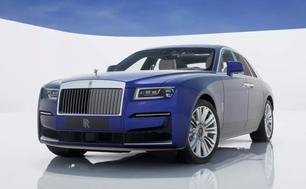
It’s finally happened: Rolls-Royce has become so divorced from the everyday world of common folk that it's no longer even sharing the previously agreed meanings of words. Rolls has its own meanings, possibly its own language, which must be spoken with a plum on the tongue.
They’ve been heading here for a while. For example, at Rolls, “affordable” means the car we're driving today, the Rolls-Royce Ghost Series II, which is yours for just $680,000 (an indicative price, bumping to $800K for the Black Badge). And “iconic British marque” means, obviously, “BMW bought us in 2003, so there might be some German bits”.
It turns out that “driver-focused” means something different at Rolls-Royce, too. Thanks to a smattering of chassis innovations, Rolls says this updated 2025 Ghost is “the most driver-focused V12 Rolls-Royce ever”. Which is “a side of Ghost’s character that our clients increasingly and enthusiastically embrace”.
Don’t fall for it. The Ghost’s extra focus is not actually very focusy, and its additional dynamism is really only more dynamic in the way that a bed that could corner at all would be more dynamic than a normal bed. None of that matters.
The reason it doesn’t matter is because the Ghost Series II is wonderful. Indeed, it is very nearly perfect. Which is a word that even Rolls won’t quibble over.
If you travel long distances, want a good amount of space and don’t want to pay big bucks for a new car, then yeah, maybe there is a reason sedans like this will hang around for a while longer.
Sure, the appeal of sedans mightn’t be as strong as it once was, but models like the Kia Optima prove they still have a reason to exist.
In a disruptive era when the coachbuilder has pivoted to SUVs like the Cullinan, a sort of London black cab that’s been dipped in opulence, and succeeds despite itself, and the brand’s grand, million-dollar EV, the Spectre, the Ghost is a safe and familiar space.
A beautiful, long, broad, immaculate land boat. It’s a space Rolls inhabits with relish.
The Ghost Series II feels nothing like a track-day option when you’re behind the wheel. But it might do if you were stepping out of a Phantom. Or a Cullinan. Or a Wraith. Especially if you’re stepping out of the back doors.
It’s the perfect driver’s car. As long as all your other cars are also Rolls-Royces.
Cosmetic changes for the facelifted 2018 Kia Optima include new headlights and tail-lights with revised LED signatures (but still halogen lamps in the base model), and there are newly sculpted bumpers and new wheel designs across the two-model range.
We had the base model Si, which doesn’t look as good as the GT model, because it has smaller wheels, the sporty body kit and misses out on the LED headlights, but the LED daytime running lights are still present.
The GT has a more aggressive look, and the side skirts, front spoiler and rear diffuser fit it better - there are dual exhausts, but not sporty quad exhaust tips.
In fact, this model is a bit like the old-man version of the Optima. No offence intended to old men, of course. The GT is just heaps sportier, and I reckon it’s considerably more attractive as a result.
Still, the inherent sleek styling of the Optima remains - the chrome highlighting along the window line is a bit too sheeny for me, but the angles and stance of this model are quite gracious. I really dig the fact the top of the windscreen mirrors the ‘Tiger Nose’ grille shape.
I'm no exterior designer, but I liked the existing Optima more - it just looked a bit neater, even though it had a decent amount of bling with its Mercedes-like diamond-pattern grille, as opposed to the cheese grater look seen here.
There’s not quite as much bling inside the cabin of the Si, either, but it is still a well-designed space - just not as special as the premium package offering of the GT (which gets leather trim - not nappa leather, but still a quality cowhide finish, and more). Check out our interior photos to see if you agree - but size and interior dimensions of the Optima are hard to argue against.
Yes, its exterior is more monolithic than before. The previous iteration was hardly fiddly, but the (apparently client driven) evolution here edges ever so gracefully towards what Rolls-Royce might secretly think of as brutalism.
The Ghost Series II’s generous 2148mm width is further emphasised up front, stretched across its upright prow, with slimline headlights adding definition and — surprisingly — a touch of villainy.
New, Spectre-inspired tail lamps and a discreetly inscribed double ‘R’ monogram add a reserved flourish from behind, and buyers can choose from two new 22-inch, nine-spoke wheel designs.
It’s subtle, no doubt. But it’s also impeccable.
I really like the way Kia designs its cabins. Sure, there’s a lot of black in here, but there’s also a lot of thought put into the usability of the space.
The high-mounted 7.0-inch infotainment and multimedia touch screen in the Si is simple to use, and for 2018 the Optima range gets Apple CarPlay and Android Auto - you couldn’t get that in the Optima up to this point.
Also included are a reversing camera, USB input, Bluetooth phone and audio streaming and six speakers. The Si model misses out on sat nav - you’ll have to use the maps app on your phone. No DVD player either.
Storage is well thought out in here, with big bottle holders in the doors, a good sized pair of cup holders up front, and a nice little storage bin for your phone, wallet, keys and so on.
There’s a driver info screen with a digital speedo, and even on this base model you get a dual-zone climate control air conditioner. The updated Optima gets a new steering wheel, too.
Now, what about the back seat?
It may be considered a ‘mid-sized’ sedan, but there’s limo-like space. With the driver’s seat in my position (I’m about six feet tall) there was still heaps of rear legroom in the rear seat, with ample knee room, good foot room and decent shoulder space, too - three of me could slot across the back bench comfortably, which means kids will fit easily, too. There are three top-tether points and two ISOFIX points as well.
Kids and adults alike will be happy with the rear air vents back here, and there’s a flip down armrest with cupholders, too. Again, big bottle holders appear in the doors, and there are map pockets in the back seats.
What about boot space? With so many people choosing SUVs over sedans because they’re theoretically more practical, the Optima offers good food for thought - it has enough luggage capacity for a bunch of suitcases (510 litres VDA in size) and there’s a full-size alloy spare under the boot floor. If you need more, you could always invest in a roof rack setup?
Inside, yes, there are bonkers touches in this most refined of automotive spaces, such as upholstery pinpricked by 107,000 'Placed Perforations' of 1.2mm in diameter, each individually examined, that replicate the shape of some clouds spotted over Rolls-Royce's Goodwood HQ.
Beside those flourishes of lunatic opulence, the more practical features feel pedestrian, but they’re comprehensive. The wireless Apple CarPlay and Android Auto, the seamless 'Central Information Display' and the 18-speaker 1400-watt audio, the upgraded Wi-Fi hotspot and the unobtrusive USB-C ports. The rear-seats flush with giant, streaming-optimised screens and heated and ventilated massaging seats.
Rolls acknowledges the generational movement of its clientele from back seat to front, with over 90 per cent of buyers now opting to — gasp! — steer themselves in a Ghost. But with back-seat savoir faire in its DNA, Rolls simply extends its hospitality to every seat.
Kia dropped prices for this updated and facelifted model range - and not by a small amount, either. So, what's the price? How much does it cost?
The Si model is the entry-grade of two models, and it comes in at the bottom of the price list at $33,290 plus on-road costs (rrp) - an $1100 drop over the previous version. The Si, then, is a value-focused sedan that you might consider if you’ve looked at a Toyota Camry Ascent, Hyundai Sonata Active, Mazda6 Sport or Subaru Liberty 2.5i.
The standard equipment list is pretty good - although there have been some deletions, because the price is down $1100. The rather good HID headlamps with washers have been dumped in favour of halogen projector lights (yeah, not even xenons), and the satellite navigation system (GPS) is gone.
But now the 7.0-inch media screen is capable of doing the Apple CarPlay iPhone connectivity and Android Auto phone mirroring thing, and that’ll serve most people’s purposes pretty well, but there is no digital DAB radio, and no CD player for the sound system. Other standard kit includes a digital driver info display with digital speedo, dual-zone climate control, cloth seat trim, auto-dimming rear-view mirror, a reversing camera, front and rear parking sensors, auto headlights and rain sensing wipers, and 17-inch alloy wheels (with a full-size spare).
New equipment for the Si includes driver-fatigue monitoring and an active lane-keeping assistance system (in place of the old lane-departure-warning buzzer).
If you want all the fruit you really need to fork out the extra cash for the GT, which lists at $43,290 plus on-roads (vs $33,290 for the Si). That is getting perilously close to Kia Stinger territory… but let's not get too far ahead of ourselves - this isn't a model comparison!
You get a fair bit more for your dough, but even the GT has seen a few deletions to help justify its $1200 price drop compared to the pre-facelift model, such as the front passenger seat being manually operated (previously electric), the cooling/ventilation of the front seats has been deleted, and the panoramic sunroof of the previous model is gone, too. And while it rides on 18-inch rims with a new design, the tyre-pressure-monitoring system has been removed.
It uses a new 8.0-inch media screen with extended smartphone connectivity and in-built sat nav (with 10 years of maps included and SUNA live traffic updates), and it also gains redesigned LED headlights but they lose the smart auto high-beam assistance of the old model. The tech doesn't go as far as to include Homelink garage door opening here in Australia, either.
Other standard kit in the GT includes leather seats, electric driver’s seat adjustment with memory settings, smart key (keyless entry) and push button start, a sports body kit, a harman/kardon audio system with 10 speakers and a subwoofer, wireless phone charging (Qi) but no Wi-Fi hotspot, rear sunshades (but no tinted windows), different interior trim finishes, a heated steering wheel, and a colour driver-information screen.
The GT also gets the new lane assist system and driver-fatigue monitor, and the entire safety approach has been improved across the range. See the safety section below for more detail.
There is no launch edition, nor is there a sports edition, but there is a decent array of colours (or colors, depending on where you're reading this) available - black, white, blue, red, grey and silver can be chosen, but not brown, purple or gold... if you wanted those.
Accessories available across both trim levels include tailored floor mats, a dash mat and weathershields, among other items.
The Ghost Series II is yours for an indicative price of just $680,000 (or $800K for the Black Badge) plus substantial on-road costs. The Ghost Series II extended (which we didn’t drive at the international launch in Provence) will slip in at around $20K less than the Black Badge before additional charges.
If they seem like big numbers, you’re probably the sort of person who looks at price tags, or who shops in shops that put price tags on things. These are not common traits of Rolls-Royce buyers, who may only be vaguely aware of the actual price of their vehicle, and whose historical impression of guillotines is generally unfavourable.
So, high six-hundreds is table stakes.
But you might also think the ‘standard’ Ghost, like all Rolls-Royces, is considered by most buyers to be a mere starting point, from which they’ll typically up-spec their ride from a sumptuous and expensive options list.
Spending another 10 percent of the purchase price on customisation is a bare-bones outlay for most owners, but even so, the evolved Ghost’s out-of-the-box features are so comprehensive as to be almost overwhelming.
First, because the Ghost has been Rolls-Royce’s driver’s car since the first (modern) generation arrived in 2010, specifically to cater to a weird (for Rolls clientele) new generation of buyers who wanted to drive their Rolls themselves.
So that price gets you, above all, that proven but superb 6.75-litre twin-turbo V12 engine, massaged via an eight-speed transmission and an AWD system that’s as rich and viscous as Crassus’s last libation.
There’s its subtly tinkered 'flight on land' 'Planar Suspension System' (note the unspoken dissonance between the terms ‘flight on land’ and ‘driver-focused'), with an ingenious 'Satellite Aided Transmission' system that uses GPS to pick the ideal gear with which to launch out of turns.
It works hand-in-velvet-glove with Goodwood's 'Flagbearer' camera system, which tracks the road ahead to chide potholes into submission in advance.
Because it’s a Rolls, though, that’s barely even the start of the story.
The coachwork is extraordinary, with new trim options including natural open-pore 'Grey Stained Ash' design elements, a sumptuous new bamboo rayon textile called 'Duality Twill'.
There a night-sky inspired illuminated fascia that apes elements of time-lapse celestial photography, part of the central glass panel that stretches the length of the dash.
Sure, you might expect that level of detail for the outlay. But for the outlay it’s far from missing anything you’d expect.
The Si model is powered by a 2.4-litre four-cylinder petrol engine, which has seen no changes to its specifications for this mid-life update.
Engine specs remain at 138kW of power at 6000rpm, while torque is rated at 241Nm at 4000rpm. It makes use of a six-speed automatic transmission only - there’s no manual transmission here, but you do get paddle shifters - and it's front wheel drive (the Optima isn't available with AWD, or as a 4x4, or in rear wheel drive - the latter is left to its bigger brother, the Stinger).
The GT gets a zestier drivetrain with more horsepower - it has a 2.0-litre turbo four-cylinder engine with 180kW/350Nm, which is much more desirable, but also louder than the Si’s 2.4. It also has a six-speed auto transmission, and is FWD. If you're into ratings and statistics, that 2.0-litre with a turbocharger is one of the perkier offerings for its engine size in the class.
There is no hybrid model available, despite a plug in hybrid petrol version (allowing you to run in EV mode) being sold in European markets. No diesel here, either, while other markets get a 1.7-litre turbo diesel. No LPG model here, or anywhere else, for that matter.
Towing capacity for Optima models is 750kg unbraked and 1700kg braked for the 2.4-litre, and 700kg/1400kg for the 2.0-litre turbo. Tow bar down-weight is capped at 80kg.
If you're concerned about engine problems, suspension problems, clutch and transmission issues, be sure to check out our Kia Optima problems page.
Rolls doesn’t like acceleration figures — too gauche, darling — but armed with that proven 420kW and 850Nm V12, the Ghost Series II has serious heft. Delivering max torque from 1600rpm — just 600rpm above idle — the effect is genuinely of one endless surge, a wafting cloud of momentum that subtly slips between gears as it exudes itself across the countryside.
The Black Badge edition, like all of its, er, ‘disruptive’ ilk offers a ‘Low’ button (‘Low’ means ‘Sport’ in Rollspeak), which bumps gearshift speeds by 50 percent when you plant your foot, and delivers a distinctly non-Rolls-like pop and burble on overrun. It also provides an extra 21kW and 50Nm, because Black Badge is mean and tough.
Kia claims a very realistic fuel economy rating of 8.3 litres per 100 kilometres for the Si model, and we saw damn close to that consumption during our week of testing. On the highway it will sit at around 6.5L/100km, ensuring good mileage, while city driving will push usage above 12.0L/100km. Our overall average was 8.5L/100km, which is good. Use the eco mode, and you'll get a little better use.
The turbocharged GT model uses a little more, according to Kia’s 8.5L/100km combined average claim, but we guarantee you’ll actually use more than that because it’s more eager to please.
Fuel tank capacity is 70 litres - plenty of size for long distance drives.
Provence is not entirely a driver’s paradise, with every stretch of slightly twisty tarmac only a counterpoint to a motorway lined with Marseille lorries, Depardieu-esque men in tractors who refuse to move to the verge, and small villages where each kerbside corners sit millimetres from the foot of an adjacent boulangerie.
Which is to say it’s neither a place for economy runs, nor a location at which to run up the consumption numbers with a madcap series of impromptu hill climbs.
Our Ghost II drive returned around 16L/100km, which feels about right with that gorilla-in-a-tuxedo 6.75L V12, and is only slightly above the official figures of 15.8L/100km. Not great, could be worse.
The Optima has some really good elements to the way it drives, but sadly some less impressive bits as well.
Let’s start with the not-so-great stuff - the 2.4-litre engine in this Si model just isn’t as enjoyable as the turbo unit, and the fact that Kia still doesn’t offer a hybrid version here, despite doing so elsewhere, is a bit of a downer.
The drivetrain isn’t terrible - the six-speed auto is smart enough, and there’s usable power if you boot it. The two more sedate drive modes, 'Eco' and 'Comfort', mean the transmission will aim to save fuel and limit throttle response, with a bit more of a lazy feel to the drive experience. But in 'Sport' mode it is definitely more rewarding in terms of acceleration and performance, offering a bit more pep and urgency (we didn't do a 0-100 km/h speed test, but take our word for it); it undoubtedly at the cost of fuel consumption.
It’s just a bit of a shame Kia doesn’t offer the turbo in this spec, too. Fuel use for the Si model is better than the turbo, however, so it could be ideal for buyers who are more worried about the bottom line than design and a sportier drive.
The thing I like most about the Optima is its road manners - the steering and suspension have been tuned for local conditions, just like all Kia products, and it shows.
The electric power steering is really well sorted, making for easy parking moves and good assuredness at higher speeds. And the turning circle is decent, too - 10.9m (so, the turning radius is 5.45m).
Plus the ride comfort is really good. On the highway it coasts along with very little fuss, and around town it deals with lumps and bumps impressively. Sharp edges can upset things a tad, and mid-corner bumps can make it jitterbug a little bit, but not to a degree that would rule it out of contention if you want a mid-sized sedan.
It’s pretty quiet on the open road, too, and the adaptive cruise control makes long-distance driving a simple task. The GT does suffer a little bit more road noise, though.
The Ghost Series II drives like a magic carpet, serene and untroubled; in almost any stable other than that of Rolls, calling it a ‘driver’s car’ would have you throttled by their skunkworks. Everything is relative.
Still, it hides its considerable dimensions well. There’s never any doubt that you’re in a large saloon, as you white-knuckle the Ghost’s impeccably appointed steering wheel, but there’s always enough power to deliver creamily instant throttle response, even in the case of initially misjudged cambers.
Nor can the Black Badge hide the shimmy of that characteristic ‘flight on land’ body drift. The upside is that its manners are impeccable, even through the worst possible pieces of corrugation Provence can deliver.
If anything, the Ghost Series II’s big-hearted bulk adds to the fun factor, especially in some of Rolls-Royce’s more garish colour options, when gasping South of France MAMILs stare in amazement as a bright yellow, five-and-a-half metre Rolls passes them on the outside, scattering their various baguettes and garlands of onions.
The safety rating of the Optima remains at five stars, as it was when the car was tested in this generation in 2015.
The updated Optima carries over the safety features of the previous model including autonomous emergency braking and adaptive cruise control, while the lane-departure warning system is now supplemented with lane-keeping assistance, and there’s driver-fatigue monitoring added, too. There is no park assist / self parking system.
That’s in addition to a reverse camera, front and rear parking sensors, and all the systems you’d expect, like stability control, anti-lock brakes, hill-start assist and seatbelt reminders.
Airbag coverage for Optima models is six: dual front, front side and full-length curtain. And parents will be happy to learn there are three top-tether attachment points, and two ISOFIX anchors, too.
If you've been wondering to yourself, "where is the Kia Optima built?"The answer is South Korea.
You get airbags, ESC, adaptive cruise, parking sensors and auto parking, and a rear camera. But don’t expect Rolls-Royce to allow the blighters at ANCAP to wreck one.
Kia remains a shining light in terms of its new-car-ownership promise, with a very strong seven-year/unlimited kilometre warranty. It makes a lot of sense if you plan to hang onto the car for a while. There's no extended warranty available, which is understandable.
That plan also includes a roadside-assist plan for the same seven-year period, provided you maintain your car with Kia Australia. So, given you get one year to start with, then you get an extra year of cover every time you go back to Kia to get your car serviced, you could end up with eight years of coverage. Nice!
Servicing is due every 12 months or 15,000km, with the first seven years covered by a capped-price-service cost / maintenance cost plan. The costs are: service one - $289; two - $466; three - $360; four - $559; five - $325; six - $599; seven - $345. That makes a total cost of $2943, which is competitive for its class. Keep your owners manual or logbook up to date, and your resale value should hold up better.
If you have concerns about common problems, issues, reliability ratings and durability, you should check out our Kia Optima problems page.