What's the difference?
The first two things any new starter who arrives in the design department of Jeep’s headquarters in Ohio is told are, 1) The bathrooms are here and, 2) Don’t change the Wrangler.
Okay, I made that up, but it’s probably not far from the truth, because the Wrangler isn’t just iconic for Jeep, but iconic for the entire car world in a similar way to the Porsche 911 and the Ford Mustang.
The Jeep Wrangler is the equivalent of a Hollywood superstar - the Clint Eastwood of the car world - with its design that stretches all the way back to the iconic little off-roader purpose-built for the US Army in World War II.
So, how do you make changes without changing the recipe? Well, the Wrangler has been updated and we went to the Aussie launch to see what’s changed.
Mazda calls the new CX-70 its "flagship" five-seat SUV, which also makes it yet another flag-bearer for the brands relentless push up market as part of its 'Mazda Premium' strategy.
It might have a different badge, but it's really a five-seat version of the brand's biggest and most expensive offering, the seven-seat CX-90.
And, for reasons that will become clear in a moment, it's something of a bargain, at least in the context of Mazda's plush large SUV range.
How so, you ask? Read on.
The changes to this updated Jeep Wrangler are small but meaningful. The inclusion of airbags, the updated media screen, and a feisty engine which suits the plucky nature of this off-roader make it a better Wrangler than ever.
Note: CarsGuide attended this event as a guest of the manufacturer, with travel, accommodation and meals provided.
For mine, the CX-70 is the pick of Mazda's premium SUV range, and if you can survive without a third row of seats, it's significantly cheaper than its CX-90 twin, too.
Note: CarsGuide attended this event as a guest of the manufacturer, with travel, accommodation and meals provided.
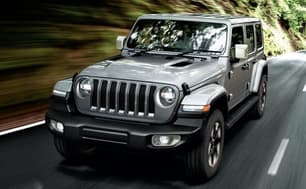
The Jeep Wrangler looks like a cartoon of a four-wheel drive, that’s how familiar and well-known the design is. It’s almost generic, like the word Jeep.
You could say the design is iconic, given that the roots of this SUV stretch back to the little Willys off-roader built for the US army in World War II. And to this day the slotted grille, pronounced wheel guards, short and upright windscreen, even the removable doors are still with us in this latest incarnation.
That’s why each generation of the Wrangler only sees very subtle tweaks to famous shape and look, in much the same way a Porsche 911’s design changes at the rate of dripping water reshaping a rock.
Changing the styling completely would destroy the look which connects the Wrangler to its past and the nostalgic appeal would be over.
So, this update sees more than subtle styling changes in the form of a tweak to the grille with the addition of a metallic-look trim around each of the slots while the mesh insert now has larger openings.
Along with this there’s a new front bumper. The Wranglers we tested had the optional heavy duty steel front bumpers.
There’s also some interior changes in the form of a new dashboard trim, horizontal air vents and then there’s the 12.3-inch media display which goes a long way to making the cabin look more modern.
Still, the interior is busy with buttons and switches in a design that seems to mix the look of heavy machinery controls with a prestige car. The Nappa leather of the Rubicon grade lifts the quality feel higher.
All Wrangler interiors also have an internal roll-over cage which covers the entire cabin, for the fixed metal roof and removable roof body style which are standard on the Overland and Rubicon.
Only the Rubicon is offered in a two-door and a four-door, while the Overland and Sport S are four-door only.
The Rubicon two-door looks cute and fun to my eyes, while the four-door versions look a bit more serious and beefy, but both definitely still give off tough and adventurous vibes.
The wheelbase difference between the two is as giant as it looks. The Rubicon two-door’s wheelbase is 2459mm while the four-door Rubicon’s, along with the Sport S and Overland, is 3008mm.
The Wrangler ranges in length from 4334mm for the Rubicon two-door to 4882mm for the four-door Wranglers. Width is the same for all Wranglers at 1894mm and the height ranges from 1879mm in the Rubicon two-door to 1901mm in the four-door versions.
Yes, the Mazda premium SUV range can look a little same-same, but Mazda insists there are critical differences.
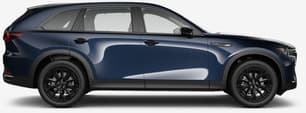
That said, if you can immediately spot the difference between the CX-70 and CX-90 without taking a peek inside, you're doing better than me, given it is the same exact dimensions as Mazda's three-row flagship.
Sure, Mazda talks about things like this design being a “passion pursuer” that serves up "dignified performance” – all of which sounds utterly ridiculous – but the less marketing-speak version is that it looks like a shapely large SUV that ditches the boxy dimensions of a proper 4WD for a more sleek and swooping profile.
Inside, it's a plush and premium-feeling space, with lovely cabin materials, plenty of tech, and plenty of space.
When we review most SUVs practicality is scored on things like legroom, storage space and boot size. But in the case of a vehicle with removable doors and roof, and a cabin that has one-way drainage valves so you can hose the interior out, practicality takes on a different meaning.
The Wrangler’s practicality seems focussed on serving adventurous folks in search of a muddy off-road expedition and, so, while there is storage it’s mainly nets for door pockets, moulded wells on top of the dash, and smaller hidey holes to makes sure loose items don’t get flung around the cabin.
Given the roof can be removed there’s also a lockable glove box and centre console storage box.
When it comes to cabin space the Wrangler’s interior feels a bit cramped. The footwells up front don’t offer much space and headroom throughout is restricted by the roll cage which stretches from the front to the boot.
The four-door Wrangler has five seats and good legroom in the second row, even for me at 189cm tall. As mentioned above, headroom is limited in places because of the safety structure. Boot space behind those rear seats is 898 litres.
The two-door Rubicon has four seats. The back ones aren’t the most spacious and the boot behind them is almost too small to mention at 365L, Two pieces of carry-on luggage wouldn’t fit back there and we had to put our bags on the rear seats.
The rear tailgate for all Wranglers is side-hinged (opening left to right) and splits to allow just the window section or lower part to open separately.
For charging and powering devices all Wranglers have two USB ports up front (one -A and one -C) and four USB ports in the second row (two -A and two -C). There are also two 12V outlets on board (front and rear).
There are two cupholders, seatback map nets and directional air vents for the second row.
The Wrangler sits high and climbing into the rear seats might be a challenge for smaller kids or even fully-grown humans, but there are chunky handholds at the pillars for extra help.
So, the Wrangler has excellent practicality, but this is geared more to its intended purpose of adventuring off-road rather than the city commute and school pick-up.
The CX-70 measures a substantial 5120mm long, 1994mm wide, and 1745mm tall, and it rides on a 3120mm wheelbase.
It will tow 2.5 tonnes no matter which engine you choose, and the expansive boot will swallow between 589 litres and 2015 litres, depending on how you configure the backseat.
All of that space translates to a hugely airy backseat experience, with the second row able to be fixed in a position that either prioritises leg room or boot space.
With the former, you've got tons of space in the second row. I'm 175cm, and my knee and leg room was ample, with only the intrusive tunnel that runs down the middle-centre of the cabin eating into leg room for the middle passenger.
There are also air vents and temp controls, twin USB charge ports, seat heating in the window seats and swathes of very nice materials.
The boot is massive, too. I can't even reach the back of the rear seats when I lean into it, and Mazda says it will swallow smaller surfboard or SUPs without needing to resort to roof racks.
Under-floor storage adds a bit more security for precious items, too.
The Jeep Wrangler range comes in three grades. There’s the entry-grade Sport S which can only be had with four doors, the Overland which is also a four-door and the top-of-the-range Rubicon comes as a shorter wheelbase two-door and the four-door.
The Sport S replaces the Night Eagle as the entry-point into the Wrangler range and with a list price of $75,950 it’s $5500 cheaper, too.
Above this is the Overland for $84,950 and at the top of the line-up is the hardcore Rubicon which is $83,950 for the two-door and $90,450 for the four-door.
This update sees all Wranglers now coming with a (damage and scratch-resistant) 'Gorilla Glass' windscreen and a 12.3-inch media screen. But each grade also comes with its own new features.
The Sport S has been given heated front seats, a heated steering wheel and ambient cabin lighting. Meanwhile, the Overland now has power front premium 'McKinley' seats and soft spare tyre cover.
And finally the range-topping Rubicon receives Nappa leather seats and a forward-facing 'Trailcam'.
There are mechanical upgrades across the range, too, especially for the Rubicon and we’ll get to those in the engine and driving sections of this review.
As for the rest of the features, coming standard on the Sport S are LED headlights, 17-inch alloy wheels, proximity key and push button start, sat nav, Apple CarPlay and Android Auto, a nine-speaker Alpine sound system and dark tint windows.
Along with its new features the Overland also comes standard with all of the Sport S’s equipment plus a three-piece removable hardtop, 18-inch wheels and a leather-wrapped shifting knob and hand brake handle.
Then there’s the Rubicon which has all the Sport S features, but 17-inch wheels instead of the 18s and an enormous amount of engineering hardware that makes this grade the off-road king of the Wranglers, which we’ll get to.
We'll drill down on this a little more in the practicality section, but it's important to note here that the CX-70 is the same size as the CX-90 – both are 5120mm long, 1994mm wide and 1745mm high — which means the only real difference between the two models is the third row of seats in the CX-90.
And, as it turns out, that's a very expensive pair of chairs. The CX-70 starts with the GT trim at $75,970 before on-road costs for the petrol or $77,970 for the diesel, and then climbs to the Azami trim, which is $82,970 or $84,970.
The CX-90, though, is $82,577 or $85,785 for the GT, or $91,461 or $93,030 for the Azami.
That makes the CX-90's third row at least a $6600 option, but as much as an $8000 upgrade. Mazda has made moves to address this, with a drive-away "plate clearance" that closes that gap, but we suspect those offers will become permanent fixtures to make the jump from 70 to 90 less ferocious.
Anyway, Mazda has thrown just about everything they've got at the CX-70. The GT kicks off with plenty of high-end gear, including 21-inch black alloy wheels, adaptive LED headlights, a panoramic sunroof and a handsfree powered tailgate.
Inside, there are twin 12.3-inch screens with Apple CarPlay and Android Auto, a 12-speaker Bose stereo, leather seats that are heated front and rear, three-zone climate control and a heated steering wheel.
The Azami then adds things like ambient lighting, black Nappa leather seats, which are now ventilated in the front, footwell lighting, body-coloured wheel arches and lower cladding and body-coloured door handles.
One of the biggest changes Jeep could make to the Wrangler without causing complete mayhem for fans is to the engine and even then there will be folks who don’t like what they’re about to read.
Deep breaths, okay? Right, so, in this update the V6 petrol engine has been replaced by a 2.0-litre turbo-petrol four-cylinder.
At 200kW the new four-cylinder makes a smidge less power than the V6 but more torque at 400Nm. An eight-speed automatic transmission shifts gears and sends the drive to all four wheels.
If you’re a Wrangler fan you’ll most likely know about this engine swap, but you’re wondering how this four-cylinder feels.
The answer is, really good. Jeep has got it right. It’s a torquey, responsive engine that feels energetic and suits the Wrangler's personality well.
In the short time I’ve spent on and off the road I’m convinced this turbo-four will be a good companion wherever you decide to go.
And go pretty much anywhere you can, with all Wranglers being ridiculously capable off-road thanks to their ladder frame chassis, high- and low-range gears, outstanding ground clearance (233mm-257mm, depending on variant ), excellent approach angle (41.4 to 44 degrees, depending on variant) and a departure angle to match (37 degrees for the both Rubicons; 36.1 for the Sport S and Overland).
The Rubicon comes standard with Jeep’s 'Rock-Trac' on-demand four-wheel drive system and this update adds a full float rear axle. Sport S and Overland grades have Jeep’s 'Selec-Trac Active' on-demand 4WD set-up.
You can have one of two engines in the CX-70, with the cheapest being a 3.3-litre, six-cylinder turbo-petrol, producing 254kW and 500Nm. There's also a 3.3-litre, six-cylinder turbo-diesel, making 187kW and 550Nm. Both are equipped with a 48-volt mild hybrid system to marginally reduce fuel use.
All models are AWD, and pair with an eight-speed automatic transmission.
The new turbo-petrol, four-cylinder means better fuel economy than the V6 it replaces. We have yet to test Jeep’s claims that after a combination of open and urban roads the four cylinder uses 9.2L/100km in the sport S and Overland grades and 9.9L/100km in the Rubicon.
In comparison, Jeep says the previous V6 uses 10.1L/100km in the Rubicon and 9.9L/100km in the Overland. Our own testing saw consumption closer to 13L/100km.
We’ll have the new Wrangler in our garage soon and we’ll be able to put the fuel consumption claims to a real world test.
In terms of range, the two-door Rubicon has a 61-litre fuel tank and in theory a range of up to 680km. The Sport S and Overland have an 81-litre tank and can get up to 880km, while the four-door Rubicon’s 81-litre tank should manage 830km.
Of course if you’re off-roading you’ll use more fuel and the range will drop accordingly.
Petrol-powered cars will sip 8.1L/100km on the combined cycle, while the diesel drops that to 5.4 litres.
Both models get a 74-litre tank, meaning a theoretical driving range of around 900kms in the petrol, and almost 1400kms in the diesel.
Every one of the Jeep launches I’ve attended over the past 15 years has involved a pretty decent off-road component and it’s clear the company has a lot of faith in its product.
This Wrangler launch’s off-road test had been scaled back due to days of flooding rain beforehand, but the section that was passable was enough to remind us of what we already know and that is the Wrangler is formidable.
A Queensland bush off-road course full of steep, muddy hills, ruts, rocks, dirt and slippery descents was still all there for us to test the Wrangler Rubicon four-door.
Fun and comfortable are the first words that pop into my head when recalling how the Rubicon fares. This is a super-capable beastie that feels planted, secure and adept at all times.
We tested low- and high-range four-wheel drive, locked the rear differential and let the hill descent mode do its thing and get us down the sides of hills that felt so close to vertical all we could see through the windscreen was the ground.
What's also clear is the new turbo-petrol, four-cylinder feels well suited to the job, with plenty of torque along with a feisty and responsive nature that fits the Wrangler better than the old V6.
There was also plenty of time spent on the road in the four-door Rubicon and its smaller two-door sibling. And was here it was also super clear the Wrangler felt like we’d taken it out of its natural habitat.
At 110km/h on the motorway the two door Rubicon feels light and floaty in its suspension, with steering adjustments having to be made constantly, like actors pretending to drive cars in movies, as the Wrangler wanders around in its lane. The Wrangler wander is a known trait and isn’t specific to this updated car.
And even though our launch drive took us on some great winding country roads which would have been perfect for a Mazda MX-5, the Wranglers found the fast tight turns difficult to handle.
I’m sure I heard a sigh of relief from our Rubicon as we pulled off the road and selected low-range four-wheel drive before bouncing up what looked to be a sheer cliff, with ease.
Of course, our Adventure Expert Marcus 'Crafty' Craft will put the Wrangler though its paces once we have one in the CarsGuide garage.
Interestingly, the CX-70 has been tagged as the expected smallest seller of Mazda's premium SUV range, but I reckon it just might be the pick of the bunch.
Every one of the CX-0 models (60, 70, 80 and 90) all get slightly different suspension tunes, and while you can find harsh edges in the other models, the CX-70 feels utterly composed and refined, at least on the smooth-ish roads of our launch test route.
Perhaps most surprising, though, is the CX-70's ability to hold its own on a properly twisting road. We expected lots of weight transfer and the high-pitched sounds of tyres screaming out in pain, but instead found Mazda's massive SUV served up grip, composure, and very little in the way of sea-swell-style body roll.
The two big six-cylinder engines also feel perfectly suited to a vehicle in this space. There's tons of power whenever you need it, and solid levels of refinement in terms of engine noise or diesel rattles.
For mine, the petrol engine is the pick though, feeing just a little smoother than the diesel option. The latter can feel a bit jerky at slower speeds, whether that's the power delivery or the gearbox, and it doesn't seem to happen with the petrol engine.
The biggest caveat, though, is that we haven't driven the CX-70 in its natural environment, the city and suburbs, so while it largely shone on flowing country roads, how it performs on roads like the ones near your place remains a bit of a mystery.
The Jeep Wrangler has a three-out-of-five star ANCAP rating from testing in 2019. This isn’t an adequate safety score for a modern vehicle and the relatively modest advanced safety tech compared to other new SUVs and its structural integrity in crash tests caused ANCAP enough concern to award it lower scores.
Surprisingly the ANCAP report scored its child occupant protection at 80 per cent which is excellent.
This update to the Wrangler now adds curtain airbags which cover the front and second rows. Along with these there are dual front airbags plus safety tech which includes AEB (city and inter-urban) and blind spot warning. There’s also adaptive cruise control and front and rear parking sensors.
For child seats you’ll find two ISOFIX and three top tether mounts across the second row of the four-door variants.
The standard full-sized spare wheel is mounted on the tailgate.
The CX-70 hasn’t been ANCAP tested, but it does arrive with a pretty stacked safety offering, including a 360-degree-view camera, blind-spot monitoring, front and rear cross-traffic alert, and a total of eight airbags, including a knee airbag for the driver.
The Wrangler is covered by Jeep's five-year/100,000km warranty, which is off the mainstream market standard of five years/unlimited km.
Service intervals are recommended every 12 months and 12,000km and service prices are capped at $399. Jeep also offers lifetime roadside assistance if you service your Wrangler though Jeep.
Servicing is not particularly cheap in the CX-70, and the service intervals, at least in the diesel, feel a little short, too.
Buy that one, and you’ll be visiting the dealership every 12 months or 10,000kms, and the first five years of ownership will cost you $3298.
Petrol cars require servicing every 12 months or 15,000kms, and five years will set you back $3436.
The CX-70 is also covered by Mazda's five-year, unlimited-kilometre warranty.