What's the difference?
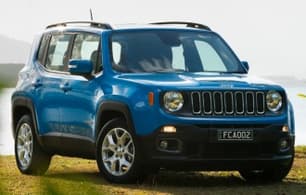
Jeep's Renegade might be late to the mini-SUV party but it comes with a pretty impressive back catalogue to suggest that this is a SUV that can cash the cheques its name can write.
The top of the range Trailhawk can write even bigger cheques than the lower models, bringing with it a range of off-road tech toys to let you really get down and dirty.
Welcome to one of the world’s tiniest SUVs, as well as amongst Australia’s cheapest – Suzuki’s diminutive Ignis.
There’s an Aussie connection. Holden designer Peter Hughes styled the original YG Cruze based on the first (FH) Ignis of 2000, with both models sharing most components underneath; but the latter was not well received, prompting Suzuki to change tack for its reborn Swift replacement of 2004. Yet the name and concept were revived 11 years later (without GMH) for the retro-themed high-riding hatch/crossover you see here today.
The point? This quick history lesson serves to remind us how similar both Ignis generations are, as well as how devoted Suzuki is in its pursuit of owning the light SUV space.
In June 2020, a facelifted MF arrived, brandishing a revised grille, bumpers and trim to give it a chunkier appearance, along with minor spec changes.
Here we take a long look at the GLX auto.
Rugged, dependable and good off-road are the most obvious qualities of the Trailhawk. It stands out from the rest of the mini-SUVs by being able to do the S and the U with plenty of vigour.
It's just a shame that its on-road manners can't match that of its big brother, the Cherokee. Unless you're planning on proper off-roading, the Trailhawk might not be quite what you're looking for.
With statement styling, inherent agility, excellent efficiency, proven reliability, high equipment levels and low entry pricing, the 2021 Ignis GLX is in danger of becoming a mandatory short-list proposition for people seeking fun and affordable motoring.
But undermining all that is a distinct lack of driver-assist safety tech that can’t be – and shouldn’t be – ignored. At least give buyers the option of paying more for essentials like AEB.
If Suzuki can address this shortfall, the Ignis would join its excellent Swift supermini stablemate in being a very compelling and enjoyable compact urban runabout. We hope this happens sooner rather than later.
In what is absolutely not a coincidence, the Renegade immediately conjures up the Wrangler. Upright grille from the Willys Jeep (references abound here), round headlights, squared off wheel arches to mimic the Wrangler's guards, short overhangs and big rear view mirrors.
The 17-inch wheels look completely lost in the wheelarches which are even more cavernous owing to the Trailhawk's 50mm of extra ride height. The wheels are also a bit cheap looking but will probably survive the belting the car is intended to take.
Less rugged is the interior, despite a fairly self-conscious effort to make it look and feel chunky. The front seats are flat and unsupportive with the rears just as lacklustre making sure everyone is sliding around together. Luckily, front passengers get a dash-mounted grab handle.
It seems quite well put together, however, but with carpets and easily-marked plastics, you'll hope your passengers don't bring the mud in with them too often. And the "Since 1941" stamped into the steering wheel can go.
The dashboard is reasonably clear and has plenty of information to share via the screen between the dials but whoever thought marking the redline with a water splash graphic in bright orange should probably rethink their design decisions.
Storage is limited to two cupholders up front, door pockets in each door and nets on the front seat backs.
Sometimes facelifts do really improve the look of a vehicle, as is the case here with the MF Series II.
Maybe it’s the Suzuki Jimny 4x4-inspired quad-nostril grille or chunkier rear bumper inserts, but they somehow make the Japanese-built crossover seem less narrow and tippy-toed.
The styling – first seen in 2016 – actually references classic Suzukis of old like the late 1970s Cervo SC100 (as per the C-pillar slit inserts and angular silhouette) that were never offered in Australia anyway.
A good thing, then, that the Ignis’ handsome proportions, flared wheel arches, deep glass area, anthropomorphic grille and pushed-out wheelbase and tracks give it a purposeful look and stance that also stands as an attractive and individualistic 21st Century design in its own right.
Measuring in at 3700mm in length, 1660mm in width and 1595mm in height, the Ignis is substantially stubbier and narrower (though slightly taller) than the Hyundai Venue, whose corresponding numbers are 4040mm, 1770mm and 1592mm, respectively. The Suzuki’s 2435mm wheelbase is also 85mm shy of the Hyundai.
Still, the result doesn’t mean the Ignis’ cabin seems overly tight or cramped in any shape or form.
The Renegade range starts at $28,000 for the 1.6-litre Renegade Sport manual front-wheel drive, climbing between $2000 and $3000 through the Sport Auto, Longitude Auto, Limited Auto with a final jump of $4000 to the 2.4-litre auto-only Trailhawk.
Standard is a nine-speaker stereo with Bluetooth and USB, 17-inch alloys, dual-zone climate control, reversing camera, rear parking sensors, keyless entry and start, cruise control, electric front seats with heating, satellite navigation, automatic bi-xenon headlights, auto wipers, leather trim, roof rails, front and middle bash plates, full size spare, heated leather steering wheel, privacy glass, trailer sway control and tyre pressure monitoring.
The lairy Omaha orange is $500, part of an eleven colour palette with only two no-cost paint options (black and white).
You can add lane departure warning, auto-parking and a black painted roof for $500 each, a removable and retractable roof called My Sky Roof for $2200 or a more conventional electric sunroof for $1900.
The Beats-branded nine-speaker stereo is run via Fiat-Chryser's UConnect system, accessible through the 6.5-inch touchscreen. While it improves with every attempt, it's still quite clunky and when the sat-nav is added, becomes a bit of a mess.
Thankfully, not every function has been crammed into the touchscreen interface, so you'll spend more time with your hands on the wheel rather than working out which bit of the screen has the climate control.
The cheapest Ignis is the GL (what is this? 1982?) manual from $18,740 before on-road costs (ORC). Auto adds $1000 while the auto-only GLX starts from $21,740.
The series has endured two big price hikes since mid-last year, totalling a hefty $2750 in the latter grade. This places the light SUV hard up against the marginally-bigger base Hyundai Venue auto ($22,960 before ORC) and larger-still MG ZS Excite ($21,990 driveaway).
Let’s get to the bad news first.
Even as a flagship grade, the GLX lacks key driver-assist safety kit like automatic emergency braking (AEB) as found in most other competitors, along with lane keeping assistance, blind-spot monitoring and rear cross-traffic alert. Not even as an option. That’s a black mark. You will find six airbags (dual front, front side and curtain items), stability control, anti-lock brakes with electronic brake-force distribution and brake assist, and traction control.
Most punters will appreciate the GLX’s LED headlights with daytime running lights and auto on/off functionality, climate control air-conditioning, keyless entry and start, six (rather than four) speaker audio system, privacy glass and 16-inch alloy wheels (with a space-saver spare), replacing 15-inch steelies. They build on the GL’s cruise control, fog lights, 7.0-inch touchscreen, reverse camera, satellite navigation, Apple CarPlay/Android Auto connectivity, Bluetooth phone and audio streaming, leather-clad steering wheel and roof rails. Digital radio is not available on either grade.
Interestingly, the GLX swaps the GL’s fixed three-seater rear bench seat for a sliding (and reclining) 50/50 split-fold two-seater item, trading practicality for luggage-lugging versatility. More on that below.
Adding premium/metallic paint costs $595.
The Trailhawk is powered by Fiat's 2.4-litre four naturally-aspirated four-cylinder producing 129 kW and 230 Nm. Jeep reckons you'll get 7.5L/100km on the combined cycle. Our mostly city driving with a longish motorway run produced an 11.0L/100km average over a week.
The transmission is a nine-speed ZF automatic driving all four wheels.
The Trailhawk also has Jeep's five mode Selec-Terrain system which should cover pretty much every eventuality – Auto, Sport, Mud, Sand and, just for the Trailhawk, Rock. The Trailhawk is rated to tow 400kg unbraked and 907kg braked.
Nearing 10 years in production, Suzuki’s K12C 1242cc 1.2-litre twin-cam 16-valve four-cylinder petrol engine is a tried and tested naturally-aspirated unit, revving strongly and effortlessly all the way to its red line. Peak power is 66kW at 6000rpm and the torque top is rated at 120Nm at 4400rpm.
With a kerb weight of just 865kg – a Suzuki specialty – the Ignis boasts a power-to-weight ratio of a healthy 76.3kW/per tonne.
It’s a shame the GLX isn’t available with the GL’s five-speed manual gearbox. Instead, your lot is an albeit-efficient automatic of the CVT (Continuously Variable Transmission) variety, driving just the front wheels for Aussie-bound Ignis models.
Overseas there are mild-hybrid and all-wheel drive alternatives too.
The Trailhawk name suggest that things are going to get muddy – compared to the rest of the range, the range-topper rides 50mm higher and has exposed, easy-to-reach tow hooks in the fairly unlikely event you get stuck. It also has a 20:1 low-range crawl ratio and Active Drive 4x4 which means it can switch between front and all-wheel drive. It'll also wade through almost half a metre of water. It's a genuine mud-plugging proposition and will take on some much bigger machinery out in the bush.
On the road, where we spent all our time in the Renegade, it's not what you'd call particularly inspiring. There's a number of sources of noise that contribute to a less than quiet cabin and having to constantly correct your course at freeway speeds adds to the tiring nature of the Renegade.
It's much better at lower speeds, pottering around but then again, its nine-speed transmission needs a lot more work on the shift mapping because it seems to forget which gear it needs to be in when you sink the right foot. If you don't need the Trailhawk's extra off-road goodies, consider the 1.4 litre Limited or Longitude.
Comparatively conventional in mechanical layout it may be, but the Ignis feels especially at home around town.
A strong and revvy 1.2-litre engine, coupled to a flexible CVT, provides eager off-the-line acceleration, though the accompanying loud exhaust drone may get tiresome for some. Aided by the Suzuki’s light mass, luckily there’s sufficient low-down response for most drivers to experience healthy performance without having to assault all occupants’ ear drums.
What this means is that the Ignis will accelerate quite vigorously once on the move, with plenty of oomph available as the revs rise towards the 6000rpm peak power point. Yes, the CVT will elicit an endless moan from the engine, but speed does build up quickly and before you know it.
We weren’t expecting to find a ‘Sport’ mode button located on the side of the auto’s shifter; locking out the highest ratios, it keeps the tacho needle within a pre-determined power band that’s useful if noticeably stronger throttle response is required. Otherwise, in Normal mode, the powertrain is tuned to upshift to top gear in the interest of efficiency. It’s good that the Suzuki at least gives the keener driver some choice in the matter.
This is also the best Ignis we’ve driven yet when it comes to steering. Around town, the turning circle is smaller than federal funding for the arts, environment and education portfolios come budget time, providing stupendously easy parking, effortless manoeuvrability and pin-point handling accuracy, especially when weaving in and out of traffic.
Yet the helm also works out on the highway as well, or through tight and twisty turns, with a blend of sporty precision and reassuring control. Keener drivers can scoot around corners at speed and – perhaps surprisingly – not experience excessive body lean, despite the Ignis’ height and narrow track. It instead just knuckles down and gets the job done, with confidence. The Ignis sticks to the road.
We expected scrappy handling but instead received no-drama agility. The chassis feels it can handle a whole lot more power than what the GLX offers. We were also pleased by how comfy the ride is on smooth roads.
However, though mid-corner bumps do not upset the Ignis’ composure, they certainly make themselves felt through inside the cabin. Indeed, around town, in the ‘burbs or out on the highway, the suspension’s inherent firmness that no doubt enhances the Suzuki’s dynamics means sharp, sudden jolts aren’t absorbed as well as we’d like, making for a hard ride at times. There’s less wheel travel from the MacPherson strut-style front and torsion beam rear end set-up than the 1.6-metre height and 180mm ground clearance suggest.
Reducing the amount of road and tyre noise piping through inside would substantially increase the Ignis’ overall appeal. That and level of driver-assist safety tech.
Two big jobs for its eventual successor, then.
Seven airbags (including driver's knee bag), traction and stability controls, roll mitigation, blind spot monitoring, ABS and brake assist.
The Renegade does not yet have an ANCAP star rating although it scored five EuroNCAP stars in 2014.
The Suzuki Ignis has never been tested by ANCAP.
However, a 2016 Series 1 model that aligns closely with the Australian one scored just three stars in the European NCAP ratings, against five stars for the equivalent with AEB. Now, as neither Ignis grades offer AEB, it should be concluded that only a three-star rating is achievable with our 2021 GLX auto.
Also missing are lane departure warning, lane keep assist, traffic sign recognition, blind-spot monitor and rear cross-traffic alert technologies, as well as auto high beam, front or rear parking sensors or adaptive cruise control.
Safety features that available are six airbags (dual front, side and curtain), stability control, anti-lock brakes with electronic brake-force distribution and brake assist, traction control, hill-hold control, a pedal breakaway system to reduce driver foot/leg injury in a severe impact and reverse camera.
Brakes are ventilated discs up front and drums out back.
Two rear-seat ISOFIX points as well as two top tethers for straps are included for younger passengers in the GLX, or three top tethers in the five-seat GL.