What's the difference?
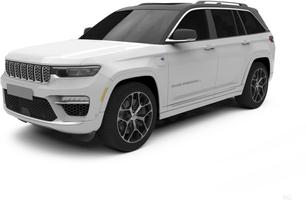
Jeep Australia's first plug-in hybrid, the Grand Cherokee 4xe, has arrived at a time when the company’s sales figures need a decent shot in the arm.
Though it’s seemingly spearheading a large and extra-large SUV hybrid push into the Aussie market, with the likes of a Toyota LandCruiser 300 Series hybrid on its way, the marque’s debut PHEV is only available here in the range-topping Summit Reserve spec, and only as a five-seater.
So, does the 4xe have enough of a jump on any large SUV hybrid rivals – including a rumoured but postponed Ford Everest hybrid – and is it enough to give the brand a much-needed boost?
Read on.
Mahindra has long been known as a tractor brand and a maker of rugged utes and SUVs, but it’s now dipping its toe into Australia's light SUV segment.
The MY25 Mahindra XUV 3XO marks a further shift in the Indian brand’s local focus from rural and regional to metropolitan.
This tiny SUV goes up against some stiff competition including the Chery Tiggo 4, Hyundai Venue and Kia Stonic, among others. However, the Indian-made SUV holds a specific title that’ll make it stand out among the crowd.
A wise man* once said "Being first can sometimes feel like being wrong" and perhaps that's how it is with the 4xe, but at least Jeep Australia is giving the large SUV hybrid realm a good ol' try.
* Former CarsGuide Big Kohuna, Glen Knowles.
The company's first plug-in hybrid, the Grand Cherokee 4xe, is not perfect by anyone's standards, however, it is a definite move in the right direction.
It's a quiet and refined drive, it retains the brand's renowned 4WD capability, and even its hefty price-tag likely won't dissuade Jeep loyalists from giving it a go.
The fact this is Australia’s cheapest SUV is a massive feat for the Indian brand. It also has so much standard kit so this is even more surprising.
In many ways the XUV 3XO is better to drive than its rivals. The three-cylinder turbo engine has plenty of charm and moves this car along with ease, the car feels confident and composed out on the open road, and there aren’t any bings and bongs from intrusive safety systems.
However, things aren’t perfect. I wish the steering column offered reach adjustment, the steering feel wasn’t so inconsistent and the lane-keep assist wasn’t so hands-on.
If you can overlook these quibbles, this tiny Mahindra is an outstanding value buy if you’re considering a first new car.
Note: CarsGuide attended this event as a guest of the manufacturer, with meals provided.
From outside it’s surprising just how small this SUV is. At just under four metres long, the XUV 3XO is shorter than a Mazda2, for example.
The reason for this is because in India there are tax breaks for vehicles under four metres long. The Ford EcoSport, sans the tailgate-mounted spare wheel, was another SUV that met this requirement.
As a result of being so short, this has made the rear overhang virtually non-existent. It’s a strange look, especially because the bonnet is so much longer.
Even though the XUV 3XO is based on the KGM Tivoli (formerly SsangYong Tivoli), which was briefly sold in Australia, you’d be hard-pressed to find visual similarities. The former looks more modern from the outside and has more visual interest with the chunky wheel-arch cladding and diamond motifs.
At the front it’s hard to not see the face of a sad panda. The LED headlights are big and plunge down the front fascia, giving it a droopy and sleepy appearance. It’s not helped by the thick black bar connecting them.
Around the side the diamond-cut alloy wheels are a nice touch, along with the contrast black-painted roof on this AX7L tester.
The rear end is a little on the flat side, though the badging is tasteful. I’m not a fan of the full-width LED light bar, however, as it’s an overdone design cue now.
Inside I appreciate the mix of both old-school and new-school. There are dual 10.25-inch screens ahead of the driver for the digital instrument cluster and touchscreen multimedia system, as well as plenty of physical buttons and knobs for shortcuts and the climate controls.
For such an affordable car I’m surprised how many soft-touch finishes there are in this car. In the AX7L you get an extended use of synthetic leather on the door cards and dashboard, which helps make for a pseudo-premium look and feel.
However, one of my biggest gripes with the XUV 3XO interior is the amount of glossy piano black. It’s on the dashboard, centre console, door cards and even the steering wheel.
This may look cool and slick when you pick the car up from the dealer, but it shows up dust quickly and then gets scratched when you try to wipe it clean. Our tester had fewer than 1000km on the odometer and the centre console was already scratched to the wazoo.
The Jeep Grand Cherokee Summit Reserve 4xe PHEV retains the regular model’s level of functionality but adds a reasonably classy touch to everything.
All seats offer adequate comfort, support and room.
There are plenty of storage spaces, cupholders etc, and charging points - two USB-A and two USB-C plus a 12V socket in the front and two USB-A and two USB-C plus a 230V point in the back.
Controls are generally easy enough to locate and operate although some buttons are positioned in awkward places – including drive-mode buttons under the steering wheel – and it sometimes takes a few finger-stabs at the multimedia touchscreen to get to where you want to go in the operating system.
In terms of packability, the rear cargo area has a listed 1067 litres of space, and, with the second row folded and out of the way, that space opens up to 2004 litres.
Given this SUV is tiny, I’m blown away at how much interior space it has.
Up front both the seats are manually adjustable, which is to be expected at this price point. Despite this, they’re still comfortable and offer an elevated driving position which is something SUV buyers seek.
In front of the driver is a leather-wrapped steering wheel which feels nice in the hand. While it offers tilt adjustment, it disappointingly doesn’t have reach adjustment. This is frustrating if you’ve got long legs and short arms, like myself.
The 10.25-inch digital instrument cluster has an overall dark and minimal look, but you can cycle through a range of informative views. There’s even one that allows you to display a full-width map.
Moving across, the 10.25-inch touchscreen multimedia system appears to be snappy enough. I’ve experienced fewer glitches in this car than in previous Mahindras I’ve driven.
I like the physical shortcut buttons underneath the touchscreen because it allows you to jump around to key sub-menus a lot easier.
As standard there’s both wired and wireless Apple CarPlay and Android Auto connectivity. With my iPhone 15 Pro Max the connection was flawless and only dropped out during known interference points.
This AX7L spec comes with a seven-speaker Harman Kardon sound system which gets this tiny car booming. The subwoofer in the boot is so powerful it almost feels like overkill.
In terms of storage up front there are two cupholders, big door pockets with two bottle holders, a centre armrest and a cooled glovebox. There’s also a USB-A port, 65W USB-C port and a wireless charger.
Moving to the second row there’s a decent amount of space for adults to sit behind adults. You could easily fit two adults along the rear bench, though pushing it to three would get a little too squishy.
Second-row amenities include rear air vents, a USB-C port with a phone slot, as well as a fold-down armrest with cupholders.
At the back there’s a manual tailgate, which is to be expected at this price point, but finding the trigger to open it is a little tricky. It’s a small button that’s hidden away.
Once the tailgate is open, the amount of boot space on offer is generous. Mahindra claims there’s 364 litres with the rear seats upright.
While the loading lip is high, the boot area is deep and wide. Unfortunately there’s no cargo cover available as standard, which means you’ll need to be careful what you boot back there.
Under the boot floor there’s a space-saver spare wheel, which is fantastic peace of mind if you travel long distances away from tyre repair shops.
The five-seat Jeep Grand Cherokee Summit Reserve 4xe PHEV has a MSRP of $129,950 (excluding on-road costs).
Standard features include a 10.1-inch multimedia system (with Apple CarPlay and Android Auto), a 10.25-inch digital instrument cluster, 19-speaker audio system, quilted Palermo leather-trimmed seats, air suspension and 21-inch alloy wheels.
It also has a heated steering wheel, 12-way power-adjustable seats and four-way power lumbar adjustment with memory for driver and front passenger, driver and front passenger seat massage function and heated and ventilated seats (driver, front passenger and rear outboard passengers).
A Mode 2 charging cable is also included.
An 'Advanced Technology Group' pack is available as a $5500 option and that includes a head-up display, a 10.25-inch screen for the front passenger, wireless phone charger, and night vision camera.
Exterior paint options include 'Bright White', 'Diamond Black', 'Silver Zynith', 'Velvet Red', 'Baltic Grey', 'Rocky Mountain', 'Midnight Sky' and 'Hydro Blue'.
The Mahindra XUV 3XO is currently Australia’s cheapest SUV.
There’s a caveat, however, because this is thanks to an introductory pricing offer that ends on August 31.
Currently though, the XUV 3XO line-up starts at $23,490 drive-away for the AX5L and extends to $26,490 drive-away for the AX7L, as tested here.
After August 31 the drive-away asking price of both of these XUV 3XO variants is set to go up by $500. This will see it share the title of Australia’s cheapest SUV with the Chery Tiggo 4.
Despite the affordable asking price, Mahindra has packed a lot of standard kit. This includes 16-inch diamond-cut alloy wheels, 10.25-inch digital instrument cluster, 10.25-inch touchscreen multimedia system, wireless Apple CarPlay and Android Auto, six-speaker sound system, dual-zone climate control, electric park brake with auto-hold, keyless entry and push-button start, leather steering wheel and gear selector and black cloth upholstery.
For an extra $3000 in the AX7L you get a black-painted contrast roof, 17-inch diamond-cut alloy wheels, LED front fog lights, panoramic glass sunroof, seven-speaker Harman Kardon sound system, 65W USB-C charger, cooled glovebox, black synthetic leather upholstery, and synthetic leather on dashboard and door trims.
The Jeep Grand Cherokee Summit Reserve 4xe PHEV has a 2.0-litre four-cylinder turbo-charged petrol engine, two electric motors (one on each axle) and a 17.3kWh battery.
Combined engine and electric outputs for power and torque are 280kW and 637Nm, respectively. The 4xe has it over any of its stablemates equipped with the 3.6-litre Pentastar V6 petrol engine because that yields 210kW and 344Nm.
The 4xe has an eight-speed automatic torque-converter transmission and regenerative braking.
Drive modes include 'Hybrid' (with combined engine and electric motor providing “maximum instant torque and impressive acceleration”, according to Jeep), 'Electric' (“zero emissions”) and 'eSave' (aims to save battery power).
There are a few options available when it comes time to charge the 4xe.
The 4xe vehicle has a Mode 2 charging cable so you can charge it at home in less than 10 hours, according to Jeep.
With a full charge, the 4xe has a claimed driving range, on electric charge alone, of 52km.
Jeep reckons a Mode 3 (wall box) single-phase electric vehicle charger will fully charge the 4xe in less than three hours.
If out and about and looking for a charge, a 4xe driver can use the onboard 'UConnect' system to locate an appropriate public charging station.
All variants are powered by a 1.2-litre turbocharged three-cylinder petrol engine that produces 82kW of power and 200Nm of torque.
This is mated to an Aisin-sourced six-speed torque-converter automatic transmission with drive sent to the front wheels only.
As mentioned, the 4xe has a listed electric-only driving range of 52km.
On our official test day, we drove just under 50km on a full electric charge and then the rest of the trip was courtesy of the good ol’ petrol engine.
Jeep's official figure for the combined cycle is just 3.2L/100km, but that's predicated on keeping the hybrid battery charged at all times. On fuel-only we recorded 11.6L/100km.
The 4xe has a 72-litre fuel tank (you need 95RON premium to fill it), so going by that on-test fuel-consumption figure, you could reasonably expect to get a driving range of about 620km out of a full tank.
Add an approximate electric range of about 50km on a full charge to that figure and you have a total estimated driving range of 670km.
Mahindra claims the XUV 3XO has a combined urban/extra-urban fuel consumption of 6.5L/100km.
During my testing, however, I achieved a real-world fuel consumption figure closer to 6.2L/100km, which is better than the claim.
All XUV 3XOs have a 42L fuel tank that Mahindra claims can take 91 RON regular unleaded petrol, but 95 RON premium unleaded petrol is recommended.
With my as-tested fuel consumption this means the theoretical driving range from a full tank of petrol is around 675km.
We’re all time-poor, right? So, why should I take up your time and rattle on about the 4xe for a thousand words when I can get the essence of it across to you, the reader, in a few sentences? Call me, Mr Thoughtful.
This is generally a big, quiet and refined, easy-steering large SUV, but it feels bulky at times and tends to be quite fussy on irregular surfaces, exhibiting a jittery ride on even brief sections of light corrugations on dirt tracks.
The 4xe’s PHEV set-up is smooth and highly responsive on-road and you can switch between the aforementioned drive modes to suit the circumstance.
Driving range on electric only is listed as 52km. I only recorded a total distance of just under 50km, and it’s a very quiet and smooth drive while relying on electric power.
It regenerates power rather quickly down big hills and via braking, but we’d exhausted all electric charge by the time we’d reached our 4WD test track.
As expected, this Grand Cherokee tackled every off-road challenge without any strife.
The air suspension, set to full off-road height, is a bonus.
Our 4WD test track consists of difficult set-pieces, including one small steep rocky hill that I’ve seen heavily modified vehicles struggle to conquer and, to the Jeep’s credit, it climbed the incline, no sweat.
The 4xe’s efforts were only ever hampered by its 'all-season' Continental CrossContact tyres (275/45R21) which are much better suited to blacktop driving and the fact the 4xe costs upwards of $129,950 and I didn’t want to risk any damage to it.
The 4xe has a listed wading depth of 610mm but our test track was dry so I never had the chance to do any water crossings.
The Grand Cherokee has a solid enough rep as a towing vehicle but, take note, the 4xe is rated to tow 2722kg.
Behind the wheel, the Mahindra XUV 3XO feels refreshingly old-school.
The 1.2-litre turbocharged petrol engine does seem like it would be underpowered, but in practice it’s completely adequate. Peak torque comes on tap from 1500rpm so it doesn’t have to work too hard at all.
It’s fun hearing the noise the three-banger makes when under the boil. You don’t hear it much though because the revs are typically kept down low to minimise fuel consumption.
The key reason why this car feels old-school is the six-speed torque-converter automatic transmission. It’s nice to not drive an affordable everyday car that doesn’t have a continuously variable transmission (CVT) or dual-clutch automatic transmission as these can suck the life out of a car or be jerky.
The gear shifts in the Mahindra are sometimes docile, but are smooth and measured. It just operates like a regular car that doesn’t require you to rewire your brain to drive.
There are three drive modes to choose from. They’re hilariously called ‘Zip’, ‘Zap’ and ‘Zoom’. These correspond to Eco, Normal and Sport, respectively.
While I did eventually get used to driving in the ‘Zap’ mode, it felt a little snoozy at points, taking a beat or two to get the car accelerating with traffic. You can sidestep this with ‘Zoom’ which feels much more lively. If you activate cruise control or restart the car, though, it defaults back to ‘Zap’.
The XUV 3XO makes the most sense in the city where you’re able to use its tiny exterior dimensions to navigate tight urban carparks and narrow laneways with ease.
It almost became a challenge for myself to find the smallest parking spot I could slot this car into. As standard on this AX7L there are front and rear parking sensors, as well as a surround-view camera system.
Where this car is let down, however, is the steering feel. It’s incredibly light at low speeds and then as the speed builds it gets very heavy. So much so it feels like I’m getting an arm workout.
Unlike some of its rivals, there is still a semblance of feel through the steering wheel, but this drastic change from light to heavy steering weight is too stark. Somewhere in the middle would be nice please.
Something Mahindra is very good at is developing a comfortable suspension tune and this car is no different. It can tackle pimply urban road imperfections and speed bumps with no problems whatsoever.
Out on the open road this car surprised me. It feels like a much larger car than it actually is and doesn’t get blown around in the lane like small cars can.
The three-cylinder turbo-petrol engine remains confident at higher speeds, though if you frequently travel up hills the fuel consumption will skyrocket. There’s also a bit of road noise, which is to be expected when a car is this small.
For the most part the suspension does a fantastic job at rounding out road imperfections, but bigger bumps or potholes can unsettle the car. It’s not helped by the larger 17-inch alloy wheels.
Out in the twisties this tiny SUV is fairly agile. It’s not the sportiest thing out there by a vast degree, but it remains planted and solid even when pushed into harder corners.
Lastly, another point that makes this car feel old-school is the lack of obtrusive bings and bongs from the safety systems.
Sure the parking sensors can be a little over-the-top and the traffic sign recognition takes over the entire digital instrument cluster when it picks up a new speed limit, but having no driver attention monitor and intelligent speed limit assist is refreshing.
It’s not all perfect however as the lane-keep assist is too hands on for my liking. It activates from 60km/h and is quite overt in how it directs the car through bends.
The Jeep Grand Cherokee Summit Reserve 4xe PHEV has the maximum five-star ANCAP safety rating from assessment this year.
Safety gear includes AEB with pedestrian detection, blind-spot monitoring with rear cross-traffic alert, adaptive cruise control, lane-keep assist, driver monitoring, traffic sign recognition, intersection collision assist, and a surround-view parking camera.
The Summit Reserve spec brings with it 'ParkSense' parallel and perpendicular park assist and (low-level autonomous) 'Active Driving Assist'.
It has eight airbags including front, side, and knee (for driver and front passenger), sides (for second-row passengers) and full curtain airbags.
The Mahindra XUV 3XO hasn’t been crash-tested by ANCAP just yet.
It was, however, tested by India’s less stringent Bharat NCAP testing authority in 2024 and received a five-star rating.
Standard safety equipment includes autonomous emergency braking (AEB), lane departure warning, lane-keep assist, lane centring, adaptive cruise control, traffic sign recognition, rear parking sensors and a reversing camera.
Stepping up to the AX7L gets you a surround-view camera, blind-spot view camera, and front parking sensors.
Notably absent from the entire range is rear cross-traffic alert, as well as a traditional blind-spot monitor that alerts you when a car is in your blind-spot.
There are two ISOFIX points on the two outboard rear seats, as well as three top-tether child seat anchorages across the rear bench.
The Jeep Grand Cherokee Summit Reserve 4xe PHEV has a five-year/100,000km warranty and a lifetime roadside assist service.
Servicing is set at 12-month/12,000km intervals and capped price servicing keeps what you pay for each appointment at $399 for the first five.
Like other current Mahindra models, the XUV 3XO is covered by a seven-year, 150,000km warranty with seven years of roadside assistance.
Logbook servicing is required every 12 months or 15,000km, whichever comes first, though the first service is required after 12 months or 10,000km.
The first seven services are capped-price and total $1994. This averages out to $284.85 per service.