What's the difference?
There’s a fairly big change hiding under the metal of one of Australia’s favourite utes. The Isuzu D-Max has a new 2.2-litre engine, replacing the 1.9-litre unit, and it brings a couple of other things with it.
A bigger engine designed to be more powerful and more efficient can only be a good thing, surely, especially with Isuzu looking down the barrel of stringent emissions laws with only two models in the line-up, both diesel powered.
But is this new 2.2-litre engine any good? Isuzu’s gone to the trouble of a new gearbox and some new tech to go with it, so we check it out to see if it stacks up against the increasingly strong competition.
Lotus - it’s one of the most iconic names in the history of automobiles and was once Great Britain’s answer to Ferrari - on the road and the Formula One circuit.
But that was a long time ago, in the 1960s and ‘70s. Since then Lotus has been on a rollercoaster ride through various owners who put in various levels of investment, resulting in various degrees of success.
But through it all, Lotus has stayed true to the ethos of company founder, Colin Chapman - ‘simplify, then add lightness.’ It’s obviously a playful saying, but it spoke to the core elements of Lotus cars, agility and driving purity.
Lotus rarely worried about big, powerful engines and instead focused on creating the best-handling cars.
That was the past, though, because Lotus Cars is now owned by Geely, the Chinese automotive giant that also counts Volvo, Polestar, Zeekr and more under its control.
Geely’s vision for Lotus is very different to what has come before, with a future focused on building electric SUVs and sedans; such as the already released Eletre and Emeya.
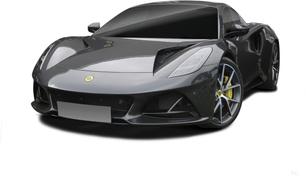
All of which is a very long way to get us to the car we’re actually testing - the MY24 Lotus Emira.
This is the last petrol-powered sports car from Lotus, and while it has been available already with a V6 engine, it has recently arrived with a Mercedes-AMG four-cylinder turbo.
Given its place in the grand scheme of things, the Emira not only needs to live up to the legacy of the iconic models that came before it, but also needs to lay the foundations for the brand’s electric future. Which is a lot of pressure for one car to carry…
The new engine makes the D-Max a much more likeable ute than it already was, which is high praise.
It’s smoother and quieter and makes for a more pleasant drive. The added efficiency is a bonus both for your wallet and Isuzu’s emissions credits.
The 3.0-litre engine will probably remain the favourite, but anyone who test drives a 2.2L might even be tempted to opt for the smaller unit. Isuzu sure hopes so.
Note: CarsGuide attended this event as a guest of the manufacturer, with travel, accommodation and meals provided.
If this really is the final petrol-powered Lotus sports car then it’s a sad day for fans of the brand and its history. But it’s also worthy of celebration because they have made a car that is genuinely impressive.
It may not be perfect, and it will have to fight hard to lure buyers away from Porsche, BMW and co. but for anyone who enjoys a dynamic, engaging and incredibly fun sports car the Emira should be on your short-list.
Alternatively, if you’ve always dreamed of buying a traditional Lotus sports car and haven’t got around to it until now, this is your last chance so don’t wait too long.
The look of the D-Max depends on the grade you end up with, but the 2.2-litre SX and X-Rider variants down the lower end of the model-run are still pretty standard-looking utes. Inside and out.
You get fairly rugged styling that fits in for both work and play, and the interior is functional, if getting a little outdated.
The black trim (and extra features) that comes with the LSM X-Rider as opposed to the SX is worth it if you’re keen to get a 2.2-litre-powered D-Max for the family rather than one for a fleet as it just elevates things slightly.
Inside, it also means nicer cloth, and not having the vinyl flooring looks a little less ‘farm ute’.
As mentioned earlier, the Emira is meant to be a bridge between Lotus’ past and its future - combining elements of its previous sports cars while also laying the visual tone for future models.
The design does a good job of that, because there’s clearly a link to the Exige and Evora of the recent past, but it also takes heavy influence from the limited-run Evija hypercar.
In turn, this new design language will spread out across the all-new electric models, including the Eletre SUV and Emeya sports sedan.
The styling does a good job of making the Emira look and feel like a premium sports car, without the need for any flashy wings or similar. It’s a simple, compact but stylish sports car.
This trend carries over to the cabin, with the more premium finish with the carpets, leather and good quality switchgear, as well as the digital instrument display and 10.2-inch multimedia touchscreen. Gone are the days of a Lotus having a minimalist, exposed aluminium interior with only the bare necessities. This is a proper premium sports car.
The D-Max remains straight-forward inside, given nothing has changed with the update aside from the 2.2-litre engine and the addition of stop-start - there’s a button for that now.
The interior and usability of the D-Max, especially in the lower-end variants where the 2.2L engine is available, is focused on the basics.
Tech remains at a relative entry point, where the 8.0-inch screen and its software feel outdated but do everything you need. Plus of course there’s the phone mirroring workaround.
The D-Max is comfortable and spacious enough, there’s also physical buttons for everything including media and climate settings, and adjustability in terms of the seating position means not needing to reach.
In dual-cab versions, there’s enough space for an adult to sit in the second row behind another adult, so the D-Max also holds its own as a family hauler. Tick.
Importantly, Isuzu is now able to claim a 3500kg braked towing capacity across the full D-Max range thanks to the new 2.2-litre engine.
While it’s a more luxurious Lotus, it remains a compact and impractical sports car - and that’s very much on brand. In terms of storage inside the cabin, there are two cupholders and a small lidded console box, but the size of the cabin means everything is quite narrow and feels a little tight for space.
There is a decent sized, although not very deep, shelf behind the seats, so you can put smaller, softer items there and hope they don’t slide around too much.
In terms of actual luggage space, there isn’t much. There’s a small boot behind the engine, and while deep, it’s pretty narrow so you’ll only get soft bags in there if you plan on taking your Emira on a road trip.
Pricing is up across the board for D-Max (and its MU-X sibling) regardless of drivetrain, but we’ll stick to the 2.2-litre variants here to stay on track.
Most of the lower-level D-Max variants are $1500 more than the previous equivalent, and with the manual gearbox dropped, the cheapest grade is the 4x2 single-cab chassis SX with a 2.2L engine at $36,200 before on-roads.
You can get the SX in crew-cab with a chassis or ute back in either 4x2 or 4x4 with a 2.2L engine, which is also available in the LSM X-Rider 4x4.
That one will set you back $59,500, which is still far from the most expensive D-Max around. That’s still the Blade, with a 3.0-litre engine and 4x4 only, but it’s now $80,900.
Back to the 2.2s, and the SX grade comes with the basics. Cloth upholstery, polyurethane steering wheel and gear selector, vinyl flooring and even halogen lights.
There’s basic air-conditioning, but it does have a HEPA filter, and rear vents for crew-cab models, plus there’s wireless Apple CarPlay and Android Auto, auto wipers, and USB-C power ports as well as a USB-A port.
The central multimedia touchscreen is 8.0 inches, but the driver display is a little 4.2-inch unit between physical dials.
Stepping up to the LSM X-Rider brings with it auto-levelling LED headlights and LED daytime running lights, black styling trim, nicer cloth trim upholstery and gloss black 17-inch alloy wheels.
The rest of the D-Max line-up is 3.0-litre-only, and remains as it was before.
In terms of size and price, the Emira lines up almost directly against the Porsche 718 Cayman, which is a formidable adversary, but also the likes of the BMW M4. Notably, it’s significantly cheaper than anything offered by the likes of Ferrari, Maserati and McLaren.
The MY24 Emira range begins at $155,900, before on-road costs, for the entry-level model but stretches up to just over $206,000 for the i4 First Edition we’re driving here.
The Emira has been designed as a more premium and luxurious sports car compared to the stripped down and basic models of the recent past, such as the Elise and Exige, so it gets a range of items not previously seen on many Lotus models - such as carpeted floors and the choice of either Nappa leather or Alcantara trim.
Also included are LED headlights, climate control, keyless ignition, cruise control, rear parking sensors, a premium sound system and a 12.3-inch digital dashboard.
It's worth noting the MY25 Emira line-up was detailed earlier this month. You can read all about it, including pricing and specification, here.
The new 2.2-litre turbo-diesel four-cylinder comes with 120kW and 400Nm, that’s 10kW and 50Nm more than before. Isuzu also says there’s 60 per cent more torque ready from near-idle at 1000rpm.
An eight-speed auto replaces the six-speed, but the brand has also culled the manual options that remained in the line-up.
As ever, that sends power and torque to a part-time 4WD system capable of 2H, 4H and 4L with a rear diff-lock.
The MY24 Emria first arrived in Australia with the same Toyota-built 3.5-litre V6 engine Lotus had used in recent years in the likes of the Exige and Evora. However, this new AMG-built four-cylinder provides a fresh choice.
Importantly, while built by Mercedes-AMG, the tuning and calibration is unique to Lotus (but we’ll discuss that in detail later).
That means the 2.0-litre unit is tuned to make 268kW/430Nm, which is less potent than AMG offers in its 310kW/500Nm A45 hot hatch, although a more potent version of the four-pot Emira has been confirmed for MY25.
The engine is paired with an eight-speed dual-clutch auto transmission, which you can either leave in automatic mode or change gear manually using the F1-style paddles on the steering wheel.
The biggest advantage for the new drivetrain from Isuzu’s perspective is that it’s more fuel efficient.
The old engine’s 6.9 litres per 100km become 6.6L/100km in the new engine, in part thanks to a new stop-start system. That system is also now on the 3.0-litre engine, where 8.0L per 100km drops to 7.1L.
With its 76L diesel tank capacity, the D-Max should theoretically be able to travel more than 1000km on a single fill, although that comes down to a lot of variables - that 6.6L figure was achieved in almost lab-like conditions.
Given the Emira is a sports car, the four-cylinder turbo is tuned for performance over economy and that’s reflected in an 10.1L/100km return on the combined (urban/extra-urban) cycle. That’s not too bad for a sports car, but is relatively thirsty given the engine capacity and the overall size of the car.
The Emira is equipped with a 60-litre fuel tank, so it has a driving range of approximately 594km.
Let’s start with the most important part of the updated D-Max. The new 2.2L is smooth.
It feels so much more refined physically, but it's also quieter. Paired with the new eight speed, it makes the D-Max a much more likeable ute than it was with the rattly 1.9L.
At the launch, Isuzu had a bunch of MU-Xs to drive (keep an eye on a review coming soon), and the new drivetrain actually suits that big family SUV down to a tee.
The power and efficiency changes are second to how much it changes the characteristics of the thing.
If anything, the D-Max sits in a slightly higher gear than necessary, probably to try and eke as much out of the diesel dual-cab as possible in terms of fuel efficiency, but put your foot down and a more appropriate gear is close-by, and without much fuss.
There's also a relatively good stop-start system. It's not seamless but it's better than some. You take your foot off the brake and the engine rattles back to life, rather than waiting for you to put your foot back down.
The rest of the D-Max’s behaviour is pretty standard ute stuff, as it was before.
The steering is on the light side, but accurate enough even though it has a slightly doughy spot dead-straight. It’s not anything you wouldn’t expect from a ute.
Similarly, the brakes are a bit spongy but predictable, and once you’re used to where the ‘bite’ point is it’s easy to live with.
The suspension is a bit busy, but easy to keep on top of and doesn’t jostle you around.
Just to be clear right up front, the score for this section is heavily biased towards the car's dynamic attributes, because frankly the Emira can be hard to live with at times.
At urban speeds the powertrain feels like a dog straining at its leash, which can result in some awkward moments.
For example, there were multiple instances where the gearbox refused to change out of second gear when exiting a roundabout, letting the engine rev quite hard and likely annoying my neighbours.
Some of the gear changes can be clunky too, not slotting as sweetly as they should on a sports car costing in excess of $200K.
However, you forget all that when you get the Emira onto a stretch of twisty, winding open road (preferably smooth tarmac) and move it from the 'Tour' to 'Sports' mode. The car comes alive, revving hard, shifting with precision and feeling like a puppy running through a field in pure ecstasy.
Like the great cars to come before it from Lotus, the Emira is in its element carving through corners. The steering is incredibly accurate, direct and responsive - as good as any sports car I’ve driven in recent memory. The chassis responds to those inputs with immediacy, too, feeling nimble, agile and engaging.
This is Lotus at its best.
Isuzu has done well to include pretty much the full range of safety features across all its variants, with the SX only missing out on rear parking sensors - it still has a camera though, obviously.
Key features like rear cross-traffic alert with braking and adaptive cruise control are standard, plus the D-Max achieved a five star crash safety rating from ANCAP, even though that was under slightly easier testing back in 2020.
The biggest (but only) gripe on-test with the D-Max’s safety gear was its lane-keep during adaptive cruise. There seemed to be a need for the ute to sit close to either the centre line or shoulder during cornering, which led to some discomfort on fast country roads.
Sports cars are not typically beacons of safety, not that they’re dangerous but the priority is speed, not complex and often weighty safety technology. It’s part of the reason these types of cars are rarely crash tested by the authorities, as is the case of the Emira.
But this more modern and luxury focused Lotus comes with a raft of safety items including adaptive cruise control, an anti-collision system (Lotus-speak for AEB), fatigue alert, road sign information, a vehicle speed limiter, lane departure warning, rear cross-traffic alert and lane change assist.
Isuzu’s six-year/150,000km warranty covers the D-Max, which could do without the limited distance, especially for a workhorse.
There’s also five years of flat-rate servicing every 12 months or 15,000km, costing $469 each time.
That’s gone up about $20 per visit since the update, with total cost over the five years at $2345.
There are 164 Isuzu dealers across the country, so finding somewhere to service shouldn’t be a challenge.
Lotus Australia offers a three year warranty, which is in line with Porsche's cover, so that’s competitive in the sports car market.
However, the brand does not offer capped price servicing, so you’ll need to discuss with your local dealer how much regular maintenance will cost you. The service intervals are every 12 months/15,000km.