What's the difference?
Hyundai is reaching for new heights with the Ioniq 9. And I don't just mean that literally – though it's certainly true that this three-row electric SUV is an absolute giant of a vehicle. I mean because it's also the most expensive car, electric or otherwise, to ever wear the Hyundai badge.
With it, Hyundai steps into premium air – the Volvo EX90 starts at around the same money, as does the Audi Q6 e-tron, albeit with fewer seats.
And because Hyundai has only brought in one flagship variant, the Ioniq 9 is also miles above the cheapest Kia EV9. But will its customers rise with it?
Let's find out.
What happens when you struggle to sell an odd-bod, not-quite-a-coupe, sort-of-a-hatchback, almost-an-SUV model? Well, sometimes it gets axed, and replaced with a new model that bears a new name.
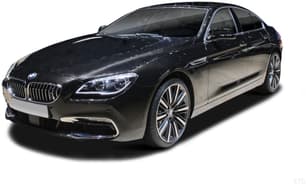
That's pretty much it in a nutshell for the BMW 6 Series Gran Turismo, which was formerly the 5 Series GT. It essentially takes the place of the 6 Series Gran Coupe - an alternative to the regular 5 Series sedan that's more attainable than a 7 Series limousine.
Confused? It's not as difficult as all that sounds - you just need to know that this model, the 2018 BMW 6 Series Gran Turismo, is supposed to offer a neat alternative to the go-to family luxury car or SUV.
I spent some time in the entry-level 630i to see if it can deliver on that promise. In fact, I spent more than 24 hours driving the BMW 6 Series GT over the past week, and I don't have a sore back, I haven't been left scratching my head over the intended purpose, I haven't been uncomfortable, and I haven't been left wanting for much.
The Hyundai Ioniq 9 is a big, comfortable and powerful SUV that ticks lots of boxes. Sadly, though, the electric power that makes it such a treat to drive is probably the same thing that will keep it off plenty of shopping lists. For now, at least.
Note: CarsGuide attended this event as a guest of the manufacturer, with accommodation and meals provided.
This isn't a car for everyone's tastes, but if you fit in to the buyer group that just doesn't really know what they want in a luxury car, it could be the perfect fit for your family. The 6 Series GT is a practical large prestige car, albeit one that will likely find very few buyers.
I'm going to sound like a bad football coach here, but the Ioniq 9 is a tale of two halves, at least when it comes to the exterior.
And I mean that literally. The front half is lovely, with a smooth, rounded nose, two stacks of LED lights that build the horizontal on top of the vertical and a clean, modern road presence.
The back half, however, isn't. It took me a while to put my finger on it, but it suddenly dawned on me that it gives off old-school station wagon vibes that, for me at least, don't gel with the rest of the design.
Inside, though, it is a complete picture, with my only complaint that the steering wheel feels a touch too big – though I like it's more minimalist design.
Elsewhere, the materials are lovely to look at and touch – even the dash panel insert that reminds me a bit of snakeskin pants – the seats are comfortable and the tech works well.
One word on the digital wing mirrors, though. They are one cost option I wouldn't be ticking the box for. I find them off-putting, not least because they seem to zoom-in so close to the car behind that you can almost see what part of the people behind's breakfast is residing between their teeth. It feels invasive.
Plus, all you're really doing is swapping a large mirror outside the car for a big screen inside it. Conventional mirrors for the win.
There is no denying the 6 Series GT looks better than the old 5 Series GT. It isn't as frumpy, it looks more sporty, and to me it appears to have grown into its identity with more conviction than its predecessor.
That said, I don't necessarily like the look very much - it's a bit like a BMW X6 that has been rounded off a little and lowered down substantially. But I can appreciate some of the finer design aesthetics that it offers up: the frameless windows are a nice touch, and the swooping roofline looks smoother than a duck's back.
Other things like the active grille shutters and the air breathers ahead of the front doors are nice functional touches, and to my eye it lives up to BMW's hope of it looking "smooth but muscular". You can get the 630i with either the M Sport package, like you see here, or the more sedate Luxury Line, which is, well, more luxurious looking.
The M Sport styling and equipment package you see in the images here - with M aero kit and 19-inch wheels (ours had been upgraded to optional 20s) - help out with the athletic look of this very big vehicle.
It's huge in fact. The length of the 630i is 5091mm long, it measures 1902mm wide and sits at 1538mm tall, with a lengthy 3070mm wheelbase.
All that equates to a lot of room in the cabin, and what a sumptuous and delightful place it is to be - leather, wood and plush finishes abound.
It’s a big unit, the Ioniq 9, measuring more than five metres long, just under two metres wide and around 1.8 metres high. Weight is a hefty 2.7 tonnes at its heaviest, too, while braked towing capacity is pegged at 2.5 tonnes.
So, big numbers and a big vehicle with big storage. With all three rows in place, you get 338 litres of boot space. But treat it like a five-seater and that increases to 908 litres. Drop both rows, and you’ll have a massive 2410 litres at your disposal.
The room in the middle row is ample for full-size adults, especially if you tick the box for the cushy six-seat layout, and the rear doors feel massive, so when opened you can step through to the third row with ease, too.
Once in there, you'll find an impressively luxe space. The room isn't ridiculous, but my 175cm got in easily enough, and then fit pretty easily, too. And the addition of USB charge ports, air vents, speakers and an automatic recline function for the third row will lift the mood for whoever you put back there.
Now, I said before that this is a bit like an X6, but it has heaps better interior space than that SUV.
As soon as you slide into the driver's seat, you feel like your inside a large car. The cabin space is plentiful, and there's an abundance of storage on offer, too: there's a split-lid armrest between the seats, a pair of cupholders, a phone storage nook with wireless charging, and big door pockets with bottle holsters.
In the back you have access to door pockets, a flip-down armrest with cupholders (that middle part of the seat can fold down completely to allow storage of longer items), and there's excellent room on offer. How many seats in the BMW 6 Series GT? Five - like, five full-size seats.
Because the roofline doesn't rake as sharply as a four-door 'coupe', headroom is excellent for adults (even of the 183cm variety, like myself), and legroom and toe room are equally very good. This is bigger in the back than a 5 Series, but maybe not as plush as a 7 Series… so I guess it makes sense numerically for its nomenclature.
Of course you get climate control in the front (and in the rear if you option it), and the materials are excellent. The media screen is tablet-style, proudly displaying 10.25 inches of high-def real estate that is both touch-capacitive and controllable by way of the central rotary controller with touchpad. And get this - you can even use gestures to control certain elements like volume, swiping and changing tracks… but you have to option that.
The fully digital instrument display is bordered by a set of incomplete dial rings, which is just odd. BMW, back yourself - your buyers can handle just having a digital screen in front of them, particularly when it's as good as this one.
This grandiose hatchback's boot is commodious - with the back seats in place it has a huge 610 litres of cargo capacity, which extends to 1800L with the 40/20/40 seats folded down using the quick release levers in the boot area.
There is no spare wheel (the BMW range is fitted with run-flat tyres) but it does have a secondary hidden storage area under the boot floor for hiding items or stowing wet gear, bathers/swimmers or muddy clothes.
For context, the X6 has 580L seats up, 1525L seats down.
So, we know it's not cheap, the Ioniq 9. In fact, it’s Hyundai’s most expensive car ever, outshining even the bonkers and brilliant Ioniq 5 N.
How much are we talking? Well, you can only get one Ioniq 9 — the flagship Calligraphy trim — and it’s yours for $119,750, before on-road costs.
There are just a couple of options from there, with the six-seat version an extra two thousand bucks, which I know sounds weird, to pay more for less, but you are essentially swapping the three-seat middle row for two more luxurious captain’s chairs. The digital side mirrors, which I hate, will cost you $3000, and matt paint will set you back $1000, or $250 more than the premium paint ask. Tick everything, and your Ioniq 9 is more like $125,000.
As to how many Hyundai will sell, suffice it to say the brand doesn’t expect it to be a huge contributor to its totals, acknowledging the EV market is stagnant and that most EV buyers are upgrading an electric vehicle, rather than stepping out of an ICE vehicle, which makes the purchase pool pretty shallow. Still, Hyundai is on track to sell around 150 of the six-figure Ioniq 5 Ns this year, so there are clearly some EV buyers with deep pockets.
Anyway, you get just about everything Hyundai can throw at a vehicle, including full LED lighting, 21-inch alloys, a big panoramic sunroof and a hands-free powered boot.
Inside, there are real Nappa leather seats, tri-zone climate, heated and ventilated seats in the first and second rows, a heated steering wheel and what Hyundai calls 'premium relaxation' seats up front.
There’s a big multimedia screen with Apple CarPlay and Android Auto, a digital dash and a head-up display, a 14-speaker Bose stereo and a total six USB connections. But no vehicle-to-load, which means you forgo the household-style power outlet found in some EVs.
There are also a couple of first for Hyundai, including the ability to load your digital key into your phone’s wallet, meaning you can unlock and drive just using your device, and it’s the first time Hyundai has deployed active noise cancellation, too.
The BMW 6 Series Gran Turismo range starts off with the model tested here, the 630i. It has a list price of $123,500 before on-road costs - and that's whether you buy the M Sport Line or the Luxury Line.
That's quite a lot of money. And while it has a lot of equipment to help justify the cost, the smarter dollars will probably find their way to a more affordable 5 Series.
Standard gear in this spec includes adaptive air suspension with multiple drive modes, a colour head-up display, semi-autonomous parking, adaptive cruise control with steering assistance, auto high-beam LED headlights with LED daytime running lights, DAB+ digital radio, a 16-speaker harman/kardon sound system, a 12.3-inch driver information screen and a 10.25-inch media display with sat nav, Bluetooth and 'BMW ConnectedDrive' online services.
Hey, you even get a panoramic sunroof as standard! Plus there are things like an active rear spoiler, two USB ports and four 12-volt outlets, leather trim, heated front electric seats, electric steering wheel adjustment, keyless entry, push-button start, and an automatic boot.
It also comes loaded with active safety assistance functions - we'll get to that in the safety section below.
Things it's missing at this price point? Well, heated seats are an option, but bundled nicely into the 'Comfort Package' ($3000) which was fitted to our car. The pack includes heated seats front and rear, quad-zone climate control, electric sunblinds for the rear side windows, and electric seat back adjustment. Oh, and BMW continues to gouge consumers $623 for Apple CarPlay (which seemingly didn't work in our car).
The only other 6 Series GT model available is the 640i xDrive, which is again available with the choice of M Sport or Luxury body styling. It's also pretty exxy, with a list price of $148,900, but gets a more performance-focused drivetrain, as well as extra equipment: essentially the Comfort package, plus vented front seats, interior fragrance (eight options), memory settings for the front seats, 20-inch wheels and metallic paint.
Plus the 640i has Sport+ settings - it's probably the wrong car for those - and 'Integral Active Steering' to couple with the all-wheel drive system.
There's only the one configuration available here, with Australia's Ioniq 9 a dual-motor AWD producing a combined 314kW and 700Nm – the latter ensuring this heavy EV never feels dull or sluggish.
Overseas, our powertrain is called the Ioniq 9 Performance, and it produces the fastest zero to 100km/h time of just 5.2 seconds.
Under the bonnet of the 630i is a 2.0-litre four-cylinder turbocharged petrol engine, which produces 190kW of power (at 6500rpm) and 400Nm of torque (from 1550-4400rpm). It uses an eight-speed automatic transmission, and is rear-wheel drive.
That may not seem a lot considering the size of this machine, but consider that some of the steamiest four-cylinder hot hatches have nearly the same outputs, and you realise this engine offers up a far-from slouched approach to propulsion.
The 640i xDrive has a 3.0-litre six-cylinder turbocharged engine with 250kW of power and 450Nm of torque. It gets the same eight-speed auto, but as the xDrive naming indicates, it's all-wheel drive.
But this is the one you'd prefer if you want to hit highway speed in a hurry - the 0-100km/h claim is 5.3 seconds, where the 630i takes a full second longer (6.3sec) according to the company.
The Hyundai Ioniq 9 is essentially sitting atop a massive 110.3kWh battery, which produces a claimed WLTP driving range of 600km.
Be warned, though, the digital dash has a live read out of your minimum and maximum driving range, presumably judged on your driving inputs, and there is a vast gap between the two numbers. In short, if you want to maximise range, go easy on the accelerator.
Its 800V architecture unlocks 233kW DC fast charging, which the brand says will take you from 10 to 80 per cent charged in 24 minutes.
Plugging in at home, though, will be much slower than that – something like 10 hours using 10.5kW wallbox.
BMW claims fuel use of 7.0 litres per 100 kilometres, and you'll need to use 95RON premium unleaded when you fill up.
On my trip with the car, I saw about 9.0L/100km across mostly high-speed driving - some freeway, some highway, some country back road touring, and quite a bit of corners and city stuff thrown in as well. I think that's pretty respectable.
What wasn't so great was the lack of premium fuel in some of the 'away from civilisation' places on my route home. Keep that in mind if planning your own GT long-distance cruise.
It's a proper surprise packet, the Ioniq 9, because you approach it with a pretty good idea of how a big, heavy and equipment-soaked seven-seat SUV is going to behave on a twisting road. Short answer? Not well.
But somehow, through some kind a wizardry, the opposite is true. Rather than feel stupendously big and heavy, the Ioniq 9 shrinks around you, feeling far smaller, more dynamic and more capable than you'd expect.
I'd maybe forgo the tightest of tight switchbacks in favour of more sweeping, undulating bends, but honestly, you can squeeze plenty of fun out of the Ioniq 9 on the right road.
Happily, it's no one-trick pony, either. It's quiet in the cabin, even at freeway speeds, it's comfortable in the city and there's plenty of space and tech on board.
The key take-away here is I like the way Ioniq 9 drives, another big vehicle helped massively by electric motors. Sometimes in big ICE-powered SUVs you can feel just how much work is going into getting them up and moving, but that's not the case here.
Instead, because there are no transmissions or turbochargers to deal with, the Ioniq delivers a rich flow of power and torque every time you push the accelerator. No lag, no whining, it just goes.
But here's the really interesting bit. It almost doesn't matter how good I say this car is, or how well I think it drives, this car will remain a niche seller. And Hyundai's executives seem to know it. And all of that's a shame, because it's really very good on the road, this Ioniq 9.
I'll put this out there - if you like to drive, there are BMW models for less than this one that will put a much bigger smile on your face. Like, a 440i Gran Coupe, or even just a 330i sedan…
But if you're in BMW's target market - that being older executive buyers who want space and luxury as a priority over thrills at the wheel, you could do a lot worse.
That's because the 6 Series GT lopes along the highway without fuss - the engine easily coping with the demands of overtaking moves, the adjustable drive modes allowing a light steering and wafting suspension feel to wile away the kilometres.
There are 'Comfort' and 'Comfort Plus' modes, but the latter is a bit too spongy and can be boaty feeling. The Comfort setting is made for the highway.
It is actually pretty agile for its dimensions.
If you decide to deviate from the straight sections, you'll be able to explore a little bit of dynamic range, especially when you dial up the 'Sport' mode, which changes the damper settings, steering weight, throttle and transmission response, and even the digital dials in front of the driver to a more aggressive look.
Our car had the 'Integral Active Steering' setting, which is a variable ratio steering system that includes rear steering - that essentially helps make is more turnable in corners at highway speed, and easier to park at lower speeds. It's difficult to say whether the assistance is excellent or not short of driving a car without the tech, but to this tester it was hard to hide the size and weight (1835kg kerb weight) of the vehicle.
That isn't to say it's clumsy or lumbering - it is actually pretty agile for its dimensions, though it makes a lot more sense on long drives and coastal cruises than it does in the narrow and twisty alpine roads of the Snowy Mountains Highway that I tested it on.
There's good grip from the tyres, and strong response from the powertrain - but if it were my money, and I had to have a 6 Series for whatever reason, I'd be looking towards the 640i model, which has a thumping six-cylinder with 250kW/450Nm - certainly an engine that would be more at home in this car. Plus that model comes with AWD.
The Ioniq 9 is yet to be assessed by ANCAP, but the results will soon be published for its European test, and the result will be adopted here. Hyundai says it’s shooting for a maximum five stars.
Elsewhere, there are 10 airbags and just about every active safety system you can poke a stick at, all wrapped up in Hyundai’s 'SmartSense' suite of technologies, including the new-for-the-brand 'Highway Driving Assist 2', which acts as a lane-centre 'Smart Cruise Control' but that can also take evasive action should someone swerve into your lane.
The BMW 6 Series GT range has a five-star Euro NCAP crash test score based on 2017 testing, but it hasn't been scored by ANCAP.
There's the usual array of airbags - dual front, front side, full-length curtain and driver's knee airbags are included, plus parking sensors all around, and heaps of safety tech including the 'Driving Assistant Plus' package with lane departure warning and lane keeping assist, forward collision warning, auto emergency braking (AEB) front and rear, blind-spot monitoring and rear cross-traffic alert, and adaptive cruise control with stop and go.
That's all great stuff, and so is the 360-degree camera system with adaptive display - so, if you're reversing and you turn the wheel to one side, the image on screen will move, too. It'll also go between a birds-eye view and a backing-up perspective, and that can take some getting used to.
What was less convincing in terms of the user experience was the rear auto braking, which seemed to be scared of the car's own shadow. On multiple occasions the car jammed on the brakes when reversing out of driveways on to empty streets - be it in the normal height, or the raised height setting.
The 6 Series GT has dual ISOFIX anchor points and three top-tether points are there and ready for baby seats or child seats.
Five years with unlimited kilometres is still the underwhelming warranty norm at Hyundai. The battery is covered for eight years or 160,000km.
Happily, servicing is infrequent, with intervals pegged at two years or 30,000km. As a result, the first six years of servicing will cost a total $2005, or an average $334 per year.
BMW runs a condition-based servicing plan, which means the car will tell you when it needs servicing. But you can rest assured it won't (theoretically) cost you much, with the brand's 'Service Inclusive' pack. It covers you for basic maintenance as and when required for five years/80,000km. According to BMW, that includes "annual vehicle checks, oil changes, all filters, spark plugs and labour costs for the duration of the package".
BMW offers a three-year/unlimited kilometre warranty plan, and you get the same cover for roadside assistance.