What's the difference?
There are really only four things you need to know about the all-new Hyundai Inster. It's small outside, yet surprisingly big inside. It's all electric. It's cute as a button. And it's as practical as a Swiss army knife.
Actually, there's one more thing. It's cheap for an EV. But it's still not that cheap, given the wave of cut-price Chinese product now on our shores.
So, can the Hyundai Inster carve itself a slice of the entry-level EV market?
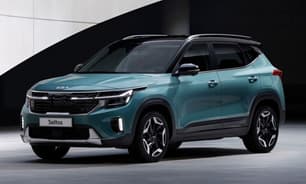
Looking for a small SUV that’s not tiny? The Kia Seltos could be that SUV, and it’s been updated for 2023.
This review covers the entire Seltos range and reviews this small SUV based on its safety, practicality, price and features, plus ownership costs, its fuel economy and what it’s like to drive.
So, if you’re thinking about a Honda HR-V, a Toyota Corolla Cross or something even as large as a Hyundai Tucson or Kia Sportage then you need to be thinking about a Kia Seltos, too.
The target market for the Inster isn't huge, and Hyundai knows it won't be a runaway best-seller for the brand. But those in the market for a bite-sized EV will find the Inster feels bigger, and drives better, than they might expect.
Kia’s updated Seltos is more expensive than the previous version but it's better as well.
The entry grade no longer has hubcaps and gets alloy wheels, all grades have directional air vents in the second row, the jerky dual-clutch auto is gone and an excellent regular eight-speed auto has arrived, plus there’s more safety tech and modern displays screens.
What hasn’t changed is the Seltos’s size. It’s a big, small SUV, that’s easy to park in tight spaces but roomy inside even for tall, awkward humans like me.
The sweet spot in the range is the Sport+ with the 1.6-litre engine, if only it had the LED headlights that only come on the GT-Line.
Note: CarsGuide attended this event as a guest of the manufacturer, with meals provided.
The words small but perfectly formed appear here, with Hyundai’s insistence on not having a traditional range-wide design identity allowing them the freedom to create something unique and pretty funky here — though I do see some shades of Suzuki Ignis in the side profile.
It does look fun though, right? With the selfie ring-light-style headlights, Tetris-style rear lights, those swollen guards and the funky alloys.
And you can dial up further with the Cross variant, which gets a tougher, more squared-off look front and back - even if you’re more chance of meeting a bunyip than an Inster on your favourite off-road track.
Inside, the cuteness continues, though some of the scratchy cabin materials definitely point to the entry-level nature of the Inster.
Still, the seat materials, both the cloth and the leather, are lovely and thoughtfully coloured, and the twin screen setup is nice, too. I love the inclusion of a host of physical buttons that control the climate, stereo and the nav.
This updated Seltos has had a few styling tweaks, too. The grille is taller and there’s a new headlight design which on the GT-Line is stunning with its LED running lights.
The rear of the Seltos has been restyled as well, with a new tail-light design and again on the GT-Line there’s an LED strip which runs between them.
The Seltos is pretty big for a small SUV. At 4.4m long it’s bigger than a Hyundai Kona and a Honda HR-V and about the same size as a Nissan Qashqai and Corolla Cross.
What’s good about that is you’re getting more space inside with a package that’s still smallish on the outside.
If you think the Seltos’ look is familiar, then I agree. The Honda HR-V and Haval Jolion have very similar tail-light designs and the profile follows many of the same styling cues of the Toyota Corolla Cross.
To my eyes, though, I think the Seltos is the more refined looking of its peers with a more modern and interesting interior.
Speaking of which, keep in mind that the top-of-the-range GT-Line’s cabin is far more fancy than the interior of the entry grade S. The GT-line’s large double digital displays are impressive and the buttons around the shifter for seat heating and ventilation are replaced with blank plastic panels in the S.
Hard plastic armrests were another of my gripes about the previous entry grade Seltos, too.
Still all cabins have a premium look even if the feel isn’t luxurious throughout on all grades.
The Inster stretches 3825mm long, 1610mm wide and 1575mm tall, but it rides on a 2580mm wheelbase – the later being bigger than the Hyundai Venue, and almost as big as the Kona.
It has allowed Hyundai to stretch the legroom options in the backseat, which actually gives you more space than the two bigger SUVs mentioned above, helped massively by the fact the Inster's rear pew is on rails, allowing you to slide it right back, and that it reclines a fair way, too.
I'm 175cm and I found I had more than enough leg and headroom, and with the backseat in full La-Z-Boy mode, I could sit back and relax, even on a longer journey.
It's a good thing it's four seats only, though. While the Inster feels longer than it is, it doesn't feel any wider, and even in the front seat you can feel like you're in economy class when you have a passenger on board, with both of you rubbing elbows on the central armrest.
Clever storage abounds though, with hidey-holes, handbag hooks and more dotted throughout the cabin. Opt for the roof box – and wear the efficiency penalty – and you can pop another 75kg worth of gear on the roof.
Also cool is the fact the backseats fold completely flat in the entry-level Inster, upping the storage possibilities. And in the top-spec Cross, the front seats fold down, too, allowing for fairly long items to be stowed. Though why you would need the driver's seat to fold flat is a bit of a mystery, unless you're looking to turn your Inster into an immovable storage container.
Apparently in Korea you can option a mattress that slides over all four seats, but I can't see that taking off here.
The official storage numbers are 280L and 1059L, and the small boot is helped along a little by underfloor storage where you can pop your charging stuff.
Some small SUVs are seriously small, which might be fine for some, but if you’re hoping to also have enough space for passengers in the back seats, and a boot which can carry plenty of luggage then the Seltos is a good choice.
Even at 191cm tall I had more than enough room to sit behind my driving position with good headroom back there, too.
Cabin storage is also good with door pockets front and rear, and a deep centre console box. As for cupholders there are two up front on all grades, while the Sport+ and GT-Line get two more in the second row fold-down armrest.
Boot capacity depends on if you’ve requested a full-sized spare wheel or the space-saver spare. With the space-saver you’ll have more room at 469 litres, while the full-sized wheel under the boot floor will leave you with 433 litres. That’s still decent for the class.
The new Seltos has directional air vents for back seat passengers which is a win (motoring journalists had been complaining about the lack of them for years) and there are also two USB ports (Type-C) for the second row along with another two for those in the front, plus a 12V outlet.
The Inster is available as an entry-level model, which comes as a Standard Range for $39,000 before on-road costs, or an Extended Range for $42,500. It then steps up to the Inster Cross, which is $45,000.
For perspective, the Geely EX5 is considerably bigger, and will travel further on a charge, for $40,990 before on-road costs. Then there's the Chery E5, which is now $39,990 plus on-road costs.
Anyway, the Inster nabs 15-inch wheels, dual 10.25-inch screens (one for the multimedia, another for driving info), a six-speaker stereo, Apple CarPlay and Android Auto, cloth seats, two V2L connectors, a wireless charging pad and rain-sensing wipers. The equipment list for the Extended Range is the same, but it rides on 17-inch alloys.
Stepping up to the Inster Cross scores you a unique and off-road-inspired look, but also leather trim inside, a unique design for its 17-inch alloys, heating and ventilation for the front seats and heating for the steering wheel, some extra safety kit and practicality perks, and the option of a sunroof or an exterior roof storage box, the latter of which seriously eats into the driving range.
The price of the Kia Seltos has increased by about $2000 across the range, but you are getting more in the way of features. Let me take you through the model line-up.
There are four grades: the entry grade S, then the Sport, Sport+ and GT-Line. Those are all available with the 2.0-litre petrol engine and front-wheel drive.
The Sport+ and GT-Line can also be had with a more powerful engine which is a 1.6-litre turbo-petrol with all-wheel drive.
So, the list prices for the 2.0-litre engine start at $29,500 for the S, then step up to $32,700 for the Sport, $35,800 for the Sport+, and $41,500 for the GT-Line.
The 1.6-litre turbo engine is a more expensive proposition and in the Sport+ you’ll pay $39,300, and to pair it with the GT-Line grade you’ll need to hand over $44,900, before on-road costs.
Kia was also doing drive-away pricing at the launch of the new Seltos. So check with your dealership to ensure that the offer is still available.
Coming standard on the S grade for the first time are alloy wheels, they’re small at 16-inches but better than hubcaps, and there’s also roof rails.
Inside, there are cloth seats, an 8.0-inch media display, digital driver’s display, air-conditioning, wireless Apple CarPlay and wireless Android Auto.
The Sport grade adds 17-inch alloy wheels, auto headlights, a 10.25-inch media screen and matching 10.25-inch driver display, digital radio, sat nav, climate control, plus Apple CarPlay and Android Auto.
The Sport+ has all the Sport’s features but brings a proximity key with push-button start, privacy glass, power driver’s seat, synthetic leather upholstery and extra safety tech which we’ll get to soon.
The top-of-the-range GT-Line has all the Sport+ features but adds a power front passenger seat, heated and ventilated front seats, sunroof and a power tailgate.
The GT-Line also comes with the option of two-tone body paint - that is a black roof with 'Clear White' or 'Pluton Blue' body colours. Be advised that this combination is not available with the sun roof.
The value is good, but I don’t agree with Kia’s decision to keep the LED headlights for the GT-Line only and leaving all other grades stuck with dim Halogen headlights.
Being able to seem clearly on dark Australian country roads at night shouldn’t be a luxury. Toyota offers LED headlights across the Corolla Cross range from the entry grade up.
The Hyundai Inster Standard Range kicks off power proceedings, with a single front-mounted electric motor producing 71kW and 147Nm.
Next is the Extended Range, which shares its outputs with the Inster Cross. Here, the front-mounted motor’s outputs have been ticked up slightly, now producing 84kW and 147Nm.
Those aren’t big numbers, but then neither does either Inster feel particularly slow or underpowered.
The Seltos range has two engines to choose from: a 2.0-litre four-cylinder petrol engine making 110kW/180Nm and a 1.6-litre turbo-petrol engine producing even more grunt at 146kW/265Nm.
The 2.0-litre engine comes with a CVT which is a type of automatic transmission and the 1.6-litre engine has an eight-speed auto.
CVT stands for Continuously Variable Transmission and some people (me included) find the droning they cause the engine to make to be annoying. They also come with a feeling of less acceleration.
The good news is the eight-speed auto that comes with the 1.6-litre is a great transmission with smooth shifts and a sporty nature that matches the punchy engine.
This eight-speed auto is welcome because it also replaces the jerky dual-clutch transmission that had been paired with the 1.6-litre engine in the previous Seltos.
All-wheel drive is only available with the 1.6-litre engine while front-wheel drive comes solely with the 2.0-litre.
So, if you’re after great acceleration and better traction then the 1.6-litre is the way to go. If you’re not after a sporty driving experience then the 2.0-litre engine will suit you, and it costs less.
Standard Range cars get a 42kWh lithium-ion battery, producing a driving range of 327km. The Extended Range and the Cross get a bigger 49kWh battery, increasing the range to 360kms. Now, that roof box. It does look cool, but you’re going to really need to carry stuff to choose that option, given it increases energy consumption by 25 per cent, reducing the Cross’s range to just 293km.
When it comes to charging, the Inster is set up for 120kW DC fast charging, or 10.5kW AC charging - provided you have that much power available at home, as most wall boxes are more like 7.1kW.
The smaller engine actually uses more fuel, but not a great deal more. Kia says the 1.6-litre engine with all-wheel drive uses 7.4L/100km after a combination of open and urban roads. The 2.0-litre engine according to Kia will use half a litre less at 6.9L/100km.
Both engines only need 'standard' 91 RON petrol, too - that’s the cheap one.
Where is the hybrid variant? Good question. The answer is, there isn’t one. And neither is one coming, I’ve asked. That’s disappointing considering the Corolla Cross comes with a hybrid version of each grade in its line-up.
It’s for this reason the Seltos range scores a lower mark for fuel efficiency.
Honestly, the impact electrification has had on vehicles in this class is staggering.
It wasn't so long ago that these micro cars were fitted with underwhelming petrol engines, four- or five-speed gearboxes and all the noise-deadening technology of a tin of beans.
As a result, they were cute, but painful. It always felt like you had to wring their neck to get the most out of them, and when you did, they were loud, buzzy and annoying.
But the Inster is none of those things. While not ludicrously powerful, the electric propulsion offered, and the nature of the way it's produced, feels ample in the little Hyundai, with the acceleration smooth, silent and easy,
It's also just generally quiet. Hyundai says it has double-sealed the doors, used thicker glass and fitted full underbody coverings to reduce the NVH - or noise, vibration, harshness - levels, and all of that, combined with the peace and quiet of an electric motor, have created a mostly blissful cabin experience.
The ride and handling hasn't been through the full Hyundai Australia ride and handling calibration of old. Instead, it's undergone the brand's more modern approach, which is to take the best componentry from what's available overseas and then build the Aussie-spec cars from there.
Either way, it all works pretty well here. Only really big bumps clang into the cabin, with the Inster otherwise riding well over all of the road surfaces we encountered.
The point, I guess, is that it's a drive experience stuffed full of happy surprises. The ride, the acceleration and the refinement are all well up on what you might expect from a city car.
The Kia Seltos has two personalities. The laid back Seltos with a 2.0-litre engine and the enthusiastic sporty Seltos with the 1.6-litre engine.
Regardless of which Seltos you pick, the ride is comfortable, the handling is good, and the steering is excellent.
Kia says it's worked to make the Seltos’s cabin more insulated from road noise, but having driven it on country roads for hours I think it could do with more sound dampening.
If you’re considering the Sport+ grade and are not sure if the $3500 premium for the 1.6-litre engine is worth it, my answer would be absolutely, if you can afford it.
That 1.6-litre turbo petrol is a great engine and the new eight-speed transmission is excellent. Even as a daily driver I think anybody would enjoy driving this version of the Seltos more, and for those who like sporty driving then it’s definitely the powerplant for you.
The Hyundai Inster is yet to be crash tested, but does arrive with a solid safety offering including seven airbags, as well as active equipment like a auto emergency braking (AEB), rear cross-traffic avoidance, lane keep assist, and active cruise control.
The Cross ups the equipment a little more, including a surround-view monitor, blind-spot monitoring and front parking sensors.
The Seltos has the maximum five-star ANCAP safety rating but that’s from 2019. Still, the advanced safety tech is excellent. All grades come with AEB, blind spot warning, lane keeping assistance and rear cross-traffic alert.
All grades also come with the rear occupant alert, which is great for sleep-deprived parents, and there’s also the safe exit feature which will let you and the kids know if a car or cyclist is approaching before you open the door and ruin everybody’s day.
The Sport+ and GT-Line both come with AEB that works at intersections.
It’s good to see front and rear parking sensors standard across the range.
The Inster delivers super long service intervals, requiring a trip to the service centre every two years or 30,000kms, but each service is priced at $655. A Toyota Yaris Cross, for perspective, will see you visit the service centre twice as often, but each visit will only cost you $255, or $510 every two years.
The Hyundai warranty is five years/unlimited kilometres, while the high-voltage battery is covered for eight years.
The Seltos is covered by Kia’s seven-year, unlimited-kilometre warranty.
Servicing differs between the two engines.
A Seltos with a 1.6-litre engine needs to be serviced every 12 months or 10,000km and over seven years the average service cost comes to $497 per year.
A Seltos with the 2.0-litre engine needs to be serviced every 12 months or 15,000km and over seven years the average service costs comes to $434 per year.
Capped price servicing is good, but the prices can get higher than $600 for some visits.