What's the difference?
In the distant future, automotive historians will look back at the Honda CR-V as one of the true SUV originals.
Sure, it and the conceptually-identical Subaru Forester, trailed the trendsetting Toyota RAV4 of 1994 by three years, but collectively all three Japanese brands broke and then reset the Australian family-car mould in lightning-quick time. Too much so for the floundering local car industry to ever catch up.
Today, they remain the blue-chip mid-sized SUV contenders.
Six generations in, how does the completely-redesigned CR-V in all-new e:HEV (petrol-electric hybrid) guise stack up? Let's find out!
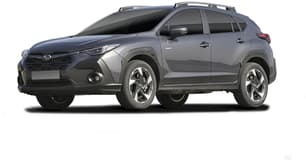
Among the many strange new car brands and names we're increasingly confronted with Subaru is an established and trusted beacon along with Honda, Hyundai, Mazda and Toyota. And Subaru’s Crosstrek SUV competes against rivals such as the Honda HR-V, Hyundai Kona, Mazda CX-30 and Toyota Corolla Cross.
So, what does the Crosstrek give you for your money and what’s different or better about the Crosstrek compared to those rivals?
We tested the mid-grade Crosstrek 2.0S and rediscovered what this small SUV does so well and what could probably be improved.
The most-expensive version of the latest Honda CR-V is one of the most convincing family-orientated mid-sized SUVs in Australia, regardless of price and positioning.
For efficiency, economy, driveability, packaging, safety, quality, refinement and value-for-money, it is an outstanding value proposition. Don't buy a RAV4 or Forester hybrid before checking this one out.
We cannot wait for the e:HEV hybrid powertrain to filter down to cheaper grades, to make the best CR-V in decades even more accessible.
The Crosstrek is good to drive with great ground clearance and an excellent all-wheel drive system for light off-road adventures. I’m also a fan of the styling and features for the money. But The letdowns comes in the form of limited boot space and cabin storage, a short warranty and pricey servicing. Still, it’s great to see Subaru has updated the car's safety systems, the most important part of any car.
Though considered handsome, the CR-V has never been a style leader. Function over form has always been its calling card, and Number Six is no exception.
Cleanly drawn, with boxy proportions and a blunter, squarer nose providing a contemporary if somewhat bland appearance, the Thai-built Honda lives on the larger end of the mid-sized SUV scale, resulting in lots of space and practicality.
Yet there are interesting and worthwhile details to explore, like narrower-than-usual windscreen pillars for exceptional forward vision.
The same applies to the considered positioning of the exterior mirrors, minimising blind spots, while deep glass areas allow light to flood in.
The stylish, Volvo-esque L-shaped tail-light graphic probably connects most clearly with past CR-Vs, giving the latest version an elegant overall presence.
Compared to the old model, the latest version's wheelbase has been stretched by 40mm to 2700mm, while front and rear tracks are 10mm wider, coming in at 1611mm and 1627mm, respectively.
Note that the front-drive models' ground clearance is 198mm – 10mm less than on the (non-hybrid-only) AWD grades.
While SUVs tend to come in either a tall and boxy or coupe-like shape, the Crosstrek has a uniquely sleek and sporty wagon look that has stayed much the same over three generations.
Also while the Crosstrek competes with the Honda HR-V, Hyundai Kona, Mazda CX-30 and Toyota Corolla Cross the Subaru is the most off-road suitable thanks in part to its high 220mm ground clearance
As if to signal those adventurous aspirations the Crosstrek has a more rugged appearance with robust-looking plastic guards and chunky roof rails.
Inside the Crosstrek looks so much the same as most other new Subarus it's hard to work out which one you’re in. The materials are dark and soft, there is not much in the way of glitzy trimmings but there’s a high quality feeling throughout.
Little wonder the CR-V was the world's third most-bought SUV worldwide in 2023. It's big enough for most families' needs... and then some.
This is immediately apparent the moment the big doors are opened up nice and wide, revealing an airy, spacious and extremely user-friendly interior.
The Japanese brand has striven successfully for greater visual symmetry, harmony and operational simplicity in the dashboard's design and layout.
And, sure, the 9.0-inch touchscreen lacks the wow factor of vast buttonless displays as found in flashy alternatives such as the disappointing Chery Tiggo 7, but it works very effectively.
Hondas have always nailed the driving position bit down pat, and the RS is no exception, with ample seat and steering column adjustment, considered controls placements and unimpeded views of the instrumentation and road ahead due to the aforementioned thin pillars.
The instrumentation cluster is an electronic set-up offering the driver the choice of either super crisp and ultra-clear analogue dials, or somewhat fussier bar graphs, with a digital speedo augmenting both.
There's so much to enjoy and so little to criticise inside Honda's mid-sized SUV. Along with space to stretch, the front seats are notably comfortable and supportive, as several hundred kilometres sat ensconced in them proved. Both sides have electric adjustment at this price point, too.
Ventilation also rates highly, with the honeycomb full-dash-length grille and lovely toggle switches bringing aesthetic and tactile delight, respectively.
And, reflecting the CR-V's US focus, storage is on a large and helpful scale, offering bottle holders in the doors amongst other places to stash things in and on.
Moving to the rear seat area, entry/egress is ridiculously unimpeded, with a decently-shaped bench.
Families are also likely to appreciate series-best legroom, backed up by a handy amount of girth – always a good thing.
You're also met with occupant-facing air vents, overhead grab handles, even more door storage, the obligatory folding centre armrest with cupholders, front-seat-sited map pockets and a pair of USB-C outlets.
However, the standard sunroof does rob some headroom so people taller than about 180cm had better try before they ride, though the 60/40 backrest reclines to 16 positions and that's helpful here.
Being a hybrid, the RS e:HEV misses out on the sliding bench which adjusts by 190mm in other CR-Vs.
Vision out is exemplary back there, enhancing an already spacious and airy ambience. But if the front seat area majors on Japanese quality, the rear is hardly premium, with plenty of dreary cheap plastic trim, betraying the Honda SUV's focus on the price-driven American market. But nothing squeaked, rattled or broke, thankfully.
Further back, the tailgate rises remotely quickly enough, and there's quite a wide and long area to store things, but the electrification elements make for quite a high and uneven floor – though a deep bin area is also provided to hide stuff in.
There's also just a can of goo in lieu of a spare wheel.
Cargo capacity rises compared to the previous CR-V, ranging from 589 litres with the rear seats up, to 1636L, or 1072L if measured only to the window line.
The Crosstrek is a small SUV but its low and sleek shape doesn’t do it any practicality favours in terms of exiting and entering or storage in the boot.
Boot capacity is 291 litres which is very small compared to its rivals which have capacities closer to 350 or 400 litres.
People space inside, however, is good, and even for a tall (189cm) person like me there’s plenty of space up front and behind my driving position.
Storage space is passable with three cupholders and thin door pockets and a decent-size console bin.
Given the Crosstrek’s adventurous intent, the cabin should be more reflective of that rugged aspiration.
At the time of writing, choosing the hybrid version over the regular petrol-turbo CR-V means forking out for the top-of-the-line RS. Less expensive (and luxurious) hybrid grades are expected soon.
Starting from $59,900 drive-away, it isn't cheap, especially as its two closest rivals – the RAV4 Cruiser Hybrid and Nissan X-Trail Ti e-Power e4orce – offer all-wheel drive (AWD) for around the same price, while the Honda is front-wheel drive only.
At least the RS e:HEV isn't short on equipment, especially safety, with 11 airbags, Autonomous Emergency Braking (AEB), blind-spot alert, lane-keep assist, rear cross-traffic alert and adaptive cruise control included. Check out our safety section below for more details.
Being the CR-V flagship, you'll also find adaptive LED headlights, a panoramic sunroof, dual-zone climate control, leather upholstery, powered and heated front seats, a 9.0-inch touchscreen, sat-nav, wireless Apple CarPlay/wired Android Auto, Bose premium audio with 12 speakers, digital radio, a wireless charger, privacy glass, hands-free powered tailgate, roof rails, front and rear parking sensors and 19-inch alloys.
Note, however, there is no spare wheel, just a tyre-repair kit. Not good enough. For why, please see the Cost of Ownership/Warranty section.
There's also five years' free subscription to 'Honda Connect', bringing remote-control operation for climate control, lights and locking/unlocking, trip log data, location status, geo-fencing and emergency callout.
What's missing? Along with the aforementioned AWD, some rivals at this price point include larger alloy wheels if that's your thing.
Otherwise, the RS e:HEV brings plenty of features to the table. Sadly, not of the picnic variety, however, unlike in the first two generations of CR-V (1997 and 2001).
The Crosstrek range is divided into three petrol variants and two hybrids. With a list price of $43,990, our test Crosstrek 2.0S sits at the top of the petrols and second from the top of the line-up under the Crosstrek AWD Hybrid S flagship.
Standard features on our 2.0S include 18-in alloy wheels, roof rails, LED headlights and tail-lights, dual-zone climate control, push-button start, proximity unlocking , 10-speaker audio, wireless phone charging, Apple CarPlay and Android Auto, an 11.6-inch media touchscreen and leather-trimmed seats.
If you’re looking to save a few thousand dollars the 2.0R is almost as well equipped.
Is it worth stepping up to the hybrid? Not in my opinion. The hybrid is the 'mild' kind and doesn't offer a great deal in terms of real-world fuel savings. You can read more on fuel efficiency below.
The CR-V hybrid is powered by a 2.0-litre four-cylinder direct-injection Atkinson Cycle petrol engine.
Married to a pair of electric motors that make a combined power output of 152kW, it delivers a system total of 135kW at between 5000rpm and 8000rpm, as well as an impressive 335Nm of torque from 0-2000rpm.
It sends drive to the front wheels via a single-speed electric continuously variable transmission (e-CVT), featuring deceleration paddles that help redirect regenerative braking energy back into the battery.
Tipping the scales at 1771kg (kerb), the power-to-weight ratio is 76.2kW/tonne. Not great, but the e:HEV's brawn lies in its hefty torque output.
The Crosstrek 2.0S uses a 2.0-litre, four-cylinder, horizontally-opposed 'boxer' petrol engine which makes 115kW and 196Nm. A continuously variable transmission (CVT) with eight 'speeds’ isn’t the most exhilarating automatic but all Subaru now use CVTs.
The boxer engine has advantageous in terms of a lower centre of mass and helps deliver better driving feel thanks to more adept handling. Boxer engines also sound better to my ears with their throaty burble.
Like Toyota's hybrids, Honda's do not need to be plugged in; the small 1.06kWh lithium-ion battery fitted is charged by either the engine or via regenerative braking energy.
Honda says the e:HEV RS on the Urban, Extra Urban and Combined cycles should average 4.9, 5.8 and 5.5 litres per 100km, respectively. The latter figure equates to a carbon dioxide emissions rating average of 125 grams/km.
Fitted with a 57L fuel tank, that means the driver can expect to achieve about 1035km between refills – and on 91 RON regular unleaded petrol at that.
Out in the real world, we managed a still-laudable 6.5L/100km during our time with the RS e:HEV, achieved through a mixture of inner-urban and open-road driving.
The Crosstrek 2.0S's combined cycle (urban/extra-urban) fuel consumption is 7.2L/100km which aligns closely with our real-world test average of 8.7L/100km returned over mainly urban and city driving. That’s not bad, but given the price of fuel as well as the availability of EVs and excellent hybrids from other brands the Crosstrek is seriously behind the times.
Yes, yes, there is a hybrid Crosstrek, but it’s a mild-hybrid and the electric motor doesn't drive the wheels and doesn’t save much fuel. The hybrid Crosstrek has a claimed combined cycle consumption figure of 6.5L/100km, so there’s not much difference between the efficiency of the two. When you consider the price premium you need to pay it’s not worth stepping up into the hybrid.
If the good-looking e:HEV RS's compelling value and great interior don't convince, then the driving experience might.
Building on five generations of gradual evolution, the latest CR-V uses an updated version of the previous model's all-new architecture – a very solid foundation to build an SUV upon.
Pairing that with Honda's latest hybrid electrification tech is the automotive equivalent of putting together peaches and cream. Even to a vegan.
From the first push of the starter button, the driving experience is seamless, elevating the e:HEV to the premium realm.
As it's in EV mode for much of the time at lower speeds, the SUV powers forward quickly and effortlessly, gliding along with a determined hum.
When the petrol engine eventually engages, it does so smoothly and quietly, yet the electric motor's influence and effects are far from done; the driver can sense all that torque (335Nm, remember) just from the immediacy of the throttle response.
Result? The CR-V's mid-range thrust makes it a deceptively rapid vehicle, accelerating instantly and surging strongly in almost no time at all. Keep an eye on that speedo, too, because the powertrain delivery is silken.
Furthermore, and going against type, the brakes thankfully avoid the wooden feel of many rival hybrids, and instead pull up immediately and with normal and natural pedal pressure.
Additionally, the paddle shifters provide variable off-throttle braking, though not quite down to a full stop.
Honda's chassis engineers have earned their keep when it comes to the CR-V's dynamics, too.
Light and easy around town for painless parking, the steering weights up nicely at higher speeds, allowing the driver to get into a linear rhythm with the machine, and without it feeling nervous or top-heavy when corners get tight – a rarity in an electrified SUV of this size.
And while it lacks the intimate connection of sportier SUVs like the Mazda CX-5 (given the RS badges), most people will appreciate the Honda's calm and controlled handling and road holding.
For the record, suspension in the CR-V consists of MacPherson-style struts up front and a multi-link rear end. However, a bit more suppleness would transform the e:HEV.
Wearing 235/55 R19 tyres, its ride around town is fine over larger bumps, absorbing them smoothly and without fuss, while overall tyre/road noise intrusion is pretty good, too.
Yet smaller-frequency surface irregularities, like joins and rail tracks, are not so easily dealt with, resulting in some sudden harshness.
Driven over exactly the same roads as the ZR-V e:HEV equivalent, it's clear there isn't quite the polish or sophistication that makes the smaller Honda SUV a highly-convincing dynamic and refined alternative to luxury German alternatives.
Other than the occasionally fidgety suspension, the CR-V hybrid makes for a dynamically impressive family SUV.
I’ve never met a new Subaru that wasn’t good to drive, apart from that time a friend sent me his 30-year old Brumby minus brakes. But even that was fun, until it was time to stop… Anyway, in my view the Crosstrek is better than its rivals in multiple areas except one, which I’ll get to in a moment.
The Crosstrek 2.0S is comfortable to sit in and its ride and handling balance is exceptional for a vehicle in this class. Honestly, the ride quality, body control and steering outshines the HR-V, Kona, CX-30 and Corolla Cross in my view.
A big call out has to go to the Crosstrek's all-wheel drive system, which is exceptional. I have tested this vehicle in some pretty adventurous settings and the kind of terrain it can devour would frighten its rivals.
But the one area that lets the experience down is the CVT auto. I feel this way about this type of transmission in any car and I’m not alone. CVTs provide smooth acceleration and deceleration but if you’re hoping for an engaging, sporty experience you’ll be left wanting.
That said, my wife also drove the car and thought it was perfect for city traffic. And I agree, it’s just on the motorway where you might notice the lack of oomph when overtaking.
Visibility is good and you sit quite high for a little SUV. That small size makes it easy to park and manage in the city’s tighter spaces.
Honda has yet to publish ANCAP crash-test results for the latest CR-V. For what it's worth, the previous two generation models achieved a maximum five-star assessment.
Today's CR-V comes with 11 airbags, including two dual front, dual side, dual front knee, front-centre, dual rear side and full-length curtains.
On the active-safety front, there is AEB with pedestrian and cyclist detection, low-speed braking control front and rear, road departure mitigation (RDM), forward-collision warning, blind-spot alert, lane-departure warning/keep, rear cross-traffic alert, adaptive cruise control (with full stop-go), low-speed follow and traffic-jam assist, traffic-sign recognition, driver-fatigue warning, adaptive driving beam and auto high beams.
You'll also find front/rear parking sensors, anti-lock braking with brake assist, 'Electronic Brake-force Distribution', hill-start assist, stability control, traction control, an intelligent speed limiter, trailer stability assist, tyre-pressure monitors and something called 'Straight Driving Steering Assist'.
An ISOFIX child-seat latch is fitted to each outboard rear seat position, while a trio of anchorage points for straps are included either on or behind, as well.
Honda says its AEB system is operational from 5.0km/h, the RDM from 30km/h, the lane support systems from 72km/h and the traffic-jam assist tech works between 0-72km/h. Top speed is 186km/h.
Part of the reason we're testing the Crosstrek is because it was updated with more safety tech and equipment towards the end of last year. This safety boost means the Crosstrek continues to boast a maximum five-star ANCAP rating.
The big change was to the 'Eyesight' sensor system with better traffic sign recognition and enhanced AEB systems. An emergency vehicle stop system has also been added to bring the car to a halt if the driver becomes unresponsive.
The rest of the Crosstrek’s features carry over including AEB, lane-keeping assistance, front and rear cross-traffic alert (with braking) and blind-spot warning.
For child seats there are two ISOFIX points and three top tether anchor mounts across the second row.
There is a spare where but it's a temporary type which will get you to a repair place.
Honda offers a five-year/unlimited kilometre warranty that also includes roadside assistance.
At the time of publication until the end of March, there is a special offer that extends those to seven years.
Additionally, there is a six-year rust perforation warranty and an eight-year hybrid-battery module warranty.
There's also five years' free subscription to 'Honda Connect', bringing remote-control operation for climate control, lights and locking/unlocking, as well as trip log data, location status, geo-fencing and emergency callout access.
The CR-V's servicing intervals are every 12 months or 10,000km or when the engine oil monitor light illuminates, with capped price servicing pegged at an annual flat fee of $199 for the first five years.
That's under $1000 over that period of time. Nothing extraordinary here unless you remember the old days of how expensive it was to service new Hondas.
Note, however, that the e:HEV's lack of a spare wheel does bring additional costs – namely in the cost of replacing the expensive tyre-repair kit, as well as the substantial time, inconvenience and flow-on issues of a more-severe puncture that can render the CR-V undriveable if the tyre-repair kit is unable to plug the hole.
Honda is not alone in not offering a spare wheel in its hybrid SUV range, but there are real consequences in being stranded with an unfixable flat tyre that needs to be factored in. Family holidays can be made or ruined in such circumstances.
Subaru’s five year united kilometre warranty is becoming less appealing as other brands offer seven or even 10 years of coverage.
Servicing is recommended every 12 months/15,000km and a capped schedule is pricey relative to its competitors at more than $2400 over five years or about $400 on average per service.
The brand is represented by a long-established and stable network of close to 130 dealers covering metro, rural and regional locations across every state and territory.