What's the difference?
Small or compact four-door SUVs have found favour with those who might usually climb into a hatch but, for whatever reasons, are now looking to a vehicle with the ability, actual or otherwise, of being sporty and even a little bit outdoorsy. The reality is most of these vehicles will spend their time on city and suburban streets, which perfectly suits them, and their owners’ lifestyles.
However, some of these diminutive SUVs are better at their intended purpose – and do it with much more style – than others.
How does the base-spec turbocharged Holden Trax, the LS, hold up in a bustling market segment? To find out, read on.
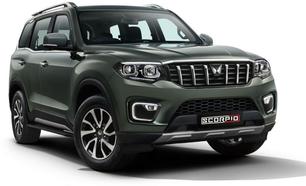
The Mahindra Scorpio is back – but now it has upgraded safety tech (including AEB) and it’s only available in one variant: the Z8L+.
This is a 4WD wagon with a fair bit of appeal: seven seats, a stack of standard features, a low-range transfer case, an automatic rear diff lock and its price-tag – at just under $50 grand – won’t kick you in the space near the pocket where you keep your wallet.
It hasn’t undergone any mechanical changes so is the Scorpio any good off-road?
Read on.
The Holden Trax looks nice enough and is pleasant enough to live with day to day. Like many others of its ilk, the Trax may be marketed as an SUV but that catch-call moniker, which has come to be accepted to mean that a vehicle is actually sporty and off-road capable, is misleading.
As an adventure vehicle the Trax falls well short – it needs a diesel engine and much improved capability (AWD) and space – but as a lively daily driver for a young starter, or a one-child family, then it’s perfectly adequate.
If you’ve got your heart set on a Trax and you’re patient, perhaps you’ll wait until 2020 when the next-generation Trax is due here.
It may seem like I've been harsh on this Mahindra but I reckon the Scorpio Z8L+ is a positive product for the company.
It’s nice enough to drive on-road – reasonably refined and comfortable – and it’s also a capable 4WD, with some trade-offs.
But this seven-seat wagon remains a good value-for-money prospect with the addition of more driver-assist tech onboard boosting its safety and adding to its overall appeal.
It’s a small SUV and it looks sporty and outdoorsy enough in a generic sort of way. A nuggety stance, short-wheelbase and roof rails add to this Trax’s activity-friendly demeanour, without promising too much. Take a look and make up your own mind if it’s your cup of tea; I’m not your life coach so decide for yourself whether it’s cool or plain.
Nothing has changed on the Scorpio’s exterior. It still reminds me of the early-generation Hyundai Terracan – long bonnet, generic cabin (i.e. inoffensive, soft lines, nothing to set it apart from most other mid-sized SUVs) and, though its off-road angles check out (more about those later) it looks quite low to the ground.
So it’s all standard for a 4WD wagon.
The Scorpio also has 18-inch alloy wheels, side steps, roof rails and a sunroof.
Potential main rival GWM Tank 300 holds sway in the looks department.
Its interior is plain, but practical. The LS has cloth trim and expanses of plastic, which make it a bit ordinary to look at but very easy to live with in the real world because day-to-day life involves liquid spills, crumbs and dirt – lots of dirt.
Storage spaces include a narrow glovebox, narrow plastic door pockets, four cupholders in centre console (no lidded bin here) plus two in the rear centre armrest, and driver and front passenger seat-back pockets.
The rear cargo area is a 356-litre space with the rear seats in use and the cargo cover in place), or a 785-litre space with the 60/40 rear seats folded into the floor. For this to happen, the rear-seat bases flip forward into a vertical position and the seat-backs fold forward to make the ‘new’ flat floor.
Nothing much has changed inside the Scorpio, either, except for the addition of an electronic park brake.
The cabin has a neat layout with a 8.0-inch touchscreen multimedia system that is easy to operate but it needs to be bigger.
The synthetic leather trim looks and feels only adequately premium and if you more closely scrutinise the Scorpio’s interior it lacks the build quality, storage spaces and USB charge points of rival wagons.
Driver and front passenger get adequate room, while the second row is actually satisfactorily spacious without being capacious; behind my driving position I had more than enough leg, head and shoulder room – but, take note, I'm the size of a garden gnome. The third row is the stuff of nightmares – only joking, but it should quite rightly be limited to use by small children or your mate the jockey.
There’s one cupholder (between the driver and front passenger), door pockets are narrow and there are few other storage spaces. In this respect, the Scorpio cabin lacks general functionality.
The Scorpio also cops a mark down because of its third row. With the third-row seats in use, there’s a small rear cargo area, and those seats don’t fold flat so when they’re not in use they occupy a lot of what could be useable storage space.
As a result, the Scorpio is one of the few modern 4WDs I’d consider removing the third row every time long-distance loaded-up travel was on the cards – just so it’s a more practical touring vehicle.
Some features, such as the directional air vents, feel flimsy. Otherwise, the Scorpio’s cabin is adequately practical, rather than overly impressive.
Suffice to say, in terms of practicality, the Scorpio’s rivals have it beaten.
The Trax is a front-wheel drive small SUV and the LS is the base-spec variant.
Our tester – a MY19 LS with a 1.4-litre turbocharged four-cylinder petrol engine and six-speed automatic transmission – has a listed price of $24,490 drive away. The Trax LS is available with a five-speed manual gearbox, but it’s matched to a 1.8-litre non-turbo petrol four-cylinder engine. The turbocharged LS is the way to go, I reckon.
The LS has a stack of standard features for the price, including Holden’s MyLink multimedia system, with a 7.0-inch colour touchscreen, Apple CarPlay, Android Auto and Bluetooth connectivity, USB port and power socket up front, cruise control, rear-view camera, rear parking sensors, as well as hill-start assist, hill-descent control, and more. No Trax has AEB.
Our test vehicle has 17-inch alloy wheels with a space-saver spare.
It has an Absolute Red paint exterior; prestige paint colours are available – including Mineral Black, Burning Hot and Abalone White – but they cost an extra $550.
As mentioned, there is only one Mahindra Scorpio now available, the Z8L+. And its price-tag is listed as from $48,990, drive-away. That’s $2000 more than its previous incarnation, the Z8L.
Standard features in the Z8L+ include a 8.0-inch touchscreen multimedia system (with wired Apple CarPlay and Android Auto), a 12-speaker Sony stereo, dual-zone climate control, front and rear parking sensors and a six-way power-adjustable driver’s seat.
New features include ventilated front seats, an electronic park brake, an auto-dimming rear view mirror and, more importantly, the Scorpio now has Level 2 Advanced Driver Assistance Systems (ADAS) detailed in the Safety section.
It also has 18-inch alloys, a full-sized steel spare, power sunroof and synthetic leather trim.
Exterior paint choices include 'Deep Forest', 'Everest White', and 'Stealth Black'. Metallic paint costs $495 and floor mats cost $125. Price as tested for this vehicle is $49,610.
Rivals such as the GWM Tank 300 and KGM Rexton offer more in this category.
Our test vehicle has the 1.4-litre DOHC 16-valve four-cylinder iTi petrol engine – producing 103kW at 3000rpm and 200Nm at 1850rpm – matched to a six-speed automatic transmission.
The turbo gives the Trax a welcome kick in the automotive pants, making the turbo-equipped variant the pick of the bunch.
The Mahindra Scorpio Z8L+ has a 2.2-litre four-cylinder turbo-diesel engine, producing 129kW and 400Nm and it’s matched to a six-speed automatic transmission.
This engine-and-auto combination is sluggish at times but it’s generally okay.
The Scorpio has a part-time 4WD system (with high- and low-range) and an automatic rear diff lock.
Worth noting the Scorpio must be in neutral and stationary for the driver to shift into '4WD low-range', but the driver is able to shift between '2WD' and '4WD High' on the move, up to 80km/h.
This 4WD wagon’s '4Explor' system’s drive modes include 'Normal' (2WD for sealed surfaces), 'Grass/Snow' (4WD), 'Mud & Ruts' (4WD) and 'Sand' (4WD).
The Scorpio lags behind its rivals here.
This Trax has a claimed fuel consumption of 6.7L/100km (combined). We clocked up more than 300km of highway and back-roads driving, with a smattering of gravel-road driving thrown in. We recorded 10.7L/100km, which is much thirstier than claimed.
Official fuel consumption is 7.2L/100km on a combined (urban/extra-urban) cycle on regular unleaded fuel.
Actual fuel consumption on this test was 9.0L/100km, which is better than the 9.6L/100km I recorded on my last Scorpio review a couple of years ago.
The Mahindra Scorpio Z8L+ has a 57-litre fuel tank so, going by those fuel figures, you could reasonably expect a driving range of about 633km from a full tank. It also has a 16-litre Adblue tank, so keep that mind.
Remember, that 633km is a best-case scenario figure and has not had a 30-50km safe-distance buffer subtracted from it. And it doesn't take into account the fact that, when being used for touring, the Scorpio may be loaded with people, pets, camping gear and more.
Rivals such as the GWM Tank 300 easily outclass the Scorpio when it comes to off-roading and all-round touring suitability.
Driving position is high, steering is quite sharp and handling is tight and controlled, so there’s plenty of welcome driver involvement from the get-go.
The turbocharged engine makes for a lively and responsive drive and, combined well with the six-speed auto, this 1376kg Trax offers up plenty of zip from stop-starts and oodles of oomph for smooth overtaking.
Ride is very firm, bordering on harsh, with rear-seat passengers* especially feeling the lumps and bumps of irregular road surfaces by way of the tight suspension. (*I believe my children.)
Interior space is not an issue though as everyone can manage head and shoulders nicely in the tall cabin. The seats are lacking in full support though, making long trips not such an appealing proposition, and in-cabin noise builds early and becomes quite hard on your ears.
On road the Scorpio is reasonable. It’s comfortable and refined but can be a bit firm on the suspension it has – double wishbone and coil springs at the front, live axle with multi links, Watts link and coil springs at the rear. But for a four-wheel drive wagon it's quite nice on sealed surfaces.
The powertrain is generally a reasonable set-up, although there is lag between foot-down and acceleration and it holds onto gears for too long before upshifting.
There have been no mechanical changes to this Scorpio over the previous generation and that's fine because this Mahindra’s tractable engine offers reasonable power and torque across enough of a rev range to make it an effective 4WD.
The Scorpio feels comfortable and reasonable off road. And when it’s time to tackle ‘4WD-only’ territory, it is generally capable. High- and low-range gearing is decent, and as mentioned earlier, its off-road drive modes adjust traction control, among other aspects, to best suit the terrain you’re tackling.
Its no rock-crawling beast but as a result of these mechanical and technical elements this 4WD wagon is able to drive the kind of terrain you’d reasonably expect to be able to cover in a standard off-roader that's been engineered for 4WDing across light to moderately difficult terrain.
The Scorpio’s off-road angles and ground clearance are on par with mid-size SUV rivals. Ground clearance is a listed 227mm. It feels quite low, but if you drive it with care and consideration, you should be fine.
The rear diff lock doesn't feel as clunky in its application as it has in the past. Maybe I'm more forgiving in my old age because, as I mentioned earlier, there haven't been any upgrades mechanically or in terms of off-road-specific driver-assist tech or in diff lock operation.
Hill descent control works reasonably well, although it's not the greatest, allowing for some free-wheeling before it bites.
The Scorpio’s road-oriented Bridgestone Ecopia (255/60 R18) tyres are fine on formed dirt tracks but are found wanting on anything rougher than that.
In terms of towing capacity, the Scorpio is able to tow 750kg unbraked and 2500kg braked. So if you're looking to haul anything larger than a small box trailer, camper trailer or tinny, you'll have to look elsewhere.
GVM and GCM are 2610kg and 5155kg, respectively.
Main potential rival GWM Tank 300 has it over the Scorpio in terms of off-roading prowess and, even though it’s not a towing beast, the GWM wagon is better suited to life as a touring platform than the Mahindra.
The Trax has a five-star ANCAP rating as a result of testing in August 2013.
The LS has six airbags (including full-length curtain airbags), dusk-sensing headlights, reversing camera, rear-parking sensors, hill-start assist and hill descent control.
The Mahindra Scorpio Z8L+ hasn't been tested by ANCAP, but as standard it has six airbags (front, side and curtain) and a 'Level 2 Advanced Driver Assistance System' which includes AEB, 'Forward Collision Warning', 'Front Vehicle Start Alert', adaptive cruise control, high-beam assist, lane departure warning, 'Smart Pilot Assist', 'Speed Limit Assist', lane keep assist and more.
It also has electronic stability control, front and rear parking sensors and a tyre pressure monitoring system.
Rivals such as the GWM Tank 300, with a full suite of driver-driver-assist tech and the maximum five-star ANCAP safety rating, have it all over this Mahindra in this category.
The Trax has a five-year/unlimited-kilometre warranty and service intervals are recommended at 15,000km/nine months.
The Mahindra Scorpio Z8L+ has a seven-year/150,000km warranty and comes with seven years' of roadside assistance if your Scorpio is serviced by Mahindra.
The first service is scheduled at the 1500km mark, then every 12 months or 10,000km. Pricing details were not available at the time of writing.
Five years of capped price servicing is available at an average cost per visit of $471.
For reference, the GWM Tank 300 offers a seven year/unlimited km warranty, five years' of roadside assistance, and five years of capped price servicing (starting at $360 for the first service and topping out at $1035 for the sixth). Service intervals are scheduled for every 12 months or 15,000km.
At time of writing there were reportedly about 80 Mahindra dealerships spread across Australia. According to the company, "the dealer network spans all states and territories, including locations in major cities like Melbourne, Brisbane, Adelaide, and Perth". Your Scorpio can be serviced at any authorised Mahindra dealership.