What's the difference?
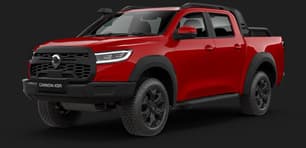
The Cannon XSR is GWM’s new top-shelf ute variant.
This dual-cab 4WD ute is intended as an off-road-focussed vehicle and has visual and mechanical upgrades over the rest of the Cannon stable, including part-time 4WD (not the full-time 4WD on GWM’s lower-spec Cannons), a front differential lock (in addition to the existing rear diff lock), raised air intake (aka a snorkel) and Cooper Discoverer AT3 all-terrain tyres.
It’s priced from $52,990 drive-away, so costs about $7500 more than you’d pay for the standard Cannon X on which this special edition ute is based. But it still undercuts similarly-equipped top-spec Ford Ranger and Toyota HiLux utes by about $20,000.
So, with twin lockers, a snorkel, underbody protection and all-terrain tyres, is the GWM XSR worth the extra cash?
Read on.
The truly great thing about great wealth - I mean like, drop $1 million on a new Rolls-Royce with a casual yawn and a mouse click wealth - would be how great it is not having to do anything for yourself.
Personally, I would hire a chef, so I’d never have to cook again, and a pilot to fly my private jet, so I’d never have to catch pneumonia while flying 34 hours to Ibiza with strangers to do my weird job (oh, and if I was rich I wouldn’t have to work anyway), and in theory I might even hire a chauffeur for those odd times when I didn’t want to drive myself in one of my fleet of beautiful cars.
All right, so I can’t even imagine that last one, but the most interesting fact I gleaned while in Spain, tirelessly testing the new Rolls-Royce Cullinan Series II, is that even the ridiculously rich are falling out of love with not driving these days.
Perhaps, being tech-savvy types, they can see the end of driving and the rise of autonomy coming and they want to make the most of it while they still can. But according to Rolls, the percentage of its buyers who sit in the back rather than in the driver’s seat has flipped entirely over the past 15 years.
Back in the day, 80 per cent of Rolls owners were back-seat passengers, blowing cigar smoke at the back of a chauffeur’s head, while 20 per cent actually drove their expensive motors.
Today, the number who drive themselves has soared to 80 per cent, and apparently that’s not just because it would feel weird being chauffeured around in what is now the most popular Rolls-Royce by far - the Cullinan SUV.
The other big change, apparently, is that the average age of a Rolls-Royce buyer has also dropped, from 56 to the low 40s. And that means more buyers with kids, and gold-plated prams and other associated dross, which means they need bigger Rolls-Royces, family-sized SUV ones, which again helps to explain why the Cullinan now makes up as much as half of all the brand’s sales in some markets.
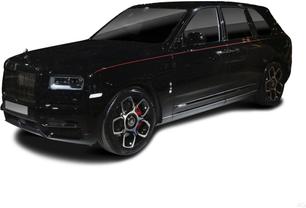
And why the arrival of this, the facelifted, tweaked and twirled Series II version of a car that was greeted cynically by many in the media when it arrived (“one group was not sceptical, and that was our clients,” as a Rolls spokeswoman delightedly pointed out) is such a big deal.
In a very competitive ute market, the GWM Cannon XSR represents plenty of bang for your buck, but it’s just not as refined as you’d hope.
It should be better at this price-point, especially when it’ll be unfavourably cross-shopped with lower-spec variants in the Ford Ranger, Isuzu D-Max and Toyota HiLux line-ups.
It’s a nice enough vehicle on-road, and the XSR is an effective 4WD on the dirt without ever being truly exceptional – but that’s fine for those who want to save big bucks and still drive away in a well-equipped twin-locked off-road vehicle.
The Cullinan might not be the most beautiful or traditional Rolls-Royce, and it’s a shame modern success means providing an SUV option to everyone, but it’s still a remarkable machine, either to drive or just to sit in. It remains not just a marvel of engineering, but a marvellous of engineering. Hats doffed, old bean.
Note: CarsGuide attended this event as a guest of the manufacturer, with travel, accommodation and meals provided.
The XSR is 5439mm long (with a 3230mm wheelbase), 1958mm wide, and 1918mm high. It has a listed kerb weight of 1965kg.
It looks like the mongrel child of a HiLux, Ranger and D-Max – in a good way.
The wider-than-standard wheel track, as well as the snorkel, sports bar, substantial bash plates, tyres and even red brake calipers add to this ute’s presence.
It is something of an achievement when a team of designers manage to make a facelifted version of a vehicle less ugly, daunting and disappointing than the original.
I thought the first Cullinan, launched five years ago, looked like a London black cab that had been mounted and inseminated by a double-decker bus. Big? Sure? Impressive? Yes. Beautiful? Only if you think Boris Johnson is sexy.
There was a lot of chat at the launch about the changes made for Series II, but in summary they tried to make it look more… like a boat, according to Exterior Design Lead Henry Clarke.
“We don’t look for speedy, overcomplicated lines, we take our inspiration from the luxury world, and it’s often from yachts, it’s that same sense of scale and grandeur, that’s the key to the timelessness of a Rolls-Royce,” he explained.
“We’re not focused on the world of automotive design, and if you look at the Cullinan it has that ethos you think of with a yacht, that strong, vital bow and then everything rearwards, the back of a yacht, has an elegance and grace to it.”
Fair enough, but what I appreciated was that they’ve squared the front end off a bit more, by outlining the grille, adding some gills beneath it and putting in some natty DRLs, and then rounded off the rear a little as well, so that it looks less… awful.
Indeed, after a couple of days of staring at it (and particularly admiring how good it looks in your rear-view mirror when behind you), I did come around to its looks. Certainly a lot more than last time.
And strangers driving past seemed to really like it, because they keep smiling and clapping at me.
The XSR’s five-seat interior is a neat and roomy space but, in line with most utes at this price-point, if you scrutinise it in a critical way you soon discover that some parts feel a bit cheap and flimsy, such as some buttons, dials and switches.
Up front there are two USB ports, a wireless charging pad, a 12V plug and a capacious centre console.
A pair of cupholders can be concealed under a sliding cover and the storage bin is on the right side of big.
The driver gets a six-way power-adjustable seat; the front-seat passenger gets four-way power adjustment. Both seats are comfortable without being too plush.
Second-row passengers get a firm but comfortable seat and amenities include a USB port, a 220V plug, and a fold-down centre armrest.
The second-row seat base can be folded up and out of the way to make room for more gear if only two people are travelling.
Build quality is generally okay, part from the aforementioned flimsy-feeling buttons.
The XSR’s business end, the tub, has a durable-looking tub liner, tie-down points and a handy pop-out step hidden in the top of the tailgate.
But it's worth noting this ute’s tailgate can’t be locked.
In terms of being a vehicle you might actually use - and keeping in mind that if you can afford one of these you’ve also got at least a half dozen other choices - every day, the Cullinan is the pick of the Rolls-Royce enclosure.
From the big boot space - 600 litres with the seats up, 1930 litres with them down - and its lovely little Viewing Suite, through the spacious rear relaxing zone to the absurdly comfortable and plush front seats, there’s a sense of grandeur about the whole Cullinan experience.
You can opt for a champagne fridge between those rear seats, if you like, or you can just lie back and stare at the blinking pins of light in your 'Starlight Headliner' and imagine that each one of them represents one of your millions, smiling down at you.
It’s a lovely place to be, in short, and with its super-thick double glazed glass, coated with an acoustic layer on top of that, and carpets thick enough to keep out road noise on their own, it’s also a very pleasantly quiet one.
The XSR has a manufacturer suggested retail price of $52,990 drive-away.
Standard features include a 9.0-inch multimedia touchscreen system (with Apple CarPlay and Android Auto), a 7.0-inch digital driver info display, quilted leather seat trim, quilted leather door trim, 18-inch black alloy wheels, a sports bar, an assisted tailgate (with a pop-out step) and roof rails.
It also has LED headlights with LED DRLs, side steps, powered mirrors, keyless entry, push-button start, power-adjustable and heated front seats, a leather steering wheel, single-zone climate control air conditioning, an auto-dimming rear view mirror, tinted rear glass, and a six-speaker audio system.
As well, the XSR gets a part-time 4WD system (with 2WD high-range, 4WD high-range and 4WD low-range), rather than full-time 4WD, which is on lower-spec GWM utes; a front differential lock (in addition to the existing rear diff lock) and Cooper Discoverer AT3 all-terrain tyres.
It also gets red brake calipers, an underbody bash plate, wheel arch flares, and a sunroof.
Elsewhere, it gets steel front and rear bumpers and a new black grille.
Value? Price? What are these things you speak of, little plebeian person? Such is the disdain for such things at Rolls-Royce that they wouldn’t even tell us what the Series II is going to cost when it lands in Australia later this year.
The people who can afford one don’t much care, of course, but for the rest of us, who like to shake our heads and make low, whistling noises, you can bet the price will rise just a little from where it was with the original Cullinan - and that was $705,000 for the basic car, or closer to $795,000 for the sportier, and blacker, Black Badge variant.
In terms of value, it’s hard to grasp that any car could cost that much, but for a Rolls buyer the equation is very different. They don’t need a Rolls, no-one does, but it makes a nice change from buying art works, gold or small countries.
In terms of features, it has almost too many to mention, but let’s pause on the marvellous massage seats, the bespoke sound system, entirely unique to this case and built by Rolls itself, with incredible levels of detail, the Rolls umbrellas tucked into each door and the very lovely 'Viewing Suite'.
This consists of two pop-up seats in the rear, with a little champagne and canapés table in between, where “you can watch your children play football”.
Try that in Australia, at the rugby league, and you’ll be covered in half-time oranges and abuse spittle in no time. Stick to the polo, perhaps.
The XSR has the Cannon’s 2.0-litre four-cylinder turbo-diesel engine that produces 120kW at 3600rpm and 400Nm from 1500rpm to 2500rpm.
It has an eight-speed automatic transmission.
As mentioned, the XSR has part-time 4WD – with 2WD high-range, 4WD high-range and 4WD low-range – rather than the full-time 4WD set-up that’s in standard Cannons.
Rolls-Royce has committed to being a fully EV brand by 2030, so it’s a safe bet this Series II Cullinan will be the last one offered with its storming, staunch V12 engine.
Indeed, Rolls hinted the only reason it hung around in this version is that this is only a mid-life face-lift for the Cullinan, and the car that replaces it will arrive on an entirely new, all-electric platform.
As good as the EV Roller, the Spectre undeniably is, driving this old-school Cullinan with its 6.75-litre twin-turbocharged V12 making the kind of thumping, torque-thick, nothing-is-too-much-trouble acceleration is a hoot.
It’s not loud, but it’s just loud enough that you can enjoy its deep, brassy tones, and it’s got plenty of power in reserve to hurl even this 2.75-tonne machine past lesser vehicles with ease.
There are two Cullinans to choose from, of course, with the base model providing a very pleasant 420kW and 850Nm or the sportier Black Badge version (Rolls calls it the brand’s “alter ego”) with 441kW and 900Nm.
The Cannon XSR has a listed fuel consumption of 9.4L/100km on a combined cycle.
Actual fuel consumption on this test, from pump to pump, was 11.2L/100km but, as is the nature of my testing, I did a lot of low-range four-wheel driving.
The Cannon XSR has an 78-litre tank so, going by that fuel figure above, you could reasonably expect a driving range of about 696km from a full tank.
Note: Drop 30km to 50km from any vehicle’s total calculated fuel-range figure for a better idea of that vehicle’s safe touring range – so, following that advice, the above driving range figure (696km) would become 666km after a 30km safe-distance buffer has been subtracted.
Also, remember that numerous other factors affect your fuel consumption and so impact your driving range, including how much extra weight you have onboard (passengers, camping gear, etc), whether your vehicle is fitted with any aftermarket equipment (bullbar, spare-wheel carrier, etc), whether you are towing (a camper-trailer, caravan, or boat, etc), your vehicle's tyre pressures, and the conditions.
Rolls-Royce claims the Cullinan will provide you with between 16 litres per 100km and 16.8L/100km, but I believe you’d have to drive it quite steadily to achieve even that quite appalling figure.
Twelve cylinders, 2.75 tonnes, you do the math, but it's interesting to note that with a nearly full tank - and we’re talking 100 litres of fuel - my distance to empty was looking like barely more than 500km - that’s an EV-like number.
If you’re not expecting a dynamic, sporty driving experience from the Cannon XSR, then you won’t be disappointed.
I’m enjoying the fact that off-road vehicles from China and India are improving all the time but there are significant trade-offs when opting for a much cheaper version of the ute you actually want.
The XSR is not an insubstantial ute, but that doesn’t excuse its less-than-ideal steering (which feels too loose) or its stiff ride on upgraded suspension which, even though it increases wheel travel (for 4WDing – more about that later), seemingly hasn’t been tuned to suit the XSR’s bigger tyres, wider wheel track and greater bulk than its lower-spec stablemates.
Also, this ute has an unwieldy turning circle of 13.7m, which makes it an interesting vehicle to manoeuvre along busy urban streets or through a bustling car park.
This is a well priced ute if compared to similarly equipped, much more expensive utes, but that doesn’t excuse its touchy throttle and thrashy transmission.
However, its engine, which can feel underdone when challenged, has a relaxed feel about it when open-road cruising and if you aren’t putting too much pressure on it you likely won’t think it’s much of a let-down.
Overall, the XSR does okay on sealed surfaces, without ever getting anywhere near great – it’s simply not as refined or compliant as it could – or should – be.
On the dirt track leading to our 4WD test track, the XSR was very skippy over corrugations and tended to thump through potholes.
This ute does go well off-road though when it comes time for low-range 4WDing but, equipped with front and rear diff locks, that’s to be expected.
Off-road traction control and other systems including hill descent control, are adequate without being as seamlessly smooth as the equivalent systems in more expensive vehicles.
It also has 'Crawl Mode' (allows for no-pedal, low-speed driving) and 'Turn Assist' (which brakes the XSR’s inside rear wheel to reduce the ute’s turning circle on traction-compromised surfaces).
The over-sensitive throttle is far from ideal during low-speed low-range 4WDing when you need absolute control for safe driving, but I did become used to it – or at least I put up with it.
As mentioned earlier, the upgraded suspension has boosted wheel travel, which means you’re more than likely able in the XSR to stretch a tyre to the dirt for better traction and controlled forward progress.
The XSR’s Cooper Discoverer AT3 all-terrain tyres help, especially when the dirt becomes sticky mud that would gum up a lesser tyre, and we had no strife getting up and over one of our more severe set-piece hill climbs on that rubber.
All in all, the XSR is a capable twin-locked 4WD without ever being exceptional – and that’s fine.
The Cannon XSR has towing capacities of 750kg (unbraked) and 3000kg (braked).
The first word that comes to mind when describing the experience of driving a Rolls-Royce the size of a small housing estate is 'intimidating', because it's one of those cars where you take a few deep breaths before setting off (while muttering “please don’t crash it”) and then some sharp intakes of breath the first few times you find cars coming towards you on a narrow road, of which there are many on Ibiza where we were summoned to drive it.
I followed a panicked young man from India who had never driven a Rolls, nor a left-hand-drive car before, and boy, he sure looked intimidated, even if he didn’t ever get above 30km/h.
The incredible thing about the Cullinan, however, is how quickly it relaxes you and how astonishingly light and easy it is to drive. The steering feels almost absurdly light at first, you really can drive it with just one finger, two if you’re feeling cautious, but once you get used to it it just feels very Rolls-Royce.
The whole brand lives on the idea of effortlessness, wafting over the world, and the much-touted 'Magic Carpet Ride', and it really does deliver that sense of ease. You’re almost as relaxed at the wheel as you are in the rear seat (and the massage functions only make you feel more so).
Speed humps do upset the Cullinan, but only a very little, and you’re aware when the car finds broken surfaces, but only distantly so. It feels like someone is dealing with bumps and imperfections in a far-off-place, perhaps the car’s basement, and it shouldn’t worry you too much.
When traffic annoys you, you can just make it disappear by engaging your whumping V12 engine and making the world go briefly blurry.
Attempt to throw the Cullinan through sharp bends at speed, however, and it reacts in much the same way you’d expect the cruise ship it somewhat resembles to.
There’s a bit of body roll, but it’s all quite polite and a sense that if you need to drive like that, perhaps you should go and get one of your other cars.
The Black Badge version does feel just a trifle sportier than the base Cullinan but we’re splitting very grey and expensively coiffed hairs here.
The overall experience is one of grand relaxation, imperiousness and a certain touch of superior glee.
The Cannon range has the maximum five-star ANCAP rating from testing in 2021, however the Cannon XSR is not covered by this rating.
Standard safety gear on the XSR includes seven airbags, AEB (sans pedestrian detection) forward collision warning, lane-departure warning, lane-keep assistance, adaptive cruise control, traffic sign recognition, rear parking sensors, a 360-degree camera and tyre-pressure monitoring.
It does not get front parking sensors, lane-change assist or a door-open warning.
The Rolls-Royce Cullinan SUV has not been ANCAP tested, but it feels safe because it’s bigger than a tank. It has eight airbags - driver, front passenger, two curtains, driver side, front passenger side, two rear passenger side), and a full-suite of active-safety tech including Forward Collision Warning and Automatic Emergency Braking.
The XSR is covered by a seven year/unlimited km warranty.
The first service is scheduled at the six-month/5000km mark (and costs $260), then every 12 months or 10,000km, with each service costing $360 a pop.
Questions about service intervals and warranties seem to confuse the people at Rolls, as if none of their customers have ever bothered to ask.
Yes, you would think servicing would be free when you’re pushing a $1 million price tag, and that the warranty would be for life, particularly considering the low mileage on these things, but it is, in fact, just a four-year servicing and warranty offer for Australian customers of this vehicle. So that means an unlimited-mileage warranty, including all services, for the first four years (at which point you obviously buy a new one). "Rolls-Royce Motor Cars will offer a service inclusive package but no pricing available yet and this will not be required until the fifth year of ownership."