What's the difference?
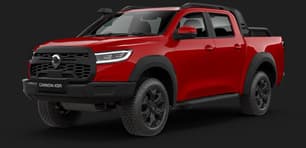
The Cannon XSR is GWM’s new top-shelf ute variant.
This dual-cab 4WD ute is intended as an off-road-focussed vehicle and has visual and mechanical upgrades over the rest of the Cannon stable, including part-time 4WD (not the full-time 4WD on GWM’s lower-spec Cannons), a front differential lock (in addition to the existing rear diff lock), raised air intake (aka a snorkel) and Cooper Discoverer AT3 all-terrain tyres.
It’s priced from $52,990 drive-away, so costs about $7500 more than you’d pay for the standard Cannon X on which this special edition ute is based. But it still undercuts similarly-equipped top-spec Ford Ranger and Toyota HiLux utes by about $20,000.
So, with twin lockers, a snorkel, underbody protection and all-terrain tyres, is the GWM XSR worth the extra cash?
Read on.
Hybrid campers tread the line between caravan comfort and camper trailer-manoeuvrability and are touted as somewhat of a new thing; almost an evolution of comfort as more people look for a perfect camping experience.
But camper-trailers like the Cub Longreach LE prove that the concept has been around for decades.
It hasn't always been called the Longreach, but this high-walled, super-sized, off-road camper-trailer was one of the first to offer caravan-like comfort and space in a product that'll go anywhere off-road*. (* In terms of reasonable use and having obviously scrutinised your camper's warranty conditions before setting off to make sure you're covered for that sort of usage.)
The 2019 LE takes the comfort levels even further, so we grabbed one for a night to check it out.
In a very competitive ute market, the GWM Cannon XSR represents plenty of bang for your buck, but it’s just not as refined as you’d hope.
It should be better at this price-point, especially when it’ll be unfavourably cross-shopped with lower-spec variants in the Ford Ranger, Isuzu D-Max and Toyota HiLux line-ups.
It’s a nice enough vehicle on-road, and the XSR is an effective 4WD on the dirt without ever being truly exceptional – but that’s fine for those who want to save big bucks and still drive away in a well-equipped twin-locked off-road vehicle.
This isn’t the camper for everyone – my guess is that plenty of people look at this and find it too sparse, too basic. I kinda get it.
But there are very few campers which offer the same amount of open, internal space, or that are as easy to set up.
That the Longreach, albeit with a few different names, has lasted so long on the Cub Campers' product roster is a testament to its versatility and ability to accommodate a small family on off-road camper trips.
It's arguably one of the forerunners of the hybrid camper scene, and it's now starting to evolve with campers' desires for more comfort.
The XSR’s five-seat interior is a neat and roomy space but, in line with most utes at this price-point, if you scrutinise it in a critical way you soon discover that some parts feel a bit cheap and flimsy, such as some buttons, dials and switches.
Up front there are two USB ports, a wireless charging pad, a 12V plug and a capacious centre console.
A pair of cupholders can be concealed under a sliding cover and the storage bin is on the right side of big.
The driver gets a six-way power-adjustable seat; the front-seat passenger gets four-way power adjustment. Both seats are comfortable without being too plush.
Second-row passengers get a firm but comfortable seat and amenities include a USB port, a 220V plug, and a fold-down centre armrest.
The second-row seat base can be folded up and out of the way to make room for more gear if only two people are travelling.
Build quality is generally okay, part from the aforementioned flimsy-feeling buttons.
The XSR’s business end, the tub, has a durable-looking tub liner, tie-down points and a handy pop-out step hidden in the top of the tailgate.
But it's worth noting this ute’s tailgate can’t be locked.
For a rear-fold camper-trailer, the space inside couldn't be more practical. The long body and high sides mean that when the camper is open and set up, it has a lot more space than most. Behind the bed, for instance, there is enough space for Cub to have fit a small dinette.
The dinette has cushioned benches for two and a swivel table that can also become a counter over the rear floor area.
The camper's length also means that the rear floor area is massive. It is easily big enough to lie a couple of kids on, or if your nest is empty, to set up some camp chairs and a table to enjoy a covered living area.
It is still a rear-fold camper-trailer, though so, despite the fact it has nearly twice the space of other hybrid-style campers, it's very sparsely furnished. There's no internal kitchenette or anything like that.
If you’re not expecting a dynamic, sporty driving experience from the Cannon XSR, then you won’t be disappointed.
I’m enjoying the fact that off-road vehicles from China and India are improving all the time but there are significant trade-offs when opting for a much cheaper version of the ute you actually want.
The XSR is not an insubstantial ute, but that doesn’t excuse its less-than-ideal steering (which feels too loose) or its stiff ride on upgraded suspension which, even though it increases wheel travel (for 4WDing – more about that later), seemingly hasn’t been tuned to suit the XSR’s bigger tyres, wider wheel track and greater bulk than its lower-spec stablemates.
Also, this ute has an unwieldy turning circle of 13.7m, which makes it an interesting vehicle to manoeuvre along busy urban streets or through a bustling car park.
This is a well priced ute if compared to similarly equipped, much more expensive utes, but that doesn’t excuse its touchy throttle and thrashy transmission.
However, its engine, which can feel underdone when challenged, has a relaxed feel about it when open-road cruising and if you aren’t putting too much pressure on it you likely won’t think it’s much of a let-down.
Overall, the XSR does okay on sealed surfaces, without ever getting anywhere near great – it’s simply not as refined or compliant as it could – or should – be.
On the dirt track leading to our 4WD test track, the XSR was very skippy over corrugations and tended to thump through potholes.
This ute does go well off-road though when it comes time for low-range 4WDing but, equipped with front and rear diff locks, that’s to be expected.
Off-road traction control and other systems including hill descent control, are adequate without being as seamlessly smooth as the equivalent systems in more expensive vehicles.
It also has 'Crawl Mode' (allows for no-pedal, low-speed driving) and 'Turn Assist' (which brakes the XSR’s inside rear wheel to reduce the ute’s turning circle on traction-compromised surfaces).
The over-sensitive throttle is far from ideal during low-speed low-range 4WDing when you need absolute control for safe driving, but I did become used to it – or at least I put up with it.
As mentioned earlier, the upgraded suspension has boosted wheel travel, which means you’re more than likely able in the XSR to stretch a tyre to the dirt for better traction and controlled forward progress.
The XSR’s Cooper Discoverer AT3 all-terrain tyres help, especially when the dirt becomes sticky mud that would gum up a lesser tyre, and we had no strife getting up and over one of our more severe set-piece hill climbs on that rubber.
All in all, the XSR is a capable twin-locked 4WD without ever being exceptional – and that’s fine.
The Cannon XSR has towing capacities of 750kg (unbraked) and 3000kg (braked).
Cub Campers are famously good to tow, and even the largest of them lives up to the reputation.
As big as it is, the Longreach LE is quite light thanks to the effort Cub puts into engineering. As a result, it's not a strain, even for older dual-cabs like the D22 Navara.
And because it isn't any higher or wider than a modern SUV, there was very little wind-drag or buffeting as we cruised along the highway.
Cub developed the camper's Australian-made and -designed independent, coil-spring suspension and the set-up yields excellent ride in any conditions.
For the LE, Cub has added an extra shock-absorber each side to improve its performance even on the most corrugated roads.
An AL-KO off-road ball hitch is standard but can be upgraded to the Click-Lock version if you'd prefer that or need a more low-profile hitch.
In reverse, the long drawbar makes it an easy camper to manoeuvre around a campsite, plus it has enough size that the tow-vehicle driver never really loses sight of it while positioning it.