What's the difference?
GWM’s Tank 300 struck a chord with Australian buyers when it launched in 2023. The rugged, boxy design, serious off-roading ability and unbeatable value for money - especially compared with similar models like the Jeep Wrangler - won it a number of new fans.
But something was missing. With an uninspiring petrol engine and a patchy hybrid powertrain the only options, the Tank 300 was sorely missing a diesel.
GWM itself says about 75 per cent of models in the off-road-focused large and upper-large SUV segments are made up of diesel-powered SUVs, so it was missing out on a chunk of sales.
Thanks to some serious nudging from GWM Australia and New Zealand, the Chinese parent company saw the potential and have added a diesel engine to the mix. This is the same diesel unit found in the GWM Cannon and Cannon Alpha utes.
Is the diesel now the pick of the Tank 300 range? Or should you look at another oil-burning 4x4?
For many Australians, calling the new ZB a Commodore is tantamount to being forced to call your Mum’s new boyfriend ‘Dad.’
It's not built here, available in rear-wheel drive, there's no sign of a V8 or a sedan body, so why should we accept it as a worthy heir to the badge worn by Holden’s proudest model since 1978?
One big reason is that it was always going to be the next Commodore, even before Holden decided to stop building cars in Australia. Yes, it was even set to be built here.
Once the VE/VF Commodore’s Zeta platform was axed during General Motors’ post-GFC rationalisation, the next best thing was to align with the Opel/Vauxhall Insignia designed primarily for Europe.
Holden was actually involved with the new Insignia’s development from the beginning, which has led to some key details for the Commodore version and Australia, and a whole lot of input from our world-renowned Aussie engineering team.
So it’s a whole lot more Commodore than you may realise. Whether it lives up to its reputation is another matter.
The diesel is now the pick of the Tank 300 range. It’s the best fit for this vehicle and offers greater driver engagement than the petrol or hybrid.
It also has genuine off-road chops while still managing to suit family life.
While it could benefit from further refinements to on-road behaviour, cabin noise and the ADAS systems, none of these are deal breakers.
The fact that it is priced so keenly against some excellent competitors and is stacked with standard gear adds to the Tank 300’s appeal.
Note: CarsGuide attended this event as a guest of the manufacturer, with meals provided.
So will the new Commodore become Australia's favourite car? I strongly doubt it, but it's not the car's fault, and it wouldn't be any different if it was a rear-wheel drive, V8, Australian-built sedan. Australian buying habits have just moved on, and diversified into a range of SUVs, small hatches and dual-cab utes.
Taken as an all-new entry in Holden's revitalised line-up though, the new Commodore ticks all the important boxes required of a mid-size to large passenger car these days. It may not be anywhere near as exciting as a 6.2-litre Redline sedan, ute or wagon, but it’s objectively a far better car overall, and you should definitely give it a drive before dismissing it.
The pick of the bunch in my eyes is the $39,490 RS Sportwagon with the 2.0-litre petrol engine. Yep, the best new Commodore is now a four-cylinder station wagon.
Be sure to check out what James Cleary thought of the new Commodore in prototype guise here:
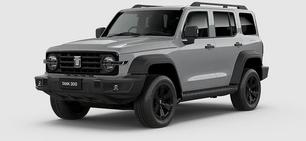
The only visible difference between the diesel and the petrol or hybrid 300s is a 2.4T badge. So you get the same boxy exterior as before.
It’s somewhat derivative and gives more than a nod to Jeep, but the design has intent - it looks capable off-road and for most people that’s enough. Luckily it is capable off-road. More on that later.
Inside the upright, shelf-like dash is appealing. I like that everything is nicely integrated, like the dual 12.3-inch screens which flow nicely into one another.
The big T-shaped three-spoke steering wheel looks cool and the aeronautical air vents are clearly inspired by Mercedes-Benz.
The chunky metal-look plastic glove box cover adds extra visual flair and the stitching throughout elevates the cabin further.
However, the futuristic looking gear shifter is chunky, takes up too much space and is unnecessary.
Aside from the move to a front-drive basis, the other key difference between the new Commodore and those of the past is its shift from a classic three-box sedan shape to a sleek, five-door Liftback. Even the Sportwagon has an elegant arc to its roofline, which is arguably their most appealing design element. There are no Ute or Caprice bodystyles, and there never will be.
The European-designed look is less macho than the bulging wheelarches of the VE and VF, but more in line with its European rivals like the Ford Mondeo, Volkswagen Passat and Skoda Superb.
The best way to identify specific models is by their wheels, with the trim levels split between a more elegant body trim on the entry, Calais, Calais-V and Tourer variants, and sportier body kits with side skirts and a rear spoiler on the RS, RS-V and VXR flagship.
The interior look is also best described as elegant, with fresh shapes that flow cohesively into the door trims and centre console. There’s a general air of quality about it, but it’s let down by some cheap-feeling controls and switches, particularly the climate control knobs.
The ZB’s overall size is bigger than you might think, with most dimensions fitting neatly between the VE/VF and the VT-VZ generation that preceded it.
You might be surprised to learn it’s no lightweight either, with the heaviest Calais-V Tourer actually outweighing the portliest VF by 31kg.
Interior dimensions are comparable with its predecessor, with the most significant differences being a narrower back seat thanks to its 36mm thinner body and 13mm less rear headroom in the Liftback (but 3mm more in the wagon).
Before the decision was made to source the new car from Germany, Holden was planning a longer wheelbase for Australia. One specific requirement that did reach fruition is the availability of a V6 engine, which isn’t fitted to European versions.
Under the skin it rides on GM’s E2XX platform, which is a significant evolution of the chassis that underpinned the previous Insignia and the now-defunct Holden Malibu.
Aside from having a say in every step of its design process, Holden engineers covered more than 200,000 kilometres of testing on Australian roads and at the Lang Lang proving ground.
This has been to fine tune the drivetrain calibrations, the steering, suspension, and even details like the sat nav and radio reception to suit our tastes and unique demands.
Specific suspension tunes have been developed for four cylinder models, the V6 Calais, V6 RS-V and the Tourer, with unique setups between Liftback and Sportwagon bodies.
The only version not to score an Australian suspension tune is the VXR, which was treated to a performance-focused setup at the Nürburgring in Germany.
Up front the Tank 300 offers a commanding view of the road and it’s easy to find your perfect driving position thanks to the power-adjustable seats.
Those seats have good side bolstering but could do with a little extra cushioning for the thighs. The Nappa leather-appointed seats in the Ultra look and feel lovely.
Storage is average for the segment with room for larger bottles and additional flat items in the door pockets, and a well-sized central bin that also houses two cupholders, although they sit low in the cavity and two coffees sit awkwardly together.
The Tank has one USB-C port for charging only but another USB-A port up front for connectivity. You shouldn’t need that given Apple CarPlay and Android Auto is wireless.
Keen off-roaders will have fun with the extensive Tank Expert Mode in the multimedia screen, which allows you to individualise your 4WD experience.
Beyond that the screen is neatly laid out, responsive and easy to use. GWM has come a long way when it comes to in-car tech. The icons on the digital instrument cluster, however, are still too small.
There’s ample leg room in the rear, with space between my knees (I am 184cm tall) and the rear of the front seat, and enough toe room. It doesn’t feel enormously spacious across the rear row but three kids should be comfy. Headroom is enhanced by a scalloped section of the roof specifically for rear-seat passengers, but it doesn’t leave a huge amount of space for taller people.
The rear seat bench is flat but the backrests have some support and overall the seats back there are comfortable.
You’ll find lower rear-seat air vents, map pockets, a fold-down central arm rest with two cupholders, room for small bottles in the doors and two USB-A ports.
The boot can take 400 litres with all seats up and 1635L with the rear seats folded. That figure is measured from the floor to the top of the rear seats.
Jeep says the Wrangler has 898L capacity with all seats in place but that is measured from the floor to the roofline.
There is no under-floor storage in the 300’s boot and the full-size spare wheel is housed in traditional 4x4 fashion on the tailgate.
Another traditional Commodore trait to have taken a step backwards is its ability to carry three adults across the back seat. Admittedly only really an issue for taxi use, the ZB will certainly still swallow three, and likely three child seats, but less comfortably and more like the similarly sized Camry.
The Liftback’s reduced headroom didn’t matter for this 172cm tester, but if you were marginal in a VF you’d probably want to avoid spiking your hair.
The cabin ticks all the other important boxes for a modern family car, including twin cupholders front and rear, bottleholders in each door and two ISOFIX child seat mounts in the rear.
All get a good cluster of USB and 12V charge points, while the RS-V models upwards get a big bonus with wireless phone charging.
The Liftback's boot space is only slightly down on before at 490 litres, but the huge opening created by the five-door design is so much more useful in the real world. It also brings a split-fold back seat for the first time in a non-wagon Commodore.
The Sportwagon has lost around 100 litres in capacity though, but is still a very useful 560 litres to seat height or 793 litres to the roof.
Holden’s local team has also developed a range of optional accessories for the Commodore, which includes a bonnet protector, weather shield, towbar, boot liner, floor mats, headlight protectors, sill guards, locking wheel nuts, roof racks and a cargo net, but there’s no sign of a cargo barrier, nudge bar or bullbar at this stage.
One of the key selling points across GWM’s entire range is value for money, and the Tank 300 has always had that in spades.
As with the petrol and hybrid 300, the diesel is offered in two well-specified model grades - Lux and Ultra.
At $47,990 drive-away, the Lux diesel is $2000 more than the Lux petrol, but $3000 cheaper than the Lux hybrid.
The Ultra diesel, at $51,990, is $1000 pricier than the petrol equivalent and $5000 more affordable than the hybrid Ultra.
The GWM Tank 300 diesel Lux is also more affordable than equivalent grades of a number of ladder-frame 4x4 SUV rivals like the Isuzu MU-X, Toyota Fortuner, SsangYong Rexton and the Ford Everest.
It’s also significantly more affordable than the Jeep Wrangler, with the Tank 300 Lux costing about $30,000 less than a Wrangler Unlimited Sport S.
Note however that many of those models - except the Wrangler - have the option of seven seats, whereas the Tank is strictly a five-seat proposition. If you want a third row, check out GWM’s Tank 500.
There are cheaper off-road large SUVs out there – the LDV D90 and Mahindra Scorpio. But the Tank 300 is a more refined and higher-quality offering than those models.
Standard gear in the Lux includes 17-inch alloy wheels, synthetic leather seats and steering wheel, power-adjustable front seats, dual-zone climate control, seven-colour ambient lighting, keyless entry and start, a sunroof, power-folding mirrors, paddle-shifters, a nine-speaker audio system with digital radio, built-in sat-nav, and a pair of 12.3 inch digital displays with wireless Apple CarPlay and Android Auto.
It also gets roof rails, side steps, privacy glass, all-terrain mode selection and a rear diff lock.
The Ultra upgrades to 18-inch wheels, Nappa leather-accented seats, heated and ventilated front seats, a heated steering wheel, more adjustment for the front seats and a memory setting, a massage function for the driver’s seat, a wireless phone charger, 64 colours in the ambient lighting suite, and a nine-speaker premium audio system.
There is nothing obvious missing from the standard features list, but I don’t know why a wireless device charger is limited to the top grade.
Aligning with the Insignia’s European platform has bumped the Commodore right up to speed with the current status quo of features expected in such a family car.
Available Commodore firsts include standard auto emergency braking (AEB) on all models, adaptive cruise control, 360-degree / surround-view cameras, massage and ventilated seats, heated rear seats, wireless phone charging, LED headlights and a power tailgate on the wagons. Like most new cars, there’s no more CD player or DVD player with the radio and other multimedia options.
The broad model range is split into LT, RS, RS-V, Calais, Calais-V, VXR trim levels, while the off-road flavoured Tourer is split into Calais and Calais-V versions.
All bar the Tourer and VXR are available with either Liftback or Sportwagon ($2200 extra) bodystyles, while the 2.0-litre turbo engine is standard in the LT, RS and Calais. The V6 with all-wheel drive is available in the RS, RS-V, Calais-V, VXR and both Tourer trims, while the diesel engine is limited to the LT and Calais.
The base LT Liftback drops the Commodore entry point by $1800 with a list price of $33,690. The diesel engine is available in either bodystyle for an extra $3000.
Standard features include the aforementioned AEB, lane keep assist, lane departure warning, Apple CarPlay and Android Auto in addition to Bluetooth connectivity with a 7.0-inch multimedia screen, reversing camera, auto parking, a leather steering wheel, an eight-way power driver’s seat, proximity keys, auto headlights and wipers, air conditioning and 17-inch alloy rims.
The RS kicks off at $37,290, or $40,790 in V6 AWD guise, and brings sports front seats, steering wheel and body kit, blind-spot monitoring, rear cross-traffic alert and bigger 18-inch alloys, while the Sportwagon version gets a power tailgate.
The V6 AWD RS-V commands $46,990, and adds leather seats, heated front seats, paddle shifters a larger 8.0-inch multimedia screen with built-in GPS navigation system and DAB+ digital radio, a colour head-up display, wireless phone charger, interior ambient lighting, upgraded Hi Per strut suspension and a sportier rear bumper.
The $40,990 Calais is also available with the diesel engine for an extra $3000, or as the V6 AWD Tourer wagon for $45,990.
The Calais sits closer to the LT on features, but adds leather trim, front seat heaters, 8-inch multimedia screen with built-in GPS navigation system and DAB+ digital radio, wireless phone charging, blind-spot monitoring, rear cross-traffic alert and 18-inch alloys.
The Calais Tourer scores a ride height lift (overall height up 42mm) and off-road styled unpainted wheel-arch moulds and bumper caps.
The $51,990 Calais-V adds a Bose premium sound system, ventilated front seats, a massage function and powered side bolsters for the driver’s seat, heated rear seats, a sports steering wheel with paddle shifters, 360 degree cameras, colour head-up display, adaptive LED headlights and 20-inch alloys. The Liftback version gets an electronic sunroof, while the Tourer version gets a panoramic glass roof.
The top-spec VXR is closest to the RS-V in terms of features, but for $55,990 it adds VXR-specific sports seats with power adjustable bolsters and ventilation up front, heated rear seats, Bose premium audio, adaptive suspension, adaptive cruise control, Brembo brakes, VXR floor mats and sill plates, active LED headlights, 360-degree camera, electric sunroof, and 20-inch alloy wheels.
From launch, Holden is offering drive-away pricing across several models, with on-road costs included. The LT petrol Liftback is available for $35,990, while the RS Liftaback is being offered for $38,990 with the 2.0-litre turbo and $42,490 with the V6. The Calais Tourer is also being offered for $47,990 drive away.
MORE: Check out our ZB Holden Commodore price guide and price list here.
The available colours are spread across two whites, two reds, silver, grey, black and blue, with some only available on certain models. All bar the non-metallic white and red will cost you an extra $550, but there’s no sign of the green, purple, orange, or yellow we’ve seen over the past decade.
The big news with the Tank 300 is, of course, the new engine.
It is a 2.4-litre four-cylinder turbocharged diesel engine borrowed from the GWM Cannon and Cannon Alpha utes.
It pumps out 135kW of power and 480Nm of torque. That’s more torque than an MU-X but not as much as an Everest.
It is paired with a nine-speed automatic transmission and has part-time four-wheel drive.
If you need to tow, the diesel has a 3000kg towing capacity, which is 500kg more than the hybrid and petrol. It can’t beat the 3.5-tonne towing capacity of the MU-X and the Everest.
Payload has also increased compared with the petrol and hybrid, up from 400kg to 600kg.
GWM says it conducted extensive testing internationally but also in Australia to improve towing performance. There are approximately 20 different parts compared with the other powertrain variants to get the best out of towing in the diesel.
A rear diff lock is standard on both grades while the Ultra gains a front diff lock.
No, there’s no more V8, manual transmission or rear wheel drive, but the ZB’s options are more in sync with its newer rivals.
For the first time since the VH, or 1984, the base engine is a four-cylinder petrol unit, but uses modern tech like direct injection and a turbo to boost power statistics to more than triple that of the infamous Starfire engine. Also seen in the Equinox, the new turbo motor’s 191kW is also notably 6kW more than the 5.0-litre V8 in the VL Group A SS (Walkinshaw), and 1kW more than the 3.6-litre V6 was making in top-spec VZ Commodores – so pretty good horsepower for its engine size.
The real story is its healthy 350Nm of torque, which is also more than what the same VZs were making, but on tap from a useful 3000-4000rpm.
The latest version of the 3.6-litre Alloytec V6 that’s seen duty in VZ, VE and VF models makes a reappearance as the new performance leader, but mounted sideways and turning all four wheels this time. In ZB trim, it produces 235kW and 381Nm, the latter from 5200rpm.
MORE: Find all ZB Commodore specifications here.
For the first time, you can also choose a diesel option with LT and Calais trims, which is a version of the engine used in the previous Opel Insignia. You’ll also find it under the bonnet of the Jeep Cherokee and Compass, and its applications spread as wide as the Alfa Romeo 159 that ended production in 2011. In Commodore guise, the turbo 2.0-litre engine specs are 125kW and 400Nm (available from 1750-2500rpm), and therefore taking out the torque trophy for the ZB range.
Both petrol engines are paired with a nine-speed torque converter automatic transmission, while the diesel has an eight-speed gearbox. Both four-cylinder engines are front-wheel drive, while all V6 variants are all-wheel drive.
MORE: What’s the difference between 4X4, 4WD and AWD
The all-wheel drive system is actually quite clever, using what’s called a Twinster twin-clutch rear differential for finite torque vectoring, or sending the just the right amount of power to each wheel. The system varies torque distribution between 100 per cent front and a 50/50 split.
If you think the Commodore has gone soft, its towing capacity ratings also suggest otherwise, with a 2100kg maximum braked rating for V6 models matching the best offered previously. The four cylinder models are rated at 1800kg, which is 200kg better than what the previous 3.0-litre V6 and LPG models carried.
The diesel Tank 300 consumes 7.8 litres of fuel per 100 kilometres on the official combined cycle, which is better than the 9.5L figure for the petrol and the 8.4L quoted for the hybrid.
That figure also sits somewhere between a 2.0-litre bi-turbo Everest (7.1L/100km) and a 3.0L MU-X (8.3L/100km).
It has a 75-litre fuel tank and GWM claims an NEDC range of about 950 kilometres. GWM says the Euro 5 engine does not require Adblue.
Given the restrictions of a media launch, we did not obtain real-world fuel use figures.
As you’d hope, the ZB sets a new Commodore benchmark for fuel consumption, with the diesel models managing a best official combined figure of 5.6L/100km. The petrol four-cylinder models also pip the VF’s best combined fuel economy figure of 8.3L/100km with 7.4 and 7.6L/100km for the LT, RS and Calais Liftbacks respectively. The Sportwagon versions wear 7.7 and 7.9L/100km figures, while V6 versions span 8.9-9.3L/100km combined ratings.
It’s worth noting that the petrol four-cylinder engine needs premium 95RON unleaded to do its best, while the V6 is happy to run on regular 91RON unleaded. All versions have a 61.7-litre fuel tank.
I last drove a Tank 300 in late 2023 and it was the hybrid variant. While the hybrid has some positives, its driving characteristics were not high on that list.
It had an erratic throttle response, hesitation on take-off and it felt underdone.
In contrast, this new diesel variant just feels like the right fit for this SUV.
There is slight lag accelerating from a standing start, but the powertrain is torquey and there’s plenty on tap when overtaking or just increasing speed when already on the go. GWM has not provided a 0-100km/h time.
It is clear you’re in a diesel as soon as you turn on the ignition - it has that typical diesel rattle, but it is not as unsophisticated as some oil-burners I have driven.
The cabin could do with some extra insulation with wind and tyre noise detected, but it’s hardly a deal breaker.
Given the vehicle’s size, heft (nearly 2.3-tonne kerb weight) and the fact it’s shaped like a brick, the 300 holds its nerve on winding stretches of road with only a little body roll. In saying that, best not to treat it like a Mini Cooper on your favourite twisty road.
Ride quality is a bit mixed. We only drove the Ultra on 18-inch wheels and while it manages to soak up bumps, the ride is jittery, and that’s even more evident on uneven road surfaces.
Steering is heavily weighted and a little vague, but fine for a big off-roader, and the brakes need to be pushed hard.
One quirk is the indicator - it appears to be a one-touch setup for indicating to change lanes, but then the indicator stays on. I tried several times to test this, even flicking it to the opposite side to turn it off and it was very stubborn.
The good news is it appears GWM has toned down the awful indicator sound of its earlier models and is now much more subtle.
So on-road the Tank 300 is more than competent, and a much nicer vehicle to drive in an urban setting than a Jeep Wrangler, for example.
We also drove it briefly on an off-road trail, and in low range the Tank 300 proved that it can do what it says on the box.
I’m no off-roading expert and there are much more challenging trails out there, but I had confidence that the Tank 300 would not let me down traversing the many chunky rocks, massive holes and fallen tree limbs.
The Commodore we know and most of us love is just as famous for its quality driving experience as its local production and motorsport successes. So, the ZB has some big shoes to fill in this area.
At the ZB’s media launch, we drove everything aside from the base LT or any diesel variant, over several hundred kilometres of pretty much every road condition.
I’ll cut to the chase. There’s a genuine quality to the way they handle Australian road conditions. We drove them back to back with a UK-spec model at Lang Lang, and while you’d expect the local car to excel at its own test facility, the rear and front suspension work in harmony to handle mid-corner bumps with far greater stability than the alternative. The electric power steering weighting was also lighter, but it didn’t seem to lose any precision.
You probably wouldn’t notice it driving to the shops every day or cruising on the highway, but this on-limit controllability could easily be the difference between life and death in an emergency.
The turbo four is a surprisingly capable and refined package, and would honestly be my pick if I were in the market. It’s smoother and more tractable than the V6, so feels like it would deliver speed more readily than the bigger engine unless you were going flat out.
Holden isn’t quoting official 0-100km/h acceleration figures, but we hear the petrol four is good for a 7.0 second-ish time, and the V6 will manage just over 6.0sec. So there’s really not much in it outright.
Therefore it’s a shame you can’t get the Tourer with the petrol four, but because the combination is available in Europe, Holden could shift the line-up if there’s enough demand.
The nine-speed auto does a pretty good job with either engine, and its electronic brain does a slick job of seamlessly adjusting its shift behaviour to your driving style.
Holden isn’t quoting ground clearance figures, but all have enough to handle dirt roads, and while the 17-inch wheel equipped models match the VF II’s 11.4m turning circle, be aware that the 18-inch wheel variants blow out to 11.7m, the 19s are 12.7m, and Holden doesn’t quote a figure for the 20-inch equipped Calais-V Liftback and VXR.
The only other surprise among the group we drove is the Calais-V Liftback, which is likely to be a bit too sharp in its ride for some luxury buyers on its big 20-inch alloy wheels. The Calais or one of the Tourers would be your best bet for comfort.
The VXR performance flagship is a completely different personality to the SS models of the past. It’s nowhere near as fast, but is more of a grownup package that’s easier to get the best out of.
Its more demure than the brash final VF IIs, and the V6 does make a pretty sweet note, even if half of it is coming from the speakers.
Nothing was ever going to replicate the romance and pride of the last SS, but all is not lost for fans of fast Holdens.
ANCAP awarded the Tank 300 a five-star crash safety rating from testing done in 2022, scoring highly across all four of the major test categories.
GWM says it is waiting to hear from ANCAP but expects the diesel to be covered by the same rating.
As well as seven airbags including a front centre bag, the Tank 300 has a long list of safety gear covering both the Lux and Ultra.
There’s a suite of collision mitigation systems that includes auto emergency braking (AEB), lane departure warning, lane-keep assist, emergency lane keep, lane centring, front and rear collision warning, front and rear cross-traffic alert and lane change assist.
It also has driver fatigue monitoring, a rear seat child monitor, door opening warning, adaptive cruise, traffic sign recognition and hill-descent control.
I noted this in my recent GWM Haval H6 GT PHEV review, but GWM has made consistent tweaks to improve its advanced driver-assist systems (ADAS) and as a result they are less intrusive than they were when the Tank 300 launched in 2023.
There is still the occasional tugging of the wheel but it’s much less of a tug-of-war than it once was.
For the first 45 minutes of our test drive there was an annoying beep every 10 seconds that my co-driver and I could not identify. There was no icon on the driver display to indicate that it was a lane departure warning or speed limit alert, but eventually it just stopped. We still have no idea what it was but it was, thankfully, not present in the vehicle we drove in the second half of the launch drive.
All versions of the new Commodore come with a maximum five star ANCAP safety rating, which has been measured against 2017 standards. The VF’s five star rating was based on 2013 standards.
As mentioned above, all versions get standard AEB and ISOFIX child seat mounts, plus features like lane keep assist and departure warning, auto parking, a reversing camera with front and rear sensors and six airbags covering both rows of seats.
All versions also get a novel following distance indicator to help you gauge a safe distance from the car in front. This could serve as excellent driver training, and worth having a go with on a test drive.
RS variants upwards get blind-spot monitoring and rear cross-traffic alert, while only the Calais-V and VXR get 360-degree /surround-view camera setups.
GWM covers the Tank 300 with its seven-year/unlimited-kilometre new-vehicle warranty, which is an impressive offer.
You are covered for seven years of roadside assist and the Tank is offered with a seven-year capped-price servicing program.
GWM is yet to confirm the Tank 300 diesel’s servicing offer (including pricing), but expect a service schedule similar to the Cannon ute with the same powertrain.
That means the first service might be required at 5000km or six months and beyond that it will need a service every 12 months or 10,000km, whichever occurs first.
Holden is currently offering a seven-year, unlimited kilometre warranty with roadside assistance to help boost sales, but be on the lookout for the return of this deal if you miss out this time. Normally, the Commodore carries the standard three year/100,000km warranty.
Service intervals are now 12month/12,000km, which have shifted from the previous 9month/15,000km terms.
Service costs are capped for the first seven trips to the workshop, with petrol models costing $259, $299, $259, $359, $359, $359 and $259, or a total of $2153 over seven years or 84,000km. The diesel is actually slightly better value at $259, $359, $259, $399, $359 and $399, or $2134 over the same period.