What's the difference?
GWM’s Haval H6 competes in the highly congested ‘Medium SUV under $65K’ segment of Australia’s new car market where a staggering 22 brands and more than 30 models compete for buyers.
GWM recently released the latest MY26 generation of its Haval H6GT PHEV (plug-in hybrid electric vehicle), which replaces the original H6GT introduced as GWM’s first PHEV in 2025.
The new H6GT PHEV heralds the introduction of GWM’s ‘Hi4’ intelligent hybrid all-wheel-drive technology along with an upgraded interior design, which now aligns with the broader H6 range and is headlined by integration of the Chinese brand's latest Coffee OS multimedia system.
We recently spent a week aboard this sporty premium model of the H6 range to see if it ticks the right boxes to win buyers in this competitive market segment.
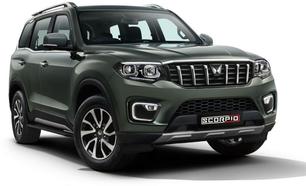
The Mahindra Scorpio is back – but now it has upgraded safety tech (including AEB) and it’s only available in one variant: the Z8L+.
This is a 4WD wagon with a fair bit of appeal: seven seats, a stack of standard features, a low-range transfer case, an automatic rear diff lock and its price-tag – at just under $50 grand – won’t kick you in the space near the pocket where you keep your wallet.
It hasn’t undergone any mechanical changes so is the Scorpio any good off-road?
Read on.
New-car buyers wanting a medium-size SUV under $65K are faced with a bewildering choice of makes and models but the H6GT PHEV Hi4 is worthy of consideration.
Its value-for-money drive-away pricing combines a spacious and classy cabin, sporty all-wheel drive persona and rare petrol bowser visits if overnight charging and daily EV-only driving are fully utilised.
It may seem like I've been harsh on this Mahindra but I reckon the Scorpio Z8L+ is a positive product for the company.
It’s nice enough to drive on-road – reasonably refined and comfortable – and it’s also a capable 4WD, with some trade-offs.
But this seven-seat wagon remains a good value-for-money prospect with the addition of more driver-assist tech onboard boosting its safety and adding to its overall appeal.
Although the premium GWM Haval H6GT PHEV range shares much of its underpinnings and cabin design with the regular H6 line-up, the GT has a unique and distinctly sporty persona with its coupe-style roofline and more engaging suspension tuning and steering feel.
The interior blends soft-touch surfaces, synthetic suede and exposed stitching with satin chrome and faux carbon fibre highlights resulting in a sumptuous cabin design with strong visual and tactile appeal.
In terms of wheelbase (2738mm) and overall length (4727mm) the H6GT is among the physically largest of competitors in the medium-size SUV segment, which contributes to the cabin’s roomy ambience that defies expectations that a coupe compromises interior comfort.
This effect is enhanced by the panoramic sunroof and column-mounted gear selector that frees up space on the centre console for additional storage and functionality.
Nothing has changed on the Scorpio’s exterior. It still reminds me of the early-generation Hyundai Terracan – long bonnet, generic cabin (i.e. inoffensive, soft lines, nothing to set it apart from most other mid-sized SUVs) and, though its off-road angles check out (more about those later) it looks quite low to the ground.
So it’s all standard for a 4WD wagon.
The Scorpio also has 18-inch alloy wheels, side steps, roof rails and a sunroof.
Potential main rival GWM Tank 300 holds sway in the looks department.
Our test vehicle’s 2045kg kerb weight and 2495kg GVM (how much weight it can legally carry) allows for up to 450kg which could easily be consumed by four large adults and some light luggage.
It’s also rated to tow up to 1500kg of braked trailer which would be handy for those with recreational activities in mind like towing a light camper or bike trailer, but GWM does not publish how much weight our test vehicle can legally carry and tow at the same time.
It also offers up to 3.3kW of V2L (vehicle to load) capability using a charging port adapter to provide electricity for numerous domestic appliances, from laptops and power tools to camping equipment.
There’s ample space for the driver and front passenger along with storage including a bottle holder and bin in each door, a single glovebox and an overhead glasses holder. There’s also a two-tiered centre console with the top level providing open storage, wireless phone charging, two cupholders and a lidded box while the floor level adds more open storage plus a 12V socket and USB port.
Rear seat passengers also enjoy generous space, including tall people given I’m 186cm and when sitting behind the driver’s seat set in my position I still have 80mm of knee clearance and 80mm of head clearance. It’s a similar story in the centre seat, enhanced by a virtually flat floor with no transmission hump to straddle.
There’s also a storage bin in each rear door plus pockets on both front seat backrests. The centre seat backrest folds forward to serve as an armrest for two complete with cupholders, while the rear of the centre console provides adjustable air vents and two USB ports.
The rear luggage area offers side bins, another 12V socket and up to 392 litres of load volume with the 60:40-split rear seat backrests upright, which is ample for a weekly grocery shop. This increases to 1390 litres (almost 1.4 cubic metres) with the seats folded flat to create an extended load area.
Nothing much has changed inside the Scorpio, either, except for the addition of an electronic park brake.
The cabin has a neat layout with a 8.0-inch touchscreen multimedia system that is easy to operate but it needs to be bigger.
The synthetic leather trim looks and feels only adequately premium and if you more closely scrutinise the Scorpio’s interior it lacks the build quality, storage spaces and USB charge points of rival wagons.
Driver and front passenger get adequate room, while the second row is actually satisfactorily spacious without being capacious; behind my driving position I had more than enough leg, head and shoulder room – but, take note, I'm the size of a garden gnome. The third row is the stuff of nightmares – only joking, but it should quite rightly be limited to use by small children or your mate the jockey.
There’s one cupholder (between the driver and front passenger), door pockets are narrow and there are few other storage spaces. In this respect, the Scorpio cabin lacks general functionality.
The Scorpio also cops a mark down because of its third row. With the third-row seats in use, there’s a small rear cargo area, and those seats don’t fold flat so when they’re not in use they occupy a lot of what could be useable storage space.
As a result, the Scorpio is one of the few modern 4WDs I’d consider removing the third row every time long-distance loaded-up travel was on the cards – just so it’s a more practical touring vehicle.
Some features, such as the directional air vents, feel flimsy. Otherwise, the Scorpio’s cabin is adequately practical, rather than overly impressive.
Suffice to say, in terms of practicality, the Scorpio’s rivals have it beaten.
Our test vehicle is available in one hybrid drivetrain specification comprising a turbocharged 1.5-litre four-cylinder petrol engine, four-speed DHT (Dedicated Hybrid Transmission), two electric motors and a plug-in propulsion battery for $54,990 driveaway.
This pricing looks enticing compared to the list prices (before on-road costs) of plug-in rivals like the BYD Sealion 6 PHEV Premium AWD ($52,990) or Mitsubishi Outlander PHEV Exceed Tourer AWD ($58,740). Our example is finished in Atlantis Blue which is one of several premium metallic paint options that adds $495 to the price.
The H6GT PHEV Hi4 comes standard with generous luxury features including:
Inside the keyless-entry cabin is:
The driver is also treated to a 10.25-inch digital instrument cluster which shares dash space with a large 14.6-inch multimedia touchscreen. The latter serves as central command for the GT’s nine-speaker premium audio system featuring GWM’s latest Coffee OS software with ‘Hello GWM’ voice command, DAB digital radio and smartphone connectivity for Apple and Android devices.
As mentioned, there is only one Mahindra Scorpio now available, the Z8L+. And its price-tag is listed as from $48,990, drive-away. That’s $2000 more than its previous incarnation, the Z8L.
Standard features in the Z8L+ include a 8.0-inch touchscreen multimedia system (with wired Apple CarPlay and Android Auto), a 12-speaker Sony stereo, dual-zone climate control, front and rear parking sensors and a six-way power-adjustable driver’s seat.
New features include ventilated front seats, an electronic park brake, an auto-dimming rear view mirror and, more importantly, the Scorpio now has Level 2 Advanced Driver Assistance Systems (ADAS) detailed in the Safety section.
It also has 18-inch alloys, a full-sized steel spare, power sunroof and synthetic leather trim.
Exterior paint choices include 'Deep Forest', 'Everest White', and 'Stealth Black'. Metallic paint costs $495 and floor mats cost $125. Price as tested for this vehicle is $49,610.
Rivals such as the GWM Tank 300 and KGM Rexton offer more in this category.
The plug-in hybrid drivetrain in the H6GT comprises a 1.5-litre turbocharged four-cylinder petrol engine which produces 110kW of power between 5500-6000rpm and 240Nm of torque across a broad rev band from 1800-4000rpm. It drives the front wheels and serves as a generator as required to maintain battery charge.
This is paired with individual electric motors on the front and rear axles, with the front motor producing 80kW and driving the front wheels while the rear motor produces 135kW and drives the rear wheels, resulting in all-wheel drive on demand.
The combined output is rated at 321kW and 642Nm.
The automatic four-speed DHT (dedicated hybrid transmission) intelligently combines outputs from the petrol engine and electric motors to continuously optimise efficiency and performance between them, in any of the three driver-selectable power mode settings comprising EV (battery only), EV Priority (minimal engine input) and HEV (full hybrid).
The DHT also offers a selection of drive modes including ‘Normal’, ‘Sport' and ‘Eco’ plus numerous 4WD settings tailored to enhance performance on snow, sand, mud and when towing.
The Mahindra Scorpio Z8L+ has a 2.2-litre four-cylinder turbo-diesel engine, producing 129kW and 400Nm and it’s matched to a six-speed automatic transmission.
This engine-and-auto combination is sluggish at times but it’s generally okay.
The Scorpio has a part-time 4WD system (with high- and low-range) and an automatic rear diff lock.
Worth noting the Scorpio must be in neutral and stationary for the driver to shift into '4WD low-range', but the driver is able to shift between '2WD' and '4WD High' on the move, up to 80km/h.
This 4WD wagon’s '4Explor' system’s drive modes include 'Normal' (2WD for sealed surfaces), 'Grass/Snow' (4WD), 'Mud & Ruts' (4WD) and 'Sand' (4WD).
The Scorpio lags behind its rivals here.
The H6GT PHEV offers a comfortable and spacious position thanks to its combination of a flat-bottom steering wheel providing easy access and plenty of torso room, along with powered seat adjustment and a big left footrest. However, some rake adjustment in the base cushion would be welcome for better thigh support on longer drives.
Ride and handling benefit from GWM’s local chassis tuning input. The steering is nicely weighted and responsive, albeit best appreciated with the active lane-keeping function switched off given its tendency to harshly tug the wheel when making its steering corrections.
The hybrid drivetrain has vigorous response thanks to more than 600Nm of near-instant torque providing enough shove to accelerate rapidly from a standing start to triple-digit speeds in less than five seconds. We found the ‘Sport’ drive mode the most engaging and enjoyable but the ‘Normal’ and ‘Eco’ modes are fine for daily commuting.
Our other gripes from a driver’s point of view are that the base of the rear window is positioned quite high in the tailgate, resulting in the solid tailgate area below it restricting vision of vehicles travelling close behind when viewed through the central mirror.
We also found that the pedestrian warning sound, which automatically starts at speeds under 30km/h, is too loud inside the car and becomes annoying when crawling along in heavy traffic, negotiating tight inner-city streets or parking.
On road the Scorpio is reasonable. It’s comfortable and refined but can be a bit firm on the suspension it has – double wishbone and coil springs at the front, live axle with multi links, Watts link and coil springs at the rear. But for a four-wheel drive wagon it's quite nice on sealed surfaces.
The powertrain is generally a reasonable set-up, although there is lag between foot-down and acceleration and it holds onto gears for too long before upshifting.
There have been no mechanical changes to this Scorpio over the previous generation and that's fine because this Mahindra’s tractable engine offers reasonable power and torque across enough of a rev range to make it an effective 4WD.
The Scorpio feels comfortable and reasonable off road. And when it’s time to tackle ‘4WD-only’ territory, it is generally capable. High- and low-range gearing is decent, and as mentioned earlier, its off-road drive modes adjust traction control, among other aspects, to best suit the terrain you’re tackling.
Its no rock-crawling beast but as a result of these mechanical and technical elements this 4WD wagon is able to drive the kind of terrain you’d reasonably expect to be able to cover in a standard off-roader that's been engineered for 4WDing across light to moderately difficult terrain.
The Scorpio’s off-road angles and ground clearance are on par with mid-size SUV rivals. Ground clearance is a listed 227mm. It feels quite low, but if you drive it with care and consideration, you should be fine.
The rear diff lock doesn't feel as clunky in its application as it has in the past. Maybe I'm more forgiving in my old age because, as I mentioned earlier, there haven't been any upgrades mechanically or in terms of off-road-specific driver-assist tech or in diff lock operation.
Hill descent control works reasonably well, although it's not the greatest, allowing for some free-wheeling before it bites.
The Scorpio’s road-oriented Bridgestone Ecopia (255/60 R18) tyres are fine on formed dirt tracks but are found wanting on anything rougher than that.
In terms of towing capacity, the Scorpio is able to tow 750kg unbraked and 2500kg braked. So if you're looking to haul anything larger than a small box trailer, camper trailer or tinny, you'll have to look elsewhere.
GVM and GCM are 2610kg and 5155kg, respectively.
Main potential rival GWM Tank 300 has it over the Scorpio in terms of off-roading prowess and, even though it’s not a towing beast, the GWM wagon is better suited to life as a touring platform than the Mahindra.
The GWM Haval H6GT PHEV was awarded a maximum five-star ANCAP rating under 2022 protocols, and has seven airbags for protection in case of a collision.
It also comes standard with:
On top of these features, the rear seat has two ISOFIX child seat anchorages and three top-tethers.
The Mahindra Scorpio Z8L+ hasn't been tested by ANCAP, but as standard it has six airbags (front, side and curtain) and a 'Level 2 Advanced Driver Assistance System' which includes AEB, 'Forward Collision Warning', 'Front Vehicle Start Alert', adaptive cruise control, high-beam assist, lane departure warning, 'Smart Pilot Assist', 'Speed Limit Assist', lane keep assist and more.
It also has electronic stability control, front and rear parking sensors and a tyre pressure monitoring system.
Rivals such as the GWM Tank 300, with a full suite of driver-driver-assist tech and the maximum five-star ANCAP safety rating, have it all over this Mahindra in this category.
The H6GT PHEV comes standard with GWM’s seven year/unlimited km warranty plus a separate eight year/unlimited km propulsion battery warranty and five years of roadside assist.
Scheduled servicing is every 12 months/15,000km whichever occurs first. Capped pricing applies to the first five scheduled services up to five years/70,000km totalling $2030 or an average of $406 per service.
This warranty/service package is among the strongest available in its vehicle segment.
The Mahindra Scorpio Z8L+ has a seven-year/150,000km warranty and comes with seven years' of roadside assistance if your Scorpio is serviced by Mahindra.
The first service is scheduled at the 1500km mark, then every 12 months or 10,000km. Pricing details were not available at the time of writing.
Five years of capped price servicing is available at an average cost per visit of $471.
For reference, the GWM Tank 300 offers a seven year/unlimited km warranty, five years' of roadside assistance, and five years of capped price servicing (starting at $360 for the first service and topping out at $1035 for the sixth). Service intervals are scheduled for every 12 months or 15,000km.
At time of writing there were reportedly about 80 Mahindra dealerships spread across Australia. According to the company, "the dealer network spans all states and territories, including locations in major cities like Melbourne, Brisbane, Adelaide, and Perth". Your Scorpio can be serviced at any authorised Mahindra dealership.