What's the difference?
GWM’s Haval H6 has been a solid budget-oriented mid-size family SUV for years now, but now it might be a better package than ever.
This current model has just received a mid-life update that brings new looks inside and out, new powertrain options, as well as a revised trim level structure.
Competition in the mid-size SUV segment is hotter than ever with fierce rivals like the Toyota RAV4, Kia Sportage and Hyundai Tucson.
Is the updated GWM Haval H6 worth considering? Read on to find out.
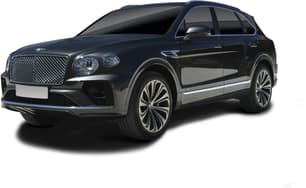
Yes, you can drive your Bentley and keep your family. It's called compromise, or the Bentayga, Bentley's SUV.
The Bentayga my family has been living with is the Azure grade which promises to be even more comfortable and pleasant than the rest of the range.
Comfort is important and we'll cover the Bentayga's lavish details in time, but our mission first and foremost is to find out if the Bentayga makes a good family SUV.
The GWM Haval H6 has always been a value buy as a mid-size family SUV and although it previously wouldn’t have been at the top of my shopping list, this mid-life update has changed my mind.
It’s now more stylish inside and out, has more ergonomic storage and most importantly remains a cut-price offering.
Things aren’t perfect, as you still need to rely on the touchscreen for many key features and the suspension tune isn’t quite right.
The Bentley Bentayga Azure may look a bit awkward and it surely isn't great value for money, but it is a true Bentley and a very good family SUV that not only provides terrific practicality but superb performance and comfort.
Although the GWM Haval H6 has only received a mid-life update, it’s rather comprehensive.
At the front there’s a new front fascia that features a grille that's eerily similar to the outgoing Hyundai Palisade.
There’s also a new LED daytime running light signature that features a plunging light strip. You can tell it’s a little tacked on to the headlight unit which remains unchanged, though it’s a nice point of difference.
Around the side GWM has made a big point of removing all the pre-update car’s chrome highlights, which is a great step in the right direction. In its place is a swathe of black finishes. It’s noticeable around the wheel arches and door sills, as well as around the windows and on the roof rails.
At the rear there are more obvious changes, including the removal of the full-width LED light bar. This is fantastic to see because they're being done to death by car brands at the moment.
In its place are two regular LED tail-light units which still look great and inoffensive.
Other changes at the rear include a revised tailgate design that’s now more angular and sharp, plus there’s now ‘GWM’ badging where ‘Haval’ once was.
Inside there are even more changes. In fact, it’s hard to see what has carried over with this update.
One of the most obvious changes is the inclusion of a new cream synthetic leather upholstery option. It’s not to my personal tastes, nor would it be something I’d recommend for someone using this as a family car.
However, it’s a no-cost option and provides a nice point of difference from the drab-looking black synthetic leather that’s standard.
Ahead of the driver is a leather-wrapped steering wheel which now has a thicker rim than before and now features sculpted indentations at the 10 and two o’clock marks.
It’s nice, but I do prefer how the old thinner steering wheel feels in the hand, plus the spokes where the buttons are placed are still too thick and highly placed.
It’s clear GWM is still sticking with the screen-heavy approach with this updated Haval H6. There’s still a 10.25-inch digital instrument cluster, but a larger 14.6-inch touchscreen multimedia system that sits proudly on the dash like an iPad.
The centre console has been heavily redesigned and it now looks similar to the Leapmotor C10.
The rotary gear selector has been moved to a column-mounted unit behind the steering wheel, freeing up more space.
Overall the Haval H6 continues to present well inside with a wide range of soft-touch materials on the dashboard. There is now also a rubberised section on the centre console which feels modern and fresh for a car that’s so affordable.
You'd think of all automotive brands Bentley, with its beautiful swooping and powerful saloons, would be able to floor us with something just exquisite in SUV form. But right from the 2012 concept the Bentayga has struggled to stun the world with its design.
So, while there are Bentley family traits all over the Bentayga, from the intricate headlights and mesh grille, to the oval tail-lights and body which squats over the rear wheels, the overall design looks awkward to my eyes.
To me it appears the boxy design with the tall, flat roofline and elevated ride height favours practicality over the sleekness possessed by a lower, more coupe-like SUV.
I favour dark coloured clothes because it hides my shapes, creases and bulges, but these are the things you want to see in a car and our Bentley's 'Onyx Black' paint, despite being a beautiful colour with a blue hue added, make it a featureless blob in the sunlight.
A lighter shade or something outlandish like a turquoise or yellow would look amazing, and even better, upset your neighbours.
Let's look at the interior design which is lavish with all the quilted leather and Mulliner customisation, but lacks the modern look of many contemporary cabins with its smallish media screen and busy mosaic of buttons.
I like the little chrome plungers for the air vents, the winged styling to the dashboard and the stitched leather upholstery, but it's easy to spot parts that are shared by other members of the Volkswagen Group (which owns Bentley).
For example, there are the indicator and wiper stalks, as well as the steering wheel buttons, all from Audi. Surely Bentley should have its own crafted parts?
The interior colour scheme on our Bentayga is 'Beluga' (black) and 'Camel' (tan) and the Mulliner option split the colours with a cream tone.
From a family perspective the tan and black will hide dirt, although the cream will struggle. It's possibly the best leather on the planet, however, coming from cattle living high enough that their hides are unblemished by insect stings.
As standard both the front seats in the top-spec Haval H6 Ultra have electric adjustment. In particular, the driver’s seat has six ways of electric adjustment, plus adjustable lumbar support.
The driver’s seat itself is comfortable enough, though on longer drives I look for a little more thigh support. You’re unable to adjust either front seat to get more thigh support.
However, there’s both heating and ventilation as standard for both front seats. The steering wheel is also heated which has been a godsend in the cold Melbourne weather.
The buttons on the new thicker steering wheel now control different functions. There’s no longer a stalk dedicated to the cruise control, instead this is now done on the steering wheel itself.
Also on the right-hand side of the steering wheel there are still buttons that change the volume, but when you click just above the volume rocker it changes their function to altering what’s on the digital instrument cluster. I’m sure you’d get used to this if you owned this car, but initially it messes with your head.
Another thing is given the gear selector is now behind the steering wheel, the wiper controls are now on the indicator stalk. This now also means there’s no proper buttons or stalk to adjust the headlights.
Instead you need to either use the touchscreen or press the ‘auto’ button on the dashboard. Unless you frequently change your headlight settings, this likely won’t be an issue.
The 10.25-inch digital instrument cluster now has updated graphics and looks high-resolution. The interface is still dark, however, and you can only adjust the content on the right-hand side.
Moving across the larger touchscreen multimedia system looks fantastic and is a breeze to navigate thanks to the shortcut keys on the right and the handy swipe-down control centre menu.
There’s now wireless Apple CarPlay and Android Auto functionality in this car which is fantastic to see. It’s particularly good because if you want to use the wired version of either, the USB-A port to access this is still on the passenger side of the centre console.
However, while you’re using smartphone mirroring you can’t access the handy swipe-down control centre menu. You need to exit and go back to the native interface to use it, which completely undermines its existence.
Another gripe is there still aren’t many physical buttons around the H6's cabin, with only a few for select climate control functions. To change the temperature, for example, you either need to use the touchscreen or the voice assistant, which isn’t always intuitive.
Thanks to the relocation of the gear selector, storage in the centre console has improved massively. There are two cupholders, a wireless charger that now features ventilation to keep your phone cool, as well as another storage nook for your keys.
Other storage highlights up front include a large space under the centre console, a centre console box, a glovebox, as well as big door pockets with bottle holders.
Moving to the second row, this is where Chinese SUVs shine. At a leggy 182cm I have plenty of space behind my own driving position.
The rear bench is reclined a touch and plenty comfortable enough for longer trips. You could easily fit three adults in the back thanks to the minimal centre tunnel intrusion.
Second-row amenities include centre console-mounted air vents, a USB-A and USB-C port, as well as a fold-down armrest with cupholders.
At the back there’s now a hands-free power tailgate that’s standard across the line-up, except for the entry-level H6 Lux petrol trim. It’s very easy to use and particularly handy if you’ve got full hands.
The boot area in the Haval H6 is decent and there’s no load lip, making lugging items in and out a lot easier. GWM claims there’s 560L of boot space with the rear seats upright, which is great for the segment.
There are few boot-related amenities besides a single hook, 12V socket and a cargo blind.
Disappointingly there’s no spare wheel under the boot floor of the H6 Hybrid. Instead there’s only a tyre repair kit, which is surprisingly common among hybrids as the space where a spare wheel would typically go is taken up by the high-voltage battery pack.
Being shaped like a bus does nothing for the Bentayga's beauty but makes it spacious for cargo and roomy for people.
With its large doors and elevated ride height (the car can be lowered for easier access) it's great for families.
Our Bentayga is a five-seater, which is fine for my little family of four, but there are four- and seven-seat configurations available, too.
Second row legroom is exceptional, even for me at 189cm tall, and sitting behind my own driving position there's still plenty of room.
Headroom is also outstanding throughout. We could be a family that loves top hats, on our way to the top hat championships, and not have to remove our top hats. That's how good headroom and hat room is.
Sun blinds in the second row are vital in Australia, and the electric ones in the Bentayga raise and lower quickly, not just offering protection but also more privacy.
Storage is good throughout with big door pockets and five cupholders.
It seems the cabin space eats into the cargo area because the boot isn't overly large at 484 litres with all seats in place.
Buttons in the cargo area allow the rear of the car to be raised and lowered to make it easier to hoist items in the boot.
For devices there's a wireless phone charger up front along with USB ports in both rows.
The 2026 GWM Haval H6 range now only includes two trim levels – Lux and Ultra.
Pricing for carryover variants is down by up to $2000 over the pre-update model. The range now starts at $35,990 drive-away for the Lux petrol and extends to $50,990 drive-away for the new Ultra PHEV AWD.
It’s worth noting the variant we have on test here is the Haval H6 Ultra Hybrid which costs $43,990 drive-away. That’s incredibly affordable in this segment.
As standard all variants get 19-inch black alloy wheels, automatic LED headlights, LED tail-lights, heated and folding side mirrors, a hands-free power tailgate (exc. Lux petrol), 10.25-inch digital instrument cluster, 14.6-inch touchscreen multimedia system, wireless Apple CarPlay and Android Auto, voice assistant, 50W wireless phone charger, synthetic leather upholstery and electric driver’s seat adjustment.
It’s fantastic to see the multimedia system in the Haval H6 now supporting wireless smartphone mirroring, while also gaining a more powerful wireless charger that has ventilation.
Stepping up to the Ultra, as tested here, it gains rear privacy glass, a panoramic glass sunroof, head-up display, front stainless steel scuff plates, heated steering wheel, heated and ventilated front seats, as well as driver’s seat memory and lumbar support.
There’s a lot of nice kit in the Ultra that makes stepping up to it an easy choice. GWM even admits that’s what a lot of Australian buyers are doing, too.
Reviewing every type of car on the market provides a pretty good perspective, but when it comes to Bentleys we enter a realm where value-for-money often isn't as crucial as it is for more mainstream options.
The same goes for the price. Bentleys are among the most expensive cars in the world. So if, like me, you flinch at the thought of paying more than half a million dollars for an SUV, it may not be the car for us right now.
With that I can tell you the Bentley Bentayga Azure's list price is $475,000 and our car with all of its options comes to $515,000.
That's more money than any SUV from Mercedes-Benz and BMW costs. Even Range Rover can't quite reach that mark.
Only the likes of Aston Martin's DBX 707 and Lamborghini's Urus can match the price.
There are always bigger fish, though, and Rolls Royce's Cullinan swims in at $700,000, making the Bentayga's price seem quite reasonable.
Let's look at the standard features.
Coming standard on the Bentayga Azure are the prettiest LED headlights in the world. There are LED tail-lights, too, as well as a proximity key, roof rails and a panoramic glass roof, plus a hands-free tailgate.
Inside there's the 10.9-inch media screen, sat nav, wireless Apple CarPlay and wireless Android Auto.
The diamond quilting to the door trims is also standard and so are the Bentley sports pedals.
Many of these features are standard on lower grades in the Bentayga range, but the point in choosing the Azure is that many of the optional bundles on offer are fitted as standard here.
So, while leather upholstery is of course standard the 'Colour Specification' package gives you a choice of all interior colour combinations and an extended choice of hide colours.
The 'City Specification' brings extra safety tech like rear cross-traffic alert and a top view camera.
The 'Front Seat Comfort' specification adds 20-way power front seats, ventilation and massage as well as comfort headrests.
The 'Touring Specification' brings adaptive cruise control, a head up display, lane keeping assistance and 'Night Vision'.
And then the 'Sunshine Package' adds electric sun blinds, which are great for kids in the back.
Despite the multitude of standard packages there's plenty left to option on the Azure.
Our car was fitted with about a dozen options including piano black veneer ($5884), 22-inch alloy wheels ($4733), rear privacy glass ($2617), LED welcome lights ($2238), self-levelling wheel centre caps ($1208), a heated acoustic windscreen ($1094), luggage management for the boot ($937) and a heated steering wheel ($543).
Then there's Mulliner, Bentley's in-house customisation division which will personalise your Bentley.
The Mulliner custom features on our Bentayga Azure include the addition of an extra colour in the leather upholstery ($13,492), 'Honeycomb' stitching on the steering wheel ($5391) and contrasting stitching on the quilted areas of leather trim ($2688).
Best family features would have to be the privacy glass, temperature control in the second row and the rear sun blinds.
The second row also comes with a removable tablet which can be used to adjust the climate control, sunroof and media settings among other functions.
In the hands of children this is every parent's nightmare and there's a 100 percent chance of the tablet being lost forever, possibly on the motorway between Sydney and Canberra.
Unlike the petrol and the soon-to-be introduced PHEV variants, the GWM Haval H6 Hybrid’s powertrain remains unchanged with this update.
It’s still powered by a 1.5-litre turbocharged four-cylinder petrol engine that runs the Miller cycle, as well as a single electric motor that’s fed by a 1.8kWh lithium-ion battery pack. Total system outputs are a massive 179kW of power and 530Nm of torque.
This is mated to a Dedicated Hybrid Transmission (DHT) with drive sent to the front wheels only.
It’d be great to see an all-wheel-drive version of the Haval H6 Hybrid because it would be better able to harness the amount of power and torque better than the front-wheel-drive version can.
When Bentley stopped putting its W12 into the Bentayga this year I was unsurprised yet sad. The world is moving toward tighter fuel emissions but the twin-turbo petrol V8 in this Azure is still a beast.
The 4.0-litre turbo-petrol V8 is from the Audi family and I love it as much for its plentiful torque and superb acceleration as the deep rumble of its exhaust.
Making 404kW and 770Nm the V8 can lift and throw the 2.5-tonne Bentayga to 100km/h from a standstill in 4.5 seconds and onto a top speed of 290km/h. I reckon you could get it to 300km/h with the wind behind you.
Drive goes to all four wheels via an eight-speed transmission and a Torsen-type centre differential.
Default drive balance is 40/60 front to rear, with up to 70 per cent of power able to be sent to the front wheels and up to 85 per cent to the rear axle.
I don't think you'll be astounded to hear this powertrain uses a lot of fuel? Let's go there...
GWM claims the Haval H6 Hybrid consumes 5.2L/100km on the combined cycle (ADR 81/02).
During my testing I matched this figure, according to the trip computer, which is surprising as not many hybrid cars actually achieve their fuel consumption claims.
All Haval H6 variants, excluding the PHEVs, have a 61L fuel tank and require a minimum of 91 RON regular unleaded petrol.
GWM claims you can travel 1000km on a full tank of petrol in the Haval H6 Hybrid, but using my as-tested fuel consumption you can theoretically travel up to 1170km.
Bentley says the Bentayga Azure with the V8 petrol engine will use an average of 11.4L/100km over a combination of open and urban roads.
But what happens if you live in the suburbs not far from the city and drive the Azure every day to do the school drop offs and trips to the shops and then take in some fun country roads? You use an average of 22.8L/100km according to the car's trip computer.
This is still not as high as I was expecting. I've driven V6-powered SUVs which use more than this under the same conditions.
That said, even when using as much fuel as Bentley says you should, an 85-litre fuel tank is only going to deliver an approximate 745km driving range.
The pre-update GWM Haval H6 petrol and hybrid received a five-star ANCAP safety rating back in 2021. It remains unclear whether this rating will carry over to the updated model.
As standard there are seven airbags, autonomous emergency braking (AEB), blind-spot monitoring, rear cross-traffic alert, traffic sign recognition, driver fatigue monitoring, a surround-view camera and rear parking sensors.
Stepping up to the Ultra gets you additional safety features like front parking sensors, semi-autonomous parking assist and reversing assist. It’s worth noting none of these features are offered on Ultra PHEV variants.
The Bentley Bentayga doesn't have a safety rating as like many extremely high-end cars it hasn't been assessed by ANCAP or Euro NCAP.
That said, the Azure grade comes standard with an armoury of safety tech including AEB (with turn assistance), lane keeping assistance, blind-spot warning, rear cross-traffic alert, evasive steering assistance, and adaptive cruise control.
Front and rear parking sensors are standard (and the most relied-upon feature I use daily), while exit warning saved my child and myself more than a few times from leaping out into the traffic on the school run.
The GWM Haval H6 continues to be covered by a seven-year, unlimited-kilometre warranty, while variants with a high-voltage battery pack have that covered under an eight-year, unlimited-kilometre warranty.
There’s also five years of complimentary roadside assistance and the first five services are capped priced.
Logbook servicing is required every 12 months or 15,000km, though the first service is required after 12 months or 10,000km.
During the five five years of ownership, servicing the updated Haval H6 Hybrid costs a total of $2145, which averages out to around $430 per service. That’s not bad but a Toyota RAV4 and a Honda CR-V are cheaper to service.
The Bentayga is covered by Bentley's three-year/unlimited-kilometre warranty. Servicing is recommended every 12 months or 16,000km.
The good news is all new Bentley's have five years regular servicing included in the cost of the vehicle.