What's the difference?
Genesis has been in Australia for seven years, which in car industry terms is ancient (given the rapid pace of new arrivals). But the Hyundai-owned luxury brand has yet to make a real dent on challenging the likes of BMW and Mercedes-Benz and is now facing growing threat from the likes of Zeekr and Omoda-Jaecoo.
So it has opted for the tried and tested method of appealing to Australian customers - more performance. Australians have always had a soft spot for the likes of BMW M and Mercedes-AMG, so Genesis is hoping its new performance sub-brand, dubbed Magma, will help give it a sales boost as well as an image enhancement.
The Genesis GV60 Magma has just arrived in Australia and is the first member of what is planned to be an entire family of Magma halo vehicles.
An electric performance small SUV is an unusual choice for a hero model, but there are some good reasons why this has potential and why it makes sense to be the first Magma offering. And both those reasons are largely the same, because the GV60 Magma is based on the same underpinnings and features and much the same powertrain as the Hyundai Ioniq 5 N and Ioniq 6 N.
Just like Hyundai N has three core elements - Corner Rascal, Racetrack Capability and Everyday Sportcar - Genesis has created a trio of pillars for Magma. These are Design: Unspoken Dominance, Driving Sensation: Captivating Control and User Experience: Sharpened Immersion.
Or to put it another way - slightly different, but fundamentally the same premise given the shared mechanical DNA. But Genesis has definitely put its own spin on it, so read on to find out if Magma is hot or not.
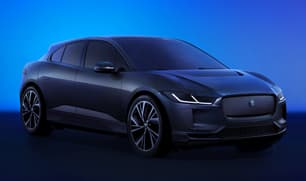
What sets the most iconic Jaguars apart?
Here’s a theory. Consider history’s greatest: the 1948 XK, its 1961 E-Type replacement and the first XJ of 1968. We’re talking about a grand tourer, sports car and luxury sedan respectively that broke ground in each of their segments.
Despite being a sales disappointment, let’s add the 2018 I-Pace to this elite group.
Like the others, it was a pioneer, this time in the luxury electric vehicle (EV) SUV field, beating most competitors and seemingly influencing newer ones ever since, from the excellent Kia EV6 to the coming Mercedes-Benz EQE SUV.
Now, five years and a comprehensive update later, we revisit the 2023 I-Pace to see if it’s still a standout.
An electric SUV is certainly an unconventional choice for a halo model, and is unlikely to be a big seller, but that’s not really the focus for Genesis. Instead, the arrival of the GV60 Magma means something bigger for the brand.
It’s a clear sign of intent from Genesis that it means business with Magma and has a long-term plan for Australia and taking on the likes of BMW M and Mercedes-AMG.
But, as for the car itself, it’s undoubtedly a very nice proposition, with some genuine performance potential and an engaging driving experience - even if it is thanks to technology rather than simple mechanics.
To dismiss it as simple a ‘luxury Hyundai’ would be doing it a disservice, too, as it offers not only a more premium package but overall a different driving experience. It’s less outrageous than either the Ioniq 5 N or 6 N, but still outrageously fast.
Note: CarsGuide attended this event as a guest of the manufacturer, with travel, accommodation and meals provided.
In the 1960s Jaguar used to promote its range as providing “grace, space and pace”. Nowadays, the I-Pace may as well also be known as the I-Grace and I-Space, because all three terms still ring true.
Jaguars were never cheap but the greatest hits felt like exceptional value because they were special. The same applies here. Five years might seem like an eternity, but age has not yet wearied the British luxury EV SUV nearly as much as you might imagine. Especially when optioned up as per our test vehicle.
Bereft of any post-modern brand baggage, the I-Pace remains a modern great. If only more buyers would catch on to that.