What's the difference?
Genesis has been in Australia for seven years, which in car industry terms is ancient (given the rapid pace of new arrivals). But the Hyundai-owned luxury brand has yet to make a real dent on challenging the likes of BMW and Mercedes-Benz and is now facing growing threat from the likes of Zeekr and Omoda-Jaecoo.
So it has opted for the tried and tested method of appealing to Australian customers - more performance. Australians have always had a soft spot for the likes of BMW M and Mercedes-AMG, so Genesis is hoping its new performance sub-brand, dubbed Magma, will help give it a sales boost as well as an image enhancement.
The Genesis GV60 Magma has just arrived in Australia and is the first member of what is planned to be an entire family of Magma halo vehicles.
An electric performance small SUV is an unusual choice for a hero model, but there are some good reasons why this has potential and why it makes sense to be the first Magma offering. And both those reasons are largely the same, because the GV60 Magma is based on the same underpinnings and features and much the same powertrain as the Hyundai Ioniq 5 N and Ioniq 6 N.
Just like Hyundai N has three core elements - Corner Rascal, Racetrack Capability and Everyday Sportcar - Genesis has created a trio of pillars for Magma. These are Design: Unspoken Dominance, Driving Sensation: Captivating Control and User Experience: Sharpened Immersion.
Or to put it another way - slightly different, but fundamentally the same premise given the shared mechanical DNA. But Genesis has definitely put its own spin on it, so read on to find out if Magma is hot or not.
What is it about single letters and performance cars?
BMW has M, Volkswagen has R, Lexus has F, and with only 23 choices left Hyundai opted for N - which stands for Namyang, site of the brand’s sprawling proving ground and development centre in South Korea, and Nurburgring, the famous German racing circuit where its performance cars are fine-tuned.
And like BMW M Sport, VW R-Line and Lexus F Sport, the Korean giant has N Line as a ‘lite’ option. Sporty models that add a little more punch and visual flair without crossing the line into hardcore hot-rod territory.
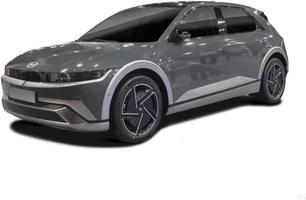
And this is one its latest examples, the pure-electric Ioniq 5 SUV in top-spec Epiq AWD trim and equipped with the N Line Option Pack as well as the tricky Digital Mirror Pack.
In this configuration it slots into the $90K price band, which means it has a lot to live up to in terms of performance, safety, driving dynamics, value and more.
So, stay with us to see if this premium five-seater is the kind of sporty EV SUV that gets your heart racing.
An electric SUV is certainly an unconventional choice for a halo model, and is unlikely to be a big seller, but that’s not really the focus for Genesis. Instead, the arrival of the GV60 Magma means something bigger for the brand.
It’s a clear sign of intent from Genesis that it means business with Magma and has a long-term plan for Australia and taking on the likes of BMW M and Mercedes-AMG.
But, as for the car itself, it’s undoubtedly a very nice proposition, with some genuine performance potential and an engaging driving experience - even if it is thanks to technology rather than simple mechanics.
To dismiss it as simple a ‘luxury Hyundai’ would be doing it a disservice, too, as it offers not only a more premium package but overall a different driving experience. It’s less outrageous than either the Ioniq 5 N or 6 N, but still outrageously fast.
Note: CarsGuide attended this event as a guest of the manufacturer, with travel, accommodation and meals provided.
The Hyundai Ioniq 5 Epiq N-Line AWD leverages an electric powertrain’s best attributes brilliantly well.
It’s ultra smooth and comfortable with ample performance and great dynamics thanks in part to this car’s N Line spec.
Its price tag pits it against formidable competition from the German Big Three, Tesla and others. But it has what it takes in terms of quality and value to fight that battle. It’s an impressive machine.