What's the difference?
Genesis has been in Australia for seven years, which in car industry terms is ancient (given the rapid pace of new arrivals). But the Hyundai-owned luxury brand has yet to make a real dent on challenging the likes of BMW and Mercedes-Benz and is now facing growing threat from the likes of Zeekr and Omoda-Jaecoo.
So it has opted for the tried and tested method of appealing to Australian customers - more performance. Australians have always had a soft spot for the likes of BMW M and Mercedes-AMG, so Genesis is hoping its new performance sub-brand, dubbed Magma, will help give it a sales boost as well as an image enhancement.
The Genesis GV60 Magma has just arrived in Australia and is the first member of what is planned to be an entire family of Magma halo vehicles.
An electric performance small SUV is an unusual choice for a hero model, but there are some good reasons why this has potential and why it makes sense to be the first Magma offering. And both those reasons are largely the same, because the GV60 Magma is based on the same underpinnings and features and much the same powertrain as the Hyundai Ioniq 5 N and Ioniq 6 N.
Just like Hyundai N has three core elements - Corner Rascal, Racetrack Capability and Everyday Sportcar - Genesis has created a trio of pillars for Magma. These are Design: Unspoken Dominance, Driving Sensation: Captivating Control and User Experience: Sharpened Immersion.
Or to put it another way - slightly different, but fundamentally the same premise given the shared mechanical DNA. But Genesis has definitely put its own spin on it, so read on to find out if Magma is hot or not.
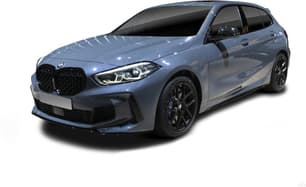
It wasn’t that long ago the notion of a front-wheel drive (FWD) BMW was unheard of, but along came the third-generation 1 Series five-door hatchback in September 2019.
The 'F40' 1 Series' predecessors were based on rear-wheel drive (RWD) platforms, as was every other model in BMW's long history – to that point.
Ironically, though, the F40 1 Series' performance flagship remains the all-wheel drive (AWD) M135i xDrive, but now it has a FWD counterpart, the Volkswagen Golf GTI-baiting 128ti.
Critically, this represents the first time since the late 1990s range of 3 Series Compact three-door hatchbacks that the ti, Turismo Internazionale, badge has been affixed to a BMW.
So, does the 128ti hot hatch live up to the ti lineage of sporty BMW small cars? And perhaps more importantly, does it prove a FWD BMW can be truly desirable? Read on to find out.
An electric SUV is certainly an unconventional choice for a halo model, and is unlikely to be a big seller, but that’s not really the focus for Genesis. Instead, the arrival of the GV60 Magma means something bigger for the brand.
It’s a clear sign of intent from Genesis that it means business with Magma and has a long-term plan for Australia and taking on the likes of BMW M and Mercedes-AMG.
But, as for the car itself, it’s undoubtedly a very nice proposition, with some genuine performance potential and an engaging driving experience - even if it is thanks to technology rather than simple mechanics.
To dismiss it as simple a ‘luxury Hyundai’ would be doing it a disservice, too, as it offers not only a more premium package but overall a different driving experience. It’s less outrageous than either the Ioniq 5 N or 6 N, but still outrageously fast.
Note: CarsGuide attended this event as a guest of the manufacturer, with travel, accommodation and meals provided.
It might not be rear-wheel drive, but the 128ti is a thoroughly enjoyable BMW to steer, proving the 'f' in front-wheel drive can stand for fun. It’s a very good hot hatch.
And given how expensive mainstream hot hatches have become, the 128ti is a bargain, giving would-be Golf GTI, Focus ST and i30 N buyers a thing or two to think about.
After all, the 128ti is a premium hot hatch by virtue of the BMW badges it wears and the higher quality of its parts, but not its price. And for that reason, it cannot be ignored.