What's the difference?
Remember those extra-long Australian luxury sedans like the Ford Fairlane and Holden Statesman/Caprice?
The patriotic choice in an era where that mattered and further protected by tariffs on imports that made them barely any more expensive than a base mid-sized Euro like a BMW 318i, they dominated the top end of the market with their sheer size outside, vast space inside and big-six or V8 grunt.
Like they used to say, there is no substitute for cubic inches.
Well, the spirit of these beloved local social-climbing classics lives on in just one modern car in 2025, the Genesis G80. Over three generations since 2008, it has been Hyundai’s tilt at the premium establishment, in much the same way as the Fairlane and Caprice were, and Toyota’s Lexus luxury brand still is.
We take a dive into the latest petrol-powered range-topper version, the 3.5T All-Wheel Drive (AWD) Sport Luxury (SL), which gives off more than its fair share of vintage HSV Grange vibes.
It’s finally happened: Rolls-Royce has become so divorced from the everyday world of common folk that it's no longer even sharing the previously agreed meanings of words. Rolls has its own meanings, possibly its own language, which must be spoken with a plum on the tongue.
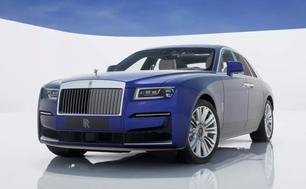
They’ve been heading here for a while. For example, at Rolls, “affordable” means the car we're driving today, the Rolls-Royce Ghost Series II, which is yours for just $680,000 (an indicative price, bumping to $800K for the Black Badge). And “iconic British marque” means, obviously, “BMW bought us in 2003, so there might be some German bits”.
It turns out that “driver-focused” means something different at Rolls-Royce, too. Thanks to a smattering of chassis innovations, Rolls says this updated 2025 Ghost is “the most driver-focused V12 Rolls-Royce ever”. Which is “a side of Ghost’s character that our clients increasingly and enthusiastically embrace”.
Don’t fall for it. The Ghost’s extra focus is not actually very focusy, and its additional dynamism is really only more dynamic in the way that a bed that could corner at all would be more dynamic than a normal bed. None of that matters.
The reason it doesn’t matter is because the Ghost Series II is wonderful. Indeed, it is very nearly perfect. Which is a word that even Rolls won’t quibble over.
Overall, then, the flagship G80 tries to be docile Clark Kent and the amazing Superman in one. As such, it stretches itself trying to be both a luxury GT and high-functioning sports sedan.
But while it doesn’t quite achieve either perfectly the Genesis gets near enough for most – especially at its exceptional price point.
In a disruptive era when the coachbuilder has pivoted to SUVs like the Cullinan, a sort of London black cab that’s been dipped in opulence, and succeeds despite itself, and the brand’s grand, million-dollar EV, the Spectre, the Ghost is a safe and familiar space.
A beautiful, long, broad, immaculate land boat. It’s a space Rolls inhabits with relish.
The Ghost Series II feels nothing like a track-day option when you’re behind the wheel. But it might do if you were stepping out of a Phantom. Or a Cullinan. Or a Wraith. Especially if you’re stepping out of the back doors.
It’s the perfect driver’s car. As long as all your other cars are also Rolls-Royces.
Australia never saw the original 'BH'-series Genesis, which was created primarily with US buyers in mind to be a 5 Series alternative at a 3 Series price, complete with rear-wheel drive and advanced chassis dynamics.
Hyundai spun the series off as a stand-alone brand in the mid-2010s within the second-gen 'DH' Genesis’ run (that did include Australia) from 2015, which is when the G80 badge arrived, while the 'RG3' redesign you see here launched in 2020.
What you’re seeing here, then, is a facelift of a half-decade-old design, and doesn’t it give off Bentley vibes? From that blocky nose with its latticed grille to the sleek profile, the five-metre long by two-metre wide G80 passes for a Continental GT wannabe. Particularly in SL guise. And a convincing one at that.
When it comes to the interior, look around. A 27-inch OLED touchscreen takes in the crisp digital instrumentation and slick multimedia displays.
We like the configurable widgets that come complete with pictures for instant recognition, and the fact that Genesis decided to put an equally-user-friendly climate-control screen below, so eyes never need to leave the road once you quickly learn where all the switchgear is.
Yes, its exterior is more monolithic than before. The previous iteration was hardly fiddly, but the (apparently client driven) evolution here edges ever so gracefully towards what Rolls-Royce might secretly think of as brutalism.
The Ghost Series II’s generous 2148mm width is further emphasised up front, stretched across its upright prow, with slimline headlights adding definition and — surprisingly — a touch of villainy.
New, Spectre-inspired tail lamps and a discreetly inscribed double ‘R’ monogram add a reserved flourish from behind, and buyers can choose from two new 22-inch, nine-spoke wheel designs.
It’s subtle, no doubt. But it’s also impeccable.
Size may not be everything, some say, but it sure says a lot when a medium-sized luxury sedan is long enough to swing it with some large Germans. And in this case, the impressive dimensions are enhanced by a three-metre-plus wheelbase.
Behind the soft-close doors, you’re met with a cabin defined by the luxury of space and isolation from the outside world – just what you’d expect from a full-sized flagship sedan. There’s room to stretch in all five seats.
Plus, in the SL, the seats and chunky steering wheel silently whirr out of the way for easier entry and egress, before sliding back to their previous-memory positions.
The front seats are among the best we’ve experienced in a long time, holding and caressing in all the right places. Switching drive modes increases bolstering and/or support, whilst longer thighs will appreciate the extendable ottoman feature. Hot/cold control and a prodding massage function further enhances the users’ pleasure.
As in all Hyundai products the digital instrumentation and media touchscreen are paragons of simplicity and clarity.
Actual knobs for audio, tuning, fan and temperature controls flank these, along with buttons for 'Home', 'Menu', 'Driving Modes', 'Cameras' and parking sensors.
So thoughtful, so easy. Even vision isn’t too bad, aided of course by the surround-views available. This is quite an unintimidating vehicle to judge when parking despite its length.
Issues? The gear selector is the circular variety Jaguar debuted with the original XF during the late 2000s and is a bit clumsy to use; sited in prime console real estate, the cupholder lid is set-up for left-hand drive, meaning it provides a (minor) obstacle for the driver when open; the test car’s carbon-fibre-look trim won’t be to everybody’s taste and there’s no walk-to/away automatic central locking.
Meanwhile, the rear seat is in the spirit of a true limo.
Wide doors allow for easy entry/egress, revealing impressive levels of space for shoulders, hips, knees and feet (though headroom might be a mite tight for taller dos due to the sunroof). The left-side rear occupant can re-position the seat in front automatically to boost legroom even more.
Airliner premium-economy class-style backrest reclination is included. And you can sink yourself or your loose digits into the tactile and aromatic bliss of the perforated Nappa leather, thick pile carpet, suede trimmed pillars and ceiling and quality textures, further upping the luxury ante.
The large folding armrest facilitates access to heating/ventilation, audio, a sunblind, cupholders, phone chargers, USB-C ports and hidden storage.
The fortunate rear-seat passengers also face air vents and a separate climate control panel from the front-seat riders. So decadent. This was clearly designed for chauffer opulence and it shows. Very difficult to fault.
But further back, it isn’t so bountiful. Literally.
The pleasingly plush boot measures in at a smallish 424 litres, and that’s almost 100L down on a 520i’s. And while it comes with a ski or 'Bunnings port', simple folding backrests would have been more practical, particularly for car reviewers who occasionally need to transport their bicycle.
Oh well, that’s what SUVs are for.
The space-saver spare, in lieu of the hated tyre repair kit, is welcome, though. Thank you.
Inside, yes, there are bonkers touches in this most refined of automotive spaces, such as upholstery pinpricked by 107,000 'Placed Perforations' of 1.2mm in diameter, each individually examined, that replicate the shape of some clouds spotted over Rolls-Royce's Goodwood HQ.
Beside those flourishes of lunatic opulence, the more practical features feel pedestrian, but they’re comprehensive. The wireless Apple CarPlay and Android Auto, the seamless 'Central Information Display' and the 18-speaker 1400-watt audio, the upgraded Wi-Fi hotspot and the unobtrusive USB-C ports. The rear-seats flush with giant, streaming-optimised screens and heated and ventilated massaging seats.
Rolls acknowledges the generational movement of its clientele from back seat to front, with over 90 per cent of buyers now opting to — gasp! — steer themselves in a Ghost. But with back-seat savoir faire in its DNA, Rolls simply extends its hospitality to every seat.
That HSV Grange analogy is pretty close to what the G80 3.5T AWD SL from $121,200 (all prices are before on-road costs) represents, and not just in dimensions and performance.
Adjusted for inflation, a 2015 Grange from $86,990 would equate to about $115,300 today, which nestles in neatly between the ‘base’ G80 2.5T rear-driver from $104,200 and 3.5T AWD SL.
And, like the big Holdens and Fords of yesteryear, the Genesis annihilates the German luxury sedan triumvirate for value for money as well as bang for your buck, when you consider what the competition is at its price point: Audi A6 45 TFSI quattro S Line from $122,415, BMW 520i from $114,900 and Mercedes-Benz E200 from $117,900.
Nowadays, even the entry-level Euro grades are pretty well specified, but all have 2.0-litre, four-cylinder, turbo-petrol engines of between 150kW and 180kW outputs and two-wheel drive, against the Genesis’ 279kW 3.5-litre V6 twin-turbo and AWD.
And then there’s the SL equipment levels, that includes everything you’d expect from a machine that is built like a Lexus, behaves like a BMW and wants to be as bourgeois as an S-Class Benz, with powered, electric and wireless everything.
It’s easier to list what’s missing: namely, walk-away door locking.
Still, listing some of the standout features is editorially required, so the SL’s lucky occupants can indulge in a heated front console armrest complete with UV-C sanitisation, a real-time concierge service with a five-year subscription included, a fingerprint recognition system for extra security (freeing society from a key!), a powered rear-window shade and the quietness that active noise-cancellation brings. And all are new with the MY25 facelift.
More opulence comes in the form of Nappa quilted leather upholstery, surround-view monitors, 18-way powered/heated/vented/memory front seats with massaging and ottoman extenders, powered reclining/vented/heated rear outboard seats with (manual) sun-blinds, tri-zone climate functionality with rear-seat controls, front and rear wireless smartphone chargers, 18-speaker Bang & Olufsen audio (with epic sound), soft-close doors, suede headlining, a panoramic sunroof with powered blind, solar-controlled glass, a powered boot lid with valet mode and remote-control parking.
We are pretty sure you won’t find this combination of gear in your entry-level German sedans at the 3.5T’s price point.
Genesis has also crammed in as much active and passive safety as possible. More on that in detail later on.
Note that there is also an all-electric G80 Signature Electrified AWD version from $155,000, making it the series’ true flagship.
Successive federal governments in Australia with their Luxury Car Tax have made this sort of vehicle a questionable value proposition as it balloons their prices, but within the context of what else is available, the G80 makes for a brave and bold alternative to formidable yet predictable alternatives.
The Ghost Series II is yours for an indicative price of just $680,000 (or $800K for the Black Badge) plus substantial on-road costs. The Ghost Series II extended (which we didn’t drive at the international launch in Provence) will slip in at around $20K less than the Black Badge before additional charges.
If they seem like big numbers, you’re probably the sort of person who looks at price tags, or who shops in shops that put price tags on things. These are not common traits of Rolls-Royce buyers, who may only be vaguely aware of the actual price of their vehicle, and whose historical impression of guillotines is generally unfavourable.
So, high six-hundreds is table stakes.
But you might also think the ‘standard’ Ghost, like all Rolls-Royces, is considered by most buyers to be a mere starting point, from which they’ll typically up-spec their ride from a sumptuous and expensive options list.
Spending another 10 percent of the purchase price on customisation is a bare-bones outlay for most owners, but even so, the evolved Ghost’s out-of-the-box features are so comprehensive as to be almost overwhelming.
First, because the Ghost has been Rolls-Royce’s driver’s car since the first (modern) generation arrived in 2010, specifically to cater to a weird (for Rolls clientele) new generation of buyers who wanted to drive their Rolls themselves.
So that price gets you, above all, that proven but superb 6.75-litre twin-turbo V12 engine, massaged via an eight-speed transmission and an AWD system that’s as rich and viscous as Crassus’s last libation.
There’s its subtly tinkered 'flight on land' 'Planar Suspension System' (note the unspoken dissonance between the terms ‘flight on land’ and ‘driver-focused'), with an ingenious 'Satellite Aided Transmission' system that uses GPS to pick the ideal gear with which to launch out of turns.
It works hand-in-velvet-glove with Goodwood's 'Flagbearer' camera system, which tracks the road ahead to chide potholes into submission in advance.
Because it’s a Rolls, though, that’s barely even the start of the story.
The coachwork is extraordinary, with new trim options including natural open-pore 'Grey Stained Ash' design elements, a sumptuous new bamboo rayon textile called 'Duality Twill'.
There a night-sky inspired illuminated fascia that apes elements of time-lapse celestial photography, part of the central glass panel that stretches the length of the dash.
Sure, you might expect that level of detail for the outlay. But for the outlay it’s far from missing anything you’d expect.
As the alphanumerics suggest, the G80 3.5T AWD is powered by a 3.5-litre twin-turbo V6 petrol engine, producing a hefty 279kW of power at 5800rpm and 530Nm of torque between 1300-4500rpm.
Tipping the scales at 2095kg (kerb), the SL’s power-to-weight ratio is 133kW/tonne.
Drive is sent to all four wheels via an eight-speed torque-converter automatic transmission. 'Normal', 'Sport' and 'Eco' modes are fitted.
Rolls doesn’t like acceleration figures — too gauche, darling — but armed with that proven 420kW and 850Nm V12, the Ghost Series II has serious heft. Delivering max torque from 1600rpm — just 600rpm above idle — the effect is genuinely of one endless surge, a wafting cloud of momentum that subtly slips between gears as it exudes itself across the countryside.
The Black Badge edition, like all of its, er, ‘disruptive’ ilk offers a ‘Low’ button (‘Low’ means ‘Sport’ in Rollspeak), which bumps gearshift speeds by 50 percent when you plant your foot, and delivers a distinctly non-Rolls-like pop and burble on overrun. It also provides an extra 21kW and 50Nm, because Black Badge is mean and tough.
Here is where the G80 has all four wheels rooted more in the past than in the future.
With no electrification of any variety (hybrid, in other words), high fuel consumption is always going to be the real price paid by going for a Euro-5 spec twin-turbo V6 weighing some 2100kg.
The official combined average figure is 11 litres per 100km, for a corresponding carbon-dioxide emissions rating of 250 grams/km. On the highway that drops to 7.9L/100km and soars to 16.3L/100km in the city cycle.
With a 73L fuel tank, that combined average number means a driver can expect around 660km of range between refills of 95 RON premium petrol, though Genesis says this G80 will also run on E10 ethanol blend.
Now, our trip computer said that we averaged less than the official figure, at just 9.7L/100km, but our pump-to-pump testing ended up being 11.4L/100km. Which isn’t that bad.
Provence is not entirely a driver’s paradise, with every stretch of slightly twisty tarmac only a counterpoint to a motorway lined with Marseille lorries, Depardieu-esque men in tractors who refuse to move to the verge, and small villages where each kerbside corners sit millimetres from the foot of an adjacent boulangerie.
Which is to say it’s neither a place for economy runs, nor a location at which to run up the consumption numbers with a madcap series of impromptu hill climbs.
Our Ghost II drive returned around 16L/100km, which feels about right with that gorilla-in-a-tuxedo 6.75L V12, and is only slightly above the official figures of 15.8L/100km. Not great, could be worse.
The Genesis G80 3.5T AWD SL drives in a similar way to the big brutish American-inspired Caprice and HSV Grange V8s, in that it delivers effortless, lazy performance with a sophisticated twist.
No slouch off the line even in Eco mode, the twin-turbo V6 leaps into action if you’re heavy on the throttle in Comfort mode, hunkering down as the speed piles on quickly.
With 'Launch Control', the claimed 0-100km/h sprint time is 4.9 seconds, though in regular mode it is rated at 5.1s on the way to a top speed of 250km/h.
And while the enhanced exhaust orchestrates a nice warble from behind, it remains a strong, smooth and silent performer.
The AWD system is RWD-biased and is continuously variable according to prevailing conditions, performance and grip.
The SL also features an electronic limited-slip differential for better traction and grip, as well as rear-wheel steering that either counter-steers the rear wheels in relation to the front ones for a tighter turning circle (11.8m) or parallel steers them for “enhanced steering responsiveness and stability at high speed.”
Selecting 'Sport' or 'Sport+' is met with distinctly more-urgent responses, with the transmission holding on to ratios as the revs approach the red line, which can be annoying around town.
It’s quite surprising – and probably a good thing – that the beautifully balanced and connected steering can be light and easy when you’re relaxed, and yet hefty to the point of feeling heavy when you’re really on it. Likewise, the brakes in 'Comfort' are pleasantly progressive. In 'Brake Sport' they’re fiercely responsive.
Note that, in Sport+ with the safeties off, the SL's tail can become very playful indeed, even in bone-dry conditions.
Suspension is via multi-links at both ends of the car, whilst the SL grade includes what Genesis calls “Road Preview Electronic Control Suspension (ECS)”, that scans the road ahead and then adjusts the adaptive dampers for better ride comfort.
That all said, the Genesis’ sheer size and weight keep it from feeling like an out-and-out sports sedan. The speed and AWD grip is there - tyres are Michelin Pilot Sport 4S (245/40 fr - 275/35 rr) - and the handling results in some pretty astounding agility for one so large, but the steering connection, balance and alacrity are more about confidence and competence than light-footed athleticism.
This is no cut-price BMW M5. But HSV Grange owners might recognise something in its muscular good manners.
And what of the SL’s four-wheel steering? It provides a degree of tuck-in at speed which can catch out the unaware driver, though of course, it is also a boon for round-town manoeuvrability. The tight turning circle that ensues is incredible for one so long.
Ultimately, though, it is a large and heavy sedan that never quite stops feeling that way. It won’t shrink around you despite being an easy and rewarding car to drive.
Out in the wet, the AWD contributes to the G80’s squatted-down attitude, feeling impervious to prevailing external conditions.
But it’s also not quite the sumptuous luxury liner that, say, a Mercedes S450 is.
Very civilised on smooth roads, with a decent level of absorption from the multi-link suspension, the G80 struggles a little with smaller-frequency bumps at times, but then does a great job smothering the larger ones. It is certainly within the luxury sedan expectations for refinement, isolation and ride comfort, but just not the best.
If you stick with freeways and highways, this thing will bring years of civilised pleasure and punchy performance. It is a rapid yet relaxed grand touring family cruiser.
The Ghost Series II drives like a magic carpet, serene and untroubled; in almost any stable other than that of Rolls, calling it a ‘driver’s car’ would have you throttled by their skunkworks. Everything is relative.
Still, it hides its considerable dimensions well. There’s never any doubt that you’re in a large saloon, as you white-knuckle the Ghost’s impeccably appointed steering wheel, but there’s always enough power to deliver creamily instant throttle response, even in the case of initially misjudged cambers.
Nor can the Black Badge hide the shimmy of that characteristic ‘flight on land’ body drift. The upside is that its manners are impeccable, even through the worst possible pieces of corrugation Provence can deliver.
If anything, the Ghost Series II’s big-hearted bulk adds to the fun factor, especially in some of Rolls-Royce’s more garish colour options, when gasping South of France MAMILs stare in amazement as a bright yellow, five-and-a-half metre Rolls passes them on the outside, scattering their various baguettes and garlands of onions.
The Genesis G80 scored a maximum five-star ANCAP assessment all the way back in December 2020, though this figure does not cover the 3.5T model as tested by us.
Along with 10 airbags (including front-centre and driver’s knee protection), it is fitted with a wide variety of advanced driver assist systems (ADAS).
These include 'Autonomous Emergency Braking' (AEB) with forward-collision avoidance (taking in car/pedestrian/cyclist as well as junction turning/crossing detection), lane-keep assist, lane-change and evasive steering assist, rear cross-traffic alert, blind-spot warning/collision avoidance, traffic-sign recognition, adaptive cruise control, parking collision avoidance, safe-exit alert, surround-view monitors, driver-attention warning, traffic-sign recognition and auto high beams.
There are also two ISOFIX child-seat fixtures and a trio of child-seat anchorage points in the back seat.
You get airbags, ESC, adaptive cruise, parking sensors and auto parking, and a rear camera. But don’t expect Rolls-Royce to allow the blighters at ANCAP to wreck one.
The Genesis G80 comes with a five-year/unlimited kilometre warranty, five years of what it calls 'premium' roadside assistance (increased to 10 years if serviced at a Genesis dealer) and five years/75,000km of free servicing. Service intervals are every 12 months or 15,000km.
While these are about on-par with most brands, it is behind better mainstream warranty and aftersales services, which are seven, and in a few cases, 10 years in length.