What's the difference?
Remember those extra-long Australian luxury sedans like the Ford Fairlane and Holden Statesman/Caprice?
The patriotic choice in an era where that mattered and further protected by tariffs on imports that made them barely any more expensive than a base mid-sized Euro like a BMW 318i, they dominated the top end of the market with their sheer size outside, vast space inside and big-six or V8 grunt.
Like they used to say, there is no substitute for cubic inches.
Well, the spirit of these beloved local social-climbing classics lives on in just one modern car in 2025, the Genesis G80. Over three generations since 2008, it has been Hyundai’s tilt at the premium establishment, in much the same way as the Fairlane and Caprice were, and Toyota’s Lexus luxury brand still is.
We take a dive into the latest petrol-powered range-topper version, the 3.5T All-Wheel Drive (AWD) Sport Luxury (SL), which gives off more than its fair share of vintage HSV Grange vibes.
Ask any opinionated car enthusiast why it is that they hate electric cars, and you’re going to hear the same word revving them up - “noise”.
Sure, EVs might be fast, and even the most old-world-loving petrol head (are we going to have to come up with a new term, soon? Power crazed? Amp-head? Copper top?) will grant you that they can be fun to drive, but the argument is that you just can’t love a car as much if it doesn’t make shouty sounds.
But there is one bunch of well-heeled car lovers who will demur on this topic, and for whom the idea of switching a big, stupidly powerful V12 engine for whispering electric motors seems to be no issue at all - Rolls-Royce fans.
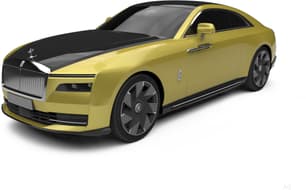
They have, allegedly, been knocking down the doors at Goodwood, demanding that Rolls build them an EV, and finally it has arrived, in the stunning shape of the Spectre, and the orders are pouring in.
We flew to the Napa Valley in California to try it out.
Overall, then, the flagship G80 tries to be docile Clark Kent and the amazing Superman in one. As such, it stretches itself trying to be both a luxury GT and high-functioning sports sedan.
But while it doesn’t quite achieve either perfectly the Genesis gets near enough for most – especially at its exceptional price point.
Personally, I was very much taken with the looks, and the feels, of the new Rolls-Royce Spectre, which delivers everything you’d expect from this brand, and seems to have lost nothing by switching to electric propulsion. The trick, it seems, in turning your brand into an EV one is to have made your cars silent in the first place.
But the real verdict comes from the people hurling their Spectre orders at the company, which has received so many of them it’s being forced to ramp up production. And 40 per cent of pre-orders are from new customers. Honestly, it’s as if they were all just waiting for an EV to drop a million on.
Australia never saw the original 'BH'-series Genesis, which was created primarily with US buyers in mind to be a 5 Series alternative at a 3 Series price, complete with rear-wheel drive and advanced chassis dynamics.
Hyundai spun the series off as a stand-alone brand in the mid-2010s within the second-gen 'DH' Genesis’ run (that did include Australia) from 2015, which is when the G80 badge arrived, while the 'RG3' redesign you see here launched in 2020.
What you’re seeing here, then, is a facelift of a half-decade-old design, and doesn’t it give off Bentley vibes? From that blocky nose with its latticed grille to the sleek profile, the five-metre long by two-metre wide G80 passes for a Continental GT wannabe. Particularly in SL guise. And a convincing one at that.
When it comes to the interior, look around. A 27-inch OLED touchscreen takes in the crisp digital instrumentation and slick multimedia displays.
We like the configurable widgets that come complete with pictures for instant recognition, and the fact that Genesis decided to put an equally-user-friendly climate-control screen below, so eyes never need to leave the road once you quickly learn where all the switchgear is.
Making a vehicle as enormous as the Spectre look good is no mean feat, but Rolls has done a hell of a job, from most angles. The massive Pantheon Grille is something to behold in the metal, and because it doesn’t need to let air into an engine bay, it’s been designed for airflow, as has so much else. Rolls achieved a drag coefficient of 0.25, which is good for extending EV range, and they even spent more than 800 hours in a wind tunnel working on making the Spirt of Ecstasy hood ornament as aerodynamic as possible (she’s had her wings clipped, apparently).
The modern take on the classic grille combined with a chesty bonnet and very cool DRLs give the Spectre a look of classic modernity from the front, while the proportions over all give it a great side profile.
Apparently the design brief was based on some majestic cliffs, the Seven Sisters of Sussex, and the car definitely has that level of grandiosity.
The only weak point is the rear, which had to be sheer for aero reasons - and features the narrowest legally possible rear lights, which are supposed to look like “islands in a lake”, apparently. To me, driving behind one, the rear view is just a little dull.
The luscious interior is meant to be an example of “Automotive Haute Couture”, meaning hand made and stupidly expensive, and Rolls also humbly refers to it as a “cosseting art lounge”. It all sounds a bit over the top until you sit in it, and discover that it really does feel beyond special.
Size may not be everything, some say, but it sure says a lot when a medium-sized luxury sedan is long enough to swing it with some large Germans. And in this case, the impressive dimensions are enhanced by a three-metre-plus wheelbase.
Behind the soft-close doors, you’re met with a cabin defined by the luxury of space and isolation from the outside world – just what you’d expect from a full-sized flagship sedan. There’s room to stretch in all five seats.
Plus, in the SL, the seats and chunky steering wheel silently whirr out of the way for easier entry and egress, before sliding back to their previous-memory positions.
The front seats are among the best we’ve experienced in a long time, holding and caressing in all the right places. Switching drive modes increases bolstering and/or support, whilst longer thighs will appreciate the extendable ottoman feature. Hot/cold control and a prodding massage function further enhances the users’ pleasure.
As in all Hyundai products the digital instrumentation and media touchscreen are paragons of simplicity and clarity.
Actual knobs for audio, tuning, fan and temperature controls flank these, along with buttons for 'Home', 'Menu', 'Driving Modes', 'Cameras' and parking sensors.
So thoughtful, so easy. Even vision isn’t too bad, aided of course by the surround-views available. This is quite an unintimidating vehicle to judge when parking despite its length.
Issues? The gear selector is the circular variety Jaguar debuted with the original XF during the late 2000s and is a bit clumsy to use; sited in prime console real estate, the cupholder lid is set-up for left-hand drive, meaning it provides a (minor) obstacle for the driver when open; the test car’s carbon-fibre-look trim won’t be to everybody’s taste and there’s no walk-to/away automatic central locking.
Meanwhile, the rear seat is in the spirit of a true limo.
Wide doors allow for easy entry/egress, revealing impressive levels of space for shoulders, hips, knees and feet (though headroom might be a mite tight for taller dos due to the sunroof). The left-side rear occupant can re-position the seat in front automatically to boost legroom even more.
Airliner premium-economy class-style backrest reclination is included. And you can sink yourself or your loose digits into the tactile and aromatic bliss of the perforated Nappa leather, thick pile carpet, suede trimmed pillars and ceiling and quality textures, further upping the luxury ante.
The large folding armrest facilitates access to heating/ventilation, audio, a sunblind, cupholders, phone chargers, USB-C ports and hidden storage.
The fortunate rear-seat passengers also face air vents and a separate climate control panel from the front-seat riders. So decadent. This was clearly designed for chauffer opulence and it shows. Very difficult to fault.
But further back, it isn’t so bountiful. Literally.
The pleasingly plush boot measures in at a smallish 424 litres, and that’s almost 100L down on a 520i’s. And while it comes with a ski or 'Bunnings port', simple folding backrests would have been more practical, particularly for car reviewers who occasionally need to transport their bicycle.
Oh well, that’s what SUVs are for.
The space-saver spare, in lieu of the hated tyre repair kit, is welcome, though. Thank you.
If you’re looking for the modern EV style interior, you can forget it, because Rolls says it didn’t want “any of that funky stuff” in the Spectre, so no giant screens in here. Indeed, I switched into a Rolls-Royce Ghost at one stage to be driven somewhere and the interior was almost exactly the same, although the new car gets a more modern fully digital dash.
There’s plenty of room for water bottles and oddment storage and the sense of space for the driver and front passenger is suitably grand, but the rear seats are really for spoilt teenagers rather than Rolls owners. They’re not uncomfortable, at all, but they just feel a bit squeezed, you wouldn’t ask to be chauffeured in a Spectre, clearly it’s a Rolls you’d choose to drive yourself.
The boot is wide, deep and long with a volume of 380 litres.
That HSV Grange analogy is pretty close to what the G80 3.5T AWD SL from $121,200 (all prices are before on-road costs) represents, and not just in dimensions and performance.
Adjusted for inflation, a 2015 Grange from $86,990 would equate to about $115,300 today, which nestles in neatly between the ‘base’ G80 2.5T rear-driver from $104,200 and 3.5T AWD SL.
And, like the big Holdens and Fords of yesteryear, the Genesis annihilates the German luxury sedan triumvirate for value for money as well as bang for your buck, when you consider what the competition is at its price point: Audi A6 45 TFSI quattro S Line from $122,415, BMW 520i from $114,900 and Mercedes-Benz E200 from $117,900.
Nowadays, even the entry-level Euro grades are pretty well specified, but all have 2.0-litre, four-cylinder, turbo-petrol engines of between 150kW and 180kW outputs and two-wheel drive, against the Genesis’ 279kW 3.5-litre V6 twin-turbo and AWD.
And then there’s the SL equipment levels, that includes everything you’d expect from a machine that is built like a Lexus, behaves like a BMW and wants to be as bourgeois as an S-Class Benz, with powered, electric and wireless everything.
It’s easier to list what’s missing: namely, walk-away door locking.
Still, listing some of the standout features is editorially required, so the SL’s lucky occupants can indulge in a heated front console armrest complete with UV-C sanitisation, a real-time concierge service with a five-year subscription included, a fingerprint recognition system for extra security (freeing society from a key!), a powered rear-window shade and the quietness that active noise-cancellation brings. And all are new with the MY25 facelift.
More opulence comes in the form of Nappa quilted leather upholstery, surround-view monitors, 18-way powered/heated/vented/memory front seats with massaging and ottoman extenders, powered reclining/vented/heated rear outboard seats with (manual) sun-blinds, tri-zone climate functionality with rear-seat controls, front and rear wireless smartphone chargers, 18-speaker Bang & Olufsen audio (with epic sound), soft-close doors, suede headlining, a panoramic sunroof with powered blind, solar-controlled glass, a powered boot lid with valet mode and remote-control parking.
We are pretty sure you won’t find this combination of gear in your entry-level German sedans at the 3.5T’s price point.
Genesis has also crammed in as much active and passive safety as possible. More on that in detail later on.
Note that there is also an all-electric G80 Signature Electrified AWD version from $155,000, making it the series’ true flagship.
Successive federal governments in Australia with their Luxury Car Tax have made this sort of vehicle a questionable value proposition as it balloons their prices, but within the context of what else is available, the G80 makes for a brave and bold alternative to formidable yet predictable alternatives.
Australian pricing for the Rolls-Royce Spectre starts from $770,000 before on-road costs, and on the point of whether that represents value, well not to me, but certainly the huge number of orders Rolls claims to have been hit by suggests otherwise.
You do get a lot of car for your money, because the Spectre is vast and weighs almost three tonnes, and there’s no doubt that the interior is nicer than most people’s houses, or even the nicest hotel you’ve ever seen, and that the top-notch umbrellas hidden in each door are a nice touch.
One of the nifty and unexpected features the Spectre offers is a “Rolls-Royce Sound”, which you can toggle on and off. With the fake noise off, the car is freakishly quiet - apparently during testing they achieved a level of EV silence so incredible that people found it “disturbing” and had to engineer some sound back in - but with it on you get just the most subtle of guttural sounds. Every other company so far has gotten fake noise wrong, but Rolls has nailed it with the Spectre; it’s just loud enough, but suitably restrained as well.
You also get the wondrous Starlight Headliner, which uses optic fibre cables to paint the night sky on the roof, complete with shooting stars, and in the Spectre you can now have the stars fitted to the inside of its massive coach doors as well.
As the alphanumerics suggest, the G80 3.5T AWD is powered by a 3.5-litre twin-turbo V6 petrol engine, producing a hefty 279kW of power at 5800rpm and 530Nm of torque between 1300-4500rpm.
Tipping the scales at 2095kg (kerb), the SL’s power-to-weight ratio is 133kW/tonne.
Drive is sent to all four wheels via an eight-speed torque-converter automatic transmission. 'Normal', 'Sport' and 'Eco' modes are fitted.
For the first time ever, this Rolls-Royce has no magnificent engine, no throbbing 12 cylinders, no, it has two separately excited synchronous motors, one on each axle for seamless all-wheel drive. The front motor makes 190kW and 365Nm while they’ve sensibly sent more grunt to the rear, which gets 360kW and 710Nm. Either motor on its own would be enough to power a normal car. The total figures are 430kW and 900Nm, which is supercar like.
The battery is made up 804 cells, weighs 700kg and has a net capacity of 102kWh, and the designers used it as a sound-deadening agent for road noise, because it’s so massive.
The Spectre can hit 100km/h in 4.5 seconds, which feels very fast indeed when you’re piloting something that weighs 2890kg and is 5.5m long.
Here is where the G80 has all four wheels rooted more in the past than in the future.
With no electrification of any variety (hybrid, in other words), high fuel consumption is always going to be the real price paid by going for a Euro-5 spec twin-turbo V6 weighing some 2100kg.
The official combined average figure is 11 litres per 100km, for a corresponding carbon-dioxide emissions rating of 250 grams/km. On the highway that drops to 7.9L/100km and soars to 16.3L/100km in the city cycle.
With a 73L fuel tank, that combined average number means a driver can expect around 660km of range between refills of 95 RON premium petrol, though Genesis says this G80 will also run on E10 ethanol blend.
Now, our trip computer said that we averaged less than the official figure, at just 9.7L/100km, but our pump-to-pump testing ended up being 11.4L/100km. Which isn’t that bad.
The Spectre is rated at 520km on the WLTP scale, but Rolls claims it can do a lot better (like 600km). Efficiency is claimed to be 21.5kWh per 100km.
We drove 210km and had 300km of indicated range left at the end, which is pretty close to the claim.
The Spectre can be charged at up to 200kW on a DC fast charger, on which it will take 35 minutes to go from 10 to 80 per cent charge.
On an 11kWh home system it will take 10 hours and 45 minutes to go from zero to 90 per cent charge.
The Genesis G80 3.5T AWD SL drives in a similar way to the big brutish American-inspired Caprice and HSV Grange V8s, in that it delivers effortless, lazy performance with a sophisticated twist.
No slouch off the line even in Eco mode, the twin-turbo V6 leaps into action if you’re heavy on the throttle in Comfort mode, hunkering down as the speed piles on quickly.
With 'Launch Control', the claimed 0-100km/h sprint time is 4.9 seconds, though in regular mode it is rated at 5.1s on the way to a top speed of 250km/h.
And while the enhanced exhaust orchestrates a nice warble from behind, it remains a strong, smooth and silent performer.
The AWD system is RWD-biased and is continuously variable according to prevailing conditions, performance and grip.
The SL also features an electronic limited-slip differential for better traction and grip, as well as rear-wheel steering that either counter-steers the rear wheels in relation to the front ones for a tighter turning circle (11.8m) or parallel steers them for “enhanced steering responsiveness and stability at high speed.”
Selecting 'Sport' or 'Sport+' is met with distinctly more-urgent responses, with the transmission holding on to ratios as the revs approach the red line, which can be annoying around town.
It’s quite surprising – and probably a good thing – that the beautifully balanced and connected steering can be light and easy when you’re relaxed, and yet hefty to the point of feeling heavy when you’re really on it. Likewise, the brakes in 'Comfort' are pleasantly progressive. In 'Brake Sport' they’re fiercely responsive.
Note that, in Sport+ with the safeties off, the SL's tail can become very playful indeed, even in bone-dry conditions.
Suspension is via multi-links at both ends of the car, whilst the SL grade includes what Genesis calls “Road Preview Electronic Control Suspension (ECS)”, that scans the road ahead and then adjusts the adaptive dampers for better ride comfort.
That all said, the Genesis’ sheer size and weight keep it from feeling like an out-and-out sports sedan. The speed and AWD grip is there - tyres are Michelin Pilot Sport 4S (245/40 fr - 275/35 rr) - and the handling results in some pretty astounding agility for one so large, but the steering connection, balance and alacrity are more about confidence and competence than light-footed athleticism.
This is no cut-price BMW M5. But HSV Grange owners might recognise something in its muscular good manners.
And what of the SL’s four-wheel steering? It provides a degree of tuck-in at speed which can catch out the unaware driver, though of course, it is also a boon for round-town manoeuvrability. The tight turning circle that ensues is incredible for one so long.
Ultimately, though, it is a large and heavy sedan that never quite stops feeling that way. It won’t shrink around you despite being an easy and rewarding car to drive.
Out in the wet, the AWD contributes to the G80’s squatted-down attitude, feeling impervious to prevailing external conditions.
But it’s also not quite the sumptuous luxury liner that, say, a Mercedes S450 is.
Very civilised on smooth roads, with a decent level of absorption from the multi-link suspension, the G80 struggles a little with smaller-frequency bumps at times, but then does a great job smothering the larger ones. It is certainly within the luxury sedan expectations for refinement, isolation and ride comfort, but just not the best.
If you stick with freeways and highways, this thing will bring years of civilised pleasure and punchy performance. It is a rapid yet relaxed grand touring family cruiser.
The short answer to this question is that the Spectre drives just like a Rolls-Royce, but that answer is deceptively simple, because, for an electric vehicle, that’s actually a hell of an achievement.
Most EVs do not feel like cars to drive - the electric Hyundai Kona is not much like a petrol one at all - but what Rolls set out to do with its first EV was to make a vehicle that feels, handles and accelerates just like one of its famous and fabulously over-powered combustion-engined Ghosts, Phantoms or Wraiths.
This meant it had to be “Silent”, which it nails with ease - and the important thing to remember here is that even its V12 cars were always incredibly quiet, unless you really misbehaved. And it had to be “Effortless”, another brand pillar. Again, nailed it, because a Roller has never bothered with things like shift paddles, Sports modes or even the option to do anything but stick it in D for Drive and go.
The sensation Rolls owners demand is endless, otiose acceleration, particularly off the line, and the Spectre delivers this in a typical EV fashion, but also one that’s very familiar to anyone who’s driven a Ghost, for example. It’s just a sense of overwhelming, prole-crushing progress, and it’s magnificent.
The third and final brand pillar is “Waftability” and despite all the weight that it’s carrying (imagine how far over three tonnes this thing would have gone if they didn’t build their cars out of aluminium), the Spectre rides with a kind of hovercraft air of being just above, or barely in touch with, the ground. Bumps are no longer your concern, sir.
As mentioned, Rolls could have chosen a limousine-style vehicle as its first EV, but it has made a driver’s car instead - no CEO will sit in the back of a coupe like the Spectre. So it had to deliver when it comes to being fun, or at least a little frisky at times, when driven.
Again, quite incredibly, despite its mass and weight, it does reward enthusiastic driving and can carve up even relatively narrow winding roads with aplomb, displaying very little body roll or pitching. The steering is almost absurdly light - because it must be “effortless” - but there’s still enough feedback to keep you interested.
Most of the time, of course, the essentially laid back aura of being in a Rolls-Royce will seep into your body and brain and you will simply cruise along, patting yourself on the back for being so rich and clever.
And now, with an EV option finally available, you can tell yourself you’re saving the planet as well (as long as you don’t think about the 28 other cars in your garage).
The Genesis G80 scored a maximum five-star ANCAP assessment all the way back in December 2020, though this figure does not cover the 3.5T model as tested by us.
Along with 10 airbags (including front-centre and driver’s knee protection), it is fitted with a wide variety of advanced driver assist systems (ADAS).
These include 'Autonomous Emergency Braking' (AEB) with forward-collision avoidance (taking in car/pedestrian/cyclist as well as junction turning/crossing detection), lane-keep assist, lane-change and evasive steering assist, rear cross-traffic alert, blind-spot warning/collision avoidance, traffic-sign recognition, adaptive cruise control, parking collision avoidance, safe-exit alert, surround-view monitors, driver-attention warning, traffic-sign recognition and auto high beams.
There are also two ISOFIX child-seat fixtures and a trio of child-seat anchorage points in the back seat.
The Spectre has not been crash tested for ANCAP. Its safety offerings include adaptive cruise control, lane-change assist, lane departure with active steer, a reversing assistant - "to support with parking and long reverses, eg country lanes or driveways, Spectre will reverse the previous 200m driven" - and collision warning with active braking.
Rolls tell us the Spectre has "Four airbags (does not need more)". So that's good news.
The Genesis G80 comes with a five-year/unlimited kilometre warranty, five years of what it calls 'premium' roadside assistance (increased to 10 years if serviced at a Genesis dealer) and five years/75,000km of free servicing. Service intervals are every 12 months or 15,000km.
While these are about on-par with most brands, it is behind better mainstream warranty and aftersales services, which are seven, and in a few cases, 10 years in length.
Now, I would assume you'd get a lifetime warranty at Rolls prices, but apparently you get only four years, but it is unlimited mileage.
The Spectre's battery is covered by a 10-year warranty.
An extended service and warranty package is "TBC".
Rolls also offers 24/7 roadside assistance, and if your battery goes flat the company will take your Spectre to the nearest charging station.
A "regional flying doctor" is on standby 24/7 in extreme cases if Spectre “fails to proceed”.