What's the difference?
S FAR as makeovers go, Hollywood has nothing on the transformation of Ford's small SUV.
Based on the Fiesta supermini only sold here in sizzling ST form, but using a stretched and widened version of its platform with heavily reworked underpinnings, the strikingly styled Puma is as charming – beguiling even – as its EcoSport predecessor was awkward. And we're talking about capabilities that are more than merely skin deep here.
We're not alone in our admiration – one respected UK publication awarded the Ford a 'car of the year' gong – and after nearly a month with our range-topping ST-Line V (for Vignale), we can understand why.
But the German-engineered, Romanian-made Puma is also a complicated proposition in Australia that requires some context, because it is certainly not for everyone.
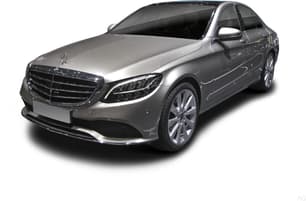
Do you know how many bones you have in your body? Stop counting, there are 207. And if say half those bones were replaced with different ones would you consider yourself to still be the same? Well that’s what Benz has done with the new C-Class – sort of. Of the roughly 13,000 parts which make up a C-Class car, 6500 of them have been modified or changed.
You don’t need to know every change to the new C-Class, but at the end of this review you will be across the differences that you can see, feel and hear.
Just a note before we start. The top-of-the-range Mercedes-AMG C63 S arrives in early 2019 and wasn’t available to drive at the Australian C-Class launch. That’s why we’ll focus on the other grades here - the C 200, C 220 d, C 300 and C 43. We’ll test drive and review the Australian C 63 S when it arrives – promise.
If a minimum price and maximum interior space are your priorities, then the Puma is not for you. Especially so in the flagship ST-Line V, which may seem too small and a tad cramped compared to, say, a Seltos, C-HR or ASX.
Where the Ford excels, typically, is in the way it encourages the keen driver while cosseting four occupants (and a surprising amount of their cargo). There's a poise and maturity to the way the Puma moves that puts it on a par with or even beyond some premium compact SUVs. Even the styling is a statement. If the badges (and dashboard) were covered, you might be convinced this cat is actually a Jag.
If all that is more important, then the ST-Line V is for you. The very antithesis, then, of the unassuming and unloved EcoSport the Puma usurps.
This may well be just an update to the C-Class, but the changes made are significant in terms of technology and performance, and you’re paying hardly any extra money for it. A good all-rounder for dynamics, features, refinement and value.
The sweet spot in the range has to be the C 300. It’s less than $10K more than the entry grade C200, but gets a powerful 2.0-litre engine, leather seats, the extra advanced safety equipment, tinted windows and convenience features such as a power tailgate (on the wagon) and proximity unlocking.
If you search for the 1998 Puma coupe, you'll see some vague similarities with its modern SUV namesake, especially in their anthropomorphic face. It's in the eyes. There are also hints of Aston Martin (DBX), Porsche (Macan) and – let's face it – Mazda (CX-3).
Yet the real achievement lies in the way Ford has managed to make a 4.2-metre-long by 1.8m wide by 1.6m high crossover look so svelte, with the resulting balanced proportions, flowing lines and taut surfacing giving the Puma quite an athletic visual presence. After the EcoSport failure, head-turning looks were deemed paramount.
The extra girth gained by widening the Fiesta's platform allowed Ford's designers to create a muscular body that could also accommodate a metre-wide tailgate opening, while beneath the cargo floor is an exceptionally deep storage box, bringing better-than-expected practicality to boot.
Now, to spot the difference between the new and the old C-Class from the outside just look at the headlights – the shape of the fitting is the same, but the new standard headlights on the C 200, C 220 d and C 300 have an LED set-up which looks like teeth, while the optional units (standard on the C 43 and C 63 S) are also LED but with a tall staggered design. Tail-lights also keep the same shape but with a different LED pattern, too.
The front and rear bumpers have also been restyled for all grades and the C 43 and C 63 S have had their grilles updated, with the former getting a new twin-louvre design, while its big brother now has chrome vertical slats reminiscent of the grille worn by the 1952 Carrera Panamericana winning 300SL.
The AMG Line Exterior package is standard on the Coupe and Cabriolet, but if you option it on the sedan it will fit a sports body kit with AMG front spoiler and side skirts.
The C 43’s gloss black rear diffuser looks tough with the new quad exhaust and the car in wagon form wins my award for best looking of the C-Class bunch.
Cabins haven’t been overhauled but they have been updated with a 10.25-inch dash-top display for media and a 12.3-inch fully digital instrument cluster - both are standard across the range and make a big styling impact in the cockpit. Mercedes-AMG grades have their own sporty version of the virtual instrument cluster.
The layout of controls remains the same, but you can now option a new real wood veneer to the centre console with 'open-pore brown walnut' and 'open-pore black ash' being your choices.
The Artico upholstery in the C 200 looks and feels ‘plasticky’. I’d option the real leather which comes standard on the C 300.
New to the C 43 are the optional ‘Performance’ seats with integrated head restraints and standard on this grade is a new leather AMG steering wheel. Other cool cabin features are the stainless-steel pedals, the AMG floor mats and stitched dash (even if it is Artico upholstery).
All grades now come standard with the 64-colour ambient lighting system. You should see the system fading through the colours at night and with the right music the whole effect is amazing.
The C-Class comes in four body styles: Sedan, Coupe, Estate (wagon) and Cabriolet.
Exterior and interior dimensions stay the same, all variants measuring about 4.7m in length. That’s a good size; not too big or small, making parking and manoeuvring in tight spaces pretty fuss-free.
The C-Class is made in various parts of the world, but I can tell you the C 200 Sedan we get in Australia is made at Mercedes-Benz's East London plant on South Africa's east coast.
Compact yet spacious, the ST-Line V's interior has strong as well as weak points.
Let's start with the latter. The most obvious connection with the Fiesta is in the Puma's dashboard, which is largely shared between the two. After all the effort expended on the design and chassis, this is somewhat disappointing. There's nothing wrong essentially with the fascia's aesthetics or functionality – it's just that the look is humdrum and dated. What's needed is something with the visual wow factor as found in the latest Peugeot 2008, especially at this price point.
Yet Ford has at least tried to put some tinsel inside this most expensive version of its smallest SUV.
Stitched perforated leather seat facings, carbon-fibre-look trim and soft vinyl coverings in key touchpoint areas bring an upmarket look and feel, backed up by a now-familiar digital instrumentation layout, a lovely flat-bottomed three-spoke steering wheel, easy and intuitive multimedia interface and a wireless phone charger. That electronic cluster, by the way, changes colour and markings but doesn't have the scope of multimedia displays of, say, Audi's Virtual Cockpit. It's comparatively rudimentary.
Conversely, there's a solidity and quietness as well, offering a level of refinement that's usually found in more-premium Euro alternatives. We weren't expecting that, though of course this is a German Ford product.
Our test car also boasted a vast glass opening sunroof, adding to the opulence. With all this gear, the ST-Line V's cabin is properly appealing.
On the practicality front, entry and egress is pretty good, the driving position is excellent (thanks in no small part to a big amount of adjustability for both the steering column and seats), the front cushions themselves are sumptuously enveloping, while wide door pockets and a big glovebox obviously come in useful. And there's a USB-C outlet in the centre cubby between the seats. How modern.
However, rear vision out is poor, there are no seat warmers and some of the lower-lying plastics are a bit drab.
The back seat isn't really suitable for people over 175cm, as kneeroom is limited and taller scalps may scrape the ceiling with the twin-pane sunroof in situ. The latter also means no overhead grab handles.
But the backrest angle and cushions themselves are fine, even for longer journeys. Just don't expect to squeeze a third adult in the back unless rubbing shoulders won't bug you. Note, too, that the rear cushion does not slide or tilt forward to allow for a lower load area when the backrest is folded down. Pity.
There is a receptacle in both doors for small bottles but no cupholders whatsoever (how can Ford call itself an American company?), or face-level air vents – though the large dash vent outputs do reach the rear. Amenities such as USBs and cupholders are AWOL; and vision out from back there is limited by the high shoulder line. Tough if you're trying to peer out. Sorry, Fido.
The Puma's overall compact footprint and rear packaging clearly suggest that this is aimed at singles, couples, or couples with smaller kids/pets to transport around.
Still, for a small SUV, the cargo area isn't bad at all. The standard floor depth is fairly generous, with a long and flat loading area, but below that is a narrower yet deeper waterproof area, while under that again is a space-saver spare wheel. Clever. Also intelligent is the luggage cover that lifts automatically with the tailgate, as per Mazda's CX-5.
For the record, cargo capacity is rated at 410 litres with the 60/40 split-fold rear seats erect – or 1170L with them folded down flat. These figures far outstrip the CX-3.
To sum the cabin experience… it's far-better than its Fiesta-sourced dashboard may suggest, while the ST-Line V treatment goes a long way in helping justify the premium. That's a win.
This depends on the body style, but being a mid-sized car practicality can be limited, but Mercedes-Benz has been clever with the way it has used the available space.
The boot, for example in the C 200 is 434 litres, which isn’t as big as the cargo space offered by the BMW 3 Series or the luggage capacity of the Audi A4. This is partly because the hybrid system uses space under the bonnet, so the car’s battery needs to go to the boot.
The C 300 doesn’t use the hybrid system and so the sedan in this grade has 455 litres of boot space.
Choosing the C 300 Coupe’s will reduce your luggage carrying ability to 380 litres and the C 300 Cabriolet’s cargo capacity varies from 360 litres with the roof up and 285 litres when it’s down and eating into the luggage area.
The Estate is the best luggage hauler but it’s still not enormous – the C 43 Estate that we test drove has a cargo capacity of 480 litres.
Legroom in the back of the C 43 Estate is good and at 191cm tall I can sit behind my driving position with about 20mm to spare thanks to the sculpted seat back.
Headroom is getting tight in the Estate and especially in the Sedan – well for me, anyway – and the optional sunroof will lower the ceiling height even further.
Up front space in the Sedan and Estate isn’t an issue with plenty of head-, leg- and shoulder room offered.
Storage throughout the Sedan and Estate is good with a large centre console storage bin, two cupholders up front and another two in the back along with a storage area in the fold down armrest, but all four door pockets are on the slimmer side. Still they can fit a small bottle of water, plus a wallet or purse.
That centre console bin houses two USB ports, and a 12-volt outlet can be found in the storage area under the climate controls – which also houses the optional wireless charging pad. Without the charging pad that small area is too tiny to place my iPhone8 Plus.
Rear headroom and legroom in the four-seater Coupe and Cabriolet is limited, but both get a pair of cupholders in the back and two more up front.
In Australia, the Puma plays in the burgeoning 'Light SUV' segment, so goes up against the ageing yet athletic Mazda CX-3 as well as Honda's HR-V, along with more recent challengers like the Hyundai Venue, Kia Stonic, Nissan Juke II, Toyota Yaris Cross and Volkswagen T-Cross. All are ready to pounce on the bestselling Hiroshima crossover.
What every one of these baby SUVs have in common is that they're based on B-segment – or supermini – platforms. However, prices and sizes do blur in this corner of the class, with larger small-car-derived rivals from the 'Small SUV' segment above, led by the Mitsubishi ASX, Kia Seltos, Mazda CX-30 and Hyundai Kona, also in the Ford's crosshairs.
Formidable opponents indeed, and just like that, the first big hurdle appears for the Blue Oval hopeful. Puma is Light SUV-sized but Small SUV-priced, with the entry-level grade kicking off from a tenner under $30,000, and before on-road costs. That's even more expensive than the VW.
This instantly eliminates it from many buyers' radars.
In contrast, a CX-3 Neo Sport starts from just $22,890. But that's with a manual gearbox, plain interior and steel wheels, whereas the Puma includes a ripper turbo engine/auto combo, climate control, a smartphone app that allows for remote vehicle location/ locking/unlocking/starting, voice-activated sat nav, wireless smartphone charging, lane-departure warning and assist, traffic-sign recognition, driver impairment monitor, 17-inch alloys and a leather steering wheel.
Along with other goodies like AEB with pedestrian alert, reverse camera, Bluetooth audio and telephony, Apple CarPlay/Android auto, digital radio, live traffic updates, fuel-saving engine stop/start, auto headlights, rain-sensing wipers, adaptive cornering fog lights, powered folding mirrors, push-button start and puddle lamps, the Puma looks and feels up-spec inside. To match most of that stuff in the CX-3 you'll need a Maxx Sport auto from $26,890.
Rising to the $32,340 ST-Line drops the Puma's ride height by just 2mm (to 164mm), but adds firmer suspension, a body kit, glitzier alloys, sports seats, a 12.3-inch digital instrument cluster, flat-bottomed steering wheel, paddle shifters and racier trim for a racier experience, though it loses the climate control for a manual air-con set-up. Strange. This grade might just be the sweet spot in the Ford's range, though it does sit about $1300 higher than the CX-3 sTouring equivalent.
Finally, the subject of this test, the ST-Line V, scores privacy glass, lashings of chrome, keyless entry/start, leather upholstery, climate control, premium audio, a powered tailgate and 18-inch alloys. All for $35,540, it's about on a par with CX-3 Akari, but lacks the latter's powered driver's seat and heated front cushions, among other items. The Mazda also goes one better with a $2000 AWD option from all mid-level grades up, as well as manual availability.
We recommend the $1500 Park Package, which ushers in adaptive cruise control with full stop/go and lane-centring tech, as well as blind-spot detection and auto parking. Premium paint adds $650, a panoramic roof $2000, roof rails $250 and a black roof $500.
Against compelling alternatives costing less, like the high-flying Seltos Sport+, CX-30 G20 Touring and Toyota C-HR Koba, the ST-Line V struggles to make sense on paper. Can the Puma's cabin and driving experience claw back its obvious price disadvantage?
The range kicks off with the C 200 and its C 220 d diesel siblings, then steps up to the C 300. Prices for these grades have increased by $1500 in this update but you’re being given more features. Above the C 300 live Mercedes-AMG’s wild animals – the C 43 and C 63 S.
The C 200 Sedan now lists for $63,400 (plus on-road costs), and if you want the Estate version add another $2500, and an extra $4500 for the Coupe, while the Cabriolet is $25,000 more at $88,400.
The C 220 d Sedan lists for $64,900 and the only other form it comes in is the Estate for $67,400.
The C 300 Sedan lists for $71,400, the Estate is $73,900, the Coupe is $84,900 and the Cabriolet is $101,900.
The C 43 Sedan lists for $107,900, while the Estate is $110,400, the Coupe is $111,900 and Cabriolet is $124,900.
The C 63 S Sedan lists for $159,900, however, prices for other body styles have not yet been announced.
So, about all the stuff you’re receiving in return for the price increase – a 10.25-inch display screen replaces the smaller one in the previous car and it’s standard across the range. Don’t stab and poke at it like I did with my finger for hours, because it’s not a touchscreen.
Also new is the 12.3-inch fully digital instrument cluster, and it’s standard on all grades, too. Apple CarPlay and Android Auto come on all C-Class cars.
Other standard features, starting with the C 200 and C 220 d, include 'Artico' upholstery, which is a synthetic attempt at leather, a reversing camera, shifting paddles, dual-zone climate control, aluminium roof rails on the Estate, LED headlights, 64-colour ambient lighting and 18-inch alloy wheels.
The C 300 has the C 200’s features and adds leather upholstery, privacy glass (coupe only), proximity key and 19-inch alloys. The C 300 also gains the 'Driving Assistance Package' which I’ll tell you all about in the safety section below.
The C 43 picks up the C 300’s equipment and adds an enormous list of its own gear including a new AMG steering wheel, brushed stainless steel pedals, Burmester 13-speaker stereo, heated sports front seats, head-up display, wireless charging, intelligent LED headlights, panoramic sunroof, black roof racks on the Estate, analogue clock and 19-inch AMG alloy wheels.
Metallic paintwork is also part of the C 43’s standard features list which includes 'Obsidian Black', 'Iridium Silver', 'Mojave Silver', 'Cavansite Blue', 'Emerald Green' and 'Brilliant Blue', but you’ll have to pay for 'Hyacinth Red', which is a sort of candy apple red. Non-cost colours for the lower grades are non-metallic black and 'Polar White' non-metallic.
The C 63 S adds to the C 43’s equipment list with its own AMG steering wheel, illuminated door sills, digital TV tuner, nappa leather upholstery, an electronic rear differential lock, 19-inch alloys in matte black with high-sheen rim, plus high-performance brakes with red calipers.
A multiple international engine-of-the-year winner, the compact and lightweight, 999cc 1.0-litre twin-cam three-cylinder turbo petrol unit is the sole choice for now. Driving the front wheels via a seven-speed dual-clutch transmission (DCT), it delivers 92kW of power and 170Nm of torque.
With no all-wheel drive option, there are instead five driving modes – Normal, Sport, Slippery (for snow) and Trail (gravel) applications, working on the traction, stability and transmission algorithms to mimic some of the benefits of AWD. In the ST-Line V, a set of paddle shifters are fitted in lieu of the sadly-absent manual gearbox.
Owners of the previous-shape Fiesta S and EcoSport would be familiar with the 1.0T's smooth and strident performance, though these 2010s models used a completely different type of DCT. This was the highly-publicised Powershift, which consisted of a dry-clutch system, and was prone to a multitude of problems and failures in the petrol-powered auto versions.
In contrast, the Puma adopts a next-generation transmission dubbed 7DCT300; related to the item found in some smaller Mercedes-Benz, Renault and Nissan models, it instead employs a more-robust wet-clutch system with a higher torque threshold, so promises to be far more durable and reliable than the problematic old dry-clutch unit.
The previous C 200’s 2.0-litre 135kW/300Nm four-cylinder petrol engine has been swapped for a 135kW/280Nm 1.5-litre four-cylinder turbo-petrol with what Benz calls a ‘mild hybrid’ function.
This isn’t a hybrid with an electric motor driving the wheels, it’s an electrical system which is able to provide an additional 10kW/160Nm when accelerating. Known as the 'EQ Boost', the system also allows the C 200 to coast at a constant speed if the driver takes their foot off the accelerator. The battery is then re-charged when braking.
The C 220 d offers a diesel alternative and its new 2.0-litre engine now makes 18kW more power at 143kW and the same 400Nm of torque.
The C 300’s 2.0-litre turbo four has had a 10kW increase, taking power to 190kW, while peak torque is still 370Nm.
Also getting a power bump is the C 43 and its 3.0-litre V6 petrol is now good for 287kW (up from 270kW) while torque stays at 520Nm. The C43 uses Mercedes-Benz’s '4Matic' all-wheel drive system, while every other grade, including the C 63 S, is rear-wheel drive.
The C 63 S still makes an impressive 375kW and 700Nm.
The C 200, C 220 d, C 300 and C 43 all use the same nine-speed automatic transmission, while the C 63 S uses a ‘AMG Speedshift 9G’ which is a nine-speed dual-clutch auto.
The Puma's official combined average fuel consumption figure is just 5.3 litres per 100km, which works out to 121 grams per kilometre. Fitted with a 42-litre fuel tank, the potential range averages out to almost 800km between refills.
Out in the real world, we managed an exceptional 6.2L/100km, no doubt helped by an ever-eager stop/start system (which, annoyingly, kills the air-con when it extinguishes the engine; we found ourselves constantly pressing that 'off' button as the days wore on). This figure was achieved in motorway-heavy driving scenarios, albeit loaded with holiday gear and with the air-con blaring.
So, we took another, urban-focused test, in lots of slow-moving traffic situations, and averaged a still-solid 8.0L/100km.
Note, that while the Puma requires 95 RON premium unleaded, it's also perfectly happy on – and is even recommended by Ford for – the cheapest petrol currently offered in Australia, 94 RON E10 unleaded. Either way, the ST-Line V is a frugal small SUV.
Fuel consumption obviously depends on the engine, but did you know the body type also affects mileage?
Mercedes-Benz says the C 200 Sedan uses 6.4L/100km over a combination of open and urban roads. The trip computer in our C 200 Sedan recorded 7.1L/100km after 254km of mainly country roads.
The C 200 Estate according to Mercedes-Benz will need 6.5L/100km, the C 200 Coupe uses 6.4L/100km and the C 200 Cabriolet will need 6.8L/100km.
Mercedes-Benz is yet to announce the C300’s fuel consumption figures.
The C 220 d Sedan is frugal with diesel fuel consumption being 4.7L/100km, while the Estate version needs 4.8L/100km.
Mercedes-Benz is yet to announce the C300’s fuel consumption figures.
The Mercedes-AMG cars are the thirstiest with the C 43 Sedan using 9.4L/100km, and the Estate will use 9.6L/100km. After 286km of country roads the trip computer in our C 43 Estate was reporting an average consumption of 10.3L/100km. The Coupe economy is 9.5L/100km and the Cabriolet needs 10.0L/100km.
The C 63 S Sedan puts it away at the rate of 10.4L/100km, and the Estate’s usage is 10.7L/100km, while the Coupe and Cabriolet’s fuel efficiency is yet to be announced.
If the Puma's pricing is complicated, its cabin surprising accommodating and its real-world efficiency particularly parsimonious, then the upward trajectory of pros over cons continues with performance that's downright spirited.
Around town first. A small-displacement engine plus a turbo plus a DCT usually spell interminable spells of lag when all the driver longs for is an instant and measured response to a right foot flexing down onto the throttle.
But the Ford largely sidesteps such pitfalls. Though momentarily hesitant at take-off, the three-pot turbo does then get down to business in no time, with a sustained and satisfying surge of thrust as the revs grow, accompanied by a lusty and raspy thrum that's entirely in keeping with the Puma's track-pants appearance. And it doesn't let up either, with speed building up strongly through the gears, and much more so than the mere 999ccs suggest. Great for overtaking, or taking over a rapidly diminishing gap in the peak-hour derby.
Selecting Sport (a fiddly action that's located too far from the driver for safe eyes-on-the-road operation) lights an even bigger fire in the Puma's belly, with punchier acceleration and a very attentive transmission tune, slicing seamlessly through the seven ratios, leaving you in awe that a heart so small can possess such deep lungs.
Where the Ford really leaves an indelible mark is its enthusiasm to corner just as keenly, armed with brilliantly slick steering and a planted chassis that is set up to both encourage and interact with the driver. Minimal body roll and lots of grip from a quality quartet of Continental tyres ensure the Puma can be punted about like a sporty little hatchback, while the electronic safety tech allowing just enough leeway for lots of fun before they gently reel everything back into line.
We cannot think of a more enjoyable small SUV. And, by the way, those same driver-assist systems provide exceptionally nuanced lane-keep and adaptive cruise-control intervention – certainly they're right up there with the premium SUV brigade.
Given that our Puma wore 215/50R18 rubber, on a 'sports' suspension tune, the ride around town is commendable, with ample cushioning from the rough stuff. There is some tautness to the ride, but it isn't hard or rough; the ST-Line V walks a fine line between urban-agility and surface-decay isolation. In other words, it's commendably relaxing to travel in.
At higher speeds, some road and tyre noises do permeate through inside, and those Dumbo door mirrors do create some wind whoosh, but overall, given how dynamic the chassis is, the Puma feels grown up and sophisticated.
The Australian C-Class launch gave us the opportunity to drive the C 200 Sedan and C 43 Estate on a test route stretching from Melbourne's Tullamarine airport, roughly 300km north to Milawa in Victoria’s alpine region and back, with the conditions being dry and cool.
I knew the C 43 would be ridiculously fun, but you can’t eat your dessert first, right? So, I started in the C 200, which is far from just meat and three veg – it’s refined and enjoyable to drive.
Steering is well weighted and accurate, offering a better sense of connection to the road compared to some of its prestige rivals. The steering wheel itself felt good to hold, too – and this is on the base car.
The test car wasn’t without its options though and it did have the 'Dynamic Body Control Suspension' with its Comfort mode softening the dampers for a more compliant ride and the Sport setting for better handling.
And that ride was comfortable. The only disturbance to the serenity (we did go through Bonnie Doon) was a bit of wind noise created by what sounded like the wing mirrors.
Apart from that, the experience was serene – those seats up front are comfortable and supportive even after hours, the vision all-around is excellent and then there’s the engine, which is perfectly adequate.
Okay, 1.5 litres sounds small but the output is almost the same as the previous 2.0-litre and the 48 Volt EQ Boost hybrid system does provide just enough of a kick to get you away from the traffic lights or overtake without any discernible lag.
The hybrid system's coasting function is excellent – take your foot off the accelerator and your revs drop to zero but the car will maintain its speed. When you brake the battery is recharged so you’ll have the extra grunt again when you need it.
Now for dessert. Just idling the C 43 sounds sedate, but that’s with the exhaust note and engine in the Comfort setting. It means you can pull into your street at night or start it up early in the morning without waking the up the entire neighbourhood.
The C43 isn't as vicious as the V8 C 63 S, but that’s the appeal of it.
Or, to hell with them, the people next door are jerks anyway: put it in Sport and the twin-turbo petrol V6 snarls and crackles as you shift through the gears. It’s not as vicious as the V8 C 63 S, but that’s the appeal of the C 43 – it’s a milder form of wild that’s easier to live with, but still so much fun.
The back roads from Milawa to Mansfield were a great testing ground for the C 43 Estate with their hill-climbing bends and downward forest runs. Merc AMG claims the C 43 can accelerate from 0-100km/h in 4.7s, and while that’s more than half-a-second behind the C 63 S, it’s still plenty quick.
With fantastic turn-in, all-wheel drive offering superb traction and great grip from the Continental ContiSportContact rubber (225/40 R19s front, 255/35 R19 at the back), a smooth-shifting nine-speed, impressive brakes and that turbo V6 which pulled the car heroically out of corners, it was hard not to grin like an idiot.
Only my mouth hurt afterwards, not my body. There’s a line you’re not going to read in any other car review. Some sports cars have a ride so firm, and seats so hard, and driving positions with hip points so low, that I almost have to leave the vehicle on all fours.
But only my face hurt from smiling so much – you could pilot a car like the C 43 until it ran out of fuel from a full tank and still feel comfortable – which is almost what we did. How much fuel did it use? Keep reading to find out.
Tested under the 2019 Euro NCAP crash-test regime, the Puma scores a top five-star ANCAP rating.
However, this means it does not meet the more stringent frontal offset crash, side impact crash and far-side impact crash-test criteria introduced by ANCAP for 2020 model-year vehicles – despite launching in September of that year.
Safety items include dual front, front-seat side and side curtain airbags (six in total), AEB with pedestrian and cyclist detection (working between 7km/h and 80km/h), lane-departure warning, lane-keep assist, traffic-sign recognition, driver fatigue alert, rear parking sensors, tyre pressure monitors and emergency assistance. These come on top of anti-lock brakes with electronic brake-force distribution and brake assist, stability control and traction control.
As mentioned earlier, adaptive cruise control, active park assistance, front parking sensors and blind-spot detection are part of the $1500 'Park Package'. Do it.
The C-Class was awarded the maximum five-star ANCAP rating when it was tested in 2014. The base grade C 200 is fitted with nine airbags, AEB which works most effectively at lower speeds, and blind spot warning.
Stepping up to the C 300 brings the 'Driving Assistance package' which adds a more sophisticated AEB with cross traffic function and evasive steering, plus lane keeping assistance.
No spare tyres here. The C 200, C 220 d and C 300 all come with run-flat tyres, while the Mercedes-AMG grades have a puncture repair kit.
For child seats, you’ll find two ISOFIX points and three top tethers across the back row of the Sedan and Estates, while the Cabriolet and Coupe have two ISOFIX points in the back.
There are also two hi-viz vests in the cargo area and, yes, you do get a warning triangle, too.
Ford offers the industry-average warranty of five-years/unlimited kilometres. Services intervals are every 12 months or 15,000km.
There is also a capped-price servicing scheme under the 'Ford Service Benefits' banner, with the first four years/60,000km of 'A and B' logbook services pegged at $299 per visit, and then between $320 and $560, for up to 12 years.
There is also a Ford loan car program, SYNC 3 map updates and Motoring Club Membership included during that time frame.
The C-Class is covered by Mercedes-Benz’s three-year/unlimited kilometre warranty. We’re keen to see Mercedes-Benz move to longer warranty periods as is becoming the norm with mainstream brands, many of which are offering five year coverage.
Servicing is recommended at 25,000km/12-month intervals for the regular C-Class cars and the C 43. The C 63 S needs servicing every 20,000km or annually.
It’s great to see Mercedes-Benz offers capped price servicing. For example, the C 200 will cost you $396 at its first service, the second is $792 and the third is also $792.