What's the difference?
Is this the car Ford Australia is crying out for?
It’s a question we’ve been asking ourselves from afar ever since the Maverick first appeared in the USA in 2021. In simple terms this is an SUV disguised as a ute, or if you prefer to look at it another way, a ute designed for the urban environment.
Why does Ford Australia need it? Because utes are what it does best and SUVs are what it struggles with. The Ranger is, by some margin, its best-selling model and the F-150 is coming to a showroom near you soon, while the Escape SUV has been dropped due to consistently low sales.
The Maverick isn’t quite a true replacement for the Falcon ute, but it’s arguably closer in concept than the more rugged Ranger.
It’s the kind of vehicle that should pacify people calling for Subaru to bring back the Brumby. In other words, this is a vehicle that has the potential (key word) to appeal to a broad audience; even more so than the niche Bronco off-roader.
There's a significant catch, though. Ford doesn’t make it in right-hand drive.
Fortunately for CarsGuide we were recently given the opportunity to sample the Maverick in the USA getting behind the wheel of the XLT Tremor variant in Los Angeles, California.
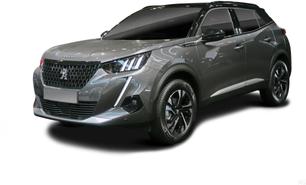
Looks are subjective but Peugeot’s updated 2008 small SUV is good looking from every angle.
The update brings a raft of design tweaks and some tech upgrades, but mechanically there isn’t anything new.
It’s not a cheap car and its diminutive size might scare off some buyers who can cross-shop cheaper and more value focused alternatives from mainstream Japanese and Korean brands.
We are driving the range-topping 2008 GT variant to find out if it’s more than just a pretty face.
Potential is the key word when it comes to the Maverick. It has loads of potential to be a sales hit in Australia, provided Ford can get it in at the right price and specification level. In many ways, for all the success the Ranger has had for the company, the Maverick is the closest thing Ford has built to the Falcon Ute since its demise.
There’s obviously no guarantees in the automotive business, but if Ford could add the Maverick as a would-be Escape replacement it clearly has the potential (there’s that word again) to do a much better job for a brand known for its adventurous models. Whereas the Escape struggled to attract attention in a crowded SUV market alongside the likes of the Mazda CX-5, Toyota RAV4 and others, that wouldn’t be the case for the Maverick.
It’s been a hit for the Blue Oval in the US, with more than 22,000 examples sold in the first three months of 2023 and the company hiring more workers to try and keep up with demand. Which will only delay any plans to bring it to Australia, as the US market clearly has priority.
Which is a shame, because it would appeal to the large number of Australians who live in urban centres but have an active lifestyle. Especially the hybrid model, which would be ideal for weekday use while allowing owners to chuck their mountain bike or surfboard in the tray and head for adventure on the weekends.
Maybe that’s an idealistic view, but the Maverick left a strong impression and would fit so neatly into Ford Australia’s line-up it would be a waste if it never made its way Down Under.
The Peugeot 2008 is a handsome and accomplished little SUV that’s fun to drive and has a cabin that feels a little bit special.
In reality the 2008 is too expensive and isn’t as practical as most of the mainstream compact SUVs.
This is the car you buy with your heart, not with your head.
The design of the Maverick is one of its standout features, because it looks like a proper Ford truck, with elements in common with the Ranger and the F-150.
That’s despite the fact that underneath it actually has more in common with an SUV, sharing Ford’s ‘C2’ platform with the Escape and Bronco Sport.
It has the same ‘C-clamp’ lights that are a signature of the F-150 and have since found their way onto the Ranger.
It also has the same boxy design as its bigger siblings with a very upright front end and cut-off tail, giving it the ‘tough truck’ look popular amongst modern ute/pickup buyers in Australia and the US.
Other noticeable design elements include the Ranger-style grille treatment, slightly flared wheel arches and the ‘Maverick’ name stamped into the tailgate.
The Maverick is also available with exposed tow hooks as optional extras on the standard XLT, but they are included on the Tremor package, and add to the ‘rugged’ look of the Maverick.
Inside the Maverick looks less and feels like a pick-up and more like an SUV, with elements like the steering wheel and media system seemingly coming straight from the Escape.
But there are a number of small details in the interior design that impress, like the unique door designs and the texture finishes to some of the inlays on the dashboard and door pocket.
The Peugeot 2008 is a smooth operator with head-turning French flair, but the devil is in the detail.
It’s not just the 2008’s well proportioned dimensions or the healthy dollop of exterior black highlights that catch your eye, but Peugeot has added a range of design cues to symbolise the Lion on its badge.
The tail-lights have a 3D effect that make them look like cat’s claws and the daytime running lights on the front resemble a scratch mark. These pair perfectly with the lion head crest on the grille.
Look deeper and you notice the attention to detail.
The 2008's redesigned front grille's slates are colour matched to the car's body colour.
Dual exhaust pipes are finished in chrome, giving the impression of performance even if the car doesn’t deliver on it.
The GT variant gets a two-tone paint job with a black roof contrasting with the body's colour.
Inside there are plenty of high quality finishes. The centre console is festooned in gloss black and there is a lovely carbon-effect textured insert on the dash and doors.
Some hard plastics below eye-level and on touch points such as where your knee might rub are less impressive. The rear seat loses some of the lustre of the front pew with tough plastics covering the back of the front seats and most of the doors.
Again, in terms of size and use you’ll feel more like you’re in an SUV than a ute when you jump inside a Maverick. It definitely feels more like an Escape than a Ranger, even down to the basic layout of all the controls, air conditioning vents and storage spots.
But there are some unique elements, like the previously mentioned interior door trims, and there are some handy storage spots in the centre console along with a pair of cupholders.
There’s respectable space in the back for what is ultimately a small vehicle, but it could do with some extra amenities for the rear seat passengers. There’s a power outlet and some under seat storage space but no rear air con vents or cupholders.
As for luggage space, this is where the Maverick diverges from the SUV script by adding its ute-style tray.
It’s a good sized bed, as the Americans call it, measuring 1381mm long and 1353mm wide, but with the tailgate able to be set a floor height it can accommodate eight-feet by four-feet wooden sheets (2400mm x 1200mm). Our test car came with the optional spray-in liner.
The tray features what Ford calls its ‘Flexbed’, which describes a variety of in-built functionality including pre-stamped slots in the side of the tray so you can insert timber as dividers, depending on what you want to use it for. There’s also a 12-volt outlet and 10 tie-down points to lean into its practical nature.
It may be small in stature compared to the Ranger and F-150 but the Maverick isn’t a show pony. In the years since it arrived we’ve seen multiple examples of the Maverick being used as a working truck in the US, with plumbers and builders who don’t need a bigger model opting for the practical small ute and it’s easy to see it filling a similar role here.
Step inside and there is no hiding the 2008’s diminutive proportions.
It’s 4300mm long, 1815mm wide and 1550mm high, which puts it closer in size to the mini Mazda CX-3 than the larger CX-30 it is more aligned with price-wise.
This all adds up to a snug fit in whichever row you sit.
There are a couple of cupholders in the centre console - a smaller one for a standard takeaway coffee and a larger one for drink bottles.
Slight storage bins in the door can hold a regular drink bottle but there isn’t much room for much else.
The wireless device charger is hidden away behind a compartment below the central screen that opens with a push and there are two USB-C ports up front and the rear seats score a USB-C and A connection.
Rear seat passengers do without a dedicated aircon vent, unfortunately.
There is an issue with Peugeot’s i-Cockpit steering wheel and digital driver display, too.
If you like to sit low the chances are the steering wheel will cut off your view of the bottom part of the display. If you prefer to have the seat jacked up, you’ll have better vision of the readouts.
There are piano key-like physical controls for simple climate functions such as the de-mister and auto climate settings. More complex functions are done via the 10-inch central multimedia screen.
The boot is a decent size at 434L and can easily handle a weekly grocery shop or a few overnight bags.
There is only a space saver spare wheel, but this car is aimed at city driving where it is easier to source a replacement tyre.
The Maverick is clearly the entry-level model in Ford’s US ‘pick-up’ line-up, positioned beneath the bigger Ranger and biggest F-150.
There’s a three model line-up in the US - XL, XLT and Lariat (following the same naming protocols as its bigger siblings).
The XL is the workhorse of the range, riding on steel wheels, and begins the range at US$23,400 (approx. $36,500), while XLT starts at US$26,315 (approx. $41,100) and the more generously equipped Lariat is priced from US$34,855 (approx. $54,450).
For context, in the US, the Escape range begins at US$28,000 (approx. $43,740) and the Bronco Sport from US$31,230 (approx. $48,780), so the Maverick is one of the more affordable members of the Ford family, which is no doubt a big part of its appeal.
In terms of standard equipment on the XLT we drove, it included 17-inch alloy wheels, LED headlights, keyless entry (but not ignition), cruise control, single-zone air conditioning, a 4.2-inch instrument display and a six-speaker sound system with Bluetooth connectivity and an 8.0-inch touchscreen running Ford’s 'Sync 4' multimedia set-up.
The Tremor is a new addition to the line-up, adding some genuine off-road credentials to the XLT or Lariat in the form of a one-inch suspension lift, Ford’s 'Trail Control' drive mode system, unique off-road biased suspension and all-wheel drive with four-wheel drive lock and the 2.0-litre EcoBoost as standard.
Cosmetic upgrades include a new grille and front fender vent, blacked-out Ford logos and lights plus orange tow hooks.
The 2008 range kicks off at $39,990, before on-road costs, for the base Allure grade and rises to $44,490 for the fully loaded GT variant.
That’s a lot of money for a small SUV, especially considering the Skoda Kamiq range starts at $32,990, you can get Nissan’s Qashqai from $33,890 and a Mazda CX-30 for $33,140.
There is a lot to like about the 2008’s standard equipment list, though.
Flash looking 17-inch alloy wheels are complemented by adaptive LED headlights that control individual LEDs to brighten the road without dazzling oncoming vehicles. The headlights will automatically switch on in low light situations and stay on for a short period of time after you exit the vehicle to make it easier to find your way to the door at night.
A 10-inch multimedia screen is compatible with wireless Apple CarPlay and Android Auto, and a wireless device charger completes the cord-free ecosystem.
Peugeot’s 'i-Cockpit' brings a 10-inch driver display with 3D readouts paired with a small steering wheel.
GT buyers can expect eight colour ambient lighting, a six-speaker stereo, four USB charging ports, in-built sat nav and brushed aluminium foot pedals.
Well bolstered seats are heated up front and wrapped in synthetic suede and leather upholstery with contrast green stitching. The driver’s seat is power adjustable and has a massage function but the front seat passenger will need to move the seat themselves.
There are rain-sensing wipers, roof rails, power folding and heated side mirrors and a space saver spare wheel.
It’s a solid list of equipment but is missing some features you’ll find on similarly priced rivals such as a head-up display.
Ford offers two engine choices in the USA - a standard 2.5-litre four-cylinder petrol-electric hybrid and a 2.0-litre four-cylinder turbo-petrol ‘EcoBoost’ option.
The hybrid powertrain makes a modest 120kW/210Nm and is only available in front-wheel drive, in an obvious nod to this ute’s shared DNA with an urban SUV.
The EcoBoost fitted to our test car packs more punch, with 186kW/375Nm on tap and it’s paired to an all-wheel drive system via an eight-speed automatic transmission.
Lurking beneath the bonnet is a little three-cylinder 1.2-litre turbo-petrol engine that makes 96kW and 230Nm. That’s a decent amount of grunt from the little unit, but again you can get more oomph for less from mainstream rivals.
It is paired to an eight-speed automatic transmission that drives the front wheels.
There is no hybrid help, either.
Ford claims the Maverick Hybrid is capable of hitting a fuel economy figure of 6.3L/100km, which is a lot more efficient than its bigger ute siblings can manage and on par with consumption the Escape Hybrid manages in the US market.
The more powerful EcoBoost is obviously not quite as efficient, using 9.4L/100km on the combined urban/highway cycle. Although this turned out to be pessimistic, as we saw returns of around 9.0L/100km in our LA test drive.
Stiff emissions regulations in Europe mean these little turbocharged petrol engines have a fair bit of self control on the drink.
Peugeot claims the 2008 uses 5.4L/100km on the combined cycle. We used slightly more than this but spent most of the time in the cut and thrust of city traffic where cars use more fuel.
You’ll need to budget for pricier premium unleaded petrol, too.
As you approach the Maverick your brain tells you it’s a ute, but once you hope inside and start driving that idea quickly vanishes and you realise this is an SUV in disguise.
And that’s not a criticism, because Ford offers the Ranger and F-150 for people who do want a ute/pick-up that looks and drives like a ute/pick-up, so that’s not the role of the Maverick.
This is designed to be an urban-friendly vehicle for those who may want a ute but need something smaller and more efficient.
The EcoBoost performs admirably on the road, with decent low speed response and enough grunt when you stand on the accelerator and rev it hard. The Maverick isn’t a big vehicle, so it doesn’t need a particularly big engine to get the job done.
The eight-speed auto is well-suited to the EcoBoost, able to get the most out of the engine when needed but also returning that strong fuel figure.
It’s not meek, though, the Maverick EcoBoost has a standard towing capacity of 900kg but can be upgraded to pull up to 1800kg with the 'Tow Package'.
Unfortunately, the Los Angeles landscape didn’t give us a chance to test the Maverick’s off-road credentials, because it does have good on-paper capabilities.
Particularly the Tremor, which has specific drive modes for 'Normal', 'Sand', 'Mud', 'Slippery' and 'Towing', as well as the ability to switch the traction control off with the press of a button so you can let the wheels slip on loose surfaces.
But around the streets and freeways of LA it did impress with its on-road manners. The steering is nicely weighted and direct, and when paired with the compact dimensions of the Maverick it reacts and drives much more SUV-like which means it feels at home in the city.
On the road the 2008 is a bit temperamental.
Most European cars are fitted with stiffer suspension than the cosseting springs found in Japanese machines.
This means you’ll feel bumps and road imperfections through your seat more than other SUVs. It has particular problems ironing out consistent smaller bumps, which can unsettle it and lead the 2008 to skip across them.
The counterbalance to that is a more dynamic drive experience, with the 2008 exerting excellent body control through the bends as it is held in line by the stiffer set-up.
Pair this with sharp, direct and well-weighted steering and it's a fun little SUV to take on a twisting country back road.
Three cylinders might not sound like a lot, but in the real world this is all the 2008 needs.
Its 96kW and 230Nm won’t set the world on fire but the torque is accessed from just 1750rpm, which endows the 2008 with some punch off the mark and it feels zippy when navigating the daily commute.
Don’t confuse that for outright speed, though, the 2008 completes the benchmark 0-100km/h dash in 9.3 seconds.
The transmission is fine when you are accelerating or cruising at motorway speeds, where it uses its many ratios to keep the engine humming along in its sweet spot. There are paddle shifters if you want more control.
In stop-start traffic it isn’t as an accomplished performer. It can struggle to find the right ratio and this leads to a jerky movement reminiscent of dual-clutch autos.
The cabin is well insulated with the outside world kept mostly at bay, but you’ll hear the three cylinder’s charming little rumble when you put your foot down.
Parking is a cinch thanks to its petite proportions and the 2008 has no issues navigating tight city streets or underground car parks.
In the US the Maverick XLT comes standard with seven airbags, a reversing camera and auto headlights as well as pre-collision assist with autonomous emergency braking.
But features such as blind-spot monitoring, lane departure warning and lane keeping assist are all optional extras.
It’s too early to even speculate, but given safety expectations are higher in Australia Ford would need to include those optional elements as standard to satisfy buyers.
The 2008 has a maximum five-star ANCAP safety rating, but that mark was given in 2020 and it might not get the same score if it was retested today.
It has six airbags, but misses out on a centre airbag that protects against head clashes in a side on collision.
It has a decent amount of safety equipment with auto emergency braking, lane keep assist, blind spot monitoring and adaptive cruise control.
Rear cross-traffic alert, which sounds an alarm if a car is approaching from the side as you reverse, is a notable absence.
It’s also much too early to speculate on ownership and warranty details.
Ford hasn’t made any official commitment to bringing the Maverick to Australia but if it does it would be logical to expect it to mirror what we already expect in terms of warranty and the ownership experience.
That means five-years/unlimited kilometres of coverage and Ford’s capped price servicing plan.
Peugeot covers the 2008 with a five year/unlimited km warranty, which is the standard coverage today.
The French brand offers a range of prepaid servicing packs that’ll save you a handy amount compared to pay-as-you-go maintenance.
A five-year plan is the best value, costing $1700 for five scheduled visits every 12 months or 15,000km. That’s $638 cheaper than the pay-as-you-go servicing.