What's the difference?
Is this the car Ford Australia is crying out for?
It’s a question we’ve been asking ourselves from afar ever since the Maverick first appeared in the USA in 2021. In simple terms this is an SUV disguised as a ute, or if you prefer to look at it another way, a ute designed for the urban environment.
Why does Ford Australia need it? Because utes are what it does best and SUVs are what it struggles with. The Ranger is, by some margin, its best-selling model and the F-150 is coming to a showroom near you soon, while the Escape SUV has been dropped due to consistently low sales.
The Maverick isn’t quite a true replacement for the Falcon ute, but it’s arguably closer in concept than the more rugged Ranger.
It’s the kind of vehicle that should pacify people calling for Subaru to bring back the Brumby. In other words, this is a vehicle that has the potential (key word) to appeal to a broad audience; even more so than the niche Bronco off-roader.
There's a significant catch, though. Ford doesn’t make it in right-hand drive.
Fortunately for CarsGuide we were recently given the opportunity to sample the Maverick in the USA getting behind the wheel of the XLT Tremor variant in Los Angeles, California.
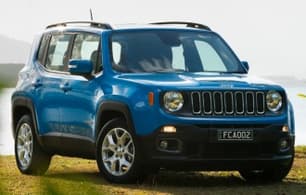
Jeep's Renegade might be late to the mini-SUV party but it comes with a pretty impressive back catalogue to suggest that this is a SUV that can cash the cheques its name can write.
The top of the range Trailhawk can write even bigger cheques than the lower models, bringing with it a range of off-road tech toys to let you really get down and dirty.
Potential is the key word when it comes to the Maverick. It has loads of potential to be a sales hit in Australia, provided Ford can get it in at the right price and specification level. In many ways, for all the success the Ranger has had for the company, the Maverick is the closest thing Ford has built to the Falcon Ute since its demise.
There’s obviously no guarantees in the automotive business, but if Ford could add the Maverick as a would-be Escape replacement it clearly has the potential (there’s that word again) to do a much better job for a brand known for its adventurous models. Whereas the Escape struggled to attract attention in a crowded SUV market alongside the likes of the Mazda CX-5, Toyota RAV4 and others, that wouldn’t be the case for the Maverick.
It’s been a hit for the Blue Oval in the US, with more than 22,000 examples sold in the first three months of 2023 and the company hiring more workers to try and keep up with demand. Which will only delay any plans to bring it to Australia, as the US market clearly has priority.
Which is a shame, because it would appeal to the large number of Australians who live in urban centres but have an active lifestyle. Especially the hybrid model, which would be ideal for weekday use while allowing owners to chuck their mountain bike or surfboard in the tray and head for adventure on the weekends.
Maybe that’s an idealistic view, but the Maverick left a strong impression and would fit so neatly into Ford Australia’s line-up it would be a waste if it never made its way Down Under.
Rugged, dependable and good off-road are the most obvious qualities of the Trailhawk. It stands out from the rest of the mini-SUVs by being able to do the S and the U with plenty of vigour.
It's just a shame that its on-road manners can't match that of its big brother, the Cherokee. Unless you're planning on proper off-roading, the Trailhawk might not be quite what you're looking for.
The design of the Maverick is one of its standout features, because it looks like a proper Ford truck, with elements in common with the Ranger and the F-150.
That’s despite the fact that underneath it actually has more in common with an SUV, sharing Ford’s ‘C2’ platform with the Escape and Bronco Sport.
It has the same ‘C-clamp’ lights that are a signature of the F-150 and have since found their way onto the Ranger.
It also has the same boxy design as its bigger siblings with a very upright front end and cut-off tail, giving it the ‘tough truck’ look popular amongst modern ute/pickup buyers in Australia and the US.
Other noticeable design elements include the Ranger-style grille treatment, slightly flared wheel arches and the ‘Maverick’ name stamped into the tailgate.
The Maverick is also available with exposed tow hooks as optional extras on the standard XLT, but they are included on the Tremor package, and add to the ‘rugged’ look of the Maverick.
Inside the Maverick looks less and feels like a pick-up and more like an SUV, with elements like the steering wheel and media system seemingly coming straight from the Escape.
But there are a number of small details in the interior design that impress, like the unique door designs and the texture finishes to some of the inlays on the dashboard and door pocket.
In what is absolutely not a coincidence, the Renegade immediately conjures up the Wrangler. Upright grille from the Willys Jeep (references abound here), round headlights, squared off wheel arches to mimic the Wrangler's guards, short overhangs and big rear view mirrors.
The 17-inch wheels look completely lost in the wheelarches which are even more cavernous owing to the Trailhawk's 50mm of extra ride height. The wheels are also a bit cheap looking but will probably survive the belting the car is intended to take.
Less rugged is the interior, despite a fairly self-conscious effort to make it look and feel chunky. The front seats are flat and unsupportive with the rears just as lacklustre making sure everyone is sliding around together. Luckily, front passengers get a dash-mounted grab handle.
It seems quite well put together, however, but with carpets and easily-marked plastics, you'll hope your passengers don't bring the mud in with them too often. And the "Since 1941" stamped into the steering wheel can go.
The dashboard is reasonably clear and has plenty of information to share via the screen between the dials but whoever thought marking the redline with a water splash graphic in bright orange should probably rethink their design decisions.
Storage is limited to two cupholders up front, door pockets in each door and nets on the front seat backs.
The Maverick is clearly the entry-level model in Ford’s US ‘pick-up’ line-up, positioned beneath the bigger Ranger and biggest F-150.
There’s a three model line-up in the US - XL, XLT and Lariat (following the same naming protocols as its bigger siblings).
The XL is the workhorse of the range, riding on steel wheels, and begins the range at US$23,400 (approx. $36,500), while XLT starts at US$26,315 (approx. $41,100) and the more generously equipped Lariat is priced from US$34,855 (approx. $54,450).
For context, in the US, the Escape range begins at US$28,000 (approx. $43,740) and the Bronco Sport from US$31,230 (approx. $48,780), so the Maverick is one of the more affordable members of the Ford family, which is no doubt a big part of its appeal.
In terms of standard equipment on the XLT we drove, it included 17-inch alloy wheels, LED headlights, keyless entry (but not ignition), cruise control, single-zone air conditioning, a 4.2-inch instrument display and a six-speaker sound system with Bluetooth connectivity and an 8.0-inch touchscreen running Ford’s 'Sync 4' multimedia set-up.
The Tremor is a new addition to the line-up, adding some genuine off-road credentials to the XLT or Lariat in the form of a one-inch suspension lift, Ford’s 'Trail Control' drive mode system, unique off-road biased suspension and all-wheel drive with four-wheel drive lock and the 2.0-litre EcoBoost as standard.
Cosmetic upgrades include a new grille and front fender vent, blacked-out Ford logos and lights plus orange tow hooks.
The Renegade range starts at $28,000 for the 1.6-litre Renegade Sport manual front-wheel drive, climbing between $2000 and $3000 through the Sport Auto, Longitude Auto, Limited Auto with a final jump of $4000 to the 2.4-litre auto-only Trailhawk.
Standard is a nine-speaker stereo with Bluetooth and USB, 17-inch alloys, dual-zone climate control, reversing camera, rear parking sensors, keyless entry and start, cruise control, electric front seats with heating, satellite navigation, automatic bi-xenon headlights, auto wipers, leather trim, roof rails, front and middle bash plates, full size spare, heated leather steering wheel, privacy glass, trailer sway control and tyre pressure monitoring.
The lairy Omaha orange is $500, part of an eleven colour palette with only two no-cost paint options (black and white).
You can add lane departure warning, auto-parking and a black painted roof for $500 each, a removable and retractable roof called My Sky Roof for $2200 or a more conventional electric sunroof for $1900.
The Beats-branded nine-speaker stereo is run via Fiat-Chryser's UConnect system, accessible through the 6.5-inch touchscreen. While it improves with every attempt, it's still quite clunky and when the sat-nav is added, becomes a bit of a mess.
Thankfully, not every function has been crammed into the touchscreen interface, so you'll spend more time with your hands on the wheel rather than working out which bit of the screen has the climate control.
Ford offers two engine choices in the USA - a standard 2.5-litre four-cylinder petrol-electric hybrid and a 2.0-litre four-cylinder turbo-petrol ‘EcoBoost’ option.
The hybrid powertrain makes a modest 120kW/210Nm and is only available in front-wheel drive, in an obvious nod to this ute’s shared DNA with an urban SUV.
The EcoBoost fitted to our test car packs more punch, with 186kW/375Nm on tap and it’s paired to an all-wheel drive system via an eight-speed automatic transmission.
The Trailhawk is powered by Fiat's 2.4-litre four naturally-aspirated four-cylinder producing 129 kW and 230 Nm. Jeep reckons you'll get 7.5L/100km on the combined cycle. Our mostly city driving with a longish motorway run produced an 11.0L/100km average over a week.
The transmission is a nine-speed ZF automatic driving all four wheels.
The Trailhawk also has Jeep's five mode Selec-Terrain system which should cover pretty much every eventuality – Auto, Sport, Mud, Sand and, just for the Trailhawk, Rock. The Trailhawk is rated to tow 400kg unbraked and 907kg braked.
As you approach the Maverick your brain tells you it’s a ute, but once you hope inside and start driving that idea quickly vanishes and you realise this is an SUV in disguise.
And that’s not a criticism, because Ford offers the Ranger and F-150 for people who do want a ute/pick-up that looks and drives like a ute/pick-up, so that’s not the role of the Maverick.
This is designed to be an urban-friendly vehicle for those who may want a ute but need something smaller and more efficient.
The EcoBoost performs admirably on the road, with decent low speed response and enough grunt when you stand on the accelerator and rev it hard. The Maverick isn’t a big vehicle, so it doesn’t need a particularly big engine to get the job done.
The eight-speed auto is well-suited to the EcoBoost, able to get the most out of the engine when needed but also returning that strong fuel figure.
It’s not meek, though, the Maverick EcoBoost has a standard towing capacity of 900kg but can be upgraded to pull up to 1800kg with the 'Tow Package'.
Unfortunately, the Los Angeles landscape didn’t give us a chance to test the Maverick’s off-road credentials, because it does have good on-paper capabilities.
Particularly the Tremor, which has specific drive modes for 'Normal', 'Sand', 'Mud', 'Slippery' and 'Towing', as well as the ability to switch the traction control off with the press of a button so you can let the wheels slip on loose surfaces.
But around the streets and freeways of LA it did impress with its on-road manners. The steering is nicely weighted and direct, and when paired with the compact dimensions of the Maverick it reacts and drives much more SUV-like which means it feels at home in the city.
The Trailhawk name suggest that things are going to get muddy – compared to the rest of the range, the range-topper rides 50mm higher and has exposed, easy-to-reach tow hooks in the fairly unlikely event you get stuck. It also has a 20:1 low-range crawl ratio and Active Drive 4x4 which means it can switch between front and all-wheel drive. It'll also wade through almost half a metre of water. It's a genuine mud-plugging proposition and will take on some much bigger machinery out in the bush.
On the road, where we spent all our time in the Renegade, it's not what you'd call particularly inspiring. There's a number of sources of noise that contribute to a less than quiet cabin and having to constantly correct your course at freeway speeds adds to the tiring nature of the Renegade.
It's much better at lower speeds, pottering around but then again, its nine-speed transmission needs a lot more work on the shift mapping because it seems to forget which gear it needs to be in when you sink the right foot. If you don't need the Trailhawk's extra off-road goodies, consider the 1.4 litre Limited or Longitude.
In the US the Maverick XLT comes standard with seven airbags, a reversing camera and auto headlights as well as pre-collision assist with autonomous emergency braking.
But features such as blind-spot monitoring, lane departure warning and lane keeping assist are all optional extras.
It’s too early to even speculate, but given safety expectations are higher in Australia Ford would need to include those optional elements as standard to satisfy buyers.
Seven airbags (including driver's knee bag), traction and stability controls, roll mitigation, blind spot monitoring, ABS and brake assist.
The Renegade does not yet have an ANCAP star rating although it scored five EuroNCAP stars in 2014.