What's the difference?
Is this the car Ford Australia is crying out for?
It’s a question we’ve been asking ourselves from afar ever since the Maverick first appeared in the USA in 2021. In simple terms this is an SUV disguised as a ute, or if you prefer to look at it another way, a ute designed for the urban environment.
Why does Ford Australia need it? Because utes are what it does best and SUVs are what it struggles with. The Ranger is, by some margin, its best-selling model and the F-150 is coming to a showroom near you soon, while the Escape SUV has been dropped due to consistently low sales.
The Maverick isn’t quite a true replacement for the Falcon ute, but it’s arguably closer in concept than the more rugged Ranger.
It’s the kind of vehicle that should pacify people calling for Subaru to bring back the Brumby. In other words, this is a vehicle that has the potential (key word) to appeal to a broad audience; even more so than the niche Bronco off-roader.
There's a significant catch, though. Ford doesn’t make it in right-hand drive.
Fortunately for CarsGuide we were recently given the opportunity to sample the Maverick in the USA getting behind the wheel of the XLT Tremor variant in Los Angeles, California.
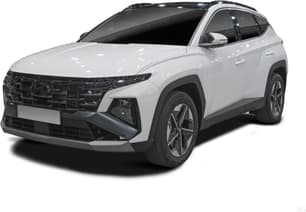
For the first time in Australia, the mid-sized Hyundai Tucson is being offered with a hybrid powertrain – which combines its spritely turbo-powered engine with a fuel efficiency-improving electric motor. And it might be enough to swing you to becoming a hybrid fan.
The new powertrain makes the Tucson a proper competitor against Australia’s darling, the Toyota RAV4 but the Nissan X-Trail e-Power and Kia Sportage remain strong rivals.
This week I’m family-testing the mid-spec Elite Hybrid with the N Line option pack to see how the newly updated Tucson handles family life.
Potential is the key word when it comes to the Maverick. It has loads of potential to be a sales hit in Australia, provided Ford can get it in at the right price and specification level. In many ways, for all the success the Ranger has had for the company, the Maverick is the closest thing Ford has built to the Falcon Ute since its demise.
There’s obviously no guarantees in the automotive business, but if Ford could add the Maverick as a would-be Escape replacement it clearly has the potential (there’s that word again) to do a much better job for a brand known for its adventurous models. Whereas the Escape struggled to attract attention in a crowded SUV market alongside the likes of the Mazda CX-5, Toyota RAV4 and others, that wouldn’t be the case for the Maverick.
It’s been a hit for the Blue Oval in the US, with more than 22,000 examples sold in the first three months of 2023 and the company hiring more workers to try and keep up with demand. Which will only delay any plans to bring it to Australia, as the US market clearly has priority.
Which is a shame, because it would appeal to the large number of Australians who live in urban centres but have an active lifestyle. Especially the hybrid model, which would be ideal for weekday use while allowing owners to chuck their mountain bike or surfboard in the tray and head for adventure on the weekends.
Maybe that’s an idealistic view, but the Maverick left a strong impression and would fit so neatly into Ford Australia’s line-up it would be a waste if it never made its way Down Under.
The updated Hyundai Tucson Elite Hybrid N Line offers families space, features and easy-enough handling for everyday stuff and the occasional weekend adventure pursuits.
The price point is higher than the previous non-hybrid model but you get a lot of bang for your buck and my family was comfortable this week.