What's the difference?
The original Ford Fiesta ST from 2013 was a modern classic. The combination of appealing pricing, point-and-shoot driving dynamics and a sweet turbocharged engine ensured it won a legion of fans.
Its follow-up from 2020 continued that formula and brought with it a refinement missing from the original. But it was just as fun to drive.
Ford has launched a mid-life update for the sprightly hot hatch, which despite arriving in Australia halfway through 2022, is still officially an MY22 model. This latest version introduces upgrades to interior tech and exterior styling, as well as a 30Nm bump in torque.
But given it’s facing a ballsy competitor from Hyundai, has Ford done enough to keep its B-segment hot hatch crown?
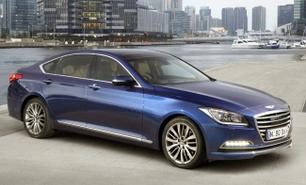
Anybody who doubts that Hyundai is gunning for the number one in the world has rocks in their head. Big heavy ones. Korean companies do not settle for anything less than number one. The second-generation Genesis (our first taste here in the Antipodes as the gen-one had its steering wheel on the wrong side) is proof.
What's different about Hyundai's unstoppable rise is the way they're going about it. They've always done their own thing in Korea, reinventing themselves time and again when they strayed off the beaten path.
The Genesis is a gamble for a Korean company in foreign markets whose default setting for luxury is marked, Britain or Germany. If Hyundai gets the Genesis wrong there will be howls of derision, or at best patronising pats on the back - "Nice try, you'll get there one day". But if they get it right...
The Fiesta ST is an addictive car to drive. It's a modern classic and hard to beat when it comes to engaging performance and smile-inducing dynamics. Add in excellent value for money and you have a certified performance car bargain.
The Genesis is not quite a match for cars twice its price but it makes you think what's possible. It doesn't have the dynamic brilliance of a BMW or the self-assured faultless execution of a Mercedes. Lexus ought to be worried, though - why would you have an LS when you could have this? The only answer is 'badge'.
The Genesis is an epoch-making car for the Korean manufacturer. As the company has got better, there are fewer excuses for overlooking it. While the Genesis is pitched into a shrinking market, it's not really meant for the average i30 buyer to buy, but to see.
It's bristling with tech and is not only a halo car but a shot across the bows of both Lexus and the Germans. Attached to that shot is a note: "We're coming for you." In other words, Hyundai got it right.
The styling changes ushered in by the 2022 update are subtle. The Fiesta ST gains a revised front fascia with LED Matrix headlights, a larger grille with a repositioned Ford badge, and restyled bonnet and bumper.
It gets a fresh 18-inch alloy wheel design and black tail-light surrounds at the rear. It also comes in two new exterior paint colours - 'Mean Green' and the 'Boundless Blue' of our test car.
The current-generation Fiesta ST has an appealing design that represents a clear evolution of its predecessor, and, arguably, it didn’t need much work this time around.
The ST’s sporty bodykit adds a touch of aggression but not in a boy racer sort of way. It’s a classic hatchback design with a bit of an edge.
The Genesis is like no other Hyundai. For a start, it's gigantic - it looks easily as big as a BMW 7 Series (it isn't) with the road presence to match. There's a lot of BMW from most directions, but with a sharper approach to the creasing and character of the sheet metal.
Towards the rear it's more BMW 6 Series Gran Coupe and is all the better for it. The style is understated and technocratic.
Inside is also very Germanic, but with a bit more of a Lexus feel
The big wheels from the Ultimate pack help make it look lower and sleeker, too.
Inside is also very Germanic, but with a bit more of a Lexus feel. Our car had the lighter leather which meant that the wood and the metal materials didn't necessarily work well together.
The interior is expertly put together and feels like it will last forever.
The only jarring moment is the gear selector is shared with our long-term Hyundai i30 - it looked a bit cheap in what is otherwise a beautifully executed cabin - it needs more heft.
On Australian-delivered cars there is just one Hyundai badge, sitting proudly on the boot - you get the feeling this was debated long and hard and when the decision was made to go for it, a big one was chosen.
However, the winged Genesis branding takes pride of place everywhere else. When you approach the car at night and the puddle lamps come on, the Genesis logo is projected on to the ground, crisp and clear.
As far as mid-life updates go, the Fiesta ST’s isn’t significant. But the additions bring with it a bump in price. At $34,490, before on-road costs, it is $1200 more expensive than the previous version.
It still represents good value and is only $500 more than its newest rival, the Hyundai i20 N ($32,990 BOC). It’s quite a bit cheaper than the other big gun in the light hot hatch battle, the Volkswagen Polo GTI ($38,750 BOC).
Another offering in this group is the Suzuki Swift Sport which is the price leader, starting from $27,990 BOC.
Ford has specified a lot of standard gear for the price, including some niceties you don’t even get in pricier premium European cars.
It comes with a leather-wrapped heated steering wheel, heated front seats, Recaro sports seats, an auto-dimming rear-view mirror, heated power door mirrors, an 8.0-inch touchscreen with digital radio, satellite navigation, 'Sync 3' multimedia with voice control and Apple CarPlay/Android Auto, and a 10-speaker audio system.
As with the pre-update model, the German-built ST is the only Fiesta variant available in Australia.
The only way to describe the Genesis' pricing is aggressive - kicking off at $60,000, it's the most expensive Hyundai money can buy, but with a spec list like this, you won't feel at all short-changed.
Your sixty large buys you a huge cabin with a seventeen speaker stereo, auto headlights and wipers, LED ambient lighting inside and out, dual-zone climate control, keyless entry and start, powered front seats which are heated and cooled, satnav, front and rear parking sensors, and plenty of other bits and pieces.
Our car had the $22,000 Ultimate package, adding 19-inch alloys, blind spot sensor, front and side cameras, around-view display, real leather, more adjustments for the driver's seat, ventilated seats in the front, heated rear seats, panoramic glass sunroof, acoustic glass, heads-up display, powered bootlid and LED foglamps.
The Genesis is like no other Hyundai
You can have a lot of the more useful features in the $11,000 Sensory Pack. It's a good middle ground that, for example, features the excellent heads-up display.
The 9.2-inch screen splits the asymmetric air-conditioning vents. The software is unique to the Genesis and a huge leap forward over the rest of the Hyundai range - classy, smooth graphics, a good responsive screen.
You control the seventeen speaker stereo from here, which kicks out a rich sound and an impressive Bluetooth performance - rear seat passengers can also run the stereo from their armrest. The satnav is detailed and chatty, while the excellent heads-up display shows a configurable information set in strong, clear graphics.
Under the Fiesta’s cute bonnet is Ford’s 1.5-litre three-cylinder turbocharged petrol engine delivering 147kW at 6000rpm and 320Nm at 4000rpm - the latter is an increase of 30Nm over the pre-facelift model.
Interestingly, it now matches the power and torque outputs of the Polo GTI. The i20 N pumps out 150kW and 304Nm.
The engine is exclusively paired to a six-speed manual gearbox - there is no auto transmission available - and it is front-wheel drive.
The Genesis is powered by Hyundai's own 3.8-litre V6 developing 232kW and 397Nm, mated to Hyundai's eight-speed automatic transmission.
Despite weighing just under two tonnes, the Genesis completes the dash to 100km/h in 6.5 seconds.
It has a claimed 11.2L/100km on the combined cycle. In what must be a first, we got below that, averaging 10.8L/100km over two weeks. And that's without stop-start fuel-saving to blunt the effect of lot of city driving.
The Genesis is not going to tempt you into a track day, even with rear wheel drive
We'd still like to try the V8 - only available in left-hand drive markets - though.
It’s easy to find your ideal driving position in the Fiesta ST, thanks to the reach and height adjustable steering wheel and the adjustable seat.
Aside from the extra 30Nm dollop of torque, Ford hasn’t changed anything else about the Fiesta ST mechanicals for 2022, but arguably, it didn’t need to.
The pre-facelift model could cover 0-100km/h in 6.7 seconds, and while Ford has not revealed whether that has changed with the facelift, it feels about right.
It’s brisk from a standing start, without being neck-snappingly quick, but there is strong urge and a lack of noticeable turbo lag. There is, however, some axle tramp on take-off, particularly in the wet. We also detected some torque steer when pushing hard up a hill, but it was minimal.
Speaking of, the little three-pot turbo engine is utterly unfazed by steep hills - it just keeps adding speed. A light kerb weight of 1218kg helps here.
The three-pot turbo engine sounds wonderful when accelerating, and the Fiesta ST begs to be driven hard.
The engine is perfectly matched with the slick shifting six-speed manual gearbox that has lovely short throws and is a joy to use. Even if Ford offered an auto with the Fiesta ST, it would take away from the driving experience.
'Sport' mode ups the growl from the engine and throttle response, but it’s not a dramatic departure from 'Comfort' mode.
The ST’s strong brakes are bordering on sensitive, but the heavily weighted steering is incredibly sharp.
On a back road run, the front-wheel drive Fiesta ST comes alive, hugging corners confidently.
On bends that would’ve seen many other cars come undone, the Fiesta’s tight, balanced chassis, grippy tyres and the standard mechanical limited slip differential ensure it maintains its composure.
The ride is undeniably firm, particularly around town in urban areas - you feel every speed bump. My partner found the ride a bit too much at times, but I was far more forgiving.
The Fiesta feels solidly built and has a level of refinement that’s missing from the likes of the Suzuki Swift Sport and Hyundai i20 N.
However, the cabin could do with more noise deadening materials as it can be quite rowdy at speed and on coarse chip roads. Another negative is the massive turning circle - a bit odd for a city-focused light hatchback.
But these are things I could happily live with. During my week with the Fiesta ST, I made any excuse to jump behind the wheel and go for a drive.
Me: “I’m just going to run to the shops to get pasta.”
My partner: “We’re not cooking pasta this week.”
Me: “Yeah but you never know when you need pasta. Bye!”
At five metres long, with a ride firmly pitched in the luxury camp, the Genesis is not going to tempt you into a track day, even with rear wheel drive.
Blindfold your passengers and swap them between a Lexus, a BMW and a Genesis and the overwhelming impression they'll get is one of incredible smoothness.
If you're wanting sudden movements, this isn't the car for you
Sitting in the back of the Genesis, it's easily as good as the German and luxury Japanese competition. The seats are hugely comfortable, there's ample head, leg and shoulder room and it feels lot nicer than anything within a bull's roar of its price.
No matter where you sit, it's an incredibly quiet car. The engine is a distant whoosh, the tyre noise muted and there's almost no wind or ambient noise. It's supremely comfortable and the excellent stereo will wash away what little noise does invade.
It certainly feels its weight from the driver's seat, with a competent, soft turn-in, but if you're wanting sudden movements, this isn't the car for you.
The Genesis is an epoch-making car for the Korean manufacturer
On fast flowing roads you can have some fun, but things will get floaty and that will quickly kill that fun. The ride and isolation from the rest of the world is completely worth it.
The Fiesta ST has not been tested by ANCAP for crash safety.
It comes with standard safety gear including auto emergency braking (AEB) with pedestrian detection, forward-collision warning, lane-keeping assist with lane-departure warning, speed-sign recognition, rear parking sensors and a reversing camera.
Given it’s a manual, it has old-school non-adaptive cruise control.
Nine airbags, traction and stability control, lane departure warning, forward collision control, ABS, brake force assist and distribution and traction and stability control bring the ANCAP count to five stars.
The Sensory and Ultimate packs add blind spot sensors and around view cameras.