What's the difference?
I know, picture Ferrari and you'll likely be conjuring images of potent V12 or V8 engines, a scenery-shaking exhaust bark on start-up and a fuel bill that would make a Sheikh wince.
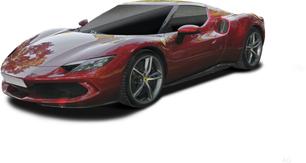
But this one, the 296 GTS, doesn't have, or do, any of those things. In fact, it doesn’t so much explode into life as it does kind of whirr gently, as though you’ve just switched on a photocopier.
And yet, people I trust on these matters reckon this just might be the best Ferrari to have ever worn the badge. So, I guess we better get to figuring out what the hell is going on with this plug-in Prancing Horse.
An American all-electric car brand with a unique take on the automotive industry, an up and down share price and a cheaper model in its future plans. You could be mistaken for thinking I’m talking about Tesla, but I’m not.
Recently CarsGuide got the opportunity to experience an alternative electric car brand, and one that, despite having many similarities to Tesla, is also in many respects its polar opposite.
I’m talking about Rivian, which is very much behind Tesla in terms of sales, market cap and just about every other measure. But what it does have is a compelling line-up of electric vehicles, with plans for expansion, including an eventual entry into Australia.
Back in 2023 we drove the brand’s ute, the R1T, but on a recent trip to Los Angeles we sampled the brand’s other model, the R1S SUV. It was an eye-opener to see how far the brand has come in two years and showcased just how different Rivian is from Tesla.
Anyone who says electrification somehow muddies the Ferrari formula is wrong. This plug-in Prancing Horse is among the most potent and direct vehicles I’ve ever driven, and the electric motor only adds to the experience.
While there are some obvious signs that the R1S is Rivian’s first mass-market vehicle, the good news for the company is that its problems are not impossible to overcome. The suspension needs retuning to improve the ride quality and the multimedia system’s software needs upgrading. But even with those issues the R1S left a positive impression.
This is a very stylish SUV with great space and excellent performance, that also happens to be electric, rather than relying on being electric as its primary selling point.
Rivian has put more effort into the design and finishes than many of its EV rivals and the result is a vehicle that can genuinely compete with the established premium players with more credibility.
The only catch is there’s no clear timeframe for when, or even if, this generation of R1S will make it to Australia. The brand has repeatedly spoken of its hopes of entering the market here without locking anything in, but given the current state of the EV sales it may pay off to wait until the conditions are right for a new, premium player to try its luck here.
It is hard not to swoon when you gaze upon the 296 GTS, and I say that with no bias - I don’t think all Ferraris have looked this good.
But this is Ferrari at its dreamy, sweeping best, from the tarmac-kissing front — which generates so much downforce and cooling it negates the need for active aero — to its swollen haunches and the glass-topped engine window.
So what’s the difference between this and the GTB? Largely it is the ability to drop the folding roof, meaning you can feel the wind in your hair and that exhaust in your soul. To be honest, though, I reckon it looks better top up...
It’s a cockpit-style driver’s set-up inside, and there’s lots I love and some things I don’t. But let’s start with the steering wheel, which might be one of the best in existence.
It feels magic under the touch, as do the giant flappy paddles which remain fixed in place as you turn the wheel.
It’s also surprisingly comfortable in the figure-hugging sports seats, though climbing in and out of them is not necessarily something you want to do in front of a crowd.
Downsides? There is plenty of tech in the 296 cabin, but it’s all controlled from the steering wheel, making it fiddly and annoying to use.
Also, there are F1-levels of complexity on the control-everything steering wheel, and if I’m being honest, there are some buttons or switches, the function of which I still don’t fully understand.
Design is another area where Rivian has carved out a unique position for itself. Whereas other brands, including Tesla, have focused on simplicity and aerodynamic efficiency, Rivian has given the R1T a unique style that looks interesting, different and most definitely not plain.
The oval daytime running lights make every R1S and R1T stand out from a mile away, even on LA’s busy freeways. The overall design is high quality and manages to strike a good balance between aesthetics, aerodynamics and practicality - even if it doesn’t suit everyone’s personal taste.
The cabin is worth highlighting in particular, because rather than go for the ‘minimalist’ look that so many brands are going for these days, with as little switchgear and different trims as possible to keep costs down, Rivian has opted for something more complex and, frankly, more impressive.
There’s a level of craftsmanship, a great mixture of premium materials (including some striking light wood options) that make the R1S feel like a stylish and relaxed environment inside the cabin. Our particular example had a great mixture of colours, textures and patterns that really elevated the cabin experience.
The technology is also nicely integrated into the design, rather than being the focal point, like so many other modern electric vehicles. It still offers the same level of technology - a pair of screens - but doesn’t rely on them to carry the design of the interior.
What do you want to know around practicality? We’re talking two seats, about 200 litres of cargo space total and a couple of smallish storage spaces in the cabin. And… that’s about it.
Next question, please.
The R1S comes standard as a seven-seat SUV, split across three rows (two in the first row, three in the second row and two in the third row). Space across the three rows is fairly typical for an SUV of this size, which is to say generous up front, good in the second row and a little bit tight in the back.
What is good though, is the length of the cabin allows for quite a spacious boot even with the third row in use, which is definitely not something all seven-seat SUVs can claim. Using a direct conversion from Rivian’s specifications that list cargo capacity in cubic feet, the R1S has a claimed 498 litres with the third row in use and up to 1331L with the third row folded down. There’s also 314L under the bonnet and another 144L underneath the boot floor (although that comes at the expense of a spare tyre).
As mentioned in design, Rivian has nicely integrated the technology into the cabin, with the 12.3-inch digital driver display and 15.6-inch central multimedia touchscreen feeling like a natural part of the car rather than a centrepiece. Rivian has also managed to incorporate eight USB-C charging ports spread around the cabin to keep everyone’s devices charged up.
However, while the technology is nice from an aesthetic design perspective, the same cannot be said about its useability. Like Tesla, Rivian has opted to go it alone with its multimedia system and has developed its own Google-based software that is not compatible with either Android Auto or Apple CarPlay. That would be acceptable, although still disappointing, if the system worked as well as Tesla’s, however the Rivian system is very slow. It repeatedly took several seconds to load between the various functions, which may not sound like long, but when you’re trying to get back to the navigation so you don’t miss your freeway exit a few seconds can make a big difference.
But, honestly, in this day-and-age, systems like this should work quickly and seamlessly, so it’s an area Rivian needs to improve.
On a positive note, Rivian does have some cool accessories for the R1S including what it calls a ‘Camp Speaker’ which is a US$400 option that it integrates into the sound system but is also removable, so you can pull it out of the centre console and listen to your music if you’re around the campfire or having a picnic.
Okay, hold your breath for a moment. The 296 GTS lists at $668,146, which is a sizeable jump over the hard-top GTB, which is more like $551,800. But what price a little open-air freedom?
What you get for that investment is a two-part (solid) folding roof, of course, but also what might be Ferrari’s most high-tech offering to date, with a plug-in hybrid system delivering potent performance rather than a usable EV driving range, a mega-clever braking system and an almost telepathic six-way 'Chassis Dynamic Sensor' designed to link the car’s key functions to make the experience, and the driver, somehow better.
Elsewhere, there are sports seats, Matrix LED headlights, 20-inch alloys, keyless entry and a very cool engine start touch-button on the even cooler steering wheel.
Oh, and there's wireless charging and Apple CarPlay, both thankfully standard in Australia, the latter controlled through the steering wheel and digital driver display.
It's all beautifully finished and a joy to behold and sit in.
When we drove the R1T in 2023 Rivian was still in the ramp up stage of production and was limited with what it could offer customers. Fast forward to 2025 and the brand now has both the R1T and R1S available with dual or tri motor powertrains, with a quad-motor powertrain expected by the end of the year.
The R1S Dual Standard begins the range at US$75,900 (approx. A$118,000), the R1S Dual steps it up to US$83,900 (A$130k) and the R1S Tri-motor completes the current line-up at US$105,900 (A$165k). While those prices are definitely in the premium end of the market the R1S is actually cheaper than the Tesla Model X, which is still on sale in the US market, and starts at US$86,630 (A$135k) and stretches to US$101,630 (A$158k).
For more context, the Audi Q8 e-tron starts at US$74,800, the BMW iX from US$87,250 and the Mercedes-Benz EQE from US$77,900.
Standard equipment across the range includes the 12.3-inch digital instrument display, 15.6-inch multimedia touchscreen, dual-zone climate control, heated and ventilated front seats, heated steering wheel, eight-way power adjustable driver and passenger seat and panoramic glass roof, so it certainly has premium levels of equipment.
We drove the range-topping RS1 Tri-motor which, aside from an extra motor, gets standard 22-inch alloy wheels, a dynamic glass roof, a soft-touch suede textile headliner as well as unique colour and trim options.
Now we're talking. The powertrain here is both tremendous and terrifying, pairing a 3.0-litre twin-turbo-petrol V6 with a rear mounted electric motor, and a 7.5kWh battery, to deliver a total 610kW and 740Nm. That power is fed through an eight-speed dual-clutch auto transmission.
Those are, frankly, scary numbers, and enough, Ferrari says, to dispatch 100km/h in just 2.9 seconds, and to push on to a top speed of 330km/h.
As mentioned earlier, there are currently three versions of the R1S available, each with a different powertrain.
The Dual Standard AWD has, unsurprisingly, dual motors (one at the front and one at the rear) which make a combined 397kW/827Nm. That’s enough for it to launch 0-60mph (0-96km/h) in just 4.5 seconds. The R1S Dual AWD has the same power, torque and acceleration figures, however it gets Rivian’s Large battery, which we’ll detail below.
The Tri-Motor AWD obviously has three motors, one on the front axle and two on the rear, which naturally provide more power, 633kW/1495Nm. With so much power and torque the Tri-motor is wickedly fast, taking just 2.9 seconds to launch 0-60mph.
If, for some reason, the Tri-Motor isn’t fast enough for you, Rivian has released the details on the Quad-Motor. It will have two motors on each axle providing a staggering 764kW (that’s 1025-horsepower!) and 1624Nm, enough to rocket it from 0-60mph in just 2.6 seconds and across the quarter mile in 10.5 seconds.
As well as the ability to start up and slink away silently, the Ferrari 296 GTS’s little battery will deliver a 25km EV-only driving range, and contribute to the overall claimed fuel use of just 6.5L/100km.
Charging is AC only, and the the brand reckons it takes around 90mins to top up using an 11kW charger. The self-charging is on-point, though, with the Ferrari able to quickly recoup energy from braking and the like to top up the battery without needing to plug in.
Rivian offers three different battery types across the three variants, each with a different driving range. The R1S with the Standard battery (92.5kWh) has a claimed 434km driving range, the R1S Dual with Large battery (109.4kWh) extends that to 530km, while the Tri-Motor comes standard with the Max battery (141.5kWh) that has an impressive 597km of range.
It is worth noting, though, that those range claims are based on US EPA estimates, rather than either the WLTP or NEDC methods usually used.
Charging times vary depending on the type of charger used, in the US Tesla has given access to its network to other EV brands and the Rivian is available with a plug adaptor to use a Tesla charger. The R1S is capable of charging up to 220kW, which means it takes approximately 40 minutes to take the battery from 10 to 80 per cent.
The engine is undoubtedly a highlight, and we’ll get to that in a moment, but I first want to talk about the steering in this car.
It might sound like a weird point to get hung up on, but it is sensational, and maybe the best I’ve ever experienced. Generally speaking, super-responsive steering can risk feeling overly sharp and uncomfortable when cruising, but somehow the 296 manages to feel super natural, super responsive, and super engaging, without every feeling sharp or darty. It’s just predictable, responsive, and spectacular.
Honestly, it is a highlight of a drive experience filled with highlights, with another being the dual-nature of this drop-top supercar. Long before I got anywhere near a twisting road I needed to navigate the usual nightmare that is Sydney, tackling traffic, suburbia, freeways, tunnels and expansion joints galore, and the 296 never felt uncomfortable.
Instead, the 296 slipped into a comfortable kind of lope, never jarring or rough, and eminently easy to get along with. And yet, when you arrive on the right road that veil of sensibility drops, and the Ferrari quickly reminds you of its potential.
For a start, the acceleration is properly, startlingly aggressive. Engage the 'Qualification' drive mode (which unlocks the full might of the Ferrari's electrified powertrain) and flatten your right foot, and you'll find the world suddenly hurtling past your windows, and your knuckles will no doubt whiten as you feel the rear tyres fighting for traction against the onslaught should you try it on anything but the straightest of roads.
It's addictive, but it's just one element of a near-perfect combination on offer here, with the 296 GTS the stiffest Ferrari drop-top to date, which becomes immediately clear as you start to attack corners with ever-growing confidence.
Grip, stability and stiffness in spades, the GTS delivers. And all accompanied by an exhaust howl so angry and evil it’s hard to believe it’s being generated by a V6.
It’s a thing of very near perfection.
The R1S and R1T are Rivian’s first mass-produced cars, and it shows. It’s not all bad news by any stretch, but there are some major issues the brand will need to address in the future if it wants to succeed globally (or even just in the US).
The biggest issue is the ride, which just doesn’t feel as well resolved as the more established brands that have been designing, developing and building cars for decades. The R1S isn’t bad to drive by any stretch, but the ride is too firm at times and it also lacks control and feels too soft at others.
All R1S grades come standard with Air Suspension that has multiple levels of firmness and can adjust the ride height. However, in the ‘normal’ setting the ride feels too busy, with the heavy (3096kg) SUV skittering over the imperfections in the road rather than absorbing them. The problem is, if you adjust the suspension to the softer setting it lacks control and has a tendency to bounce over bigger bumps and take a few seconds to settle. This was particularly noticeable on LA’s concrete freeways, but it would be an issue on any road with undulations or joints.
But while the ride needs improvement, the R1S has strengths in other areas - namely performance. The Tri-motor AWD we sampled had immense punch from its three motors and it certainly felt like 633kW and 1495Nm was on tap. We didn’t test its acceleration claim officially, but any take-off could be made into a rapid one with just a squeeze of the accelerator pedal.
The R1S is also capable of towing up to 3500kg, so it’s a strong and capable SUV too, rather than just a speedy EV.
Another strength is the regenerative braking system. There are multiple settings but we found the lowest regen was the best option, as it still provides powerful regen but is more progressive than the more powerful modes.
Not much chance of the 296 GTS being crash-tested in Australia — you’d be able to hear the Italians weeping across the ocean.
You do get front and side airbags parking sensors, a reversing camera, auto high beam and tyre pressure monitoring.
The R1S comes loaded with safety equipment across the range, including eight airbags, adaptive cruise control, autonomous emergency braking, blind spot monitoring, forward collision warning, lane departure warning, lane keeping assist and rear cross-traffic alert.
It also comes with what’s called the ‘Rivian Autonomy Platform’ that includes 11 cameras and 12 ultrasonic sensors for mild-autonomous functionality in specific circumstances, such as freeway driving or on well-marked roads.
Standard is a three year warranty, but you can extend that for up to five years. Then, if your car has less than 90,000km on the clock, you can opt into the 'New Power15', which gives you up to 15 years total warranty coverage and is fully transferable.
The first seven years scheduled maintenance is free-of-charge.
Rivian offers a four-year/80,000km warranty for the R1S vehicle as a whole, as well as a separate battery pack and drivetrain specifically. The Standard battery is covered for eight years/190,000km while the Large and Max batteries are covered for eight years/240,000km.
As for servicing, Rivian uses an app-based system, which allows owners to schedule a service at any time via the app and then either have a Rivian technician come to your home for a small service or drop it off at a service centre if it’s a bigger job. The app is also connected to the car, so if the car’s own diagnostic system recognises a problem, it can prompt you to book a service proactively.