What's the difference?
The Ferrari 12Cilindri should not exist. Everything about it shouts of excess to the point of illegality. Surely, one would assume, emissions regulations have made a vehicle with a naturally aspirated V12 engine as socially, and indeed legally acceptable as asbestos sandwich wrapping.
The work it must have taken to somehow squeeze this thing through the regulatory net is clearly more than any other company could be bothered with - the 12Cilindri is the only new atmo V12 a lot of money can buy.
Ferrari made the effort because this car, with this layout, is an integral part of the brand’s heritage, dating back to 1947, the rock on which it is built. Old Enzo Ferrari himself said the V12 is the Ferrari engine “everything else is a derivation of the original”.
And, of course, they made it because there are plenty of purists out there who will pay big, big dollars to have one. We flew to an unfortunately soggy launch for the car in Luxembourg to see what a V12 that can now rev to 9500rpm would feel, and sound like.
Life comes at you fast, especially in the automotive industry, where model lifecycles are becoming shorter as each new generation comes and goes.
Take the BMW 4 Series for instance. It’s been a segment stalwart since 2013, but the current model’s time in the sun is finally coming to an end a little later this year.
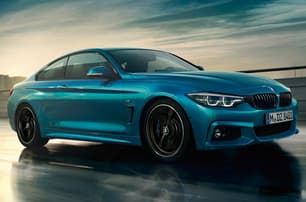
And that got us thinking whether or not the old saying rings true in this context. So, we put the flagship 440i coupe to test to find out if the older you get, the wiser you are.
In the near future we’ll look back at the 12Cilindri and say it’s a shame Ferrari doesn’t make cars like that any more. But if this is the last proper, naturally aspirated V12 Ferrari ever, it’s definitely a worthy one. One day you’ll enjoy seeing this in a car museum.
Note: CarsGuide attended this event as a guest of the manufacturer, with travel, accommodation and meals provided.
Is now the right time to buy a 4 Series coupe? With the next-generation model a matter of months away, probably not.
That said, those buyers who decide to park a new ‘old’ 4 Series coupe in their driveway will be very pleased with their purchase.
At the end of the day, the current-generation model is still a cracking sports-luxury coupe, and more so when in 440i form. It’s just that good.
So, while I’ll admit a vehicle with such a massive, phallic bonnet and a cabin that seems to sit over the rear wheels is never going to be my favourite Ferrari, personally, it’s impossible to see how you could make a giant-bonneted V12-powered, heritage-hugging grand tourer look better than this.
Yes, it does look striking in pictures but in the flesh it is absolutely gob smacking, a thing of real beauty from some angles, and outrageous showiness from others.
Following one from behind, its massive, hunkered rear end actually brings to mind a Lamborghini Diablo, although I wouldn’t tell the many passionate Ferrari designers I met that.
They have a lot to say about why the 12Cilindri (and can we just discuss that name - yes, it is silly, in English, but when an Italian says it - Dodici Cilindri - with the properly poetical pronunciation, it really does make sense) looks as outrageously lovable as it does.
They reckon they were inspired by the exciting era of car design in the 1970s, but also by science fiction movies, and the desire to build something modern that also feels classic.
Take the black banded front end where the headlights live. “Our intent was to lose the human expression that cars have, to not have an actual human gaze, so it doesn’t have eyes.”
Of course, no car has actual eyes, but you get the idea, they didn’t want it to look like it has them, the way most vehicles do.
There’s also a lot of talk about dihedrals and monoliths. The 12Cilindri also has an incredible clam shell bonnet, which not only creates a sense of theatre when you open it but means there’s no cut line through the bonnet, adding to that sense of the whole front end being monolithic.
Then there are the many aero features, including two Batmobile-like flaps on the rear wing that activate to provide downforce when required - some 50kg of it at 250km/h.
I could go on and on, surely they did, but let’s just say this is one hugely impressive piece of car design. I know some people find it a little weird looking in photos, but they are simply wrong. It's beautiful in the flesh.
The first-generation 4 Series coupe has aged relatively well, despite sharing most of its design cues with the superseded sixth-generation 3 Series sedan.
Compared to current BMW models, the 4 Series coupe’s signature kidney grille is small, flanked by angry-looking adaptive headlights with hexagonal daytime running lights, all of which are of the LED variety.
The 440i’s standard M Sport body kit adds to the aggressive styling with chunky front bumper with three large air intakes, the outer two of which also contain the LED fog lights.
Around the side, a strong shoulder line stretches from the front wheel arches to beyond their rear counterparts, while BMW’s Air Curtains split the difference between it and the sporty skirts.
The rear end is the 440i’s simplest angle, although its bumper is spruced up with a dark-grey insert and dual exhaust tailpipes. Predictably, L-shaped LED tail-lights punctuate the styling at the rear.
Inside, the 4 Series coupe is holding up well, but it's still clearly a generation behind most other new BMW models.
That said, it’s a throwback we quite like, particularly iDrive6, which is still arguably BMW’s best multimedia system to date. Powering a floating 8.8-inch touchscreen in this instance, it’s just so intuitive, partly thanks to its rotary controller.
An 8.8-inch digital instrument cluster is a late-life addition for the 440i, and while it looks great with its drive mode-specific views, it lacks the breadth of functionality of Audi’s set-up.
The 4 Series coupe’s cabin is otherwise pretty basic despite its apparent emphasis on sportiness, although the selection of luxurious materials used throughout is top-notch.
The entire dashboard, chunky M Sport steering wheel and old-school handbrake lever are trimmed in high-quality leather, while lower-quality Dakota leather covers the sports seats, armrests and door inserts.
Soft-touch plastic is used for the door shoulders and bins, even in the second row, while hard plastic is limited to the centre console, and gloss-black trim is used on the centre stack’s audio and dual-zone climate control surrounds.
For what it is, a two-seat grand tourer/rocket ship, the space inside is perfectly functional, and there’s a large kind of overgrown parcel shelf where you can throw a back pack or your jackets if you need to.
You also get a 270-litre boot, which is, you guessed it, just big enough for a set of golf bags.
Keep in mind that there is literally no one on Earth who will buy this as their only car.
Measuring 4640mm long, 1825mm wide and 1377mm tall, the 440i coupe is a true mid-sizer, and that means it’s surprisingly practical – for the most part.
Cargo capacity is more than solid, at 445L, but stow the 60/40 split-fold rear bench via a pair of manual latches located in the boot and more storage space is quickly liberated.
To make matters even better, the boot has two bag hooks and four tie-down points, making securing a load a cinch. That said, the high load lip means bulkier items can require a little more effort to accommodate.
Up front, the door bins are large enough for a regular bottle each, while a pair of cupholders separate the gear selector from a seriously shallow storage tray.
The central storage bin is on the shallow side, too, albeit not to the same degree as the dedicated storage tray. That said, much of its space can be taken up by the optional wireless smartphone charger ($200), which was fitted to our test car.
The glovebox tries its best to make up for the lack of genuine in-cabin storage options by being quite large, while storage nets are attached to the backs of the front seats.
Rear occupants can also make use of a large storage tray that resides where a middle seat would otherwise go. They also have access to a fold-down central armrest that incorporates two more cupholders.
Speaking of armrests, the rear side ones are incredibly narrow, leaving tired elbows in a bit of a pickle.
It’s not all bad news in the second row, though, as legroom and toe-room behind our 184cm driving position are very generous, with the former offering several inches of wriggle room.
We’d go as far as to say the rear quarters are comfortable, but that would require ignoring the fact that headroom is seriously compromised with the optional power-operated sunroof ($3000) fitted, with our head pressed firmly against the 440i coupe’s Anthracite roofliner.
Either way, child seats can be fitted in the second row, with ISOFIX anchorage points available for the outer seats. Speaking of which, it’s worth noting ingress and egress to the rear bench isn’t too bad, with the front seats folding forward via manual latches.
Connectivity-wise, two USB-A ports are found in the first row, split between the centre stack and the central storage bin, while three 12V power outlets are spread across the front and rear of the centre console, and the boot.
So just how big are these big dollars we’re talking about, for a Ferrari 12Cilindri. Well take a big deep breath, because the Coupe we drove starts at $803,500 while the convertible Spider, which is also available for order is $886,800.
Yes, that does seem like a lot to just take the roof off, but we’re talking about customers who will likely pay over $1M for one of these cars by the time they’ve finished personalising and adding expensive options, so they won’t mind.
And, to be fair, aside from the Purosangue SUV, this is about as many square metres of Ferrari as your money can buy you - not to mention the most cubic centimetres of engine, at 6.5 litres.
There’s a fair slab of luxury inside with a new 10.2-inch central touchscreen that makes it easier to ignore just how poorly designed and difficult to use the haptic buttons on the steering wheel are.
This is where you can run your Apple CarPlay or Android Auto without the kind of frustrated screams you’ll hear in some Ferraris.
The driver also looks at his own lush 15.6-inch display while the passenger now gets an 8.8-inch screen of their own, which can tell them how fast the person next to them is driving, or allow them to choose music to distract them from the blurred scenery outside.
The 12Cilindri is also available with luxurious ventilated seats featuring massage functions, as well as heating and cooling. But if you don’t want that kind of frippery you can opt for the far sportier carbon-fibre bucket seats instead.
Similarly, you can choose to have a very snazzy looking tinted glass roof or a carbon-fibre one, if you're very serious about lowering your centre of gravity.
Those kind of choices actually speak to the fact that the 12Cilindri is very much trying to be two cars at once; a luxurious and powerful Grand Tourer in the tradition of gentlemen drivers exploring Europe by road and, effectively, a supremely fast supercar, although Ferrari admits it is no longer the ultimate vehicle in its range, because more modern hybrid heroes like the 296 GTB and SF90 are, today, much more impressive when it comes to pure pace.
The 440i coupe is priced from $103,200 plus on-road costs, positioning it as a more affordable alternative to its main rivals, the Audi S5 coupe ($105,400) and Mercedes-AMG C43 coupe ($116,500), although it’s not as fully featured.
Standard equipment not already mentioned in the 440i coupe includes dusk-sensing lights, rain-sensing wipers, 19-inch alloy wheels, a mixed set of run-flat tyres (front: 225/40, rear: 255/35) and power-folding side mirrors with heating.
Inside, satellite navigation with live traffic, digital radio, a 600W Harman/Kardon sound system with 16 speakers, a windshield-projected head-up display, keyless entry and start, power-adjustable front seats with heating, an auto-dimming rearview mirror and ambient lighting feature.
This stupendous, trumpeting, mid-mounted 6.5-litre V12 (it’s mounted just beneath the windscreen, effectively, which actually looks a bit weird when you lift up that big clamshell bonnet, but makes sense in terms of mid-engine balance for handling) is a further development of what was already a fearsome powerplant in the vehicle that precedes this, the Ferrari 812 Superfast.
This new version also gets an eight-speed dual-clutch transmission, instead of the old seven-speed one, which theoretically provides better economy, as if the owners will care, but also provides “more driving enjoyment” as its shift times are now 30 per cent faster.
The V12 itself, naturally aspirated remember, now revs even higher, with maximum power of 610kW arriving at a very, very loud 9250rpm, just short of the 9500rpm redline.
What is incredible about that rev number is just how effortlessly and easily the engine will climb to those heights, repeatedly and addictively.
Ferrari says it’s also developed something called 'Aspirated Torque Shaping', which allows it to “sculpt” the torque curve in relation to engine speed and the gear selected, with 80 per cent of its 678Nm kicking in from 2500rpm.
The goal of this, on which it delivers, is to provide a sense of “seemingly endless acceleration”, particularly in third and fourth gear, where the car’s happy place exists.
All that grunt will hurl you to 100km/h in 2.9 seconds or from a standing start to 200km/h in 7.8. No, it's not the fastest power plant Ferrari now makes, but in terms of its intended goal of being the greatest naturally aspirated V12 ever, it's a 10 out of 10 effort.
There is no way that Ferrari will get away with making another engine like this, so it’s fitting that it’s going out on an operatic high note.
The 440i coupe is motivated by a silky smooth 3.0-litre turbo-petrol in-line six-cylinder engine that punches out 240kW of power at 5500rpm and 450Nm of torque from 1380-5000rpm.
An equally silky smooth eight-speed torque-converter automatic transmission exclusively sends drive to the rear wheels – a characteristic that has become a rarity in this segment.
This combination helps the 440i coupe sprint from a standstill to 100km/h in a scant five seconds flat with launch control engaged, according to BMW. Its top speed is electronically limited to 250km/h.
Move along, nothing to see here. Well, nothing you wouldn’t expect, except for the fact the Ferrari 12Cilindri is fully emissions compliant with the 2026 Euro-6-E standard. Incredibly. A ceramic catalytic converter is part of the magic, apparently, but a lot of effort has clearly gone into all areas of emissions.
Its CO2 emissions are claimed to be 353g/km, but then its fuel efficiency is a claimed 15.5 litres per 100km, and that’s just having a laugh.
Despite having a 92-litre tank, I was shown a predicted range of just over 415km when full, and was down to a predicted 300km to go after draining a quarter of a tank. Even EVs can do better than that.
The 440i coupe will drink a claimed 6.8 litres per 100 kilometres on the combined cycle, while its carbon dioxide emissions are 159 grams per kilometre.
Our week of testing skewed towards city driving over highway stints, and we averaged 8.6L/100km, which is impressive given the six-cylinder performance on offer. And yes, we did put it to use...
The 440i coupe's 60L fuel tank takes 95RON petrol at minimum.
To say that our first drive of the Ferrari 12Cilindri was impacted by nasty wet weather and standing water on slick and narrow European roads would be like saying that going outside naked when it’s snowing impacted your level of goose flesh.
For the first 30 minutes I was breathing like someone who’d just been pushed out of a plane with no parachute. When trucks came towards me, and when the rear wheels scrabbled madly to find grip - bringing to mind the whirling legs of the cartoon Road Runner - I breathed in so severely that I think I now have a pair of boxer shorts stuck in my chest cavity.
Fortunately, Ferraris have a 'Wet' setting, which is a work of genius, sensing the amount of grip you might not have and adjusting the power delivery to keep you safe. Remarkably, even in this mode, you don’t feel short changed on power in this wild V12-powered machine.
Unfortunately, the combination of my work ethic, professional pride and male ego meant that I could not allow myself to stay in Wet mode and would occasionally switch to 'Sport', when the rain eased up and the road almost dried out.
It was during these times that, after about an hour, I really started to gel with the Dodici Cilindri and found opportunities to enjoy its stupendously operatic soundtrack.
Much as the emissions laws have squeezed the engine, new sound regulations mean this V12 Ferrari must be quieter, in theory, than ever before, at least from outside.
But the sound designers have gone to a lot of trouble to make sure the sensational noise of this engine spinning its way to 9000rpm-plus finds its way into the cabin, and into your ears, and your very soul.
The temptation to give it plenty in the lower gears was thus overpowering and unending, but this grand tourer is so powerful that exploring the upper ranges in any gear means warping straight past speed limits, and sane behaviour.
Fortunately, the 12Cilindri has stupendous brakes, and while its extreme length - almost 5.0m - causes some nose lifting under acceleration and diving under hard stopping, the car’s mid-engined balance means you always feel planted and in control.
The steering is also super sharp and, while it takes some getting used to, the accuracy of its turn-in encourages you to push harder and harder. I had a fantastic time driving it through long sweeping bends, and a slightly more stressful time in sharp hairpins.
This Grand Tourer really is two cars in one, however, because if you leave the gearbox in Automatic it really does take all the effort away, riding its wall of torque and seemingly capable of driving at any speed from 40km/h to 240km/h in seventh or eighth gear.
It is far more fun, and frightening of course, to change the gears yourself, and explore those higher, scintillating rev ranges.
So, it’s a great car, a collector’s piece, because they’ll never make another one like it, and a moving piece of visual drama. The only problem I have with the 12Cilindri is it’s just not the best Ferrari a huge whack of cash can buy.
Indeed, the Ferrari 296 GTB is not only the best Ferrari I’ve ever driven, it’s the best car I’ve ever been lucky enough to sit in, and it’s more than $100K cheaper.
Apparently the thing to do, if you’re a Ferraristi, is to have one of each. Sounds good.
The 440i coupe toe the line between sports car and luxury vehicle very, very well.
The straight-line performance is definitely there thanks to its in-line six-cylinder unit, which is one of our favourite engines in any vehicle – period.
From top to bottom, the 3.0-litre unit is absolutely delicious. Maximum torque kicks in just above idle and remains on tap deep into the top end, at which point a fleeting moment of peak power is just 500rpm away. Needless to say, acceleration is strong.
Remarkably, the engine’s twin-scroll turbo exhibits next to no lag, making for a unit that you truly want to wring out. That said, don’t expect aural pleasure when you do so, as the sound it generates is lacklustre. Yep, no enticing crackles or pops are heard here.
The automatic transmission ties everything together beautifully, providing timely, quick and smooth gear changes on the regular, even without its Sport mode engaged. And, of course, there are paddle-shifters on hand if you want to take matters into your own hands – literally.
Given the 440i coupe’s apparent performance bent, you’d be forgiven for thinking it rides like an unforgiving sports car. Well, the good news is it doesn’t.
Consisting of MacPherson-strut front and multi-link rear axles with adaptive dampers, its independent suspension set-up stands up really well to Australian roads.
While potholes and coarse-chip roads would usually be met with hesitation, the 440i coupe silences the doubters with its composed ride. Can you feel them? Yes, but they’re relatively muted, especially in a car with sporty aspirations, like this one.
Cornering is a lot of fun, too, thanks to excellent body control. Tip its 1555kg kerb weight into a corner with intent and you’re quickly reminded why SUVs are nowhere near this fun to drive.
Simply put, the 440i coupe loves a twisty stretch of road, where its M Sport brakes (front: four-piston fixed callipers, rear: two-pot floating stoppers) and traditional rear-wheel-drive dynamics come out to play.
This experience is enhanced by its superb electric power steering, which is speed-sensitive, meaning it’s quick at low speed, for improved manoeuvrability, and ‘slow’ at high speed, for improved stability.
We absolutely adore this particular system, mainly because of its perfect weighting and surprising amount of feel. And in a surprise to no-one, it also turns in really well, too.
Of course, if you want to take the 440i coupe’s handling to the next level, you can engage its Sport drive mode, which stiffens up the adaptive dampers for even flatter cornering and adds more heft to the electric power steering. But we’d say both are unnecessary.
The Ferrari 12Cilindri has not been ANCAP tested, nor is that ever likely to happen.
As well as a new brake-by-wire system and improved brakes that promise shorter stopping distances, this Ferrari is packed with software designed to keep you on the road, including 'Side Slip Control' and too many levels of traction control to count.
It also features, as standard, adaptive cruise control, 'Surround View', 'Assisted Emergency Braking', lane keeping assist, 'Traffic Sign Assistance' and 'DDAW' or Driver Drowsiness and Attention Warning.
Advanced driver-assist systems in the 440i coupe extend to low-speed autonomous emergency braking (AEB) with pedestrian detection, lane departure warning, blind-spot monitoring, adaptive cruise control with stop and go functionality, a manual speed limiter, speed-sign recognition, high-beam assist, park assist, surround-view cameras, front and rear parking sensors, hill-start assist and tyre pressure monitoring.
Other standard safety equipment includes six airbags (dual front, side and curtain), electronic stability and traction control systems, anti-lock brakes (ABS) and brake assist, among others.
That said, high-speed AEB, lane-keep assist and rear cross-traffic alert are among the notable exclusions.
Neither ANCAP nor its European sibling, Euro NCAP, have awarded the 4 Series a safety rating yet.
Like all Ferrari’s, the 12Cilindri comes with a seven-year, unlimited km warranty and a free-of-charge seven-year maintenance program covering all regular maintenance for the first seven years of the car’s life.
Service intervals are once a year, or every 20,000km.
As with all BMW models, the 4 Series comes with a three-year/unlimited-kilometre warranty with three years of roadside assistance, both of which are two years short of the premium standard now set by Mercedes-Benz.
The 440i coupe’s service intervals are every 12 months or 15,000km, whichever comes first. Owners can opt for a $1650 five-year/80,000km capped-price servicing plan, which is well-priced.