










.jpg)


After years of on and off when it comes to plug-in hybrid (PHEV) drivetrains, Mercedes-Benz Australia seems to have finally committed.
There are already a couple of models on sale with PHEV technology - at one end of the scale the GLA small SUV, and at the other the intense AMG C63 S E Performance sedan.
But now two very important cars arrive to join them: the non-AMG C-Class PHEV, arguably still the most recognisable Mercedes, and this, the GLC350e SUV, a plug-in version of the brand’s biggest seller.

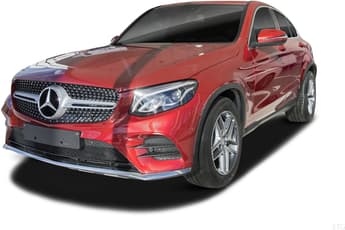

That means this is a particularly important launch for the brand in the plug-in space, even a small percentage of the thousands of GLCs sold each year being PHEVs make it a significant number.
The GLC350e launches at $99,900 before on-road costs, only a small bit more expensive than the C350e sedan ($98,200) it shares much of its drivetrain with. But there are some small changes.
The GLC comes with the same turbocharged 2.0-litre four-cylinder petrol engine as the C350e and shares its 230kW/550Nm outputs, thanks to the engine’s 150kW/320Nm and the electric motor’s 95kW/440Nm.


The GLC is all-wheel drive, with power being sent to the four corners via a nine-speed automatic transmission.
The 0-100km/h sprint takes 6.7 seconds according to Mercedes, so it’s slower than the sedan despite its all-wheel drive. But this is understandable given it’s also in the realm of 200kg heavier, tipping the scales at more than 2.3 tonnes.

Despite sharing drivetrains, the same-sized 25.4kWh battery and the GLC being heavier, it has a longer claimed electric driving range. Mercedes says it can travel up to 132km (under lenient NEDC testing) on electric power, as opposed to the sedan’s 104km (also NEDC).
Its 1.2L/100km fuel consumption figure is also lower than the sedan (1.5L), but Mercedes admits that with the battery at zero charge, fuel consumption bumps all the way up to 7.8L/100km.


Inside, the GLC is well-equipped, though some of what comes standard on the C350e is optional for its SUV cousin. The GLC comes standard with heated electric memory front seats, a head-up display, ambient lighting, a panoramic sunroof, privacy glass, metallic paint and aluminium-look side steps.
A 12.3-inch multimedia touchscreen and same-size digital driver display allow for wireless Android Auto and Apple CarPlay integration, but the system is clear and easy to use even with its native software.


Optional for the GLC is a Sport Pack for $6000, which adds AMG Line exterior and interior design features like 20-inch wheels with arch liners, sport seats, and a multifunction sports steering wheel in Nappa leather. It also adds larger brake discs on the front axle.
A Night Package ($1300) adds high-gloss black trim, while a Plus Package ($7600) adds a Burmester 3D surround sound system, the brand’s high-tech Digital Lights with adaptive high beam, Guard 360 vehicle protection, noise-insulating acoustic glass, and an MBUX multimedia system with augmented reality navigation - much of this is standard in the C350e.


But most importantly, the GLC comes with more space inside. The compromised 315L boot in the sedan doesn’t hold a candle to the GLC350e’s 490L, which isn’t huge for an SUV but is more useful for families.
More good news is that the SUV also retains its confident driving characteristics.
With its electric mode, the GLC350e is quiet and smooth, road noise only coming through on rough surfaces and with no music being piped in via the sound system.


The hybrid drive mode is similarly gentle in terms of the senses, sometimes its engine turns on unnoticed, and helps keep the battery from draining faster than necessary.
While its 230kW isn’t sports-car stuff, it’s brisk enough to not feel sluggish, and even on a twisty road the GLC is able to refrain from too much body roll, keeping things moving smoothly.
As you’d hope, its steering is responsive and predictable, though not extremely feelsome, which proves suitable for a family SUV.


The suspension does an acceptable job of keeping the GLC’s weight from turning rough roads and sharp bumps into uncomfortable cabin intrusions. It’s an overall comfortable driving experience.
Safety systems don’t intrude unnecessarily either, the progression from small warning to intervention meaning you have time to react and make your own decision. There’s also a five-star ANCAP rating and 10 airbags for peace of mind.
Furthermore, a five-year, unlimited-kilometre warranty covers the GLC, though servicing is pricey - a five-year servicing plan (intervals are 12 months or 25,000km) costs $7350.
Related cars for sale on CarsGuide
See more Mercedes-Benz GLC350s for sale View cars for saleMercedes-Benz GLC 2025: 350 E 4Matic
| Engine Type | Turbo 4, 2.0L |
|---|---|
| Fuel Type | Premium Unleaded/Electric |
| Fuel Efficiency | 1.2L/100km (combined) |
| Seating | 5 |
| Price From | $92,730 - $106,590 |
| Safety Rating |
|


Verdict
It’s not going to be the most useful choice for many, as going fully electric or sticking with a non-plug-in car for now seems to suit most lifestyles at the moment, but if you can manage to charge at home every night, keep long trips to a relative minimum, and your daily commute is relatively urban, the GLC350e is a comfortable day-to-day companion.
Note: CarsGuide attended this event as a guest of the manufacturer, with meals provided.


.jpg)
.jpg)
.jpg)
.png)
.jpg)
.png)
.jpg)
.jpg)


.png)
.jpg)

_0.jpg)