What's the difference?
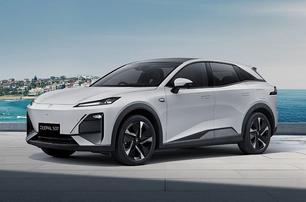
You’re getting flooded with new electric mid-size SUVs from China, I know. But if you’re struggling to recall them all, just remember – this is the good-looking one.
It’s the Deepal S07, the spearhead for the Deepal brand's new presence in Australia, and I reckon it looks damn sharp.
But is there substance to match the style? And can it take on the likes of the Kia EV5, Tesla Model Y and XPeng G6?
Let's find out, shall we?
Hyundai's Ioniq range is nothing if not a flex in the face of Toyota.
Sure, Toyota has a dominating position in the Australian market, with its well-received range of hybrid models, but what happens after hybrid? Hyundai takes on the blocky Prius formula with not only a directly competing hybrid model, but a plug-in and a fully electric version, too.
This expansive range is as though Hyundai is trying to demonstrate it's ready for any future, near or far, and guess what, Toyota? Anything you can do; the Korean juggernaut thinks it can do better.
These cars aren't really designed to sell so much as they are offerings for early adopters, but a few years after its launch, with a host of rivals set to take it on, and an entire sub-brand based on the Ioniq just around the corner, is Hyundai's top-spec Ioniq electric worth a look? I took one for a week to find out.
The Deepal S07 has the makings of a great family friendly EV, but with some quirks that really need to be ironed out.
Just like the Kona EV, Hyundai's Ioniq is still one of the best EV options on the market today. It strikes an excellent balance by offering significantly more range and better energy consumption than the more affordable Nissan Leaf or MG ZS EV, while providing the familiarity of the Hyundai spec and drive experience at a price only a little higher than a top-spec Prius.
Its relatively high score is a product of these factors, but also the way in which its interactivity offers the early adopters the engagement they will be searching for.
If you’re left a little underwhelmed from the bland same-sameness of so many new SUVs, I reckon you’d like the Deepal S07 in the metal. Because boring it ain’t.
It’s sharp and purposeful and full of lovely creases and angles, and it stands out on the road — especially in this 'Sunset Orange' colour.
Deepal says it was designed in Turin, Italy, but I'm not sure that matters much. I mean, being in Italy doesn’t guarantee design success – just look to the modern Lancia range for proof – but I guess it’s something for a newish Chinese brand to hang its hat on.
Inside, the design is lovely, too. I like the materials used, the extended dash and the size of the central screen (though it tilting towards you or the passenger is probably overkill). And the flat-bottom wheel is a nice touch.
I'd like to know where the air con was designed, though. It feels massively underwhelming on a piping hot Sydney day. The main outlet is at the bottom of the dash, which is perfectly positioned to chill absolutely nothing, and you can’t really change the direction of the vents, either. Or, at least, I couldn't figure out how to.
The Ioniq follows in the footsteps of eco hatches before it. You'll note this car's similarity in profile to the Toyota Prius, both shaped as such to secure low drag figures and therefore better economy and longer range.
While the Ioniq is a little more sedate than the wacky angles of the current Prius, there's no getting around the fact it's not exactly a cool shape. You could say it's interesting, perhaps, in the way it warps the low-drag box to Hyundai's styling cues, but dorky nonetheless. The LED headlights help lift it a little, but the filled-in grille and small 16-inch wheels hardly lend this car extra street cred.
The Ioniq is more a proof of concept for early adopters who care a little less about the way the car looks and a little more about its drivetrain and technology, which is clearly the focus here.
This can be seen in the Ioniq's interior, which has been re-worked for its most recent update. The digital features are impressive, with the floating 10.25-inch screen now totally dominating its dashboard.
I also like how the brand has given the instrument cluster a more modern design, with a cool floating bridge element over the top to eliminate glare, and, as always, Hyundai has made ergonomic use of its excellent switchgear and tidy steering wheel from the i30 and Kona ranges.
The climate unit has lost its tactile dials, replaced by touch-panel controls, and the lack of a transmission under the centre console has allowed plenty of negative space for the brand to play with, in this case a huge storage bay. There are also elements from more recently launched Hyundai models, which help to tidy the centre space up further, like an upright wireless-charging bay and shift-by-wire drive selector, which all looks very modern and neat.
It's a step towards things to come from the newly minted Ioniq sub-brand, which will do a lot more of this stripped-back, space-saving stuff with its next vehicle, the Ioniq 5 SUV. For now, though, the Ioniq is good as a half-step into the future. It's not as outlandish as a Tesla Model 3, for example, and will better suit a buyer looking for something a bit more familiar that still has a futuristic edge.
At just over 4.7m long and 1.9m wide, with a 2.9m wheelbase, the Deepal is a sizeable proposition, which means good passenger room and decent luggage space.
Starting at the boot, you’ll find 445 litres with the rear seats in place, but with the seats folded flat that number grows to 1385 litres. There’s a frunk up front, too, that holds another 125 litres.
In the back, the room is ample for full-size adults. When sitting behind my own 175cm driving position, I had more than enough knee and headroom to sit comfortably.
There’s also a heavy pulldown divider that’s home to twin cupholders, and there are two more up front, and USB connection points galore. Bonus points for the back seat riders being able to adjust their own air temps, too.
As mentioned, there's actually quite a lot of space in the Ioniq cabin, and the design has been further stripped back with its most recent updates.
The front seat seems a bit high for a hatch, although ergonomically everything is correct for the driver, with a good amount of adjustability in the seat back and wheel.
The big, bright multimedia touchscreen is easy to use, and the single centrally mounted volume dial is welcome, but I do sorely miss the dials for adjusting fan speed and temperature. Touch-panel controls, to me at least, are always inferior.
As already mentioned, the centre-console area under the climate unit has been almost entirely deleted for the electric variant, granting the driver a little more knee room, and leaving a deep rubberised bay for loose objects, maybe even small bags. This area also houses two 12v power outlets and one USB port. The centre console has been re-worked to include a smart, space-saving upright wireless-charging bay for your phone, the shift-by-wire console, and controls for the heated and ventilated seats. This area also hosts two large bottle holders, and a large centre-console box.
As is usual with Hyundai models, there's also a large bottle holder in the door, alongside a practical bin.
Rear passengers are treated to decent legroom, about on par with what you'd expect in a hatchback. Headroom is a little limited, both for getting in and out, with the descending roofline, so if you have family or friends taller than my 182cm height, they might be less than pleased.
The rear-seat area gets bottle holders in the doors and in the drop-down armrest, although there are no power outlets, just dual adjustable air vents.
The hatch body of the Ioniq makes for a decent boot volume of 357 litres, enough for a large pram or, in the case of my testing, the largest of the CarsGuide luggage cases, with ease. Hyundai gives you a little satchel to tidily store the standard powerpoint to Type 2 charging cable. A Type 2 to Type 2 cable, which you will need to charge at public outlets (up to 7.2kW) is not included.
It’s easy picking in the Deepal range, given there’s one model with just the one trim level, simply called the S07.
It’s currently $58,521 drive-away in NSW, or $53,900 before on-road costs. And that’s probably about right. You can get an entry-level Kia EV5 for $56,770, though with less range and kit, or the XPeng G6 Standard Range for $54,800, though that’s before on-road costs. The new Model Y is a bit of a jump, at $63,400 on the road.
For that you get 19-inch alloys, a fixed sunroof with a sun shade, LED lighting all around and a powered boot.
Inside, there’s a giant 15.6-inch touchscreen that can swivel towards the driver or the passenger, wireless Apple CarPlay and Android Auto, a 14-speaker Sony stereo and wireless device charging.
There’s dual-zone air con, the seats (heated and ventilated up front) are trimmed in synthetic leather and there’s an interior camera with gesture control, so you can use a kind of sign language to take a photo, control the stereo or answer or hang up the phone. It's weird and makes you look like a turkey, which is why I used it once and once only, but you might like it.
On the one hand, forking out over $50k for a car which looks like this is a tall order. On the other hand, there is no other electric car that really falls into this price bracket, and when you think about it, it's only a few thousand dollars more than a top-spec Prius.
The aggro never-EV types will argue you can have a very good hot hatch, like say, Hyundai's own i30 N for less, but then this car really is for those early adopters who are after a slice of future drivetrain tech rather than a complete value offering.
In the context of the EVs currently available in our market, the Ioniq shines. Yes, it is more expensive than rivals like the Nissan Leaf or MG ZS EV, but it also offers more range than either of those, at 311km measured to the more accurate WLTP standard.
This is short of Tesla's Model 3 standard range, but also more than $10k more affordable, and as I discovered on my week of testing; 311km, and it really is 311km, is plenty for a predominantly urban commuter to get by with either routine maintenance charging, or a once-a-week stop at a DC charger.
So, value then? As this car has probably the minimum electric range you really want for an Australian city at a price only a little above rivals which fall short, it's in quite the sweet spot.
Oh, you probably want to know about equipment, too. Our Ioniq electric Premium scores familiar equipment from the facelifted Hyundai i30 range, including a 10.25-inch multimedia touchscreen with Apple CarPlay and Android Auto connectivity, built-in sat-nav integrated with charging-station distances, a 7.0-inch digital dash cluster, eight-speaker premium audio system, 16-inch alloy wheels, LED headlights and DRLs, single-zone climate control, leather-appointed interior trim with heated and cooled front seats, a heated steering wheel, auto-dimming rear vision mirror, wireless phone charger, opening sunroof, and keyless entry with push-start ignition.
It's a good array of items, and we'll touch on this car's fully equipped safety suite later. The only notable omissions for now are the lack of a holographic head-up display and the lack of dual-zone climate control.
The S07 is powered by a single 160kW/320Nm rear-mounted electric motor and it's rear-wheel drive. That’s enough output, says Deepal, to push the S07 to 100km/h in 7.9 seconds — not bad for a two-tonne-plus SUV.
The Ioniq electric has a single motor on the front axle producing 100kW/295Nm. It's the least powerful EV in Hyundai's range, but still out-punches cars like the Toyota Prius on raw power. It drives the front wheels via a single reduction-gear transmission, and the Ioniq electric also has re-worked regenerative braking for its most recent update.
This is powered by a huge-for-its-size 38.3kWh lithium-ion battery pack under the floor.
The 79.97kWh ternary lithium battery delivers a claimed driving range of 475km. It is, however, set up for just 92kW DC fast charging, which means going from 30 to 80 per cent will take just over half an hour. That’s at an appropriate DC fast charger, of course. Your 7.0kW AC home wallbox will take 11 hours, or eight hours if you can draw 11kW.
The huge 38.3kWh battery pack and official combined energy consumption of 15.7kWh/100km, grants the Ioniq electric an impressive 311km (WLTP) range. As already mentioned in the pricing section, this lets the Hyundai electric hatch strike a good balance for urban commuters, however, under our mostly urban testing, it's an even better story.
For context, electric cars are far more efficient when operating in an urban scenario than they are on the open road. This is because they can regenerate energy more often and are less susceptible to losses from drag. The Ioniq has a superb regenerative-braking system, which can be completely customised to the user's preference. Want to drive it with no regen braking (like a normal car)? You can. Want to have the full eco experience, and have the car's motor bring it to a halt even without using the brake pedal, thereby maximising the amount of energy recouped? You can absolutely do that, too.
For most of my week, I stuck the Ioniq in its maximum regenerative setting and was very impressed to find it return an efficiency rating of 12.3kWh/100km. Not only is this number well below its claim, it's by far the most efficient electric car I have driven, and the only one I haven't tried yet is the brand-new MG ZS EV.
Colour me very impressed. The Ioniq charges via the most popular socket, the European Mennekes Type 2 combo. On DC, the Ioniq can charge as fast as 100kW allowing for a charge time of 54 minutes from empty to 80 per cent. On AC, its max charge input is a frustratingly low 7.2kW, making for a charge time of six hours and five minutes (more expensive rivals will charge at 11kW or even the max 22kW), while from a 240v wall outlet (~2.3kW) it will charge in 17 hours and 30 minutes.
My single charge session was at a council-supported clean-energy Tritium charger with a max output on DC of 112kW. It charged my Ioniq from about 35 to 80 per cent in 32 minutes, and cost around $7.
Binging, bonging safety systems aside, the Deepal S07's drive experience is relatively peaceful.
It can feel heavy, and isn't dynamically perfect through tighter bends, and even in the city the suspension - which does a good job ironing out most road imperfections - can clang over sharper, bigger stuff, especially if you're too enthusiastic with a speed bump.
But provided you're not asking too much of it on some twisting pass, and you're gentle enough over really big bumps, the S07 behaves much as you'd expect a big, wafty electric SUV might.
That is, with a smooth flow of power, steering that isn't overly direct, but not overly sharp either and with comfort the order of the day.
There are some annoying quirks, though, that would seem easy enough to iron out. The safety systems are often intrusive – and other Chinese brands can get them to be far less annoying – but I also found the tech and user interface annoying and fiddly, which again would be easy enough to fix.
The Ioniq's familiar Hyundai switchgear makes it largely feel like the brand's i30 from behind the wheel, and this is a very good thing. This car is immediately ergonomic and user friendly, although the seating position is a little high, preventing it from feeling particularly sporty.
The Ioniq emits a pleasant choral tone at low speeds, which enhances the perception you're steering something from the near future. It also helps alert pedestrians nearby, which was one of my pet peeves about the silent Tesla Model 3. The noise is interesting enough that you'll have people peering closely at it to figure out what's going on. It even gets louder as you accelerate, as though the motor is making it and it's not entirely artificial. Cool.
This EV is silky smooth to drive and accelerate. Like other Hyundai electric cars, it doesn't have the unleashed electric torque of a Tesla, but it feels well attuned to driving around in an urban scenario, with viscous acceleration and regenerative braking. I was surprised to discover how heavy it feels, though.
I was expecting it to be heavier than its hybrid or PHEV counterparts but compared to the hybrid Prius I drove only a week or two prior, the electric Ioniq feels obese.
Upon closer examination, the Ioniq electric weighs 200kg more than the Prius, at 1575kg. It doesn't sound outrageous but it's enough to have this little car's suspension wallowing and occasionally crashing over bumps that wouldn't bother its hybrid versions or, indeed, the Prius.
This is perhaps emblematic of the issues facing smaller EVs like this. To get more than 300 kilometres of range, they need a lot of heavy batteries. Manufacturers can better hide this with the existing heft and better suspension travel of SUVs. The Kona EV, for example, feels less hefty than this little hatch.
Regardless, the electric motor dispatches with the Ioniq's weight easily when you really want to accelerate, and while it doesn't provide the hold-on-for-dear-life acceleration of Teslas, it's more than enough for a daily commuter. Unlike the Prius, the Ioniq does genuinely feel pretty sporty in the corners, thanks to steering that's on the heavier side, and a firm, responsive damper tune.
The regenerative braking is particularly good on the Ioniq. Using paddle-shifters usually reserved for changing gears, the Ioniq instead lets you alter the amount of regenerative braking available. Feel like coasting a bit faster? Flick the Regen braking off. Feel like maximising economy and range? Max it out in the drive mode of your choosing, and you can use it as essentially a ‘single pedal' car (you can go or stop by using the throttle alone).
It even has an auto mode, which I found to be pretty intuitive. Paired with a few different display options to let you get superior feedback on how you're tracking with battery usage, it's brilliant, and more electric vehicles should take note.
So, this is an eco-focused electric car that is reasonably engaging to drive if a little heavy. Most importantly for the electric era, it's highly interactive, helping you really understand how your inputs are affecting its battery usage, and how you can better drive it to maximise range.
Handing out a low score for a five-star ANCAP car seems harsh, but bear with me.
All the major bases are covered, the standard spec including auto emergency braking (AEB) with car-to-car and 'vulnerable road user' (pedestrian, backover, cyclist, motorcycle) detection, blind-spot monitoring, lane-departure warning, lane keeping assist and more. And there are front, front side (chest), side curtain and front centre airbags.
But the single biggest drawback of the Deepal experience has to be the most annoying, infuriating active (crash-avoidance) safety systems I’ve ever come across. Honestly, it has to be experienced to be believed.
For one, whenever I wear sunglasses it gives me an “occlusion” warning, which I genuinely had to Google, but that’s nothing compared to the driver attention monitor, which seems rigged to go off if you so much as blink, sending chimes binging and bonging throughout the cabin, increasing in number like a bomb about to go off.
And if you have to turn them off every time you get in, you have to wonder if they have any business being there at all.
So yes, it wears a maximum five-star ANCAP rating from assessment in January this year, but it’s a tree falling in the forest, kind of vibe, like if a car has every active safety system known to man, and you want to switch them off every time you get in, is it any safer than a car that doesn’t have any systems at all?
The Ioniq electric comes with the full suite of Hyundai SmartSense safety features, with active items including freeway-speed auto emergency braking (detects vehicles up to 180km/h, detects pedestrians up to 70km/h), lane-keep assist with lane-departure warning, blind-spot monitoring with rear cross traffic alert, adaptive cruise control, driver-attention alert, and auto high-beam assist.
This is backed by the usual stability, brake, and traction systems, as well as seven airbags (the standard dual front, side, and head array, plus a driver's knee) securing the Ioniq a maximum five star ANCAP safety rating dating back to its launch in 2018. It scored highly across all categories.
The S07 is covered for seven years or 160,000km, while the battery is covered for eight years or 240,000km.
Servicing is required every 12 months or 10,000km, and the brand’s capped-price servicing program covers the first seven services (or eight, if you include the initial 5000km check-in, which is free), for a total $2981.43 (or an average of $426 per paid workshop visit).
Hyundais are all covered by a competitive five-year and unlimited-kilometre warranty, which includes 12 months of roadside assist. The roadside assist is topped up for an additional 12 months with every genuine service, and the battery pack in EV models like the Ioniq is covered for eight years or 160,000km.
Hyundai's service pricing is amongst the best in the business, and with less moving parts, the electric Ioniq is the cheapest in the range with the first five services for the life of the warranty fixed at just $160 per 12 monthly or 15,000km interval.