What's the difference?
Cupra is a new brand under the Volkswagen Group, designed to be a cool, sporty, and youth-focused alternative to the likes of VW and Skoda, as contemporary and disruptive as it comes, and the Formentor we’re testing here treads the delicate ground between the world of hatchbacks and SUVs.
The VZe spec we’re specifically looking at for this review is even a hybrid with a plug - arguably a concept Australians are barely ready for.
It’s very much a symbol of what’s going on in the car industry at the moment. New names, shapes, and technologies are coming to shake the status quo, and permanently alter the kinds of cars Australians buy.
It’s all well and good to be on the front foot. But does the Formentor VZe make sense in an increasingly crowded marketplace? Read on to see what I found.
The moment Audi slaps an 'S' badge on any of its cars, you know you could well be looking at something a bit special. That single S has usually inferred a big jump in performance and an overall much sportier flavour than the Audi 'A' car on it's based on.
And now there’s an all-new Audi A3 coming to showrooms about now, the chance to take a deep dive into the equally new S3 was a no-brainer.
Describing the S3 as an A3 with more of everything sounds a bit trite, but it’s also accurate. And this is not new; Audi is as good as any other carmaker (and better than most) at taking a volume seller, piling on the good gear and letting it loose to appeal to a cashed-up buyer profile.
Available in both Audi’s usual Sedan and Sportback (that’s Audi-speak for a five-door hatch) the new S3 boasts more of everything from engine output, to handling, to luxury and connectivity. No surprises there, it’s pretty rare to hear of a car going backwards in any of those departments. But compared with the A3 – and this is the important bit – the S3 offers more of the attributes that appeal to buyers with more cash to splash.
While much of the car might be new, Audi fans will recognise the 2.0-litre turbocharged engine. It’s been tweaked this time around for more power and, significantly, Australia gets the full-fat, Euro-spec engine, rather than the slightly detuned 'hot-weather' specification we’ve seen in this model in the past.
Other changes over the new A3 include the usual S touches including lower, firmer suspension, bigger wheels and tyres and a more industrial braking package.
Inside, there’s more connectivity and multimedia potential than ever before, and safety has been given a leg-up with the latest driver aids.
The other significant thing about the S3, of course, is that until the even hotter RS3 turns up in showrooms sometime later this year, this car will represent peak A3-platform performance.
I am stuck in two minds on the Formentor VZe, a car which took me by surprise. It's a bit frustrating as a plug-in hybrid. It has a short real-world electric-only range and takes a while to charge. While this isn't unusual for a small PHEV, I wish it were better on this front. As a hybrid crossover, though, it is intriguing - a rare case of an electrified car being seriously fun to drive and proving that hybrids don't just have to be about saving fuel. If only it didn't cost almost as much as a Golf R...
There are plenty of historical instances where a particular model within a broader range manages to hit the absolute sweet spot even though it’s not the fastest or most expensive variant. Porsche’s GTS specification across various models is a great example of this.
And at the risk of being proven wrong when the all-new RS3 comes along later this year, this car, the S3, might just pull off that feat.
Yes, the new RS3 will be more powerful and will offer even more grip and sporty flavour, but it will also be more expensive. And we defy anybody to drive the S3 and say that it lacks dynamism in any single area.
It’s also a magnificently balanced car with the right amount of attention paid to every aspect of its trim and performance. That, in essence, is where that `balanced’ label originates and even though it’s felt most in the actual driving experience, it permeates throughout the entire vehicle.
Note: CarsGuide attended this event as a guest of the manufacturer, with travel, accommodation and meals provided.
The Formentor looks great. It’s much more a crossover hatch than it is an SUV, and one of the better looking examples on the market, too.
It’s a surprising take on the Volkswagen Group SUV formula, too, given it could have easily been a re-skinned, or worse, re-badged T-Roc. Instead the Formentor brings a quite unique look and feel to what are otherwise commonly shared parts.
The light profile is distinctive, as are the chunky, almost Porsche-style haunches over the rear wheels. The wheels themselves, despite measuring in at just 18-inches appear enormous on this design, and completing its contemporary visage are the contrast grey crossover highlights over the wheels and a contemporary light-bar running across the rear.
This car brings all the elements it needs to stand out and apart from its peers. It’s striking, cool, and aggressive, and with its signature light profile, it looks all the more menacing at night.
The interior is also interesting. The big bucket seats in the front instantly imbue it with a sporty feel, as does the neat steering wheel with a carbon-look finish and the raised centre console elements shared with the Golf 8.
The mix of manual adjust seats, modern fly-by-wire controls, and digital dash set-up makes the Cupra feel like it’s in an unusual, very European trim level, the kind you don’t usually see in Australia, and while all the individual pieces come from across the VW Group - from Skoda to Audi, the way they’ve been mixed and matched in this car gives the Formentor its own distinctive appeal.
This is helped along by a bespoke set of typefaces and designs for this car’s digital elements, on the multimedia screen and dash display. There’s been attention to detail here in setting the Cupra brand apart, and I appreciate the depth of changes this car has compared to, say, a Golf, or a T-Roc.
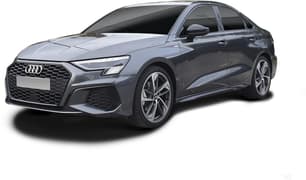
Perhaps the most striking thing about the styling of the new Audi is just how similar it looks to the old model. Okay, this is not a new thing with Audi which has made a point of not throwing a handsome design into the dumpster in pursuit of new for new’s sake.
As such, the exterior lines are taut and typically Audi clean and, with the latest LED headlights and a refinement of the Audi trapezoidal grille, the look is fresh and crisp without being a novelty act.
Inside, the virtual dash display and large, relatively flat centre console almost amount to anti-styling. Or it would if the rest of the deal wasn’t so sharply angled towards a philosophy of less is more.
Again, this is classic modern-era Audi where the game is to make a complex layout look as simple as possible. The face-level air vents also seem to have borrowed a little Lamborghini (part of the Audi family) DNA.
I particularly like the new shift-by-wire gear selector which is a nifty looking switch but works just as intuitively as a conventional shift lever. New tech meets old muscle memory, I’m calling it.
It's worth mentioning (again) just how good Audi’s customisable dashboard display is. With sharp, clear graphics and the ability for the driver to prioritise the information on display at the time, the S3’s display is still about the best in the business.
Overall, ergonomics have always been a long-suit of this brand and there’s been a clear intention to follow that tradition this time around.
The design sells a car which is more individualistic than some of its rivals or relations, and this certainly felt true in my week with this Cupra. The big front seats, for example, are accommodating and supporting, allowing a sporty, low seating position and a good level of adjustability for the steering column.
The doors have a big bottle holder in them, and there are a further two in the raised centre console element. This area is also enhanced with a small bay thanks to the minimalist fly-by-wire controls, good for holding another phone, wallet, or perhaps keys. There is also an adjustable-height centre armrest covering a small storage box.
The area under the screen hosts dual USB-C ports as well as a wireless charger. Although we’ll call out here there’s no mechanical controls for the climate functions, which like all modern VW Group vehicles, need to be managed through some touch elements below the multimedia screen, or, more frustratingly, through the screen itself.
The screen is interesting, because it’s not one of the crazy high resolution ones which appear in some VW Group products, instead being a faster, lower resolution version, which has the benefit of making the touch elements in CarPlay or some of the sub menus large and easy to jab at while on the move.
The software is mostly good, too, with a handful of fairly self-explanatory menus, with some more advanced features buried about two menus deep, best adjusted while parked. There’s a clever little short-cut bar on the left-hand side of the screen, even when CarPlay is running, which lets you skip right to the main menu, car settings, or climate functions.
The digital dash has a welcome variety of views to play with to suit all kinds of preferences, and some bespoke Cupra ones which look neat, too.
In my week with the car, I had some passengers complain that the rear seats feel very claustrophobic with the massive front seat backs blocking the view out the front of the car, and a combination of black headliner and a large transmission tunnel closing in the space further.
I tend to agree, although I (at 182cm) had sufficient airspace for my knees behind my own driving position as well as sufficient headroom, with the only small annoyance being how low the doorline is. If you’re as tall or taller you’ll need to duck low to get in.
Welcome additions to the second row include a large bottle holder in each of the doors, dual USB-C outlets, and the third climate zone with adjustable vents is a real win.
Boot space is 345 litres. Sounds middling for the small SUV segment, and down on the 420 litres offered in the purely combustion variants, but I was pleased to find it could accept the entire CarsGuide luggage set with minimal disruption to the view out the rear window. I did have to remove the luggage cover, however.
There is no under floor storage with a small cutaway for the tyre repair kit, so you will need to store your charging cables in the boot.
While SUV owners are often quick to tell you that they bought their car for its interior space, the truth is sometimes different. And without the huge wheel-wells and suspension towers of a high-riding SUV, the conventional hatch or sedan often has an advantage.
Certainly, there’s no lack of room in the S3 and the hatchback version has a wide hatch opening to make loading easier. The sedan, however, is a full 150mm longer than the hatch and that extra is all behind the rear seat.
So the boot is actually very useable with a capacity of 325 litres. Audi claims the same 325 litres for the Sportback, but that figure jumps to 1145 litres with the rear seat folded flat.
The rear seat in either variant is handily split 40/20/40 and there are storage nets on the back of each front seat, luggage nets in the cargo area and 12-volt outlets in both the centre-rear and luggage compartment. Even floor mats are standard.
Let’s get the price out of the way immediately, because on the face of it, the VZe is a tough sell.
This plug-in hybrid version of the Formentor comes in at a whopping $60,990, before on-road costs (or $66,990 drive-away). There’s no getting around how expensive it is. The bright side is it costs no more than its top-spec alternative, the VZx, which is the same car but with a bigger engine and all-wheel drive. The downside is it’s almost as expensive as a Golf R.
This puts it in a tough place. Performance-wise it can’t quite match a pure combustion rival, and on the electric car front you can have a Tesla Model 3 or Polestar 2 at a similar cost. The Cupra brand itself is even in a strange semi-premium spot, with the most direct rivals to this car being the Mini Countryman PHEV (from $64,000).
You’d have to be committed to buying a plug-in hybrid then, with everything that entails. Thankfully, the Formentor VZe is not only notable for its drive experience (more on this later), but it’s also well equipped.
Standard gear includes 18-inch alloy wheels, a 10.25-inch digital dash, 12-inch multimedia touchscreen with wireless Apple CarPlay and Android Auto, a wireless phone charger, built-in navigation, surround parking sensors, bucket seats with cloth trim (these appear to be a similar style to the ones which appear in the Golf R), tri-zone climate control, full LED head and tail lights, with Curpa logo puddle lamps, leatherbound heated steering wheel, keyless entry and push-start ignition, adaptive chassis control, and a progressive steering tune usually reserved for the more upmarket Volkswagen Group products.
It’s a nice set of gear, and if you’re missing high-end seats, they can be optioned with the $2050 ‘Leather Package’ which upgrades the trim, while also adding heating and power adjust with memory.
The only other options are a sunroof ($1800) and premium paint ($475). It’s nice to see Cupra throw in the Type 2 to Type 2 public charging cable at no extra cost.
There’s only one trim level across the S3 range, so it doesn’t matter whether you choose the sedan or hatch, the level of standard kit remains the same. And extensive.
As with many performance variants of a platform, what you’re paying for in the S3 is the hardware that allows it to be a more aggressive, more involving drive. So, compared with the A3, the S3 gets much more engine performance, bigger brakes and improved suspension.
Inside, the S3 runs to S-specific trim and presentation (instrument display, steering wheel) standard heated, powered, four-way lumbar-adjustable sports seats, a black headliner and the 15-speaker Bang & Olufsen stereo that’s a $1500 option on some variants of the A3.
The interior is also home to a 10.1-inch info screen, dual-zone climate-control, an auto-dimming mirror, keyless entry and push-button start, wireless phone charging, rain-sensing wipers, park-assistance and acts as a Wi-Fi hotspot. Connectivity runs to Android Auto, Apple CarPlay and sat-nav.
Helping the image match the performance, the S3 also gets dark aluminium accents, alloy pedals, ambient lighting and gloss-red brake calipers to give it the visual punch the price-tag suggests.
Speaking of price, the new S3 represents a fair hike over the outgoing S3, and a sticker of $70,700 for the Sportback and $73,200 for the sedan means the new model will be tickling the $80,000-mark as a drive-away proposition.
Compared with the old model, those prices represent a leap of around $6000, not to mention a spike of around $23,000 or $24,000 over the entry-level versions of the new A3 on which it’s based.
But perhaps a more meaningful comparison is with the 40 TFSI variants of the new A3 which also feature Audi’s famous Quattro all-wheel drive system.
In that case, the price difference between the A3 and S3 is closer to $17,000; closer, but still a big tweak to the monthly lease repayment.
Given you’re starting with a premium-priced product to begin with in the A3, the extra performance and dynamics offered up by the S3 seems to be reasonably priced given the scope of their influence.
Again, you need to see it through the prism of high-end motoring, but when you do, you can see where the money has gone.
And if you have even more to outlay, there’s always the 'Premium Plus' package for the S3. That gets you a panoramic glass sunroof, head-up instrument display, 360-degree cameras, a memory function for the driver’s seat (which should be standard at this end of the market) and a memory function for the exterior mirrors. Yours for an extra $3990, which, given some makers charge that just for the sunroof, seems a pretty reasonably proposition.
The Formentor VZe pairs a 1.4-litre four-cylinder turbo-petrol engine producing 110kW/250Nm with an electric motor producing 85kW/300Nm. The two can combine using a boost function, for a maximum combined output of 180kW/400Nm.
The front wheels are driven via a six-speed dual-clutch automatic transmission, and the electric motor is seated between the transmission and engine.
A 12.8kWh battery pack allows a theoretical purely electric driving range of 58km, although I was seeing more like 40 at best in the real world, with the adjustable regen set to the higher of two available settings.
Here’s where a lot of the extra currency demanded for the S3 goes. Forget the 1.5-litre engine in the base-model A3, and instead move to the two-litre four-cylinder as seen in the A4 40 TFSI. Then, add extra turbo-boost (up to 1.8 bar thanks to an efficient intercooler) different variable valve timing protocols, and a direct fuel-injection system with a specific calibration and the potential to create injector pressures of up to 350 bar, and you have the S3’s powerplant.
Maximum power is 228kW at anywhere from 5450 to 6500rpm, and maximum torque of 400Nm produced in a broad range between 2000 and 5450rpm.
Transmission is a seven-speed dual-clutch unit driving through all four wheels as per Audi’s Quattro mantra, although it’s important to note this version of Quattro is the simpler, arguably less pure, on-demand system where the car behaves as a front-drive platform until the all-wheel-drive system is required to step in.
That said, with 228kW under its wheels, that’s a fair bit of the time. And compared with previous systems, this one takes more notice of driver inputs and wheel-speed to be less reactive and more active.
As with most plug-in hybrids, the Formentor VZe has a very good-looking claimed fuel consumption of 1.9L/100km, although this assumes you’ll religiously charge it up. In my week with the car I saw 5.5/100km, with the caveat that I was mostly driving it in the hybrid mode as I was far from places I could charge it up.
Thankfully, the hybrid driving mode is very good, but one of the most annoying things about this car is how long it takes to charge.
The Formentor VZe’s AC inverter offers a maximum rate of just 3.6kW, and from the base level my car informed me it would take almost four hours to charge from a public charger.
Again, like many plug-in hybrids, this car is really only suitable for those able to charge in their home garage. It takes too long to charge this car on a public outlet to make the most out of its electric features.
It also requires mid-shelf 95 RON unleaded fuel for its small turbocharged engine.
Audi quotes an official combined cycle fuel consumption figure of 7.4L/100km for the A3 Sportback and 7.3 litres for the sedan.
That difference is a bit of a mystery given the sedan is heavier (by just five kilograms) until you consider that the combined figure includes freeway running, at which point the sedan’s extra 150mm of length and different rear diffuser may be the aerodynamic deal-breaker.
The Sportback emits 170 grams of CO2 per kilometre (166 for the sedan) and with the 55-litre tank fitted, both variants should have a range of around 750km between fill-ups.
The Formentor VZe might be the best plug-in hybrid I’ve driven, certainly at this end of the market. It does something so few hybrids in this class try to, or are even capable of. It’s a lot of fun.
The Formentor manages to pack all the entertaining drive characteristics of something like a Golf GTI into a car which can be driven fully electrically.
It’s a thing of brilliance. The car feels agile, responsive, and lightweight, with some magic at work to hide the weight of its nearly 13kWh of batteries under the floor.
It also blends the instantaneous response of the electric motor in quite nicely with the surge of the 1.4-litre turbocharged engine, the two complementing each other with some grace. On a rare occasion, there is a slight delay between the electric motor waning off and the torque of the combustion engine meeting it, but these instances are few and far between.
With a healthy amount of torque available instantly, it also does away with the need to worry about the occasionally fiddly dual-clutch automatic transmission.
As to going fast in a straight line, the VZe is capable of combining its two power sources to very easily overwhelm the front wheels. It has a 0-100km/h sprint time of 7.0 seconds, although feels as though it could best this, traction allowing. A peak of 400Nm is an incredible amount of torque for such a small two-wheel drive vehicle, after all.
The electric driving is of course smooth and easy to work with, although the regeneration, even on its highest of two available settings, can be quite mild. When set to hybrid mode, it drives more or less like a Toyota hybrid, limiting the amount of electrical assistance available on the accelerator pedal.
This is good, because some PHEVs will simply drain the electric system first, with the engine only turning on with a solid press of the accelerator, but the Formentor’s combined accelerator approach means you can drive in stop start traffic for nearly 200km before it manages to drain the battery (trust me, I tested it).
It exudes sportiness from behind the wheel, too, with a low-set driving position, neat customisable dash settings which offer plenty of information, and a sporty, thin wheel which offers direct feedback unsurprisingly similar to that of a car like the Golf R.
While it might not be the most competent electric vehicle, then, nor as brilliant as something like a Golf R, it’s an excellent hybrid offering unprecedented levels of driver engagement for a car with this kind of technology. I liked driving it a lot.
Some cars take a few minutes at the wheel before they start to get chatty. Not so the S3. From the moment you grab the lovely leather tiller, haul it into gear and give the perky little turbo-motor a squeeze on the throttle, the Audi is making all the right noises and giving clear, precise feedback on its every move.
Sometimes, cars with lots of tyre, lots of all-wheel drive grip and the sort of sharp steering fitted here, can start to feed back so many responses that it becomes difficult to know which one to respond to.
Not the S3, which seems tuned to a keener driver’s priorities (as it should be, of course). As a result, the steering feedback is distinct from what the rest of the front end is doing and everything else going on is clear, quantifiable and designed to improve the experience.
That even extends to the soundtrack which, Audi told us does not use any electronics to improve it beyond amplifying the engine-bay harmonics which use the windscreen and scuttle as their 'speaker.'
Combined with the active exhaust system, this car honestly sounds like a five-cylinder engine (I opened the bonnet to count the spark plugs to make sure it wasn’t. It isn’t.)
If you’ve ever driven a five-cylinder Audi or a V10-powered R8 (two in-line fives, really) the tune will be a familiar one. Lovely, and – again - such amazing attention to detail.
The 2.0-litre engine runs fairly high boost levels, but that doesn’t seem to have affected the way it storms off the mark. Neither does the dual-clutch transmission contribute any delay, provided you haven’t managed to stand on the brake and throttle at the same time (as many left-foot brakers might).
At that point, the driveline goes into sulk mode and will force you to wait a heartbeat or two before full power is restored. This can be an issue when trying to dart across a busy intersection or merge into a traffic flow.
It’s not a new thing to Audis, but remains an annoyance to those of us who equate having two pedals with having two feet.
The driver-selectable drive modes fitted to the S3 are interesting inasmuch as they actually make a meaningful difference to the way the car operates. They alter the transmission shift points, the throttle sensitivity, steering weight and damper settings.
'Comfort' mode will be the default for most owners, and while 'Dynamic' does sharpen up the dampers ever-so-slightly beyond an acceptable day-to-day level of firmness, it also adds weight to the steering feedback.
Frankly, I don’t think it needs it and simply adding resistance feels like a token gesture. And since the steering has a (non-negotiable) variable rate in the first place, bigger inputs equal a bigger proportionate change of direction anyway.
The damping control is now the more sophisticated magnetic-hydraulic type where hydraulic pressure varies the valving rather than the simpler, previous system of energising an electro-magnet to alter the viscosity of the damping fluid.
This more finite control system has allowed more 'bandwidth' as Audi puts it, between Comfort and Dynamic damper settings.
While the auto mode is almost prescient, it’s not actually pre-emptive but rather takes into account suspension deflection, wheel-speed and driver inputs to come up with a combination of settings to make the most of the situation.
And if you really want to fiddle, you can choose 'Individual' and create an overall setting that combines bits of Comfort and Dynamic with a smattering of 'Efficiency' thrown in.
Toggle down to Dynamic and throw the S3 at some bends and it soon emerges as a pretty gripped-up piece of equipment. The front-drive bias is not really noticeable, but then neither is the transition where the computer begins to engage the rear multi-plate clutch to turn the rear axle into an active participant.
There’s certainly no lack of grip at any stage of a typical corner, and even the odd unexpected damp patch poses no awkward questions. Perhaps the biggest grumble would be the tyre roar at highway speeds, but that’s often the price of performance rubber.
The full active safety suite is available across the Formentor range. Active items in this list include freeway-speed auto emergency braking with pedestrian and cyclist detection, lane keep assist with lane departure warning, blind-spot monitoring with rear cross-traffic alert, and side assist which warns you if you’re going to open your door into traffic.
Adaptive cruise control also features, and the Formentor has a comprehensive suite of eight airbags (including a driver’s knee airbag and centre airbag between the front occupants).
There are three top-tether child-seat mounting points on the rear row, and two ISOFIX mounts on the outer seats.
The Formentor has a maximum five-star ANCAP safety rating to a 2021 standard, it scored relatively highly in three of four categories.
No surprises for guessing that Audi has this angle absolutely covered.
Some driver-assistance technologies have now filtered down from larger more expensive Audi models, and are standard fitment on the S3. Those include collision-avoidance assistance, lane-departure warning, rear cross-traffic assistance and parking assistance programs.
There’s also adaptive cruise-control, hands-on detection, traffic-jam assist, exit warning, a rear-view camera and a tyre-pressure monitoring system.
You also get the usual six air-bags including side-front bags and curtain air-bags at head height for rear-seat passengers. The S3 also gets a centre-front air-bag; a move that is likely to become a lot more widespread in the not-too-distant future and is designed to avoid head clashes between the front-seat passengers in a side impact.
Autonomous emergency braking is fitted and can also detect pedestrians and cyclists; a first for the S3.
The S3 scored a maximum five stars for safety in ANCAP testing.
Cupra shares the same five-year and unlimited kilometre warranty as its VW parent, and at the time of writing, includes three years of scheduled servicing for free.
The brand has not settled on how much its servicing plans will cost after that period (again, at the time of writing). While VW Group’s five-year service plans aren’t usually outrageous, proceed with caution.
The Formentor VZe needs to visit the workshop once every 12 months or 15,000km, whichever occurs first.
Audi has finally had to cave in and extend its warranty to match its competition. So, any new Audi sold after January 1 this year moves up to a five-year/unlimited kilometre factory warranty; a big step up from the previous three years of cover.
S3 buyers can also opt for Audi’s five-year service plan which costs $2580. Servicing is set down for every 15,000km or 12 months.