What's the difference?
Cub Campers is Australia’s oldest camper-trailer manufacturer and one of the oldest businesses in the caravan and camping industry, having just celebrated 50 years of operation in 2018.
The company can lay claim to inventing the soft-floor camper trailer, pioneering the rear-fold and championing off-road campers when everyone else was concerned with the on-road market. Amongst all that, though, it was late to the game when it comes to forward-fold campers, not releasing the Frontier until early in 2016, well after the flood of Chinese manufactured versions became immensely popular. So why did Cub wait so long and was it worth it?
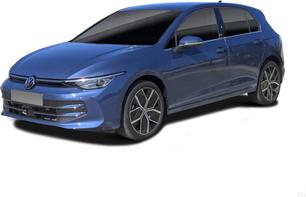
It was the moment the Golf grew up. Just over 20 years ago Volkswagen unveiled a fire-breathing R32 variant to top the fourth-gen line-up of its already iconic hatch. With a growling atmo V6 engine, proper Haldex-based all-wheel drive, fat rubber and a pumped-up body, it instantly became the brand’s performance flagship.
And another four Golf generations later an updated ‘8.5’ version of its current ancestor, the Golf R has arrived. An equally focused, heavy-hitting AWD with just over 30 per cent more torque and close to 40 per cent more power than that snarling, original R32.
CarsGuide was invited to its local launch, including a suitably challenging drive program on road and track. So, stay with us to see if this exceedingly hot hatch can earn a spot on your performance five-door short list.
All in all, the Frontier is the best forward-fold camper on the market, although it is also the most expensive. If you were making a buying decision purely based on features, you’d probably look elsewhere, but if you are prepared to pay a little more because this camper-trailer is Australian made, you get a very functional camper that’s easy to set up, reliable, strong and light.
While some Golf enthusiasts will prefer the lighter, more nimble, front-wheel drive GTI, this Golf R is now an even more serious machine.
It’s a great touring car, super-sharp in the corners and good value in the context of its competitive set. Cars like Toyota’s GR Corolla and Honda’s Civic Type-R are on notice.
Note: CarsGuide attended this event as a guest of the manufacturer, with travel, accommodation and meals provided.
The real appeal of a forward-fold camper-trailer is the internal configuration. Because the bed folds out over the front of the camper, the trailer body is configured with a wrap-around lounge and dinette area, that also converts into a bed. It brings a certain level of caravan comfort to a camper-trailer-sized package. Cub’s execution is quite good. The lounge is comfortable and the dinette table is highly adjustable up and down or around and around. It converts into a bed more simply than any other on the market I’ve seen.
The downside of the forward-fold concept is the quantity and access of storage. Very little of the internal storage is easy to get to, and in truth there’s very little of it. That’s what happens when you put a couch in a trailer, sorry. There are hatches under the seats, but even they are limited by the slide-out kitchen and battery box across the back, plus, they’re not as easy to get to as a drawer. It’s the same in every manufacturers version, though. However, the Frontier has one unique features that makes it stand out – a series of pigeon holes under the foot of the bed which provide the only easy-to-access internal storage in any forward-fold I’ve come across so far.
For reference, the Golf R is just under 4.3m long, close to 1.8m wide and a bit less than 1.5m tall with a 2630mm wheelbase. Right in the middle of the medium hatch footprint.
In the front there’s plenty of breathing room for the driver and co-pilot. And in terms of practicality, you’ve got big bins in the doors with room for large bottles. There’s also a box between the seats with a lid that doubles as an armrest, which also adjusts for height and length, which is nice.
If you need more, there are two cupholders in the centre console, one of which is adjustable for smaller cups, plus a long oddments tray as well as a more powerful ventilated wireless device charging tray at the front end of the console.
There’s also a decent glove box and two USB-C ports for power and connectivity.
In the back, sitting behind the driver’s seat set for my 183cm position, I have ample headroom, legroom and more than enough foot room.
That said, three abreast for full-size adults would be very squeezy. Even a trio of middle teenagers might find it a bit tight. Best as a two-seater in the rear.
Then for storage, you’ve got big bins with room for bottles. Fold down the armrest and you’ve got not one, not two, but three different size cupholders in it.
There’s a nifty double pocket set-up on the front seatbacks, each just right for a phone or hand-held game console, as well as a more conventional map pocket lower down.
There are individual ventilation outlets as well as climate control for the rear section, plus two USB-C outlets.
With the 60/40 split-folding rear seat upright the 8.5 Golf R boasts 341 litres (VDA) of boot volume, which is decent, and that number expands to nearly 1197 litres with the seat down.
There’s a load-through hatch, tie-down anchors, a 12-volt outlet, multiple bag hooks, specific lighting and storage compartments to the side.
No spare of any description, however, with a repair/inflator kit your only option.
The Frontier is quite good under tow. Cub designed and manufactures its own coil-spring independent suspension and has paid quite close attention to the balance and dynamics of the trailer.
As it’s not overly heavy, it’s not a handful, even on the beach, and behind the Mitsubishi Triton I tested it with, it was barely a struggle. On the road, the camper is well behaved, easy to see over and around and because it’s not very long, it’s not very daunting.
The Golf R weighs in at 1517kg and Volkswagen says it will accelerate from 0-100km/h in 4.6sec, which is quick, and the car’s broad torque band makes it super-usable. The maximum 420Nm is available from 2100rpm all the way to 5500rpm.
A blue ‘R’ button on the steering wheel is your short-cut access point to various modes - ‘Eco’, ‘Comfort’, ‘Sport’, ‘Sport+’ and ‘Race’ - and in the racier settings what VW calls ‘Turbo Pre-load’ steps in. More or less an anti-lag set-up for smoother power delivery.
Even from low revs in a (manually-selected) high gear, squeeze the throttle and it quickly builds up a head of steam. Power delivery is impressively linear.
The transmission is super slick and manual shifts are rapid. Refreshingly, manual mode is exactly what it says on the tin. Select a gear with the wheel-mounted paddles and it will stay in that ratio until the rev limiter makes its stuttering presence felt.
And if you’re going into a corner under brakes just keep the left-hand paddle pulled in and the transmission will automatically cycle down to the lowest ratio available, which is handy if you’ve really got the bit between your teeth.
Even with the standard exhaust, once you’ve dialled up the sporty modes, you get that snap, crackle and pop on full-bore upshifts and on the over-run, which also enhances the experience.
Suspension is by struts at the front and multi-links at the rear, and the ‘Adaptive Chassis Control’ system monitors acceleration, braking and steering to fine-tune the set-up.
We drove on some rough B-road sections, in the wet, and the R remained surprisingly refined. Given how hard it grips and how much it communicates back through the seat of the pants it is a comfortable touring car. It’s like a GT in hatch form, eating up the kilometres without fuss or putting too much stress on the driver.
Worth noting we spent much of our time in ‘Nürburgring’ mode, accessed through the Race menu, which, no surprise, was developed on the famous Nordschleife. It’s tuned to optimise dynamic performance on undulating patchy surfaces and is a superb set-up sweet spot for the road and track.
Progressive ratio steering delivers good road feel without too many jitters coming up to your hands. And turn-in is precise without being jagged. Just point the car and it goes exactly where you want it to.
The drive system splits torque between the front and rear axles and across the rear. If, for example, it senses the car wants to turn more but might push into understeer, it calmly manages drive distribution to keep everything under control.
Tyres are Bridgestone Potenza S005 (235/35) and over even coarse chip surfaces they remain quiet and grip with admirable determination.
Braking is by ventilated discs all around and on twisting backroads we occasionally leant on them hard and they were well up to the task. A firm pedal with progressive application when getting on or easing off the brakes.
They even stood up to a race circuit pressure test without raising a sweat, because day two of the launch included a track session at Sydney Motorsport Park. And we can confirm the car is properly fast, balanced and predictable in that environment.
SMP’s dipping, then uphill, off-camber right-hand turn four highlighted the R’s grip and the sophistication of its torque vectoring set-up. We also went sliding on the skid pan in the car’s Drift mode, which biases the rear axle, and is huge fun.
In terms of lower speed manoeuvring, you’ve got a 12-metre turning circle, which isn’t vast but isn’t tiny, so be ready for that.
You’ve also got a 360-degree overhead view, which is very handy in tight spots. And if you want some extra support, ‘Park Assist Plus’ will help you slot the car into the space you’re aiming for.
Under the heading of miscellaneous observations, the sports front seats deliver solid lateral support yet remain comfortable over long periods behind the wheel.
Speaking of the wheel, it’s just the right thickness, with perforated leather at the quarter-to-three positions helping with that lovely connection to the front tyres.
As well, from an ergonomic point-of-view, working through the central multimedia screen and driver’s display is straight-forward, with the latter able to be configured via the steering wheel.