What's the difference?
Remember when electric vehicles were the next big thing? Well they still are, it's just that hybrids are making a huge comeback and have entered a new era of the super hybrid. These are plug-in hybrids with enormous driving ranges and Chery’s just arrived Tiggo 9 Super Hybrid is one of these.
The Tiggo 9 is a large seven-seater SUV that competes with the likes of plug-in versions of the Hyundai Palisade and GWM Tank 500, only for less money.
The value is excellent, but how does the Tiggo 9 score in other areas such as the way it drives, its practicality and safety, or its styling and interior feel?
We found out in this first Australian drive.
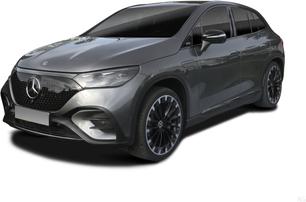
The EQE53 SUV is Mercedes-AMG's first fully-electric SUV.
That means it doesn't have a thundering V8 like a lot of its petrol-powered AMG siblings, but what it lacks in ear-splitting noise it makes up for in colossal but quietly delivered shove.
Which, when you have a sleeping child in the back, is exactly what you might need, because this after all is a family review and we're testing how good this silent beast of an SUV is when it comes to family duties.
The Chery Tiggo 9 Super Hybrid is outstanding in many ways, especially value and the way it drives. I can only stress the importance of charging this vehicle frequently, however, otherwise it will go from super hybrid to super fuel consumer.
The Mercedes-AMG EQE53 SUV has some serious tech inside and will fit the family in style. If you're after the AMG experience, you may be a little disappointed as this model leans heavily towards plush rather than sports-SUV. And it does plush extremely well but it begs the question whether the AMG factor is worth the extra cash.
Chery has crafted a superb-looking SUV here. Sure, the design isn’t ground-breaking or unique, but styling is beautiful from the large grille and multi-spoke wheels to the chrome framed windows and smooth lines of the tailgate.
Our car was painted in 'Aurora Green', which looks stunning in the sunlight. There’s also 'Cosmic Black', 'Star White' and 'Technical Grey'.
The cabin is super modern and luxurious looking, with only a few physical buttons for the hybrid system and climate control. The leather seats are a lovely high-end touch, and while the level of refinement is not up there with the likes of Audi and Lexus flagships the build quality appears to be good.
The Tiggo 9 stretches 4800mm end to end and is 1930mm wide. That classifies it as a large SUV, albeit not an enormous one. A fairly short wheelbase of 2750mm means the cabin space isn’t as voluminous as you might have thought.
We affectionately nicknamed our test EQE53 model the Blue Tic Tac because of its… well, similarity to the mint.
While not uncommon in the EV market, the EQEs pillowy design doesn't exactly scream 'big personality'. However, it does feature some cool features like the massive 22-inch alloy wheels, red brake calipers and the AMG badging at the rear. But that's all that separates it from its non-AMG siblings.
Head inside and it features all of the plush comforts and styling you’d expect from a Merc with some of the best ambient lighting in the business and a sunroof that manages to make the cabin feel airy despite all the black trims.
Some of those trims, like the synthetic grey panels scattered liberally throughout the cabin, are found in all EQE models and don't reflect the grade level. A trim with better tactility and style would be a point of difference.
The dashboard features three screens in a ginormous panel, which surprisingly doesn’t catch the light but does show fingerprints and every spec of dust on it. Which might annoy you as it's 100 per cent the drawcard for the interior and when it's dirty, it's very obvious.
Although I'm not in love with some design choices, it's still a lovely cabin to spend time in.
The Chery Tiggo 9 is not overly large and with a relatively short wheelbase the cabin room is adequate but not outstanding. I’m tall at 189cm, but there is still room for me to sit behind my driving position and headroom is good, too. That said, the cabin floor is high which raises the knee height for second row passengers.
The third row is really just for children and for those occasional but unpredictable times when as a parent you’re suddenly thrown into having to transport more kids home or to parties.
Cabin storage is good with door pockets and cupholders front and back, while a large storage area under the centre console is great for loose items or even a handbag or small backpack.
The wireless charger is perfectly situated on top of the console and features a grippy soft surface.
I would have liked more physical dials and buttons for climate and the stereo, which are accessed through the central screen.
Boot space, according to Chery, is larger than it looks, with the manufacturer saying with the third row up there is 143 litres of cargo capacity and with five seats in place it's 819 litres.
The cabin of the EQE53 offers plenty of head- and legroom for its occupants. Using the armrests is also a civilised affair as there's not fighting for elbow positions!
Access to both rows is (annoyingly) more complicated than it needs to be because of the sidesteps - which are, quite frankly, useless on a car like the EQE. They hit your shins/calves when you're not using them and using them feels silly.
All seats offer a tremendous amount of comfort but the fronts benefit from heat and ventilation functions that keep you relaxed year-round. They extend everywhere you need them to to get into the best seating position.
Storage is excellent throughout the car and in the front there's an extra-deep middle console (it swallows most of my arm), a large centre console that features retractable cupholders and a big shelf underneath for bulky items, like a handbag, or as my mum joked, Saturday night’s takeout and a bottle of wine!
Each door pocket gets a dedicated bottle holder and the rear also gets two retractable cupholders and a pair of map pockets.
The boot has 520L of capacity available which is a good size for the class and the wide boot aperture and level loading space make it easy to slide things in and out. You miss out on underfloor storage in the EQE53 model but the back seat has a 40/20/40 split to open up storage options.
The technology looks daunting but is very user-friendly once you spend some time with it. The main multimedia system is responsive and you can access the menus from the steering wheel controls as well as the touchscreen.
The system has wireless Apple CarPlay and Android Auto and satellite navigation, all of which are easy to use. Charging is good with eight USB-C ports (six up front!) and a wireless charging pad.
Despite having four co-pilots this week, the additional screen in front of the passenger remained mostly unused and ended up being more of a novelty.
The real bugbear has been the air-conditioning system. Despite having a pre-climate function, it takes ages for the car to cool down and my eight-year old struggled in the rear the most. The rear vents just don't seem to pump much out, even on the top speed setting.
Once the system has cooled the cabin, though, it's like a fridge. But until it does... you really notice the 30+ degree days!
There is only one grade in the Chery Tiggo 9 Super Hybrid line-up - the Ultimate - and it lists for $59,990. It’s remarkably affordable compared to many rivals and the value is outstanding.
As you might imagine the Ultimate is fully loaded with features.
There are leather seats - powered adjustable, massaging, heated and ventilated in the front, while the second row outboard seats are heated and ventilated, too.
There are big screens - a 15.6-inch media display and a 10.25-inch digital instrument cluster as well as a head-up display. There’s Apple CarPlay and Android Auto, sat nav, a 12-speaker Sony sound system and digital radio.
There are LED headlights and tail-lights, 20-inch alloy wheels, a panoramic glass roof, privacy glass and a power tailgate.
The EQE SUV is available in three grade levels and the EQE53 model on test for this review here is the creme de la creme, tucking in under AMG badging, and all that implies. Sitting at $191,900, before option packs or on-road costs, positions the top model in between its high-performing electric rivals, the Audi SQ8 e-tron at $173,090 MSRP and the BMW iX M60 at $228,400 MSRP.
Our test model has the optional 'AMG Dynamic Plus Package', which adds $5691.40 to the price tag but includes a bunch of features AMG-lovers will appreciate. Items like an 'AMG Sound Experience' which gives you three motor soundscapes to choose from, a track pace function, improved motor outputs and a boosted top speed of up to 240km/h.
In terms of technology, the not-so-standard fare includes a seriously cool-looking multimedia display consisting of a 3D Burmester surround sound system and three digital screens covering the width of the dash.
The tech is rounded out by wireless Apple CarPlay and Android Auto, satellite navigation, four-zone climate control, eight USB-C ports, a wireless charging pad and digital radio.
The top model also gets some luxuries like heated and ventilated front seats featuring a three-position memory function, electrically extendable under-thigh support and a 'kinetic' function (think light stretching rather than massage).
The upholstery and trims are a good mix of black Nappa leather on the seats and doors (partial), as well as synthetic suede-like materials on accent panels throughout the car.
Practical items include a hands-free powered tailgate, rain-sensing wipers, keyless entry/start, pre-entry climate, dusk-sensing headlights and a park assist function to help in tricky car spots.
Overall, the EQE53 is fairly well packaged but does miss out on a few luxury extras in the second row, which is noticeable because its rivals cover this area a little better.
The EQE53 is an AWD and has dual electric motors - one at the front and one at the rear.
Without the optioned AMG Dynamic Plus Package, the motors produce up to 460kW and 950Nm but with the package those outputs jump up to a staggering 505kW and 1000Nm!
That means the 3.7-second 0-100km/h sprint time also improves to 3.5-seconds. Suffice it to say, it's enough to blow your hair back and considering we have no roads in Australia you can really let this thing loose on, it's more than enough power for anyone.
The Tiggo 9 Super Hybrid is a plug-in hybrid. There’s a fuel tank for petrol (95 RON minimum) and a charging flap for you to fill up the 34kWh battery.
Super hybrids are so-called because of their relatively big batteries and longer ranges. Chery says on a full 70-litre tank and charged battery the Tiggo 9 Super Hybrid has a range of 1250km (NEDC). The WLPT range isn’t given but while it will still be impressive it would be less than the NEDC. The same goes for the electric-only range of 170km (NEDC).
If you keep the battery charged, fuel consumption is outstanding. In our short time with the car the trip computer was reporting an average 1.4L/100km, which is exactly the manufacturer's claim.
I noticed that once battery charge fell below 20 per cent the fuel economy worsened to 7.1L/100km.
The battery has a 71kW DC charging capacity however and will fill up fast. But you will have to top up frequently to get the good fuel economy.
Non-AMG EQE models see decent driving ranges over the 500km mark, but the EQE53 has an official range of up to 485km which again positions it in the middle of its rivals. So, not bad, but a larger range would be welcome as the EQE53 is a comfortable road-tripper!
The EQE53 has a a claimed consumption figure range of 23.0 to 25.6kWh and a lithium-ion battery with a large 90.56kWh capacity.
After a week of open-roading, city-driving and not being shy in using its power, my average has been around 25.5kWh, which is solid for an electric performance SUV.
The EQE53 has a Type 2 CCS charging port which means you can hook it up to the faster DC chargers and it accepts up to 170kW on this type of system meaning it goes from 10-80 per cent in as little as 32 minutes. On an 11kW AC system, expect it to hit 100 per cent after 14.5 hours.
The Chery Tiggo 9 Super Hybrid drives silently and smoothly with strong acceleration just like an electric car for the most part while in the city at lower speeds.
Hills and higher speeds call on the engine to help but even then the transition is almost imperceptible.
A comfortable ride with well set up suspension, light and accurate steering make for an impressive and effortless driving experience.
There are downsides, like the brake pedal feel. As in many hybrids there’s a ‘wooden’ sensation and I felt I needed to depress the brake pedal harder and longer to pull up at times. This is a heavy vehicle at 2200kg and brake response could be better.
The active safety tech is also intrusive, as is the case with so many cars these days, but the alerts and warnings can be turned off.
I really wanted the AMG EQE to be crazy-fun like its petrol-powered cousins but while it has the specs to support that wish, it never feels wild.
That's not necessarily a bad thing, just unexpected for an AMG model. The 53 is still one cool customer and its composure on the road is wonderful but it's a model that a grandparent could get into and not feel overwhelmed by. Power is smoothly delivered and when you need to take off, it responds eagerly .
Steering is firm and responsive but it’s the rear axle steering that makes the EQE53 feel nimble in the city or a tight car park despite its bulky size. It corners well, without much roll and you can tackle a winding road at speed with confidence.
The ride comfort is very good with minimal outside noises finding their way inside and the suspension is plush without feeling like you’re floating on top of the road.
The visibility is mostly good but the wide A-pillar is annoyingly in the way for my driving position and I have to duck my head around it to see clearly on roundabouts.
The 360-camera system is top notch but the camera angle turns when you move the steering wheel, which takes some time to get used to. Otherwise, the EQE53 is an easy one to park.
The Chery Tiggo 9 Super Hybrid hasn’t been assessed by ANCAP yet, but the safety tech is in abundance with everything from AEB, front and rear cross-traffic alerts with braking, lane keeping assistance and blind-spot warning.
For child seats there are three top tether anchor points and two ISOFIX points in the second row only.
There are also 10 airbags onboard.
I’ve mentioned the intrusive safety alerts in the driving section, and while they can be turned off, they can also be life saving.
The EQE53 hasn’t been assessed by ANCAP yet but its siblings achieved a maximum five-star safety rating in 2023.
The top model enjoys a long list of safety features, including 10 airbags which is outstanding for a family SUV.
Other systems include blind-spot monitoring, an SOS call button, driver monitoring, safe exit warning, rear occupant alert, rear collision warning, forward collision warning, rear cross-traffic alert, lane departure alert, lane keeping aid, traffic sign recognition, an intelligent seatbelt warning, adaptive cruise control (with stop/go), park assist, a 360-degree view camera system as well as front and rear parking sensors.
There are two ISOFIX child seat mounts and three top tether anchor points across the second row but two seats will fit best.
None of the safety systems intrude on daily driving either, which is great.
The Chery Tiggo 9 Super Hybrid is covered by a seven-year, unlimited-kilometre warranty, while the battery has an eight-year unlimited-kilometre warranty.
There’s also roadside assistance and capped price servicing for seven years at $3174, or an average of $453 per year.
Chery's national dealer network consists of 86 sites, including 21 in Melbourne, 20 in Sydney and 12 in Brisbane.
The EQE SUV is offered with a five-year/unlimited km warranty, which is not unusual for its grade level but it has a longer-than-usual battery warranty of up to 10-years or 250,000km.
You can pre-purchase a three-, four- or five-year servicing program. The three-year program costs a flat $2240, while the four-year program costs $3525 and the five-year option costs $4085.
All pricing is pretty competitive for the class but servicing intervals are odd at every 12-months or 25,000km as it's typical to see intervals on EVs at 24 months.