What's the difference?
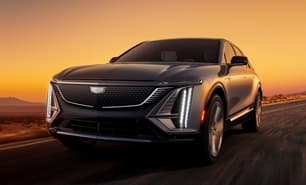
General Motors Australia & New Zealand (GMANZ) has recently expanded its full-electric Cadillac SUV range in Australia from one to three models, with the new Optiq and Vistiq joining the pioneering Lyriq in the company's local line-up of luxurious US-sourced SUVs and pickups.
The five-seater Lyriq is now the happy medium of the Cadillac trio, as it’s positioned between the smaller Optiq and larger Vistiq; the latter with a unique seven-seat design.
We recently spent a week aboard the Lyriq to see if its opulence, practicality, performance, driving range and price provide a compelling alternative to full-electric or combustion-powered rivals for high-end luxury SUV buyers.
“If this is to be our end, then I would have them make such an end as to be worthy of remembrance.”
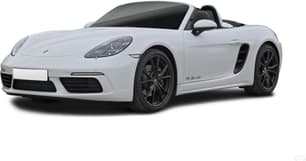
King Theoden may have been talking about the men and women of Rohan in The Lord of the Rings, but he could have just as easily been talking about the team behind the Porsche 718 Boxster.
It’s been nearly 30 years (yes, that long) since the Boxster joined the Porsche line-up as the more affordable sports car alternative to the 911, but now it’s facing a dramatic change that will make it a very different beast.
Porsche has committed to an electric future for the 718 but before it does so, there was one more petrol-powered version to create, this one, the 718 Spyder RS. It stands to be the final 718 to have an internal combustion engine, but could also be the best.
The 718 Spyder RS is the Boxster version of the previously released Cayman-based GT4 RS. So it takes every element of the sports car and turns it up to 11. This is faster, more powerful, lighter and more dynamic than the Boxster has ever been.
The Lyriq Luxury combines handsome styling and luxurious appointments with responsive yet supple ride quality, the choice of relaxed driving or exhilarating performance as desired and a decent driving range. Its lack of towing ability may be a deal breaker for some, but it's certainly worthy of consideration by prestige SUV buyers with a penchant for electric power and (for now at least) sub-$100K drive-away pricing.
If this is to be the end of the 718 as we know it, then it is an end to be remembered. Porsche has produced something special in the Spyder RS, a sports car that can compete with the 911 on any stretch of road - which is something so few cars can claim. The focus on performance has driven the entire concept of the car, but all the elements work in harmony, with form and function coming together.
The Lyriq has a generous 3095mm wheelbase, is more than five metres long (5005mm) and almost two metres wide (1977mm, including mirrors). Its 1620mm roof height is relatively low for a large SUV, resulting in a sleek and sporty profile combined with a muscular surefooted stance fronted by a finely-etched solid grille.
It rides on five-link independent suspension with GM’s ‘passive plus’ dampers, plus there’s electric power-assisted steering and big Brembo disc brakes in each corner featuring classy Cadillac scripts on the calipers. Turning circle is 12.1 metres, which is to be expected for a car of this size.
The interior design is an elegant blend of soft-touch materials and discreetly textured surface finishes with an emphasis on chrome and satin chrome highlights. It’s also spacious as you’d expect, with the panoramic sunroof creating a bright and airy feel.
We applaud Cadillac’s adherence to tradition with physical buttons and knurled dials and knobs for controlling key cabin and driving functions, in preference to annoying and distracting touchscreen menus. There’s also nice attention to detail with small jewel-like Cadillac emblems and scripts contributing to its prestige look and feel.
As the pinnacle of not only the current 718 range, but potentially the entire combustion engine era of the Boxster, Porsche has pulled out all the stops for the Spyder RS.
This includes major changes to the design, but none are purely for aesthetic reasons and instead are driven by the search for performance; and the fact they make the 718 look tougher, meaner and more purposeful than ever before is just a bonus.
It’s a comprehensive redesign that starts at the bumper with a new front lip spoiler to enhance downforce. Then there’s a pair of NACA ducts on the lightweight bonnet to improve brake cooling without compromising aerodynamic drag. The lightweight front fenders include wheel arch vents to stop any potential for front-end lift at high speeds.
And the fenders aren’t the only component that’s gone on a diet, there’s a lighter exhaust, lighter wheels, lighter bonnet, lighter roof, lighter door panels and even lighter carpets on the inside. All up, the Spyder RS tips the scales at 1400kg, which is 40kg lighter than a standard 718 Boxster.
If it’s still not light enough, you can opt for the optional 'Weissach Package' (which was fitted to our test car), which brings even lighter 20-inch forged magnesium wheels and carbon-fibre reinforced plastic for a range of parts including the front luggage compartment, rollover bars and ducktail spoiler on the Gurney flap – plus some cosmetic enhancements.
And we still haven’t even touched on the biggest design change yet - the rear half of the car. Starting with the roof, which Porsche actually calls a ‘sunshield’ and ‘weather guard’ because it’s a stripped down version of what the brand usually uses, to save weight and let the glorious engine noise into the cabin uninterrupted.
But it’s also necessary because the entire rear engine cover has been redesigned to accommodate the larger engine that Porsche has installed in the Spyder RS, a 4.0-litre six-cylinder instead of the usual turbocharged four-cylinder ‘boxer’ engines.
While the Spyder RS looks great with the roof/sunshield on or off, frankly the removal process is much too complicated and requires repeated viewings of a YouTube tutorial to still get it wrong.
While owners will (likely) eventually get the hang of it, it will always be a clunky and awkward process and that’s just the price of being so focused on performance, which you can accept or not.
Inside that ethos of performance over practicality continues, with sports seats, an Alcantara-wrapped steering wheel and even the previously mentioned lightweight carpet floor mats.
It’s a purposeful, rather than luxurious, cabin, but that perfectly suits the nature of the Spyder RS. Our test drive included several long stretches behind the wheel and at no stage did it feel uncomfortable or impractical, despite its stripped-down design.
The Lyriq’s 2687kg kerb weight (largely due to its hefty propulsion battery) and 3200kg GVM results in a modest 513kg load capacity, which could easily be used up by five large adults before you could think about loading their luggage. It’s also not rated for towing in Australia which limits its appeal as a recreational vehicle.
Driver and front passenger enjoy palatial space and comfort plus ample storage with a bottle-holder and bin in each door. There's also a large glove box, pop-out drawer in the dash and a ‘floating’ centre console equipped with a lower tray, three USB-C ports, a 12V socket, wireless phone charging and a felt-lined box at the back with padded lid that doubles as an elbow rest.
The rear doors open wide for easy entry to the rear bench seat which even for tall people (I’m 186cm) offers ample room for knees and feet, enhanced by a flat floor with no transmission tunnel for centre passengers to straddle.
However, the top of my head brushes the roof lining and the unusually high floor height (we assume caused by the underfloor battery) results in raised thigh angles that concentrate more weight on the lower back.
Given the rounded lower backrest cushions, which integrate with the ISOFIX child seat anchorages in the outer seating positions, also protrude into a passenger's lower back region, the rear seat provides less than ideal comfort for tall passengers in contrast to the sublime luxury up front.
Even so, rear passenger storage is well catered for with a bottle-holder in each door, pockets on both front seat backrests and two cupholders in the fold-down centre armrest. The rear of the centre console offers two more USB-C ports, adjustable air vents and adjustments for numerous comfort settings.
The power tailgate provides access to the fully carpeted rear luggage area, which offers up to 793 litres (almost 0.8 cubic metres) of load volume with the rear seats upright and up to 1722 litres (almost 1.8 cubic metres) with the seats power-folded flat. This provides a versatile space for carrying everything from a mountain bike to flatpack furniture.
The luggage area also has four tie-down hooks, a 12V socket and a hinged floor section which when opened reveals an underfloor bin ideal for storing charging cables (see image).
One area where the 718 range is starting to show its age quite dramatically is the in-car technology. While Porsche’s native system is relatively user-friendly, the lack of wireless Apple CarPlay or Android Auto in any capacity is deeply out-dated; and was frustrating for this Android using reviewer.
Given the age of the current 718 platform, and the impending arrival of the new model, it’s understandable that the multimedia system didn’t get an overhaul, but for a $350K car it does feel a bit behind the times.
In practical terms the Spyder RS is a bit of a struggle if you plan to go away with it. We managed to get a small suitcase and backpack in the under bonnet storage, but that was at capacity. While the addition of the larger engine removes any meaningful rear storage space.
The Lyriq is available in two trim levels comprising the Luxury from $122,000 and the Sport from $124,000 (both before on-road costs) but GMANZ is currently offering both for $95,000, drive-away.
These list and drive-away prices compare more than favourably when cross-shopping German luxury EV SUV alternatives like the Audi Q8 e-tron ($140,090), BMW iX ($142,900) or Mercedes-Benz EQE ($146,700).
The key differences between the Lyriq duo are visual, with the Luxury emphasising traditional elegance with lavish chrome detailing while the Sport is more performance oriented with greater use of dark trim elements.
Our test vehicle is the Luxury variant, finished in optional ‘Crystal White Tricoat’ paired with what GM describes as ‘Noir with Santorini Blue Accents’ interior trim.
Large and stylish in true Cadillac tradition, the Lyriq is built in right-hand drive form at GM’s Spring Hill manufacturing plant in Tennessee, instead of local RHD remanufacturing like its Chevrolet pick-up siblings.
Luxurious standard equipment includes big 21-inch multi-spoke alloy wheels and 275/45R21 self-sealing tyres (no spare), a full-length panoramic sunroof with power internal sunshade, power tailgate, rear roof spoiler, heated door mirrors with puddle lamps and more.
Concealed door handles discreetly extend to allow access to a sumptuous synthetic-leather interior with power adjustable/heated steering wheel, power front seats with heating/ventilation/massage/memory functions, outer rear seating also with heating/ventilation/massage, tri-zone climate control, five USB ports, 360-degree camera, wireless phone charging, a choice of 126 ambient interior lighting colours and more.
The driver is treated to a curved 33-inch colour LED instrument cluster/multimedia display which controls premium 19-speaker AKG Studio sound (including speakers in the front seat head restraints) and numerous multimedia functions including wireless Apple CarPlay/Android Auto connectivity.
The bad news is, the Spyder RS costs just over $200,000 more than the entry-level 718 Boxster, which is not a small sum of money. The good news is, for that $200K, Porsche has overhauled the 718 from nose-to-tail and enhanced it in nearly every aspect.
There’s a raft of mechanical changes that we’ll get to later on, to help justify the $334,200, plus on-road costs, asking price, but from a specification perspective there are some notable inclusions.
For starters it comes with the 'Porsche Communication Management' (PCM) multimedia system, which includes in-built navigation and Bluetooth connectivity, as well as a 110-watt sound system.
But Australian delivered cars get an even higher level of standard equipment than other countries, with LED headlights including 'Porsche Dynamic Light System' (PDLS), cruise control, digital radio, rear 'ParkAssist' with reversing camera, 'Light Design Package', tyre fit set and windscreen with grey top tint, plus a no-cost optional Bose Surround Sound System all included.
It may be $200K more than 718 but compared to a 911, it actually makes a pretty compelling value argument. A 911 Cabriolet Carrera S starts at $342,700 (plus on-road costs), making that Spyder RS $8500 cheaper and a genuine alternative to its ‘big brother’.
Then, when you compare it against similar mid-engine European sports cars, such as the Maserati MC20 (from $510,000) or McLaren Artura (from $477,310) the Porsche looks like a bargain; relatively speaking, of course.
The Lyriq features drive units with single-speed transmissions located at the front and rear which provide permanent all-wheel drive. Each is equipped with an electric motor, which combined produce 388kW of power and 610Nm of torque. There are also numerous selectable drive modes. Claimed 0-100km/h acceleration time is a rapid 5.3 seconds.
The key stat for the engine is the cylinder count. Gone are the four cylinders and instead it’s a return to Porsche’s iconic flat-six.
Specifically, the same 4.0-litre six that Porsche uses in its 911 GT3, which is a lot of engine to squeeze into the middle of this lightened sports convertible.
In order to keep the 718 in its place (beneath the 911), Porsche has slightly detuned the engine, so it makes 368kW/450Nm (compared to 375kW/460Nm in the 911 GT3), but the German brand has never worried about a kilowatt contest and instead prefers to focus on driveability and the other elements that make a drive great.
To that end the combination of air-intakes next to the headrests and the lightweight stainless steel exhaust (which gets titanium tips on the Weissach Package) helps the Spyder RS sound like a Carrera Cup racing car when you really wind it up to its 9000rpm redline.
Not that the performance isn’t spectacular, though, with Porsche claiming it takes the Spyder RS just 3.4 seconds to run 0-100km/h, only 10.9 seconds to get from 0-200km/h and will hit a top speed of 308km/h.
The engine is paired to a seven-speed dual-clutch auto transmission (or PDK in Porsche-speak) that the company claims has “short-ratios”, but with peak power not hitting until 8400rpm and peak torque from 6750rpm, you don’t have to rush the ratio changes.
GMANZ claims official combined consumption of 22.5kWh/100km and up to 530km of driving range from the Lyriq’s 102kW lithium-ion propulsion battery.
When we collected our test vehicle the dash display was showing 100 per cent charge and an estimated driving range of 583km.
We drove 239km over five days and still had 52 per cent charge and 300km of range remaining when we did an overnight charge at home using the supplied AC charger with a domestic three-pin plug.
However, after 15 hours the charge only increased from 52 to 65 per cent for just 76km of extra driving range, so we would recommend installing a dedicated wall box for faster home charging.
In total we covered 297km across our usual mix of suburban, city and highway driving with average energy consumption just under the Cadillac's official figure, so based on our test results a driving range of around 500km per charge is credible.
GMANZ claims 7.4kW AC charging can add up to 43km of range per hour, which increases to 94km with 22.1kW charging. And up to 128km of range can be added in just 10 minutes using 190kW DC fast charging.
Porsche says the 4.0-litre engine in the Spyder RS uses 13.0L/100km, which is a big number for what is a relatively small car. But that engine is highly-tuned and built for performance not efficiency, so it’s something owners will need to accept.
Our test drive included some long highway stretches, as well as some spirited driving and urban commuting, so a good mix across all conditions, and we saw consistent returns around the 15-16L/100km range.
It has a 64-litre tank, which means a theoretical driving range of around 490km, assuming you can hit the official claim.
The driving position is supportive and comfortable with multiple power-adjustment of the seat and steering wheel ensuring people of most heights and girths can enjoy luxurious travel.
The low dashboard height ensures vision to the front of the bonnet and its array of physical buttons, knurled dials and knobs minimise touchscreen use, which makes driving far less distracting than having to search through digital menus.
It’s very quiet given its electric drivetrain. Most noise emanates from the tyres but that is also minimised by the audio system’s noise cancellation technology and the cabin’s effective acoustic insulation.
Ride quality and handling are excellent thanks to the Lyriq’s suspension refinement and close to an ideal 50-50 weight distribution mostly influenced by the positioning of its drive battery.
This battery’s considerable heft (we reckon it weighs at least half a tonne) also creates ample sprung weight to assist the suspension in smoothing out bumps and its underfloor location ensures a low centre of gravity for surefooted cornering.
Standing start acceleration is more than impressive for a luxury car weighing almost 2.7 tonnes, with instantaneous torque from its two electric motors helping to propel the Lyriq to a neck-straining 100km/h in about five seconds.
This spirited response creates a sporty and engaging drive that belies the vehicle’s weight, particularly in Sport mode with its sharper throttle response and firmer steering feel.
We also like the choices for regenerative braking which include ‘One Pedal Driving’ mode with 'Normal' and 'High' settings, both of which make the quartet of disc brakes largely redundant (the High setting feels like heavy pedal braking) while optimising battery charge. There’s also a small paddle on the steering wheel which increases regenerative braking in response to the amount of finger pressure applied to it.
Our only criticism from a driver’s point of view is the absence of a head-up display (HUD) and traffic sign recognition (TSR), both of which are notable omissions for a prestige vehicle in this price range.
I’m only giving it a nine out of 10 because perfection is hard for any car to achieve, but the 718 Spyder RS goes as close as any car I’ve driven. This is a masterpiece of modern sports car design, pushing the 718 closer to the 911 than ever before, which is something Porsche has clearly tried to avoid so as to not tarnish the image of its flagship.
But with the 911’s 4.0-litre flat-six in the middle of the 718, plus its more compact dimensions, the lightweight nature of the Spyder RS and the raft of chassis and handling enhancements, this really does leave you questioning ‘do I really need a 911?’
The steering is fantastically direct, the chassis responds to every input with precision and feedback and the braking is strong and consistent. Which helps because that engine is so good it launches you with ferocity and a glorious noise (as good as anything on the market today) whenever you squeeze down on the accelerator.
The highest praise I can give the Spyder RS is not that it was a dream to drive on winding, challenging roads, but that it was just as enjoyable on a trip to the shops or cruising down the freeway. Any drive in this car is a genuine pleasure.
The Lyriq does not come with an ANCAP rating (typical for small volume production) but has a suite of passive and active features like multiple airbags including dual head side-curtains, AEB with intersection/front pedestrian/cyclist detection, lane-keeping, a 360-degree camera, parking assist, tyre pressure monitoring, adaptive cruise control and lots more. The rear bench seat has ISOFIX child seat anchorages on the outer seating positions and top tethers across all three.
In this part of the market it's fair to expect a head-up display and traffic sign recognition as standard but both are missing in action.
This is another area where the 718 is showing its vintage, with very little in the way of active safety features. There’s the required stability control, as well as airbags for driver and passenger, plus the previously mentioned reversing camera. But that’s it, there’s no autonomous emergency braking, no lane-keeping assist or even adaptive cruise control.
While that may sound shocking to some, there’s never a moment where you feel unsafe in the 718. It feels incredibly stable and responsive on the road, as the onus falls back upon the driver to pay attention and make smart choices.
There’s no ANCAP rating for the 718, or any Porsche, so it is a question of putting your faith into Porsche’s in-house safety measures.
The Lyriq comes standard with a five-year/unlimited km warranty including five years' of roadside assist, while the propulsion battery is covered by a separate eight-year/160,000km warranty.
Scheduled servicing is every 12 months/12,000km whichever occurs first, with costs for the first five years of scheduled servicing or five scheduled services included in the vehicle’s purchase price. These servicing terms are generous for this segment, although some rivals offer similar enticements like Audi’s six-year ‘complimentary’ servicing for its Q8 e-tron.
GMANZ has a national network of 45-50 dealerships across most capital cities and some regional areas but not all offer vehicle servicing.
It’s difficult to give the Spyder RS a clear score here because Porsche is cagey on the details. The public dealer websites indicate annual oil maintenance is required, with additional servicing every two years or 15,000km.
How much that will cost is unclear, as despite the rest of the 718 range having publicly available prices, there were no such details for the Spyder RS (or even its Cayman sibling, the GT4 RS).
For reference, the 'standard' 718 requires oil maintenance ($895) for the first annual service and an inspection ($1500) the year after. Those costs continue to alternate annually out to eight years/120,000km.