What's the difference?
As the flagship variant, the BYD Sealion 8 Premium all-wheel drive makes a big first impression as it arrives with seven seats, a plug-in hybrid powertrain and a features list that reads like a wish list.
It’s also stepping into a competitive space, lining up against the Chery Tiggo 9 Super Hybrid, Kia Sorento GT-Line PHEV and Mazda CX-80 P50e Azami - all promising similar blends of efficiency, space and value for Australian families.
The Sealion 8 Premium looks like a strong contender on paper … but does that translate to the real world?
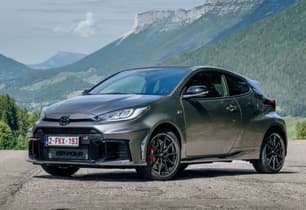
Thank the automotive gods cars like the GR Yaris still exist.
Not only are hot hatches the funnest way to drive, but in a world that’s obsessed with electric vehicles, these combustion-powered beasties remind us what we’ve got before it's gone.
The GR Yaris arrived in 2020 and won praise for its rally-car-for-the-road feel with Toyota’s high-performance division Gazoo Racing heavily modifying the docile Yaris hatch - while adding a bit of Corolla - to create this little monster.
In early 2025 Toyota added more power and torque, along with an automatic transmission for the GR Yaris and now a new variant has been launched - the GTS Aero Performance Package and this is what we are testing.
There’s no denying the value the BYD Sealion 8 Premium offers as it packs a lot in for the price. Its efficiency and inoffensive looks add up to a good package and reflect what it does well. That said, the underwhelming driving experience and clunky media system are noticeable. Whether they're deal breakers is up to you.
The GR Yaris GTS with the Aero Performance Package is a so wonderfully special with its brilliant engineering, mind-blowing dynamics and fun-to-drive nature. The new aero package makes an already angry beastie look furious, making it the perfect enhancement that's also functional.
The only lower marks here are for warranty, fuel use and practicality. But if there was a score for fun it'd be a 10/10.
The Sealion 8 is a big unit, and its design leans more towards soft and rounded than sharp. There’s a sense of restraint with its pillowy panels, smooth curves and flush door handles all contributing to a clean, almost clinical look.
The 21-inch wheels add a bit of presence, as does the full-width LED light bar with its braided design. But overall, it doesn’t try too hard to stand out. It’s inoffensive - clean and easy on the eye, but it stops short of having any sense of identity.
Inside, the cabin carries that same restrained approach. There’s black leather upholstery, some interesting geometric detailing through the panels and speaker grilles and a generous use of soft-touch materials throughout.
The large displays and panoramic sunroof help lift the space, giving it a premium feel, but more importantly, it’s just a comfortable, easy place to spend time. Which, for a family SUV, arguably matters more than anything else.
The GR Yaris exists so that Toyota could go racing in the World Rally Championship. As with many racing series it required Toyota to build a road-going version of their Yaris race car, also known as a homologation vehicle. It’s a good deal, they get to race, you get a race car for the road. And so the GR Yaris was born.
Wildly different from a regular five-door garden variety Yaris, the GR Yaris is a hand-built three-door hatch with a wider track, wider and lower body and the use of forged carbon and aluminium for lightweight construction.
The GR Yaris already looks very angry, but the GTS Aero Performance Pack makes it look furious. It adds a huge adjustable rear wing, fender ducts that channel air, a front spoiler lip that aids stability, a giant bonnet scoop to help release air, and rear bumper ducts to reduce drag.
The GR Yaris’s cabin was redesigned for the 2025 update and that saw the dashboard angled more to the driver much like in a race car, but it's more functional than fancy and it’s all very plain.
Still, we’re not complaining. The seats are lovely and the red stitching is a nice touch but this isn’t a Lexus. It’s supposed to favour function over form and so the design is absolutely fitting. And by function I mean dynamics and not practicality.
Up front, storage and general usability are well thought out. There’s a handy shelf tucked underneath the centre console with two USB-C ports, while a tray above houses the fast wireless charging pad. You also get a sunglasses holder, two cupholders and decent-sized bottle holders in the doors, so it’s easy to keep things organised.
Seat comfort is a highlight, and the overall layout is clean and easy to live with, but the same can’t be said for the multimedia system. While the graphics are sharp and the touchscreen is responsive, functionality isn’t always its strong suit. Wireless Apple CarPlay and Android Auto are included, but CarPlay required reconnecting on every drive during testing and the digital radio and phone calls experienced noticeable signal dropouts. It’s the kind of friction that chips away at the day-to-day experience and starts to feel out of step with how polished the rest of the cabin is.
There’s also a heavy reliance on the screen for core functions. Climate control is integrated, which is fairly standard, but so too are things like headlight controls. It might suit those who are used to navigating everything through a screen, but needing to dig through menus to adjust something like auto high beam on the move feels like a step too far. Bring back buttons.
The second row is where the Sealion 8 really leans into its family-friendly brief. Space is generous, with enough width to comfortably accommodate three adults and the flat floor helps here too. There are three top tether points and two ISOFIX mounts, while charging is covered by a USB-A and USB-C port.
Amenities are a standout. The outboard seats mirror the front with heating, ventilation and massage functions, which quickly become a favourite, alongside dedicated climate controls, roof-mounted air vents and multiple cupholders. A set of sunshades would round things out nicely, but it’s otherwise a very accommodating space.
Access to the third row is less impressive. The manual slide and tilt mechanism feels a little heavy and fiddly to operate and the space itself is best reserved for kids. In practice, that means younger passengers will likely take the path of least resistance, as mine did and simply climb over the second row instead.
Amenities are fairly basic, with directional air vents and cupholders, but there’s no charging provision back there. You do, however, get two top tether points and ISOFIX mounts, which will be a plus for larger families.
Around the back, the boot is a practical, usable space with a wide opening and flat loading floor. With all three rows in place, there’s 270L on offer, which is enough for a few school bags or a grocery run, expanding to 960L with the third row folded. There’s no spare tyre, just a repair kit, which may be a consideration for regional drivers. A 12-volt socket and powered tailgate round things out in this grade.
The regular Yaris is small, the GR Yaris is smaller at 3995mm end-to-end and with two fewer doors. As a tall person (I’m 1890mm end-to-end) the space on board is adequate up front with just enough knee, head and elbow room.
The GR Yaris is a four seater with the two rear seats accessed through the front doors. There’s not much room in there for adults and not even my lanky 11-year old would be happy in there. Still if you need to carry three other people, technically you can.
Cabin storage is limited to fairly large door pockets and two cupholders between the front seats. There is a little shelf carved into the dashboard which is great and a small glovebox below it.
Boot space is tiny at 174 litres but again this is a small car with other priorities.
The BYD Sealion 8 range is relatively straightforward, with two grades on offer and the base variant available with a choice of two drivetrains. For this review, we’re in the flagship Premium AWD, which is priced from $70,990 before on-road costs.
It lines up against the Chery Tiggo 9 Super Hybrid at $65,430 driveaway, the Kia Sorento GT-Line PHEV from $71,130 before on-roads, and the Mazda CX-80 P50e Azami, which stretches up to $87,950 before on-road costs.
On paper, the Sealion 8 Premium doesn’t quite undercut the Chery on price or match its claimed 170km (NEDC) electric-only range, but it’s not far off, with a still-impressive 152km (NEDC). And when you look at the broader package, it starts to make a fairly strong value argument, particularly against its other key rivals.
The 'Premium' badge isn’t just for show, either. Equipment is generous, with highlights including a fixed panoramic sunroof with an electric sunshade, leather-appointed upholstery, a heated steering wheel, and heated, ventilated and massaging seats not just in the front, but for the outboard seats in the second row as well - a feature that hasn’t gone unnoticed by my nine-year old.
Technology is a clear focus. There’s a 10.25-inch digital instrument cluster, a large 15.6-inch touchscreen multimedia system and a 26-inch augmented reality head-up display, alongside wireless Apple CarPlay and Android Auto, a 50W wireless charging pad and a 21-speaker DiSound audio system. BYD also includes 2GB of data per month for the first two years to support its 4G connectivity and over-the-air updates.
Practical touches round things out, with keyless entry and start, NFC card access and a digital key via the BYD app, a powered tailgate, vehicle-to-load (V2L) capability, rain-sensing wipers, sound insulation for the front doors and windscreen and three-zone climate control.
The GR Yaris GTS Aero Performance Pack sits at the top of the model range with the six-speed manual version listing for $64,990 before on-road costs, while the automatic is $67,490. That’s $4500 more than the standard GTS without the aero pack
The aero pack significantly toughens up the look of the GR Yaris, and also improves its dynamics. So if you plan to use the GR Yaris as a track car and drive it hard and fast, the kit will help.
That's thanks to improved down force from the giant rear wing, air ducts in the fenders to improve steering under braking, a front splitter for stability, underbody cladding to maximise airflow and a bonnet scoop to help release hot air from the engine bay.
The rest of the high-performance equipment comes on the regular GTS including a Torsen limited slip differential, high performance suspension tune and 18-inch forged wheels with Michelin Pilot Sport 4S tyres.
Standard features are the same as the regular GTS and include heated GR sports front seats with suede leather upholstery, a 12.3-inch digital instrument cluster, leather-wrapped steering wheel, aluminium pedals, dual-zone climate control, proximity unlocking and push-button start.
There's also an eight-speaker, eight-inch media screen with Apple CarPlay and Android Auto, and an eight-speaker JBL sound system.
The value is actually great considering all the high-performance engineering around you in the GR Yaris, and it will save you money from being tempted to go down the aftermarket route and buy equipment that hasn't been designed for the car by the people who made the car.
There are some nice comforts, too, like the leather seats, although the media screen is small.
The BYD Sealion 8 Premium is all-wheel drive and pairs a 1.5-litre, four-cylinder, turbo-petrol engine with two electric motors, one on each axle. Combined outputs sit at a hefty 359kW and 675Nm, which comfortably out-muscles its key rivals.
Those figures do drop back to a more modest 110kW and 220Nm when running on the petrol engine alone.
Performance is strong for a large family SUV, with a claimed 0-100km/h sprint time of 4.9 seconds. You can toggle between pure EV and hybrid modes depending on the drive, which adds a layer of flexibility that suits short daily trips and longer highway runs.
It still boggles my mind how 221kW and 400Nm is extracted from a 1.6-litre three-cylinder petrol engine but here we are. The GR Yaris has this set up with this output, along with all-wheel drive.
Thanks to lightweight materials such as forged carbon and aluminium the GR Yaris weighs nothing in car terms - just 1300kg - so acceleration from 0-100km/h is a rapid 5.1 seconds.
I’ve already detailed the juicy engineering bits the GTS Aero Package is fitted with, from the limited slip diff to the adjustable rear wing, and it’s not an exaggeration to say that not many small hatches are this gifted with this kind of genius.
Our test car has an eight-speed automatic, which is easy to drive in city traffic. However, I'd opt for the six-speed manual because if you've come this far you may as well go the whole way.
Charging is handled via a Type 2 CCS port, with support for up to 11kW on AC and up to 74kW on a DC fast charger. BYD claims a 30 to 80 per cent recharge can be done in as little as 20 minutes under ideal conditions.
The 35.6kWh lithium iron phosphate (LFP) battery is a standout, delivering a claimed electric-only driving range of 152km on the NEDC cycle. That figure is on the optimistic side compared to WLTP testing, but even with that in mind, it remains an impressive number for a plug-in hybrid of this size.
With a full battery, the combined fuel consumption is rated at just 1.0L/100km, translating to a theoretical driving range of over 1000km. Real-world results will vary depending on how often you’re able to charge and the type of driving you’re doing, but after a week that included a fair stretch of highway driving, my trip computer was showing 6.3L/100km. Overall, it’s a solid result, particularly for something with this level of performance.
The GR Yaris is a hungry beastie that eats through its 50L petrol tank fairly quickly and then wants more. Toyota says you should see 9.1L/100km of 98 RON used in the automatic and 8.2L/100km with the manual over a combination of driving conditions.
Stop-start city driving in traffic saw fuel use increase dramatically to 13.0L/100km in the auto. According to our car's trip computer, my own testing used an average of 14.5L/100km after mainly suburban driving.
On-road performance is where things become a bit of a mixed bag. There’s no denying the Sealion 8 Premium is quick and it leans more heavily into its EV character than many large plug-in hybrids. It’s quiet in hybrid mode and responsive off the mark, which makes it easy to keep pace in traffic and overtake when needed. For something of its size, it also does a good job of masking its weight on the move.
Regenerative braking is offered in two levels, but even the stronger setting feels fairly mild. The upside is smoother low-speed driving, with none of the abruptness you sometimes get in hybrids, and it does still recover a decent amount of energy, particularly on longer descents.
Where it falls short is in its overall dynamics. The steering and suspension are tuned for comfort, which results in a soft, slightly floaty feel on the road. It’s not unpleasant and around town it actually suits the car’s brief, but there’s a noticeable lack of feedback and control if you’re expecting something more composed.
Visibility and driver positioning also take some getting used to. The forward view is decent, but the pillars are quite thick and it can be difficult to find a driving position that doesn’t feel a little enclosed.
Judging the edges of the car isn’t always intuitive, and while the 360-degree camera is clear, its perspective can feel slightly off. Objects tend to appear much farther away than they are, which isn’t the most reassuring combination when you’re trying to manoeuvre in tighter spaces.
There’s been a multitude of electric cars through the test garage over the past six months and the GR Yaris is like a diamond found in a tub of Lego when it comes to driving.
So much sound. The three cylinder snarls on start up sending vibrations into the cockpit and up through the steering wheel, the transmission can be heard engaging gears, the big brakes creak as they’re released. And we’re hardly even moving yet. There’s so much theatre. It’s all real and I love it!
I even love that in the first 10 minutes of driving, a message appears on the instrument cluster asking that excessive acceleration be avoided while the engine is cool. You don’t get that beautiful inconvenience in an electric car.
But when you can excessively accelerate (on a race track of course, right?) it's wonderful and it's loud. Lift off, and the wastegate lets out a little "weeee!" in excitement.
I don't need to tell you that the GR Yaris handles better than just about anything in this price range and while the ride is firm and speed bumps feel like you’ve hit a gutter I still drove the GR Yaris every day, even to do the school run, because it is so much fun. Meanwhile my hybrid long0term test car looked lonely in the driveaway all week...
Being an automatic makes it easy to drive in traffic and the small size makes finding parking spots quick and simple.
Visibility is good, steering is excellent, the seats are big enough to accommodate me but snug enough to offer good lateral support, too.
The BYD Sealion 8 is yet to be tested by ANCAP and therefore remains unrated at this stage. That said, it comes equipped with a comprehensive suite of safety features, along with nine airbags including side chest airbags for the front and second rows.
Standard equipment includes seatbelt reminders for all seating positions, front and rear parking sensors, driver attention monitoring and alert, tyre pressure monitoring, traffic sign recognition and autonomous emergency braking. It also features front and rear collision warning, blind-spot monitoring, rear and front cross-traffic alert and side exit assist.
On the road, however, some of the active safety systems are less polished in execution. The adaptive cruise control can feel abrupt when slowing down and slow to regain speed, while the steering assist can be overly reactive through corners. Lane keeping also lacks consistency, with the system not always engaging as expected.
For families, child seat provision is strong, with four ISOFIX anchor points and five top tether mounts across the cabin, along with child presence detection.
The GR Yaris has not been crash tested by ANCAP and the score for the regular Yaris can't be applied to the GR version.
Still the GR Yaris comes equipped with an array of advanced safety tech such as auto emergency braking (AEB), lane keeping assistance and a blind spot warning.
There are six airbags, two child seat ISOFIX points and two top tether anchor mounts in the rear row.
BYD offers the Sealion 8 with a six-year/150,000km warranty and an eight-year or up to 160,000km battery warranty. Both terms are competitive for its class.
Service is recommended every 12 months/20,000km with each workshop visit averaging a solid $596 for the first five years (year four is $1360). Accessing a BYD service centre is fairly easy as there are around 70 centres nationwide now.
BYD recommends premium unleaded petrol (95RON) to be used for the Sealion 8.
The GR Yaris is covered by Toyota's five-year/unlimited-kilometre warranty which is lacking compared to many other mainstream manufacturers’ seven-year-plus warranties. The good news is that the engine and driveline is covered by an extra two-year warranty.
Servicing is capped at about $300 for the first six visits, although services are six months apart which means that after three years you’ll run out of capped-price servicing.
Still, Toyota’s reputation for reliability does provide some peace of mind.