What's the difference?
Following the money comes pretty naturally to carmakers. It’s what happens when the product planning department smells a new direction on the breeze and then handballs that to the design and engineering folks who turn a perceived market trend into a showroom reality. And when everybody gets it right, you have a new default product. And everybody else has to keep up. Some even have to catch up.
We’ve seen it plenty of times before, too. Think about those early 1980s days when the default small car went from a sedan to the five-door hatchback. Didn’t that catch on? You might also remember more recently when a family car had to be a four-wheel drive. And what about the dual-cab ute revolution of the last 15 years?
The other strident market segment right now is the SUV, of course. And within that, most recently has been the march to electrification, starting with conventional hybrid technology and now progressing to the new must-have, a plug-in hybrid platform.
The fact is, if you’re a Chinese carmaker intending to sell on a world stage, you can’t ignore the plug-in SUV in any of its various sizes and marketing segments. There’s a good basis for this, too. Plug-in hybrids just make good sense. They offer the urban running-cost advantages of any hybrid, the option of zero tailpipe emissions, all-electric running over a normal commuting distance and – crucial for a big country like this one – they’ll keep motoring along for as long as the owner puts petrol in them.
Okay, so they can be heavy with all that tech on board, and there’s no denying that two power sources (petrol and electric) make for a more complex machine, but the advantages outweigh the downsides for many buyers.
The other graph you can plot with great certainty is that new tech will get cheaper as the industry moves forward. Which is exactly where BYD finds itself right now by being able to offer a plug-in hybrid variant of its Sealion 5 mid-sized SUV at a price that will have much of the opposition running scared. But how scared should the others be?
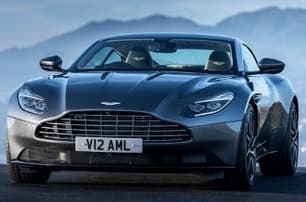
It might look like a stealth fighter, but this dramatic example of Aston Martin’s DB11 AMR didn’t fly under anyone’s radar during its time in the CarsGuide garage.
Forget the Duke and Duchess of Sussex, this piece of British royalty caused jaws to drop and camera phones to rise more effectively than any mere ginger celebrity or ex-TV trouper.
AMR stands for Aston Martin Racing, and this performance flagship replaces the ‘standard’ DB11, delivering even more fire under the hood and fury from the exhaust. Aston also claims it’s faster, dynamically superior, and sleeker on the inside.
In fact, the DB11 AMR’s 5.2-litre twin-turbo V12 now produces enough grunt to accelerate it from 0-100km/h in just 3.7 seconds.
More than just a flash Harry, then? Let’s find out.
Cars that don’t always appeal to enthusiast buyers are often seen by manufacturers as a way of not bothering with the dynamics. Good enough is, apparently, good enough. Thankfully, BYD hasn’t taken that path here and the local suspension tweaks have turned what could have been a me-too product into a bit of a dynamic class leader. And even if buyers can’t verbalise the benefits of that, they will still be subliminally enjoying them with every kilometre.
The other stand-out feature is the price-tag which represents an awful lot of car for the money. And, in such a price-sensitive market as this one, that will get the BYD over the line for a lot of families. That it also offers a vastly better driving experience simply makes the value equation – and the purchasing proposition – even stronger.
The Aston Martin DB11 AMR is fast, capable and beautiful. It has a unique character and charisma its Italian and German competitors can’t match. That said, some important media and safety-tech features are absent. So, it’s not perfect... just brilliant.
The interior of the Sealion 5 feels pretty well-made and there are soft-touch surfaces on most of the touch-points. The steering wheel, too, is thick and chunky and nice to hang on to. But there’s a lot going on in terms of different colours, textures and surfaces, and it can all look a bit busy, despite the high-tech boardroom overall flavour. It’s also worth mentioning the trim material is synthetic but does a great job of looking and feeling like real leather.
Externally, there’s not a lot to grab the eye. Sure, it’s not an unpleasant looking vehicle, but neither does it stand out from the mid-size SUV pack. At least BYD decided against those cheap-looking plastic tack-ons on each wheel-arch.
For a while there it looked like Aston Martin had fallen into the ‘everything looks the same’ trap, with Ian Callum’s breakthrough DB7 design in the mid-‘90s writing the script for the DB9 that followed, and heavily influencing everything else in the brand’s subsequent portfolio.
But in 2014, Aston’s design chief Marek Reichman sent a message with the DB10 Concept that things were about to change.
James Bond had Q and MI6 to thank for his DB10 company car in Spectre, but real-world Aston Martin customers were soon offered the DB11, which combined the muscularity of Reichman’s work on the ultra-exclusive One-77 from a decade earlier with the swooping, long-nosed proportions of his track-only Vulcan hypercar.
The hallmark of a well executed 2+2 GT is that it looks bigger in photos than it does in reality, and the DB11 is a perfect case in point.
Appearing limo-sized in our accompanying images, the DB11 is in fact 34mm shorter end-to-end than a Ford Mustang, but it’s exactly 34mm wider, and no less than 91mm lower in overall height.
And as any fashionista worth their salt will tell you, dark colours are slimming, and our ‘Onyx Black’ AMR, with gloss black 20-inch forged rims and black ‘Balmoral’ leather interior accentuated the car’s tightly drawn, shrink-wrapped surface treatment.
Signature elements in the shape of a broad, tapering grille, divided side vents, and sharply curved, two-level (smoked) tail-lights clearly identify the DB11 as an Aston Martin.
But the smooth integration of the car’s broad haunches (very One-77), gently tapering turret (optional exposed carbon) and flowing bonnet is masterful and fresh. The dash-to-axle ratio (the distance from the base of the windscreen to the front axle line) is Jaguar E-Type-esque.
And it’s all subtly aero-efficient, For example, the door handles fit flush to the body, the mirror housings double as mini ‘wings’, and the Aston Martin ‘Aeroblade’ system channels air running from carefully crafted openings at the base of the C-pillar, through the rear of the car to generate downforce (with minimal drag) across a lateral vent on the trailing edge of the bootlid. A small flap rises at “high speed” when more stability is required.
The interior is all business, with a simple instrument binnacle showcasing a central 12.0-inch digital speedo-within-tacho combination, flanked by configurable engine, performance and media read-outs on either side.
Aston has form with squared-off steering wheels and the DB11’s is flat on the bottom and decidedly straight on the sides, affording a clear view of the gauges without compromising purpose. A leather and Alcantara trim combination is (literally) a nice touch.
The teardrop-shaped centre stack sits in a slightly recessed section (optionally) lined with ‘carbon-fibre twill’, while the form and function of the 8.0-inch multimedia screen at the top will be immediately familiar to current Mercedes-Benz drivers, as the system, including the console mounted rotary controller and touchpad, is sourced from the three-pointed-star brand.
A band of proudly illuminated buttons across the centre includes gear settings for the transmission and a winged stop-starter in the middle. Strange, then, that the plastic knobs on the adjustable air vents look and feel so cheap and bland. This a $400k-plus Aston Martin, where’s the knurled alloy?
Other highlights include elegant sports seats trimmed in a combination of premium leather and Alcantara. Aston offers various levels of leather and our car’s black ‘Balmoral’ hide is taken from the top shelf.
The key accent colour inside and out on our test example was a screaming lime green, picking out the brake calipers, centre strips on the seats, and contrast stitching throughout the cabin. Sounds awful, looks amazing.
Here’s the other big shock relative to the price-tag of the Sealion 5: This is not a small car. Based on the price, you might have been thinking the vehicle would be a compact SUV. And you’d have been wrong. This is a proper mid-sized SUV with room for five and luggage and an overall length of 4.7 metres and change. And to put that into some kind of perspective, that’s just 30mm shorter than the Sealion 6 which costs about $9000 more at its starting point.
The wheelbase is long, too, and the 2712mm between the axles helps make the interior even more spacious. That means there’s lots of stretching room in the front, but also that a grown adult can comfortably sit in the back seat behind another grown adult at the wheel and still have enough room in every direction. The window sills are commendably low in the rear seat, too, ensuring even littlies can see out.
The biggest problem in the back is that the seat cushion is a bit flat, but, like the front chairs, it’s still pretty plush.
With all five seats in place, the Sealion 5 boasts 463 litres of luggage space and the cargo area is well done with storage pockets at each side, a light and an under-floor tray designed to transport charging cables and a tyre repair kit. Yep, that’s right, there’s no spare tyre of any sort here. No surprise, really.
Fold the rear seat down and you’re suddenly looking at 1410 litres of cargo space and your SUV is now a panel van.
As well as the dual-zone climate control, the Sealion 5 also offers a single USB -C and a USB-A charging port in the front and rear compartments.
The Sealion 5 also offers a V2L (Vehicle to Load) function, meaning it can power camping or on-site work equipment and even act as your home’s battery.
On one hand it’s hard to describe a supercar like the DB11 as practical when its primary purpose is to go ridiculously fast and look incredibly good in the process.
But this is, in fact, a ‘2+2’ GT, meaning a couple of occasional seats have been squeezed behind the front pair to allow obliging contortionists, or more likely small children, to enjoy the ride.
No one is claiming full four-seat capacity, but it’s a trick that has for decades made cars like Porsche’s 911 a more practical choice for high-end, high-performance sports car buyers.
At 183cm I can verify the chronically limited space back there, without anything in terms of connectivity, specific ventilation or storage options provided. Good luck, kids.
For those up front it’s a very different story. First, the doors are hinged to move up slightly as they swing out, which makes entry and egress a more civilised process than it might otherwise be. That said, those doors are still long, so it pays to pre-plan a workable parking spot, and the high-mounted, forward-facing interior release handles are awkward to use.
Storage runs to a box between the seats, complete with a two-stage electrically controlled lid, housing a pair of cupholders, an oddments space, two USB inputs and an SD card slot. Then, there are slim pockets in the doors, and that’s about it. no glove box or netted pouches. Just a small tray for coins or the key in front of the media controller.
And speaking of the key, it’s another strangely underwhelming part of the DB11 AMR’s presentation. Plain and insubstantial, it looks and feels like the key to an under-$20k budget special, rather than the heavy, polished and glamorous item you’d expect to be subtly placing on the table in your preferred three-hat restaurant.
The carpet-lined boot measures 270 litres, which is enough for some small suitcases and a soft bag or two. In fact, Aston Martin offers a four-piece accessory luggage set “expertly tailored to match the car’s specification.”
Don’t bother looking for a spare wheel, an inflator/repair kit is your only option in the case of a puncture.
The plug-in hybrid in question is the BYD Sealion 5. It has a claimed EV-only range of better than 100km, relatively quick charging, a decent sized battery, adequate performance, enough interior space for a family, good safety and lots of equipment. Oh, and it costs just $33,990, before on-road costs, in its entry-level Essential form. Incoming!
Equipment-wise, that sub-34K sticker gets you a 10.1-inch central info-screen, an 8.8-inch driver display, digital radio, a six-speaker stereo, wireless connectivity for Android Auto and Apple CarPlay and dual-zone climate control.
Throw another four grand on the table and you move up to the Premium version which adds plenty of kit for the $37,990 ask. That includes a panoramic sunroof, automatic tailgate, roof rails, heated and electrically folding mirrors, one-touch power windows, a six-way powered drivers seat and four-way powered co-pilot’s chair, a heated and ventilated driver’s seat and wireless charging.
The step up from Essential to Premium also includes a battery upgrade, and we’ll cover that off in the Under the Bonnet section below.
Head into the $400k new car zone and expectations are understandably high. The DB11 AMR’s is a continent-crushing GT after all, and you want your fair share of luxury and convenience features to go with its huge performance potential.
For $428,000 (plus on-road costs), as well as the safety and performance tech (of which there’s plenty) covered in later sections, you can expect a lengthy standard features list, including a full-grain leather interior (seats, dash, doors, etc), Alcantara headlining, multi-function ‘Obsidian Black’ leather-trimmed steering wheel, electrically adjustable and heated front seats (with three memory positions), heated/folding exterior mirrors, front and rear parking sensors, and 360-degree ‘Surround View’ parking cameras (including front and rear cameras).
Also standard are cruise control (plus speed limiter), sat nav, dual-zone climate control, the electronic instrument cluster (with mode-specific displays), keyless entry and start, a multi-function trip computer, 400-Watt Aston Martin audio system (with smartphone and USB integration, DAB digital radio and Bluetooth streaming), plus the 8.0-inch touch-control multimedia screen.
Then there are LED headlights, tail-lights and DRLs, ‘dark’ grille, headlight bezels, and tailpipe finishers, 20-inch forged alloy rims, carbon-fibre bonnet vent blades and side strakes, dark anodised brake calipers and, to reinforce the car’s motorsport DNA, the AMR logo sits on the door sill plates and is embossed on the front-seat headrests.
Apple CarPlay and Android Auto functionality is a surprising omission, but our test car more than made up for it with a motherload of optional extras including an exposed carbon-fibre roof panel, roof strakes and rear-view mirror caps, as well as ventilated front seats, the vivid ‘AMR Lime’ brake calipers, plus a ‘Dark Chrome Jewellery Pack’ and ‘Q Satin Twill’ carbon-fibre trim inlays to add presence in the cabin. Along with some other bits and pieces this adds up to an as-tested total of $481,280 (before on-road costs).
Both variants of the Sealion 5 have the same driveline – mostly. They each use a 1.5-litre petrol engine teamed with a single electric motor, both driving the front wheels. Unlike the bigger Sealions, there’s no all-wheel drive version. Power peaks at 156kW and torque at 300Nm.
Why a non-turbocharged engine? BYD tells us the non-turbo engine helps keep cost out of the vehicle and, since the engine really only runs to power the electric motor and charge the batteries, it does so at a relatively constant engine speed, negating the need for a wide spread of petrol power.
The only major difference is that the Essential version has a 12.9kWh battery-pack, while the Premium gets a bigger, 18.3kWh pack for longer range, but precisely the same output and, therefore, performance.
A single-speed transmission is part of the BYD driveline package, also made possible by the fact that the vast majority of the driving of wheels is done by the electric motor.
The DB11 AMR’s (AE31) 5.2-litre, twin-turbo V12 is an all-alloy unit, tuned to deliver 470kW (up 22kW on the old model) at 6500rpm, while retaining the previous DB11’s 700Nm of maximum torque from 1500rpm all the way to 5000rpm.
As well as dual variable camshaft timing, the engine features a water-to-air intercooler and cylinder deactivation, which allows it to run as a V6 under light loads.
Drive goes to the rear wheels via a ZF-sourced eight-speed (torque converter) auto transaxle with column-mounted paddles, recalibrated for faster shifting in more aggressive Sport and Sport+ modes. A limited-slip differential is standard.
The Premium’s bigger battery claims to up the official NEDC range from the Essential’s 71km to 100km. BYD reckons with the 52-litre fuel tank brimmed and the car operating at its claimed 1.2 litres per 100km efficiency, the range of either version is just on 1000km. In the real world, that’s likely to be closer to 800km (especially with some highway running thrown in) but it’s still one heck of a solution to range anxiety.
There’s no DC charging function for the Sealion 5, so forget about commercial fast chargers. But on a 3.3kW AC power outlet, the maker claims the Essential can reach full charge in under four hours, while the Premium’s bigger battery will take under six hours to fully charge. A Type 1 charge cable is included.
Minimum fuel requirement for the DB11 AMR is 95 RON premium unleaded and you’ll need 78 litres of it to fill the tank.
Claimed economy for the combined (ADR 81/02 - urban, extra-urban) cycle is 11.4L/100km, the big V12 emitting 265g/km of CO2 in the process.
Despite standard stop-start and cylinder deactivation tech, in roughly 300km of city, suburban and freeway running we recorded a figure exactly nothing like that, according to the on-board computer we more than doubled the claimed number on ‘spirited’ drives. The best average figure we saw was still in the high teens.
You don’t have to drive very far to realise that the local input into the Sealion 5’s suspension and steering have been worth the effort. BYD Australia has a local engineering team on call these days, and it shows here.
Actually, the steering is not the highlight; it has some weight but not a whole lot of feel, or, indeed, feedback for the driver. The ride and handling combination is what stars. Obviously well-damped, the suspension allows for a ride that is both complaint and quiet, without causing the car to wallow around like some jacked-up designs can with their higher centre of gravity.
In fact, the BYD is athletic to the point where keener drivers will find it an entertaining drive; hardly something that can be said for the majority of medium SUVs.
Performance is strong without being overwhelming and even though the Sealion 5 has that signature electric-drive feeling of effortlessness, the accelerator pedal has been calibrated to avoid the neck-snapping surge of grunt off the line. As such, it emerges with a fairly flat acceleration curve, and no hint that the petrol motor is cutting in or out.
Until, that is, you bury the throttle all the way at which point the petrol engine takes a few second to join in. And when it does, it’s pretty vocal – shrill, almost – as it catches up with the rest of the car and starts directly driving the wheels. To be fair, though, this is not going to be a common occurrence in everyday life thanks to the flexibility of the petrol-electric system for 99 per cent of circumstances.
On the move, the cabin is perhaps most notable for its soft, plush seats that are a nice change from the church pews of some manufacturers. And although the driving position is about right, taller drivers might prefer a steering column that extends out another few millimetres.
The driver display screen is another source of annoyance. It’s pretty small and contains lots and lots of information, to the point where the typeface is too small to be read on the run by anybody who relies on reading glasses.
The moment you press the starter the DB11 begins a theatrical performance worthy of the Royal Shakespeare Company.
A high-pitched whine reminiscent of a Formula One air-starter precedes a raucous blast of exhaust noise as the twin-turbo V12 bursts into life.
It’s spine-tingling, but for those wanting to remain on good terms with their neighbours a quiet-start setting is available.
At this point, rocker buttons on either side of the steering wheel set the tone for what follows. The one on the left, marked with a shock-absorber graphic, allows you to scroll the adaptive damping set-up through Comfort, Sport, and Sport+ settings. Its ‘S’ branded partner on the right facilitates a similar trick with the drivetrain.
So, throwing urban serenity out the window, we pushed into maximum attack mode for the engine, and by extension the exhaust, selected D and began to enjoy the first act.
A launch-control function is standard, so purely in the interests of science we explored its function and can confirm it works exceptionally well.
Aston claims the DB11 AMR will accelerate from 0-100km/h in just 3.7sec, which is properly fast, and two tenths of a second faster than the standard DB11 it replaces.
Keep the pedal pinned and two things will happen; you’ll reach a maximum velocity of 334km/h and generate headline news across the country while making your way directly to jail.
With 700Nm available from just 1500rpm, and remaining on tap to 5000rpm, mid-range thrust is monumental and the thundering exhaust note accompanying it is the stuff automotive dreams are made of.
Peak power of 470kW (630hp) takes over at 6500rpm (with the rev ceiling sitting at 7000rpm) and delivery is impressively linear, without a hint of turbo hesitation.
Aston claims the DB11 AMR will accelerate from 0-100km/h in just 3.7sec, which is properly fast.
The eight-speed auto is simply superb, picking up gears at just the right point and holding on to them for exactly the right amount of time. Select manual mode and the slender shift levers on either side of the steering column allow even more control.
In Sport and Sport+ drivetrain modes the howling exhaust is accompanied by an entertaining array of pops and bangs on up and down shifts. Bravo!
The DB11 AMR is underpinned by an ultra-stiff bonded aluminium chassis, with a double wishbone front/multi-link rear suspension set-up attached to it.
Spring and damper rates are unchanged from the previous DB11 and even on enthusiastic back-road runs we found suspension in Comfort and driveline in Sport+ to be the best combination. Flicking the shocks into Sport+ is best kept for track days.
Steering is (speed dependent) electrically power-assisted. It’s beautifully progressive, yet pin-sharp with excellent road feel.
The big 20-inch forged alloy rims are shod with high-performance Bridgestone Potenza S007 rubber (255/40 front – 295/35 rear), developed as original equipment for this car and Ferrari’s F12 Berlinetta.
They combine with the 1870kg DB11’s near perfect 51/49 front to rear weight distribution and standard LSD to deliver confidence-inspiring balance and ferocious power down on (quick) corner exit.
Braking is handled by huge (steel) ventilated rotors (400mm front – 360mm rear) clamped by six-piston calipers at the front and four-piston at the rear. We might have put them under decent pressure from time-to-time, but stopping power remained prodigious and the pedal firm.
In the calm of urban traffic the DB11 AMR is civilised, quiet (if you prefer) and comfortable. The sports seats can be adjusted to grip like a vice at speed or provide more breathing room around town, the ergonomics are spot-on, and despite its striking looks, all around vision is surprisingly good.
Overall, driving the DB11 AMR is a special event, flooding the senses and raising the heart rate no matter what the speed.
Passive safety in the Sealion 5 starts with no fewer than seven airbags including full-length side-curtain bags.
There’s also a front-centre airbag, something we’d like to see in more cars, particularly at this price-point. Child restraint points in the rear seat are the ISOFIX type.
The BYD gets pretty much the full suite of driver aids, including autonomous emergency braking, blind-spot monitoring, rear-cross traffic alert with active assistance, stability control, active cruise-control, traffic-sign recognition, front and rear collision warning and tyre pressure monitoring.
The Sealion 5 also incorporates a driver-attention monitor which seems better calibrated than some earlier efforts from some of the Chinese carmakers. Also improved in calibration terms is the lane-keeping assistance which is still too violent for our tastes, but more subtle than some of the competition’s systems. But while the savagery of this system has been toned down, it appears to have been at the expense of sensitivity and, time and time again, the cameras missed road markings that were faded or dirty.
The major safety benefit in paying more for the Premium variant is the addition of front parking sensors and a 360-degree camera instead of the Essential’s simple reversing camera.
The Sealion 5 has not been ANCAP tested as yet, although BYD says this is largely down to ANCAP’s scheduling rather than any hesitance on BYD’s part.
Big speed demands serious active and passive safety, and the DB11 comes up short on the former.
Yes, there’s ABS, EBD, EBA, traction control, Dynamic Stability Control (DSC), Positive Torque Control (PTC) and Dynamic Torque Vectoring (DTV); even a tyre-pressure monitoring system, and the surround view cameras.
But more recent crash-avoidance tech like active cruise control, bling-spot monitoring, lane-departure warning, rear cross traffic alert, and especially AEB, are nowhere to be seen. Not great.
But if a crash is unavoidable there’s plenty of back-up in the form of dual-stage driver and passenger front airbags, front side (pelvis and thorax) airbags, as well as curtain and knee airbags.
Both rear-seat positions offer top tethers and ISOFIX anchors for baby-capsule and child-seat location.
The DB11 hasn’t been assessed for safety performance by ANCAP or EuroNCAP.
Like other BYDs, the Sealion 5 comes with a six-year/150,000km warranty. Some of the competition have unlimited kilometre warranties, but to be honest, 150,000km in six years is going to be beyond the need and aspirations of most owners.
The EV battery is covered by an eight-year/160,000km warranty, and let’s not forget, BYD was a battery manufacturer before it started making whole cars. Certainly, the company is very bullish about the quality and safety of its 'Blade' battery technology, claiming it easily passes the technically-daunting 'nail-puncture' test.
BYD plans to have capped-price servicing for the Sealion 5, but no pricing announcements have been made yet.
Servicing also falls into line with other BYD models, so that means 12 months or 20,000km intervals.
While Kia leads the mainstream market with a seven-year/unlimited km warranty, Aston Martin sits further back with a three-year/unlimited km deal.
Servicing is recommended every 12 months/16,000km, and an extended, transferable 12-month contract is available, including everything from provision of a taxi/accommodation in the event of breakdown, to coverage of the vehicle at “official Aston Martin organised events.”