What's the difference?
We appear to have reached a tipping point in the acceptance of electric vehicles in this country. The early adopters have made their switch but the technology has become more widely accepted, so now carmakers need to woo buyers with conventional means.
That means the tried and tested methods for making any car more appealing to a customer - lower cost and more equipment.
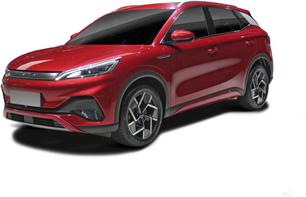
No car demonstrates this better than the BYD Atto 3, which is one of the most popular electric vehicles in Australia. But after an initial surge of buyers happy for a more affordable EV, BYD needs to find fresh ways to attract new customers.
So, for this updated 2024 Atto 3, BYD has made it cheaper and added some key new equipment, while retaining its previous strengths in terms of value and technology.
It’s easy to forget BMW was paddling into the growing electric vehicle wave when it was only a gentle swell. It took off early with the i3 city car, which believe it or not has been in the Aussie new car market for six years.
While the German maker has long been developing the concept of electrified powertrains in existing models, the i3 was the result of a dramatically different approach, showcasing the use of exotic materials and innovative packaging.
Like its i8 supercar sibling, the i3 won’t be replaced with a new-generation version, but BMW says it will continue to develop this high-tech hatch before it departs, and we spent a week in the sporty i3s to see how it stands up in 2020.
BYD hasn’t made dramatic changes to the Atto 3 for 2024, but has it done enough to lure in more buyers?
The additional equipment, namely the larger infotainment screen and new tyres, will certainly help make the Atto 3 more appealing. And the technology behind EVs is more understood by the average motorists, so the barriers to making the switch to electrification are dropping.
But the single biggest factor is likely to be the price. At a time when inflation (and other reasons) is driving the cost of new vehicles up, having your updated model go in the wrong direction will only help make potential buyers take notice.
Especially when you consider Toyota’s closest rival to the Atto 3, the bZ4X, starts at $66,000, while the Tesla Model Y is priced from $55,900, making both significantly more expensive propositions. Heck, the cheapest Toyota RAV4 hybrid model starts at $42,260, only marginally cheaper than the Atto 3 Standard Range.
So, if BYD can make its value argument strongly it will help lure more new buyers to take the plunge into the world of EVs.
Yes, it’s pricey for a small hatch, but this little BMW is a city car like no other. The i3s is tailor made for the urban environment, and six years on retains the quirkiness and charisma that stood it apart at launch, and it can still hold its head high among the current EV crop.
In a couple of words, not really. At least when it comes to the exterior design.
In fact, the biggest design change for 2024 is actually the colour of our test car, the new Cosmos Black. Apart from that, the rest of the Atto 3 is unchanged visually, which is becoming something of a trademark for EVs, at least from newer brands like BYD and Tesla.
Instead of worrying about adding a new grille, different headlights or an alternative alloy wheel design, brands like BYD are focusing on updating batteries, the technology and other software enhancements to keep their models fresh.
The only exterior change is at the rear, where the previous 'Build Your Dreams' lettering has been replaced by a simple 'BYD' badge.
As for the interior design, kudos to BYD for not following Tesla down the cost-saving-disguised-as-minimalist-design path, but personally the design aesthetic and the variety of colours and trims used aren’t to my taste, but I can see why others may love it. The ‘guitar string’ door pockets are likely a particularly polarsing design choice.
BYD has added a new interior option, with a black/blue trim for the examples finished with grey and black exteriors, while white and blue painted cars get a blue/grey interior.
Built around a carbon-fibre reinforced plastic (CFRP) tub, the i3s is ultra-light (for a battery-electric vehicle), super strong, and unlike anything else on the road.
At just over 4.0m long, close to 1.8m wide, and a fraction under 1.6m tall, the i3s is compact, upright, and boxy. A classically polarising design, with some crossing the street to avoid it, and others (like me) loving its unique proportions and stand-out styling.
The nose is tall, short and upright, with the distance from the base of the front windscreen to the front axle (car designers call it the ‘dash-to-axle ratio’) unusually short.
That’s because the electric motor sits in the back of the car driving the rear wheels, with only a small front boot compartment required to house charging cables and other bits and pieces.
Despite the lack of anything of substance behind it, BMW’s signature ‘kidney grille’ is present and accounted for, with swoopy LED headlights (and DRLs) either side. Our test car’s ‘Fluid Black’ finish with ‘i Blue’ highlights dialed up the little car’s charismatic personality.
One of the i3’s most impressive party tricks is its counter-opening ‘clamshell’ doors, and the engineering trickery used to create a B-pillar free side opening (including the strength of the carbon body structure) means the high window line follows a jagged path from front to back, the rearmost hatch windows shrinking the rear glass area appreciably.
The i3s’s standard 20-inch (dual) five-spoke alloy rims, although slightly wider in this performance model, are alarmingly skinny. But taking the car’s relatively light weight (1245kg) and urban-centric purpose into consideration, the narrow, low-rolling resistance rubber makes sense.
With the roofline and sides of the car tapering distinctly towards the back, the rear view is suitably idiosyncratic, highlighted by flush-fit, vaguely U-shaped LED tail-lights.
The hatch window is small, and the bumper sits high to marry with the load space floor sitting on top of the motor and transmission.
And when it comes to moving inside, BMW offers a choice of three ‘interior worlds - ‘Loft’, ‘Lodge’, and ‘Suite’ - featuring renewable natural fibres, recycled plastics, naturally tanned leather, and open-pore wood (sourced from 100 per cent Forest Stewardship Council-certified forestry).
But irrespective of where everything comes from, the end result is inviting, comfortable and sub-zero cool. Our car’s ‘Suite’ interior was combined with ‘Oak dark matt’ wood, and ‘Vernasca’ brown leather to stunning effect.
A tunnel-free floor, gently curved dash and digital screens for instruments and media let you know you’re in something different and special. It might be six years old, but the i3 still feels contemporary and distinctive.
The Atto 3 remains classified as a ‘Medium SUV’ but blurs the line between mid-size and small in terms of dimensions, especially inside. It’s not in the same size game as the Toyota RAV4 or Mitsubishi Outlander, but is close in size to the likes of the Honda ZR-V and Mazda CX-5.
While there’s a few key practical storage spaces, there aren’t as many as some newer rivals, which does suggest the Atto 3 design is starting to date or just wasn’t well thought-out enough in the first place; such as putting all the switchgear in the centre console rather than on the dashboard.
This was probably done, at least in part, to accommodate the rotating touchscreen, which seems like a poor design and practicality choice to me. Especially the new one, which at 15.8-inches when rotated to the portrait mode it starts to interfere with your vision and the layout is more user-friendly in landscape mode - both when using the native multimedia system or your smartphone connection.
Space is respectable in the back seats, and there’s both a USB-A and USB-C port for charging devices. While out the back the boot measures 440 litres, which is a respectable amount of space for an SUV this size, but there’s only a tyre repair kit instead of a spare wheel.
Wide-opening clamshell doors make getting in and out of the i3s a breeze. But bear in mind you have to open the front door to get to the latch for the back one, which can be a pain.
The driver and front passenger enjoy heaps of room, in an open environment, but there’s only a single cupholder in the centre console, so let the coffee cup wars begin.
Aside from that there are seriously big bins in the front doors, a modest glove box, and a handy elasticised pocket near the floor at the base of the bulkhead.
Outlets for 12-volt and USB are provided, and there’s a small oddments tray at the rear of the centre console.
Slip around to the rear and you’re in anything but limousine territory. Sitting behind the driver’s seat set for my 183cm height, head and legroom are modest but do-able. And remember it’s two seats only back there.
In terms of storage, there are two cupholders between the seats but no storage pockets or bottle holders in the doors. You won’t find adjustable ventilation outlets either, but that’s not a huge factor in car of this stature.
The boot’s volume is quoted at 260 litres with the 50/50 split-fold rear seatback upright, which is enough to easily swallow the largest 124-litre suitcase in the CarsGuide three-piece set. The smaller 95- and 36-litre cases will sit side-by-side without a problem.
Fold the rear seat down and you have 1100 litres of space at your disposal, with tie-down anchors, an elasticised pocket and 12-volt power provided.
Don’t bother looking for a spare of any description, a repair/inflator kit is your only option. And not surprisingly, the i3 is a no-tow zone.
As we just mentioned, price has been a critical tool for carmakers looking to keep demand for EVs rolling along as the early adopters fade, and BYD is not immune from this. Earlier in 2024 the Atto 3 Extended Range, the model we’re testing here, started at $50,011 before on-road costs. Then in April 2024, BYD announced a drive-away deal for $45,990 for pre-registered demos.
Now this updated model is priced from $47,499 (plus on-road costs), which is a jump up from the sale price, but is more than $3500 cheaper than the Atto 3 was at the start of 2024. Meanwhile, the Standard model is priced from $44,990 (plus on-road costs), which is also a saving of more than $3000 on the previous model.
The key difference between the Standard and Extended Range models are the batteries, so the specification is similar. Both variants are equipped with LED headlights, power tailgate, synthetic leather upholstery, power-adjustable front seats, 5.0-inch digital instrument panel and in-built satellite navigation.
One of the big ticket item changes for 2024 is the upgraded 15.8-inch multimedia touchscreen, which comes with BYD’s signature trick - rotating between portrait and landscape modes. This is upsized from 12.8-inch in the old model. Wireless Apple CarPlay and Android Auto are now standard too.
For a compact, four-seat hatch the BMW i3s is all the money at $70,900, before on-road costs. Close to $20K more than even the top-spec ‘Premium’ version of Hyundai’s Ioniq electric hatch ($52,490), and even further away from Renault’s cute little Zoe ($49,490).
But a carbon monocoque body and high-tech powertrain don’t come cheap, and that’s where BMW’s ‘i’ model program has seemingly run out of juice.
Getting into the EV market early, BMW took a punt on niche vehicles using exotic materials, appealing to a relatively small group of premium buyers. And in glorious hindsight, that path has proved something of a dead end.
But putting all that to one side, it’s fair to expect a generous standard equipment list in a $70K-plus BMW, and the i3s comes to the party with a solid, if not spectacular batch of features.
Aside from the safety tech detailed later, Included is a 10.25-inch media touchscreen, managing audio, built-in nav (with real time traffic alerts), phone connectivity and more.
Other features include, wireless phone charging (for compatible devices), a rear-view camera, automated parking assist, active cruise control (with stop-go function), climate control air, driver’s digital display, ambient interior lighting, 20-inch alloy wheels, auto LED headlights, LED DRLs, indicators and tail-lights, keyless start, rain-sensing wipers, plus heated and folding power mirrors.
But there are a few surprises. It might be an electric car, but forget power adjustment of either front seat. And despite inclusion of Apple CarPlay (BMW says Android Auto will be available later in 2020) and digital radio, the audio system only has four speakers, all in the front doors (because of the clamshell arrangement detailed later).
Our test car featured the ‘Suite’ interior package ($2308) which brings ‘Vernasca Dark Truffle’ leather on the seats, instrument panel, doors and side trim, as well as ‘Oak dark matt’ wood trim, the steering wheel in black with a ‘Satin Silver’ contrast ring, floor mats (and general interior fabrics) in ‘Anthracite’, the roofliner in ‘Carum Spice Grey’, plus orange/white LED lighting for the door pull handles and front map pocket. A dual porthole-style glass sunroof adds another $2246, for an as-tested price of $74,454.
As with the design there isn’t much to say about what’s powering the Atto 3 because it’s the same as the 2023 model. Both the Standard and Extended Range use the same front-mounted electric motor, which makes 150kW/310Nm and drives the front wheels through a single speed transmission.
With 0-100km/h times of 7.9 seconds and 7.3 seconds respectively for the Standard and Extended Range, the Atto 3 won’t shove you back in your seat, but it has adequate performance for a mid-size SUV.
The i3s is powered by BMW’s ‘eDrive’ hybrid synchronous electric motor, producing 135kW at 7000rpm, and 270Nm from 0-4500rpm. Yep, that’s right, maximum torque is delivered the instant you depress the right-hand pedal, and we’ll get to what that brings to the driving experience a little later.
The unit incorporates a charging and generator function for braking energy recuperation, the latter delivering up to 50kW.
Drive goes to the rear wheels via a single-speed (fixed-ratio) automatic transmission.
The battery powering the whole show is a 352-volt/120 amp-hour (Ah) Lithium-ion unit with a (gross) energy rating of 42.2kWh.
The Standard Range has a rated driving range of 345km (WLTP) from a 49.92kWh ‘Blade’ lithium-iron phosphate (LFP) battery while the Extended Range’s bigger 60.48kWh unit increases that to 420km.
Charging is capped at 70kW (DC) for the Standard and 80kW (DC) for the Extended.
One of the major hurdles for EV brands is convincing people that they won’t run out of charge every day. At 420km the Extended Range Atto 3 will get most people through multiple days of commuting, so even with public charging you shouldn’t worry about range anxiety.
Those drivers with commutes longer than 420km per day should be looking at something other than an electric car (and probably a job closer to home).
When it comes to an electric car’s energy use and projected range, there are two main things to consider - the motor’s power consumption and the battery’s capacity.
And according to BMW, the i3s’s power consumption for the combined (urban/extra-urban) cycle is 14.6–14.0kWh/100km.
Over a week, and roughly 250km of urban driving (with some brief freeway runs thrown in) we saw 19.3kWh/100km staring back at us from the on-board computer.
When BMW launched the i3 in Australia in 2014, the pure EV version came with a 60Ah battery pack delivering a claimed 130 kilometre range (a range extender model featuring the addition of a two-cylinder petrol motorcycle engine was also offered).
In 2016 a 94Ah version arrived to boost range up to 183km, and the i3s launched in 2018, with its 120Ah battery pushing range out to BMW’s current, real-world estimate of 260km.
Then, there’s charging time, which is like asking how long is an electric piece of string.
According to BMW, for a 0–80 per cent charge from a (50 kW DC) fast-charging station, you’re looking at 45min.
From a (11kW/16A/380V) high-output home/office wall unit, that pushes out to 3.10h, and using a (3.7kW/16A/240V) low-output home/office unit stretches the wait time to 9.40h.
BMW offers the ‘WallBox plus’ charging suite as a dealer accessory priced from $1990 (not including GST or install costs).
Plug into a domestic (2.4kW/10A/240V) socket, and you’re staring down the barrel of 15.00h. But at least you can use low-cost, off-peak energy overnight, right? Nah, I don’t buy that line either.
Driving the updated Atto 3 feels… fine. Nothing special or class-leading, but within the expectations buyers should look for in a mid-size SUV. Which is meant as a compliment to BYD, as it is still a relatively new brand in this very competitive market and there are certainly some noticeably worse rivals in this same segment.
The Atto 3 may not be the most comfortable, most powerful or most dynamic mid-size SUV, but it’s a perfectly nice thing to drive and it will get you from Point A to Point B quietly and smoothly.
Another of the major changes for 2024 is BYD’s decision to ditch the fantastically named, but not very good Atlas Batman tyres, replacing them with Continental rubber. The Atlas tyres were a major drawback on the old model, lacking grip and detracting from the driving experience, with the new ‘Contis’ solving those problems.
It might not look like a conventional sports car, but the BMW i3s certainly accelerates like one, with a claimed 0-100km/h time of 6.9sec. The i3s is a smile-inducing hoot to drive.
Every one of this little hatch’s 270 newton metres of torque is available from the minute you hit the accelerator pedal, and remain in service until 4500rpm, at which point torque delivery drops off a cliff.
But peak power steps in at exactly 7000rpm, so if you’re determined to make that overtaking move you won’t be left in the lurch. In fact, BMW says it only takes the i3s 4.3 seconds to surge from 80km/h to 120km/h.
However, the i3’s forte is 100 per cent the city, rather than the open road. Its ‘point and squirt’ ability making it the perfect partner for the cut and thrust of the urban jungle.
The i3s features an upgraded ‘Sports Suspension’ incorporating firmer dampers, re-tuned springs and revised anti-roll bars. It’s also lowered 10mm, the track is widened (+21mm front / +2.0mm rear) and the wheels go plus one inch to 20-inch alloys.
The standard i3 (no longer offered in Australia) rolls on 19-inch rims shod with 155/70 rubber all around. And while the i3s’s 175/55 front and 190/50 rear tyres are still exceptionally narrow, from the side the low-profile Bridgestone Ecopias look like fan belts wrapped around pulleys rather than tyres around wheels..
No surprise then that ride comfort isn’t exactly cushy, and in signing on for the i3s experience you’ll need to be ready for more than occasional bumps and thumps.
But the pay-off is super-sharp dynamics, Suspension is by alloy struts at the front, and a five-link alloy set-up at the rear..The steering responds to inputs quickly yet smoothly, and with 48/52 front to rear weight distribution, the car always feels balanced, eager, and taut.
And if you really want to dial things up the ‘driving experience control’ allows a switch to Sport mode for a further tweak of the suspension, steering, and traction control set-ups.
A tight 10.3m turning circle makes for easy parking and stress-free U-turns. But if things get too tight, rapid three-point turns are assisted by the gear shift controller bring mounted on a chunky stalk on the right-hand side of the steering column. Too easy.
Braking is by vented discs front and rear, but they’re tiny. That’s because the ‘Brake Energy Regeneration’ system does most of the work.
Effectively turning the motor into a generator, the system not only slows the car dramatically but feeds energy to the battery in the process. It takes a while to get used to the sensation, but soon becomes a fun, and surprisingly easy game to use the brake pedal as little as possible… often not at all, for long periods.
In terms of safety, both Atto 3 variants get a comprehensive list of both passive and active safety features, enough to score a five-star ANCAP rating.
There’s airbag coverage for all occupants, 360-degree parking cameras, adaptive cruise control, autonomous emergency braking, forward and rear collision warning, blind spot detection, lane departure warning, lane keeping assist, rear cross-traffic alert, rear cross-traffic brake and door open warning.
Most of these systems behaved themselves during our testing, although the forward collision warning did seem overly sensitive at times, and sounded alarms over potential accidents that simply weren’t a problem. Still, compared to some modern brands, the BYD systems performed well.
The i3 scored a maximum five ANCAP stars when it was assessed at the time of its local launch in 2014, and the standard safety spec has been boosted since then.
Active tech includes ‘the usual suspects’ such as ABS, EBD, and ESC, as well as city-speed AEB (with 'Forward Collision Warning', and 'Traffic Sign Recognition'). reversing collision avoidance, a reversing camera, and tyre pressure monitoring.
If all that doesn’t prevent an impact, passive safety tech includes, dual front, side chest and side curtain airbags.
There are also top-thether points and ISOFIX anchors to secure child seats/baby capsules in both rear seating positions, as well as a first aid kit and warning triangle..
BYD offers a six-year/150,000km warrant for the vehicle, with eight years/160,000km coverage for the batteries.
Service intervals are every 12 months of 20,000km and while a minor service is only $165, every second visit is more expensive, ranging from $498 to more than $600. There may be less oily bits under the bonnet but there’s still a cost to owning an electric car.
BMW offers a three year/unlimited km warranty, which is off the pace given the majority of mainstream brands have stepped up to five-year cover, with some at seven. And the pressure is on with Mercedes-Benz recently announcing its shift to five years/unlimited km.
That said, the BMW's body is warranted against rust (perforation) for 12 years/unlimited km, and roadside assistance is provided free-of-charge for three years/unlimited km.
Maintenance is 'condition based' with sensors and on-board algorithms (mileage, time since last service, driving style) determining whether an annual vehicle inspection is required.
The 'BMW Service Inclusive' package, offering a single, one-off advance payment to cover selected service and maintenance costs, is available in two levels - 'Basic' ($850) or 'Plus' (dealer quote)