What's the difference?
Back in 2010, Mitsubishi released Australia’s first mainstream electric vehicle (EV) in nearly a century.
That model, the i-MiEV, was a four-seater city-sized Kei car from Japan that cost $48,800, before on-road costs, or from roughly $70,000 in today's money. Little wonder it bombed. That was four times more than petrol-powered equivalents of the time.
Now, in 2026, the new BYD Atto 1 is the first EV sold here since the i-MiEV’s 2013 departure to be considered a four-seater city car.
It’s also the least-expensive EV money can buy, being even cheaper than many internal-combustion engine alternatives like the Mazda 2 and Toyota Yaris hybrid. The fact is, there’s nothing remotely near the Chinese supermini’s base price that’s electric.
But is the Atto 1 any good?
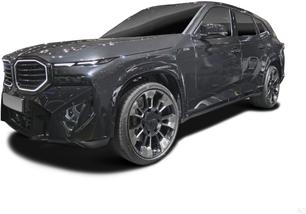
BMW’s new XM is a tricky customer to pigeon-hole. Yes, it’s a huge, super-lux SUV and, yes, it’s all-wheel drive and features a station-wagon layout.
But it’s also a M-car and that infers super high performance. Weighing in one the wrong side of 2700kg, however, makes that a difficult task for any engineer.
This car also left us wondering if perhaps the glory days of M Division sports cars and coupes might behind it and SUVs like this one represent the road ahead.
But fear not: The CEO of M Division himself, assured us that the XM is a showcase for what an M badge can do, rather than a mission statement for the brand.
So, with that in mind, does this car have the wow factor that places it somewhere between peak oligarch and a motor-show concept car? Does it move the goal posts for big luxury SUVs? Does it even matter that it’s a plug-in hybrid?
The BYD Atto 1 has already earned its place in history as the cheapest new EV ever sold in Australia. And the good news is that, on the strength of bigger-battery Premium version, it rarely puts a foot wrong as a city car, exceeding performance, efficiency, refinement and comfort expectations. The Atto 1 really delivers around town.
But the baby BYD’s price is too close to larger EVs with better range, while extended exposure reveals issues with seat comfort, touchscreen access/distraction, ADAS interference and nervous steering feel at speed. Australian road tuning is required to rectify these.
Still, as a cheap urban EV runabout, the Atto 1 Premium still (just) stands alone. A glimpse into the future, someday, all city cars will likely follow in the bold BYD’s footsteps.
It’s pretty obvious the XM is designed to impress people with big wallets and an appetite for a techy experience that’s also not without a few green credentials. The ability to motor around as a fully-electric vehicle for up to 80km or so is a big plus and the electric-ballroom interior vibe is hard to ignore, as well.
But from our perspective, the full-fat, twin-turbo V8, while offering startling performance, is perhaps a lost opportunity to follow some of BMW’s competitors into the engine-downsizing space. Then again, when you floor the throttle and 2700kg hurtles forward like a big dog on a short chain, you can see where BMW is coming from.
Perhaps the biggest letdown is the ride quality – or lack of it. While it’s understandable BMW wanted the most dynamic version of the XM it could manage, the end result plays against the vehicle’s otherwise long suit of hyper-luxury. Doubtless, BMW would argue that to soften the chassis would have been to introduce a chink into a no-compromise product. But, perhaps, sometimes a sensible compromise is the way forward.